Every sign factory promises a free quote in 24 hours. I’m going to tell you what that really means from someone who’s been on the factory floor, not a sales deck.
It means I’ll look at your drawing, napkin sketch, or photos of the building fascia and get you a number fast. That number is 90% accurate for standard storefront letters or light boxes. If you need a curved fascia sign with integrated neon flex and custom mounting brackets, the 24-hour quote is a ballpark. I’ll be the first to tell you I need another day to price the engineering. Anyone who promises a final quote on complex work in 24 hours is guessing, and their guess comes out of your pocket later.
What you get from us is a line-item breakdown: material thickness, LED brand, power supply spec, finish, mounting method, and packaging. Not a single price with a vague “custom sign” description. That kind of quote is useless for comparing factories. I’ll also flag anything that might bite you – like when your 2.8-meter letter should really be 5mm acrylic instead of 3mm, or when a white face with warm white LEDs will look yellow after six months. The 24-hour window is real for most jobs. I just want you to know when we’re being honest about a delay versus rushing a number that’s wrong.
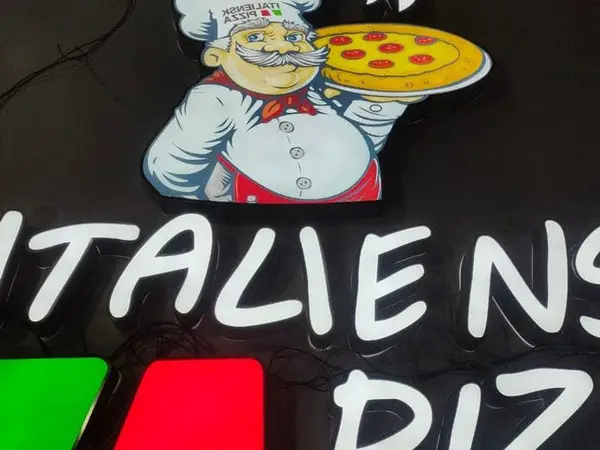
Look, I can’t read your mind. I’ve gotten RFQs that say “illuminated sign for pizza shop.” That’s like asking a carpenter for a house without a floor plan.
Send me the following and you’ll have a solid quote before tomorrow’s coffee: artwork in .ai, .cdr, or .eps (even a clear photo of the logo on the wall helps), overall dimensions or height of one letter, and the installation environment. Indoor? Outdoor? Coastal? I need the substrate material preference if you have one – stainless steel, aluminum, acrylic? If not, I’ll recommend based on lifespan and budget. Tell me if you want front-lit, back-lit, or side-lit, and if you need a UL/ETL listing. Yes, that matters for US inspectors. With those basics, I’ll calculate everything from LED module count to transformer load, and you’ll get a factory-direct price that a sign shop owner can mark up fairly or an importer can land without nasty surprises.
Here’s what nobody tells you: most Chinese sign factories will say yes to anything. Then they sub it out to a cheaper shop and deliver crap. We don’t do that.
We make illuminated channel letters, halo-lit letters, rimless letters, dual-lit letters, neon flex signs, acrylic light boxes, and metal letters in stainless, aluminum, and brass. 3,000 square meters, 50+ skilled workers, running since 2010. We’ve shipped worldwide and our guys have seen everything from mall directories to highway pylon signs. We handle custom shapes, integrated push-through acrylic, and even mixed-metal assemblies. The work we won’t touch? Large-scale structural pylons requiring PE-stamped engineering. That’s a different license. We also won’t do cheap electrical work that skips grounding or uses household-grade power supplies. If your project needs a UL field inspection sign-off, we’ll build to UL 48 standard, but we’re not the field labeler – your local electrician handles that. I’d rather turn down a job than ship you a fire risk.
Our certifications are real: ISO 9001, CE, RoHS. I keep the audit reports in a folder, not a PDF someone Photoshopped. Ask for them.
The ugly truth is most illuminated signs fail because of cheap materials, not bad installation. I’ve pulled apart competitor letters that were rusting from the inside after 14 months.
I use 304 stainless steel for 90% of outdoor metal signs. It’s an 18% chromium, 8% nickel alloy that survives 10+ years outdoors. Density is 7.93 g/cm³, not some thin recycled mystery metal. For coastal jobs, I spec 316 marine-grade stainless with 2-3% molybdenum – it costs 20-30% more, but it won’t pit after two hurricane seasons. Aluminum letters? One-third the weight of steel, naturally rust-proof, 8-12 year life. But if you want a mirror finish on aluminum, don’t. It oxidizes dull fast. Go brushed or powder coated.
Acrylic faces are the heart of illuminated letters. We use Mitsubishi or Degussa acrylic with 90-92% light transmittance and UV resistance that keeps it from yellowing for 5-8 years. I’ve seen cheap acrylic go yellow in 18 months. For any letter over 2.5 meters tall, I move you up to 5mm thickness. Less than that, 3mm is fine. And I’ll never use domestic Chinese acrylic on a high-end exterior without warning you – it’s fine for budget interior displays, but real weather eats it alive.
LED modules are where most factories silently downgrade. I use SMD 2835 or 5730 chips on quality modules – Samsung, Osram, or Lan Jing. The good stuff delivers 100-150 lm/W and an L70 lifespan of 50,000 hours. In the real world, that’s 5+ years of nightly illumination. I’ve replaced cheap modules for clients that died after 12 months. Full transformer burnout. You don’t want that phone call. Color temperature matters too. 3000-3500K warm white for hospitality, 4000-5000K neutral for retail and corporate lobbies, 6000-6500K cool white for industrial signs. I’ll suggest the right one based on where your sign lives.
Look, I’m going to give you factory-direct prices that might make you choke – because you’re used to US distributor markups.
A standard front-lit channel letter in 304 stainless, 600mm tall, with Samsung LEDs, costs between $20 and $80 ex-factory. The same letter installed on a storefront in Dallas runs $200 to $700, and the sign shop probably paid $120-180 wholesale. If you’re comparing quotes and seeing $300 per letter from a local vendor, that’s not a rip-off – that’s labor, rent, truck rolls, and insurance. But if you’re an importer or a sign shop doing your own install, buying factory direct saves you 50-65% on product cost. Our back-lit halo letters run $35 to $120 each depending on size and finish, while US retail installed prices jump to $400-$1,000 per letter.
Stainless steel non-lit letters are $15-40, aluminum letters $10-25. Light boxes run $80-250 per square meter. Neon flex signs, which I make with bendable silicone that looks like glass neon but won’t shatter, range from $30-200. If you’re looking at a complete storefront package, our quote will lay out every line item so you see exactly where the money goes.
Here’s what nobody tells you about shipping factory-direct signs from China: the freight cost can be more than the sign if you don’t plan right.
A small front-lit letter order under 20kg goes express (7-10 days) for $30-100. Air freight for medium orders is about 10 days and $4-12 per kg. Sea freight is slow – about 65 days – but LCL costs $80-200 per cubic meter, and a full container is $1,200-3,000. I’ll tell you if your order is too small for sea freight or too heavy for air. And then there’s the US Section 301 tariff, which adds about 30% to sign imports from China. I build that into my landed-cost estimate for customers who want a door-to-door price. I’m not a customs broker, but I won’t let you get a $2,000 sign billed with a $400 customs exam fee because we labeled the HS code wrong.
Packaging matters. Every sign leaves our factory wrapped in foam, then in a heavy carton, then in a fumigated plywood crate. I’ve seen signs arrive bent because someone used honeycomb cardboard and hoped for the best. Not here.
We run a 10-step process that hasn’t changed much in 14 years because it works.
Once you approve the design (1 day), laser cutting starts. Our machine hits ±0.1mm accuracy, cutting 304 stainless or aluminum like butter. That’s 1-2 days. Then TIG welding and bending – our guys can hand-weld a 2mm stainless return edge so clean you don’t need filler paint. Grinding and polishing take another day or two. The acrylic face is CNC-routed, LED modules are assembled and wired, and the whole letter gets sealed with neutral-cure silicone that won’t eat the acrylic. Every finished sign sits in an aging test for 8-12 hours to catch early LED failure. After that, it’s a 100% QC inspection under a light meter. That whole chain runs about 5-15 days. One-off prototypes ship in the same window because we’re not a factory that puts small orders at the back of the line.
I’ve seen this go wrong: a competitor rushed a dual-lit letter order and didn’t cure the silicone. Condensation inside the letter in two weeks. Short circuits. We bake the process into the timeline and don’t apologize for it.
The ugly truth is that online sign marketplaces are packed with middlemen pretending to be factories. Here’s how I’d test them if I were you.
Ask for a real-time photo of your exact sign in production, with a handwritten note and today’s date. A trading company can’t do that. Ask for the CE certificate number and the test report. CE testing costs 20,000-50,000 RMB; plenty of small workshops fake the stamp. Our certificate is legit and I’ll show you the last audit date. Ask what LED module brand they use – if they say “high quality,” run. I’ll say Samsung 2835 or Osram. Ask about IP rating. IP65 means water jets from any direction, fine for most outdoor signs. IP66 handles powerful jets, good for coastal storms. IP68 is submersible – you don’t need that unless your sign is in a flood zone. A clueless sales rep will just say “waterproof.”
When you get a quote that’s 30% cheaper than mine, check the acrylic thickness. They’re probably using 2mm across the board. Check the stainless grade. Could be 201 or 430 that rusts in six months. I’ve replaced those signs for guys who bought on price alone. It’s cheaper to do it right once.
I don’t do flashy brochures. I send a spreadsheet with the specs and price. If you need a photo of a similar project, I’ll send five from our portfolio. You want front-lit channel letters for a strip mall? I’ll spec 304 stainless, 3mm acrylic faces, and weatherproof LED drivers. Looking for a sleek office lobby reception sign? Our acrylic light boxes can be edge-lit or back-lit with a flush wall mount. If you need a high-end architectural look, those back-lit halo letters we talked about throw a crisp glow that makes even a dentist’s sign look expensive.
Email me your artwork and dimensions. I’ll answer within hours, not because a chatbot does it, but because I’ve got a phone in my pocket and a factory 30 steps from my desk. And if your project has a problem, I’ll tell you before you pay a cent. That’s the difference between a factory that wants your repeat business and a supplier that just wants your wire transfer.

Real photo from our production floor — every sign we ship is made here.
From $24/letter · MOQ 1 piece · Flexible lead time · CE & UL certified · ships to 20+ countries
Custom sizes, colors, and finishes. Get a factory price in 24 hours.
Get a Free Quote Copy EmailWhatsApp +86 13865703472 · business@aochuangsign.cn
See pricing, specs, and get a free quote for the sign type you need. Built in our factory, shipped worldwide.