I’ve watched sign shops order cheap acrylic letters for a Florida strip mall in July. Twelve months later, they’re pulling yellowed, cracked faces off the wall while the client fumes. The ugly truth is most people think “plastic is plastic” and “metal is metal.” It’s not that simple. Not even close.
Look, I’ve spent 16 years on this factory floor. I’ve unboxed warped aluminum returns that peeled like a sunburn, and I’ve handled acrylic panels that stayed crystal clear for eight years. If you’re comparing acrylic and aluminum for an outdoor sign, this article will save you from making a rookie decision that costs you your reputation.
Acrylic isn’t just one thing. At our facility we use Mitsubishi and Degussa-brand acrylic that delivers 90-92% light transmittance and UV resistance built to last 5-8 years outdoors without noticeable yellowing. The domestic stuff some low-cost suppliers push? You’ll see yellowing in 1-2 years. I’ve held both side by side after a single summer and the difference is like night and day.
Aluminum is simpler on paper: it’s lightweight, a third the weight of steel, naturally rust-proof, and common thicknesses run from 0.040" to 0.063" (1.0-1.6mm). But “aluminum” signs aren’t just raw mill finish sheets. They come anodized, powder coated, or brushed. The finish is what takes the beating outdoors. Here’s what nobody tells you: a poorly applied powder coat on a 0.040" aluminum letter will start flaking after 3-4 years in a climate with freeze-thaw cycles. Once moisture gets under the coating, the aluminum oxidizes, grows a white powdery bloom, and the whole appearance goes south.
If you’re ordering front-lit channel letters with an acrylic face on an aluminum return, you’re marrying both materials. Do it wrong and you get a great face on a corroding body.
Sunlight doesn’t rust aluminum, but it sure does attack acrylic. The number you need to remember is 1-2 years. That’s how fast cheap domestic acrylic loses its clarity outdoors. Put a 2mm face on a south-facing wall in Phoenix and you’ll see chalky white edges before the next Super Bowl. Upgrade to UV-stabilized acrylic (the Mitsubishi or Degussa grades we stock) and you push that out to 5-8 years. A small price difference up front, maybe 25-30%, buys you three times the life. I’ve seen this go wrong: a car dealership insisted on the cheapest acrylic because “nobody will notice.” Sixteen months later every letter looked like it had cataracts. They paid us to replace everything.
Aluminum doesn’t care about UV. It sits there, laughs at the sun. The finish can fade—especially dark powder coats in constant direct sun—but the metal underneath stays intact. Anodized aluminum holds color better, but anodizing adds cost and limits your color palette. Still, for a sign body that must last 8-12 years, aluminum’s base material wins the UV battle hands down.
Here’s what nobody tells you: aluminum is “rust-proof” only in a textbook. In the real world, right next to the ocean, the salt spray pits aluminum. Those tiny white spots aren’t structural rust like steel, but they look like hell on a brushed aluminum face after 3-5 years. I’ve pulled 0.050" aluminum letters off a Miami Beach restaurant; the backsides were cratered with salt pitting even though the powder-coated faces looked okay. If the sign is within a mile of salt water, aluminum needs 316 stainless steel hardware and a marine-grade coating. Better yet, use solid cast aluminum signs with a thick powder coat, or switch to 316 stainless for the letters themselves. Acrylic, on the other hand, doesn’t care about salt air at all. No corrosion, no pitting. That’s a win for coastal locations.
Temperature swings matter too. Acrylic expands and contracts more than aluminum. A 3mm acrylic face on a 4-foot wide channel letter can bow in and out enough to stress the mounting studs. I’ve had clients call saying “my letter is humming in the wind.” It was the acrylic face flexing like a drumhead. Aluminum returns, when properly welded and braced, stay rigid. The trick is sealing: on any letter that combines acrylic and aluminum, we use neutral silicone sealant and let it cure fully. That 1mm of give absorbs the thermal movement.
At factory-direct pricing, a standalone 12-inch acrylic letter with LED can cost $20-80. An aluminum letter (non-illuminated, powder coated) runs $10-25. But that’s the product price before shipping. Installed in the U.S. with UL-listed power supplies, that price jumps 3-5x. If the acrylic yellows in two years, you’re paying for removal, disposal, fabrication, and reinstallation. The ugly truth is a $40 acrylic letter that fails early costs six times more in the long run than a $60 UV-stabilized acrylic letter that lasts eight years.
Aluminum’s lifetime cost often comes down to the finish. A powder-coated aluminum letter that doesn’t see direct coastal spray can look good for 10+ years. Once it starts to chalk, you can refinish it on site—sand and repaint. Try that with yellowed acrylic; you can’t. So for multi-decade life, I’d pick aluminum with a properly cured coating every time. But for illuminated signs, you need acrylic for the face. Period. You don’t light through solid aluminum. The smart move is using aluminum returns and a UV-stabilized acrylic face, exactly what we build when you order acrylic LED letters designed for outdoor use.
Pick acrylic when you need backlighting, edge glow, or a precision radiant color. Full-body glow signs, front-lit channel letters, or halo-lit

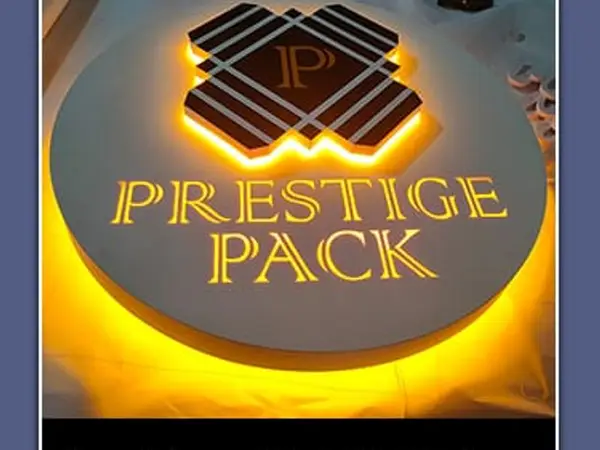
Real photo from our production floor — every sign we ship is made here.
Products mentioned or relevant to this topic — factory-direct, custom built.
Factory-direct since 2010. Free quote within 24 hours — no obligation.
Get a Free Quote → Copy EmailMOQ: 1 piece · Flexible lead time · 2-year warranty · Worldwide shipping
See pricing, specs, and get a free quote for the sign type you need. Built in our factory, shipped worldwide.