I've watched acrylic faces turn the color of old teeth in 14 months. I've also pulled aluminum letters off a building after 15 years and they looked ready for another decade. Which one actually lasts longer outside? It's not a simple answer. I'll give you the exact breakdown—with thickness specs, real-world failure rates, and pricing we use on our own factory floor in Lu'an—so you don't get burned by marketing garbage.
Here's what nobody tells you: acrylic is a plastic. All plastics degrade under UV. The difference between 18 months and 8 years outdoors is about $3 per square foot of material. We source UV-resistant acrylic from Mitsubishi and Degussa. Those sheets carry 90-92% light transmission and a 5-8 year outdoor yellowing warranty. We also stock domestic acrylic that costs 40% less. The cheap stuff? You'll see yellowing start around month 14 in direct sun. Front-lit channel letters built with that garbage look like a failed franchise by year two.
I've seen this go wrong: a regional pizza chain ordered 120 channel letters from a low-bid shop. Two-millimeter domestic acrylic face, white LEDs behind it. Within 18 months, every face was a sickly butter-yellow. They paid $11,000 to replace all faces. Their original savings on cheap acrylic? About $800. Rookie mistake. We stamp our own work orders with the acrylic brand and batch number so nobody can accidentally substitute indoor-grade sheet.
Aluminum is naturally rust-proof. No iron, no red rust. It forms a self-healing oxide layer. That's why a bare aluminum letter can sit outside for 20 years and still be structurally sound. The catch? Nobody wants a bare aluminum letter. They want color, gloss, texture. That's where finishes enter the picture, and where most shops screw up. Powder coating fails at edges first. Anodizing fades unevenly under harsh UV. Cheap chrome-look PVD plating delaminates like sunburned skin. Our aluminum letters go through a five-stage chemical pretreatment before any powder hits the surface. That's the difference between a coating that bonds for 12 years and one that peels in 3.
The ugly truth is that many quote "marine-grade powder coat" but skip the chromate conversion step. They throw a polyester powder onto raw aluminum and call it outdoor-rated. It'll look fine for six months. Then edge corrosion creeps under the coating, and suddenly your client's $800 letter is flaking worse than a rusty muffler. Ask your supplier for the pretreatment data sheet. We'll send ours with the QC report.
Look, I don't care what material you pick if you spec it too thin. For acrylic faces, anything over 2.5 meters wide needs 5mm stock minimum. Use 3mm on a big span and the face bows under wind load or LED heat. We see warped acrylic on cheap channel letters all the time. Aluminum letters have a similar weakness. A 1.0mm sheet might hold its shape on a small "A" but on a 24-inch letter, it'll oil-can in a stiff breeze. We default to 1.6mm (0.063") for letters over 12 inches. It adds a few bucks but stops callbacks cold.
Here's a combination that works: our back-lit halo letters often use a 5mm UV-resistant acrylic face with a 1.5mm aluminum return and backing. The acrylic handles the illumination and snap-in trim; the aluminum handles structure and standoff mounting. You get the best of both materials, and we guarantee the LED's L70 lifespan of 50,000 hours. The face will still yellow eventually—plan on replacing it around year 8 if it faces direct southern UV—but the aluminum body will outlast the business.
Let's cut the bull. Under identical conditions—Midwest climate, partial shade, mounted on a building facade—here's what we've recorded over 16 years of installations:
So which lasts longer? An aluminum letter will outlive an acrylic face by a solid 3-5 years—IF you maintain it. But an acrylic face on an aluminum channel letter housing (the classic front-lit sign) gives you illumination that a solid aluminum letter can't. You're trading a few years of perfect cosmetic life for the ability to be seen at night. That's the real choice. Not material versus material, but lit versus unlit, and then picking the right grade for the job.
I've seen identical signs fail in Miami and thrive in Denver. Salt spray eats aluminum if the edge coating is damaged. Acrylic doesn't care about salt. So for beachfront restaurants, I'd spec a front-lit channel letter with UV-resistant acrylic face and a stainless steel letters return (304 at minimum, 316 if within 500 yards of breaking surf). The acrylic handles the salt air, the stainless handles the structure. Solid aluminum letters near the ocean need marine-grade anodizing and regular washing. Without that, pitting starts at the mounting holes.
Temperature swings are another killer. Acrylic expands and contracts about three times more than aluminum. If a channel letter frame traps the face too tightly, you get stress cracks at the screws in the first freeze-thaw cycle. We CNC-rout face slots with 1.5mm clearance and use flexible silicone sealant—not rigid adhesive. Small detail, huge impact on lifespan. Many shops don't know this. They caulk the face in solid and wonder why it cracks in January.
Factory-direct prices from our floor: a 12-inch front-lit channel letter with 5mm UV-resistant acrylic and Samsung LEDs runs about $45-$60. An equivalent solid aluminum letter with premium powder coat runs about $18-$25. The price gap exists because of the LED system and labor, not the material cost of the face. Upsizing to Mitsubishi-grade acrylic adds maybe $5 per letter. That's $5 to push the replacement window from 2 years to 7. You'd be insane not to do it.
Now compare to US retail. That same front-lit letter installed on a storefront costs $400-$700. By importing from us, your margin jumps even after Section 301 tariffs (about 30%). And you control the material spec. You're not stuck with whatever acrylic the local fabricator has in stock. I've had contractors order 50 letters from us, split between front-lit and aluminum, and save enough to cover installation and a steak dinner for the crew.
Look, I won't promise you a 20-year acrylic face. It doesn't exist. All thermoplastics degrade. Even Mitsubishi's marine-grade sheet starts losing gloss after 8 years of direct UV. We guarantee our workmanship and LEDs for 2 years, power supplies for 1 year. The acrylic we source carries its own manufacturer warranty—we pass that through. But if your sign faces south in Phoenix, the clock ticks faster. Plan to replace faces every 7 years regardless. Budget for it. We'll keep your file for a quick reorder.
We also can't control what happens after the sign leaves our crate. If your installer uses steel screws through aluminum in a coastal zone, galvanic corrosion will bubble the paint within months. We include nylon isolation washers and stainless hardware with every order. Whether they get used is out of our hands. A lot of sign failures aren't material failures. They're installation failures. Don't let your installer blame the acrylic when the real problem is they used drywall screws.
The ugly truth is that CE marking on sign components can be worthless. A factory can download a template and print "CE" on a sticker. Our certification cost us 22,000 RMB and took six weeks of testing at a third-party lab. Ask any supplier for the test report number and certifying body. If they hesitate, walk. We'll send a scan of our current certificate with your quote. Same for RoHS and ISO 9001. No trade secrets there—just proof we didn't fake it with a color printer.
UL 48 or ETL certification for illuminated signs? That's a whole different beast, $4,000 to $15,000 per listing. We can build to UL standards if you need it—we cut parts to the same shape and wiring rules—but we won't lie and say a standard export sign is UL-listed unless we've done the listing for that exact SKU. Plenty of shops in this industry will tell you otherwise. I'd rather lose a sale than a customer's faith.
If you need non-illuminated identification that'll last the lifetime of the building, don't overthink it. Order aluminum letters in 3mm thickness with a matte powder coat. They'll survive hail, rain, and UV without a hiccup. A yearly wipe-down keeps them looking fresh. We laser-cut the faces with ±0.1mm accuracy, TIG-weld the studs, and grind the backs flat. You get a product that looks machined, not stamped. Weight is one-third of steel, so you're not beefing up the building structure. And if a tenant changes, they unscrew cleanly—no repair to the facade.
For corporate lobbies or high-end retail, brushed stainless steel (304) with a clear lacquer topcoat gives you a premium feel that aluminum can't match. But that's a different price bracket and a different article. Our stainless letters start at $15 for a small character and climb from there. The key is matching the material to the expected lifespan and the brand's tolerance for maintenance.
Stop asking which material lasts longer outside. The right question is: what kind of failure can you tolerate? If you need illumination, spec UV-resistant acrylic and accept that you'll replace the faces in 7 to 8 years. Build the housing from aluminum or stainless so the structure outlasts the plastic. If you don't need light, go with solid aluminum letters and call it a decade. They'll outlast the faces, the power supply, and probably the business lease.
I've spent 16 years watching people try to cheat physics to save fifty bucks. The sign always rats them out. Yellowed faces. Flaking paint. Dented returns. Your client might not know the technical term for UV degradation, but they know when their brand looks tired. Order the right grade of material, install it with compatible hardware, and schedule the maintenance. Do that, and your sign will look newer than the building next door in five years.
We'll put the exact acrylic brand, thickness, and LED module model on your invoice. You'll know exactly what you're buying. No mumbo-jumbo, no "commercial grade" nonsense. Just the real specs. And if you still have questions about whether Mitsubishi acrylic is worth the upcharge over domestic, call my office. I'll tell you what I've seen, warts and all. That's how a factory in a small city in Anhui ships worldwide without a single lawsuit.
Factory-direct since 2010. Free quote within 24 hours — no obligation.
Get a Free Quote → Copy EmailMOQ: 1 piece · Flexible lead time · 2-year warranty · Worldwide shipping

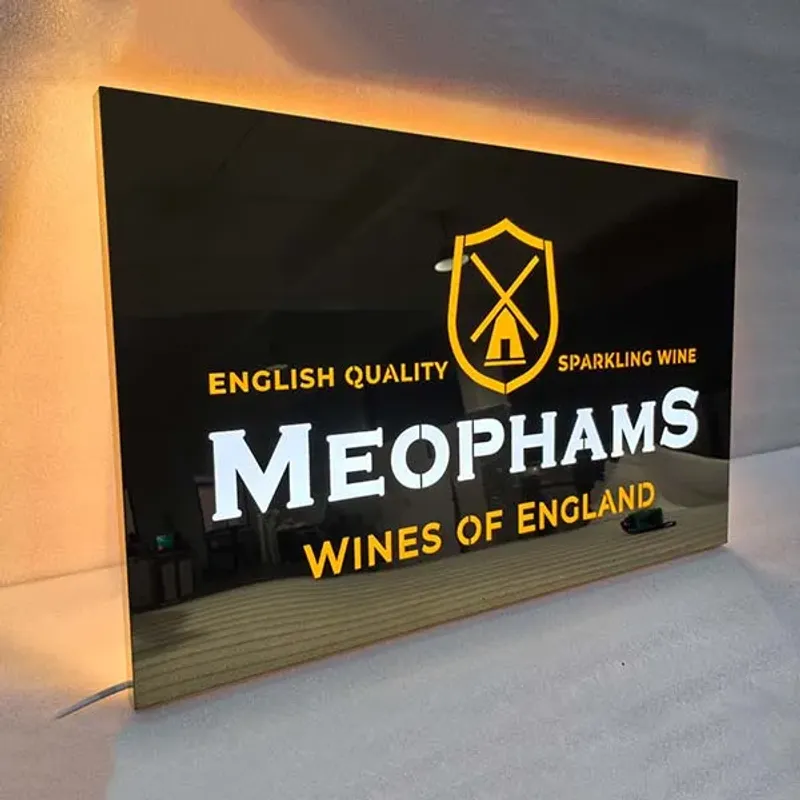
Real photo from our production floor — every sign we ship is made here.
See pricing, specs, and get a free quote for the sign type you need. Built in our factory, shipped worldwide.