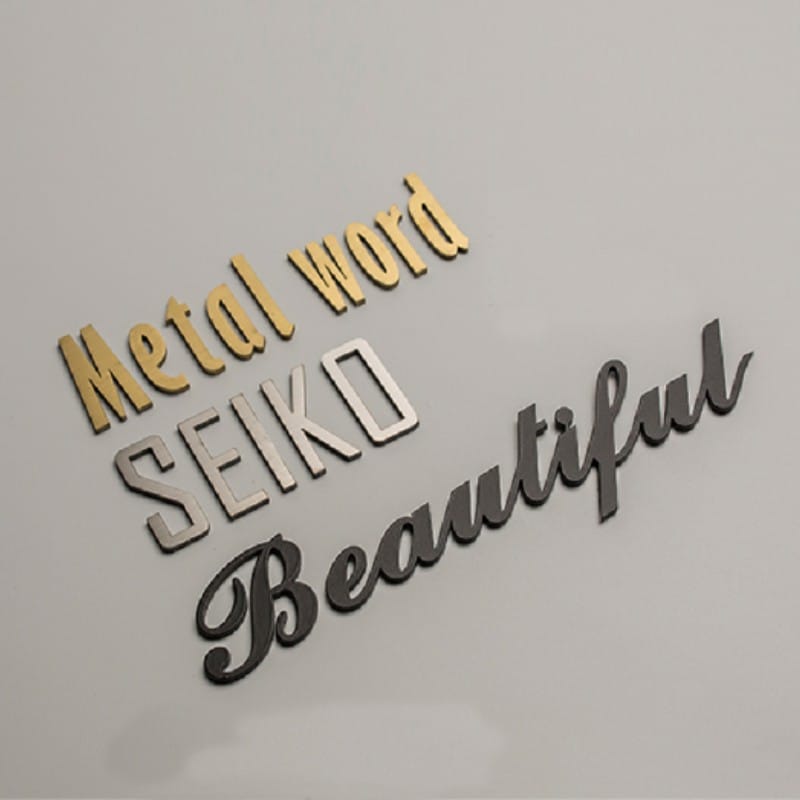
The price difference between a backlit halo letter bought factory-direct and the same letter from a US sign supplier isn’t a few bucks.
It’s the kind of margin that makes a grown sign shop owner cry. I’ve watched contractors pay $800 for a single 18-inch halo-lit letter—304 stainless, Samsung LEDs, nothing crazy. We ship that exact letter from our factory in Lu’an for $65. That’s not a typo. By the time you add shipping and the damn tariff, you’re still at maybe $110 landed. Do that across a whole pylon sign with twenty letters, and you’re pocketing over $13,000 that would’ve vanished into middlemen. I’ll show you exactly where the money goes, what you’re actually buying, and when you’d be an idiot to order direct—because I’m not here to sell you a fairy tale.
We roll 304 stainless steel coil into a channel letter return at about $3.80 per kilogram. A US shop pays $11–14 for that same metal. Our skilled workers—guys who’ve been TIG welding letters for fifteen years—make around $1,800 a month. Their American counterparts are pulling $5,000+. That’s the core of it, and no amount of “supply chain optimization” gobbledygook changes that.
But it ain’t magic. We don’t have a US warehouse. We don’t have UL certification in-house (that’s a $4,000–$15,000 process, and I’ll get brutally honest about that later). You’re paying for the product, the box, the pallet, and the slower boat ride. You’re not paying for a sales rep’s commission, a showroom lease, or 24-hour turnaround. If you can plan about 65 days ahead, you’ve just unlocked 50–65% savings on the product cost without touching a single quality corner.
Let’s put numbers on the table, no fluff.
Our back-lit halo letters range from $35 to $120 apiece, EXW our loading dock. That $35 gets you a 6-inch letter in 304 stainless, domestic acrylic face, a basic 2835 LED module without a brand name, and a standard 1-year power supply. It’s a solid sign for a strip mall dry cleaner, and it’ll look good for five years. The $120 end gets you a 24-inch monster in 316 marine-grade stainless, 5mm Mitsubishi UV-resistant acrylic, Samsung or Osram LEDs with a 5+ year real lifespan, and an IP66 sealed power supply. That letter belongs on a Miami Beach condo tower or a Chicago restaurant that gets hit with sleet sideways. In between you find all the usual sizes: 12-inch letters hover around $45–55, 18-inch around $65–80. These aren’t estimates. They’re what we invoice every week.
Here’s what nobody tells you: a “halo letter” quote that doesn’t specify the stainless grade, the acrylic brand, or the LED manufacturer is a quote designed to screw you. I’ve seen factories ship 201-grade stainless stamped “304” and call it done. 201 has no nickel, rusts in a year, and costs 40% less. That’s why some quotes look impossibly cheap. Ask for the mill test certificate. If they can’t produce it, walk.
The ugly truth is that IP ratings on halo letters are the most abused numbers in the sign business.
Any factory can slap “IP65” on a spec sheet. IP65 means the letter can take water jets from a 6.3mm nozzle, which is great for rain. It does not mean the sign survives a Florida hurricane or a pressure washer held six inches away. I’ve seen this go wrong: a hotel chain ordered 200 halo letters with “IP68” rated LEDs, but the silicone seal around the acrylic face was cheap neutral-cure stuff that turned brittle in 18 months of sun. Water seeped in, corroded the LED solder points, and by winter half the letters looked like a dim, flickering mess. IP68 on the LED module means jack if the enclosure isn’t sealed properly. At our plant, we use a specific outdoor-grade neutral silicone and run every letter through an 8–12 hour burn-in aging test before it goes in the crate. You want a factory that shows you that process, not one that waves a certificate.
Another industry lie: “LED lifespan 100,000 hours.” Bull. L70 of quality SMD 2835 Samsung chips is around 50,000 hours under ideal thermal conditions. That’s about 5.7 years of continuous 24/7 operation. In real outdoor use, with heat cycling, you’ll get 5 solid years before brightness drops noticeably. Cheap no-name modules? 12–18 months. Period. When I quote a halo letter, I tell you exactly which LEDs are in it, and I’ll send you a photo of the reel label.
Look, I’m going to be blunt about something that bites first-time importers: if you don’t understand that the power supply needs ventilation and a drip loop, you’ll blame my sign when your install fails. We ship Mean Well or equivalent power supplies rated for the load, but if you shove it in a sealed compartment without airflow, it’ll cook in a year. That’s not a factory defect. That’s a rookie mistake I’ve seen a dozen times.
Let’s run a real order so you see the math.
Ten 18-inch backlit halo letters, 304 stainless, Samsung 2835 LED, 5mm Mitsubishi acrylic, IP65 sealed. Our FOB price: $75 per letter = $750 total. Sea freight LCL to Los Angeles for the crate (approx. 0.4 m³) at $120/m³ = $48. Marine insurance another $15. That’s $813 before tariff. US customs values the shipment at the commercial invoice: $750. Section 301 tariff rate for “illuminated signs” from China is about 30%, so $225. Brokerage fee maybe $85. Total landed: $1,123. That’s $112.30 per letter, ready to install.
Now call your US wholesale sign supplier. Same spec metal letter with remote phosphor halo, UL-listed maybe, but otherwise identical material. Their wholesale price for ten letters might be $320 each, maybe $2,800 total if you’re a good account. Your client gets a quote from a national sign company for the full installed project: $6,000–$8,000. You see the spread. Even if you mark the factory letter up to $350 installed, you’re the hero on price and still making a killing. That’s why so many US sign shops import—they quietly pocket the difference.
We don’t have UL listing in-house. There, I said it. If your job spec demands UL 48 labeled signs, we can build the letters to UL standards—same gauges, same wiring methods, same recognized components—and you can get them certified through an American field evaluation body like MET or QPS. That costs a bit and takes time. We can also work with a partner lab in China, but that adds 4–9 months and significant up-front cost. For a five-location restaurant chain in Texas that just needs a beautiful sign, UL isn’t worth it. For a national bank or a hospital, you may need that sticker. Be honest with yourself on day one.
Lead time is another hard boundary. Our production takes 7–15 days, but shipping adds 10–70 days depending on ocean vs. air. If your grand opening is in three weeks, I will tell you to find a local fabricator and pay the premium. You simply can’t air-freight a crate of ten stainless letters for cheap—express would add $600 or more and eat any savings. Plan ahead, or don’t bother.
Here’s a quick-and-dirty snapshot, factory EXW versus what you’d pay a US distributor for the same raw letter, no installation.
All prices reflect a one-piece MOQ—we’ll literally build a single letter if you need one for a sample, but shipping on one letter makes less sense than a full set. The unit economics work better at 10+ letters, like any factory.
Upgrading from domestic acrylic to Mitsubishi or Degussa UV-resistant sheet adds about $6–12 per letter but buys you 5–8 years before any yellowing. Downgrading to no-name acrylic that goes hazy in 18 months saves you lunch money and costs you your reputation. Same story with stainless: 316 with 2–3% molybdenum survives salt spray for 15+ years. 304 is good for a decade inland. If your client is on the coast, pay the 20–30% premium for 316. I’ve replaced enough rust-stained letter returns to know that “outdoor durable” should mean something.
LED choice is the other lever. Our baseline SMD 2835 at 100–120 lm/W is plenty for a halo glow—you’re after an even aura, not blinding brightness. But if you want a warmer halo, we switch to 3000K Samsung modules with high CRI, which costs a little more. All that nuance lives on our back-lit halo letters page, where we break down how each spec affects the final look. Don’t guess. Ask for a video call and I’ll walk you through the welds on a current build.
I mentioned the 30% tariff under Section 301. That’s not going away tomorrow. But even with that, you’re still 50% or more below US wholesale. Sea freight LCL runs $80–200 per cubic meter. A pallet carrying 20 halo letters is usually under half a cubic meter if packed smart, so freight might be $80–150. Air freight is $4–12/kg, which only makes sense for tiny sample orders. We use thick foam, double-wall cartons, and plywood crates because we ain’t paying to ship air all the way to Alabama just to have a letter arrive with a dent.
Laser cutting (±0.1mm tolerance) takes a day. Then TIG welding and bending, another day. Grinding and polishing to a brushed #4 or mirror #8 finish eats up 1–2 days. Acrylic face CNC routing with clean edges is a day. LED assembly on our custom rails, one module every 5–7 cm to eliminate hotspots, takes 1–2 days. Then comes the sealing with outdoor neutral silicone—mess this up and the halo becomes a bug trap. Every letter sits in an aging test for 8–12 hours, powered on, looking for flicker or hot spots. Final QC is 100%, not random sampling. And packaging is its own science: foam corners, carton, plywood crate with straps. You can drop it from a forklift (please don’t), but it’ll survive.
The process takes 7–15 days. When someone quotes you 3-day production for a custom halo letter without a massive premium, they’re skipping the aging test or the polish. And you’ll see it when the sign is up.
Request a quote for an 18-inch backlit halo letter, 1.5mm 304 stainless, brush finish, Samsung SMD 2835 4000K, IP66 power supply, with 5mm Mitsubishi acrylic. Ask for the EXW price, the weight, and a photo of a similar order’s crate. Then watch the replies. Some factories will “quote” 304 but send you 201. Some will quote a Samsung LED but install a knock-off chip that looks identical until it dies. I’ve seen this go wrong: a competitor’s client sent a sample for testing and the LED die markings were lasered off. That’s the kind of corner you can’t spot from a glossy PDF.
Ask for the LED reel certificate and the stainless mill test report. If they hesitate, you’ve got your answer. We keep a file for each material batch because we’re ISO 9001 audited, and nothing leaves the factory without traceability. Doesn’t make us holy, just means we’re not amateurs.
Look, the sign business is full of people who’ll tell you a halo letter is a commodity. It’s not. It’s a piece of architecture that glows in the dark and sits out in the weather for a decade. If you want the kind of quality that doesn’t embarrass you when the client calls three years later, spend the extra $10 per letter on real materials. We ship worldwide, and our 2-year LED warranty—backed by actual replacements if something goes wrong—means we put our money where our mouth is. The back-lit halo letters we build today are the same letters I’d put on my own shop, if I wasn’t already on a dusty road in Lu’an with a sign that’s seen better days.
Get a quote that doesn’t come wrapped in sales jargon. Give me the letter height, material, LED color temp, and quantity. I’ll send you back a spreadsheet that breaks down the line items like you’re one of my floor supervisors—because at the end of the day, you’re the one who has to install it and stand behind it. The price won’t make you weep. That much I can promise.
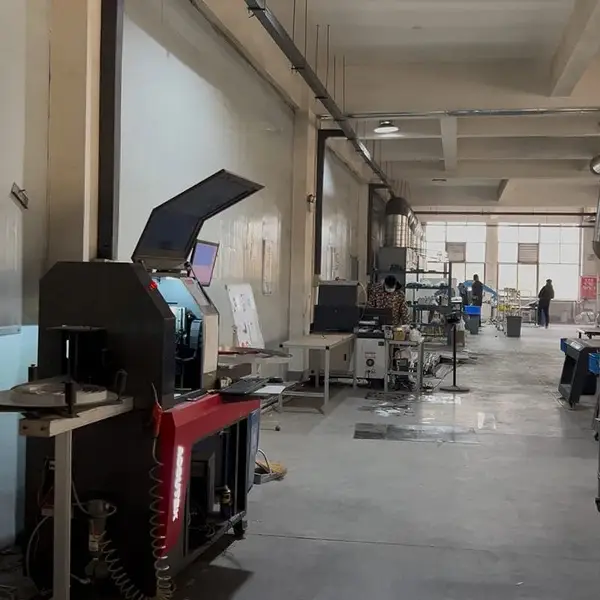
Real photo from our production floor — every sign we ship is made here.
Products mentioned or relevant to this topic — factory-direct, custom built.
From $24/letter · MOQ 1 piece · Flexible lead time · CE & UL certified · ships to 20+ countries
Custom sizes, colors, and finishes. Get a factory price in 24 hours.
Get a Free Quote Copy EmailWhatsApp +86 13865703472 · business@aochuangsign.cn
See pricing, specs, and get a free quote for the sign type you need. Built in our factory, shipped worldwide.