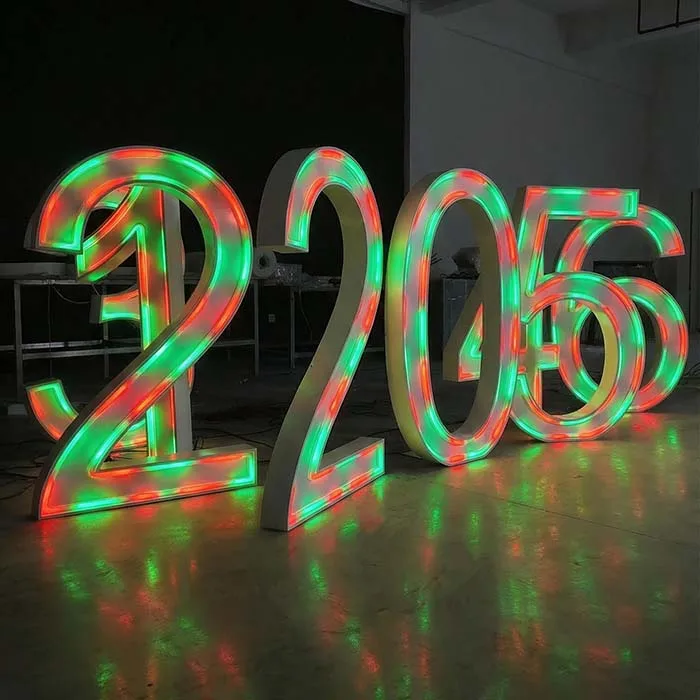
I've spent 16 years in this industry — 15 of them here in the factory in Lu'an, Anhui, watching sign orders come in from all over the world. This guide is what I'd tell you over a beer after a 12-hour shift. No fluff. No "partnering with best-in-class" nonsense.
You're looking for the best sign manufacturer China can offer. Let's be clear: there is no "best" — there's "right for your job" and "pick a guy who disappears after you transfer the money." I'm going to show you how to tell the difference.
Here's what nobody tells you: most "factories" you find on Alibaba are trading companies. They've got a warehouse, three staff, and an Instagram page filled with photos stolen from real manufacturers. I've had our own work used to sell subpar signs to clients who later emailed me for support. That's how it goes.
The ugly truth is that over 60% of the "cheap" sign quotes you'll get are either outdated material specs or bait-and-switch LED grades. You'll order 3mm acrylic and get 2mm. You'll order Samsung LEDs and get a knockoff with the Samsung logo peeled onto a cheap strip. That's the industry.
So, this guide covers things I have literally argued with suppliers and clients about. How to verify a factory. What certifications actually mean. What materials are worth paying for. And the exact order process — from your first email to delivery.
Factory-direct savings on signs are real: 50–65% on product cost compared to US retail installed prices. A US shop will quote $200–700 per letter for front-lit channel letters. Our factory price is $20–80 per letter. Same 304 stainless. Same Samsung LEDs. The difference is that you're paying for the fabrication here, not the salesman's office in Austin with a pool table.
But those savings vanish if you get the wrong factory. If you buy cheap modules with 12–18 month lifespans, you'll be back within the warranty cycle, paying for freight and RMA.
I've seen this go wrong: a shop owner bought 400 letters from a "factory" in Shenzhen. By month 14, half the power supplies were dead. The factory didn't answer. He spent the next year replacing them at his own cost.
Don't trust the website. Don't trust the "10-year factory" claim. Do these three things:
Here's what nobody tells you: many Chinese sign factories can't read your architectural drawings. They're cutting shapes from a screenshot. That's a dealbreaker. A legit factory will ask you for AI, PDF, or step files, and will confirm dimensions in writing before cutting. That's the difference between a sign that fits your face panel and a sign that fits the trash.
Also, ask about their production team. Our facility has 50+ skilled workers and a 3,000m² facility. That matters because you want actual welders, not day laborers who watch TikTok while assembling.
Certifications are the biggest lie in this industry. I've seen paperwork for UL that was printed on a home printer. I've seen CE certificates for products that never touched a lab.
Here's the real breakdown:
CE marking costs 20,000–50,000 RMB and should take 2–8 weeks. It's a self-declaration with a lab test. A legit factory will show you the test report, not just the logo. We have CE, RoHS, and ISO 9001. We'll show you the documents before you order.
UL 48 is the nightmare. It costs $4,000–15,000, takes 4–9 months, and includes quarterly factory audits. We don't hold UL. I'm not going to pretend we do. If you absolutely need UL for a US municipality, we'll work with a US-based UL-licensed assembler — or you pay the cost and we'll engineer the sign to pass. But a factory that claims UL after a quick phone call? Run.
IP ratings are another trap. IP65 means dust-tight and water jets from any direction. It does NOT mean your sign survives a hurricane. For coastal areas, spec IP66 or IP68. We offer IP65 as minimum, IP66 for coastal, IP68 for submersible if you want to pay for the extra seals. But you'll find a lot of factories promise IP68 on a standard aluminum extrusion with no gaskets. I've watched that happen. It leaks.
If you're ordering for a US project, remember NEC Article 600 for electrical. That's the wiring, grounding, and disconnects. Your sign can have perfect LEDs and fail an inspection because the wiring doesn't meet code. Our factory can build to NEC specs, but you need to say so at the start. Also, ADA signage has specific tactile requirements: Grade 2 Braille, 48–60" mounting, non-glare finish. That's not just about aesthetics — it's a legal requirement for hospitals, schools, offices.
Sign material is where most factories squeeze you. Let me give you the exact numbers we use.
Acrylic: we use Mitsubishi or Degussa for high-end orders. Light transmittance is 90–92% and they're UV-resistant — 5–8 years
Factory-direct since 2010. Free quote within 24 hours — no obligation.
Get a Free Quote → Copy EmailMOQ: 1 piece · Flexible lead time · 2-year warranty · Worldwide shipping
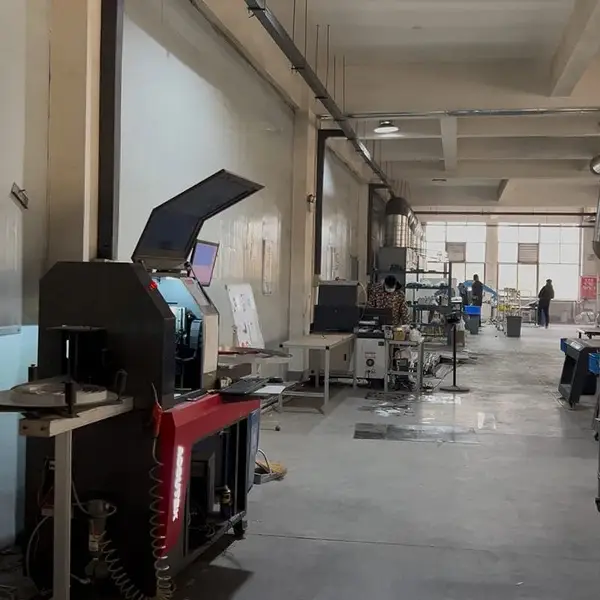
Real photo from our production floor — every sign we ship is made here.
See pricing, specs, and get a free quote for the sign type you need. Built in our factory, shipped worldwide.