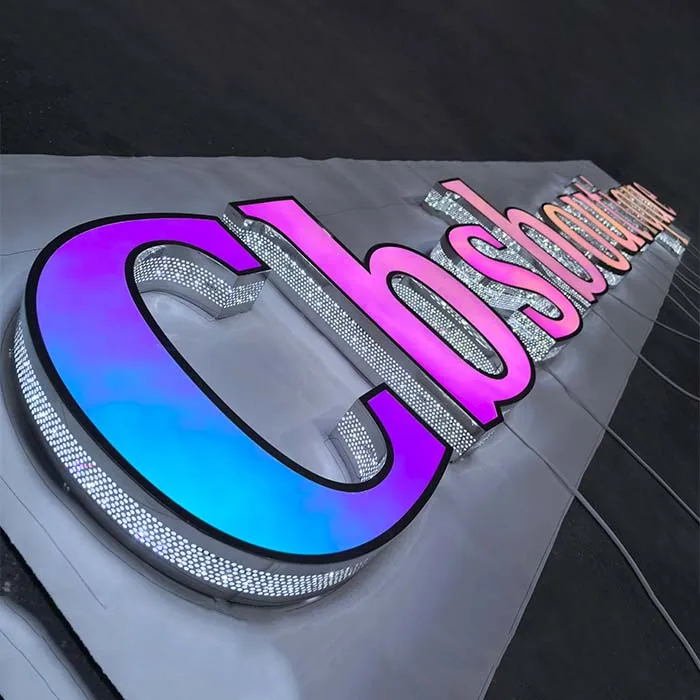
You Think You Know Signs? Let Me Tell You What the Manual Doesn't Cover
By Jack Morrison, Owner of Morrison Sign Installation (20+ years, 30+ states)
I’ve installed commercial signs across 30+ states, from a dry cleaner in Omaha to a chain restaurant in Miami Beach. Twenty years, and I still learn something new every time I open a crate. But here’s the thing: most of what you need to know about business signage isn’t in the glossy brochures or the websites that promise “cutting-edge” solutions. It’s in the grime of a job site, the quiet swear words while you’re fishing wires through a rain-soaked wall, and the numbers that nobody wants to quote.
2026 is shaping up to be a weird year for signage. Materials are getting better, but the cheap stuff is getting cheaper faster. LED modules hit a brightness ceiling five years ago, but now the race is on for lifespan and color accuracy. And tariffs? Don’t get me started on tariffs.
This isn’t a buyer’s guide written by a content marketer who’s never held a stud finder. This is me, an installer, showing you what works, what fails, and what trends are worth your money.
The Materials That Actually Matter (And the Ones That Don't)
Let’s start with the bones of your sign—the letter bodies. You’ll hear salespeople throw around “stainless steel” like it’s all the same. It’s not.
I’ve installed this in coastal Florida with 304 stainless and watched it start pitting within three years. Don’t make the mistake I made: saving 20% on 304 for a job within a mile of saltwater. Marine-grade 316 contains 2-3% molybdenum, and for a 15-year life expectancy, it’s worth the 20-30% cost premium. For a strip mall in Ohio, 304 is fine. For Miami Beach, pay for 316 or you’re replacing letters in three years.
Acrylic faces are another minefield. Mitsubishi or Degussa acrylic will give you 90-92% light transmittance and resist yellowing for 5-8 years. Domestic generic acrylic? You’ll see it go milky in 12-18 months. I’ve seen signs shipped from cheap factories where the acrylic turned amber before the first annual cleaning. Here’s what the permit office won’t tell you: many municipal codes require UV-stable acrylic with a minimum 3-year warranty for outdoor signs. The cheap stuff won’t pass inspection.
For aluminum backs and returns, 0.040" (1.0mm) is standard, but if your sign is over 2.5 meters tall, step up to 0.063" (1.6mm). Otherwise, wind load will flex the face and crack the silicone seal.
LED modules are where the real savings live—or the real lies. SMD 2835 modules at 100-150 lm/W are the workhorse. SMD 5730 gives higher brightness per chip but runs hotter. The key difference? Solder joints. Quickest way to spot bad LED modules: look at the solder joints. Dull gray means they used cheap flux – those modules won’t last 18 months. Shiny silver with a clean meniscus? That’s proper lead-free solder, and you can expect 50,000 hours L70.
Color temperature is your silent partner. 3000-3500K gives a warm, hospitality glow. 4000-5000K is neutral and crisp for retail or corporate. 6000-6500K is pure ice – fine for industrial yards, but it makes a storefront look like a morgue. Don’t let a graphic designer pick based on a Pinterest board. I’ve had to re-lamp entire jobs because someone thought “daylight” meant “higher quality.”
How a Factory Turns a CAD File Into Your Sign (And Where Corners Get Cut)
A good manufacturer follows a 10-step process. Design confirmation in one day. Laser cutting to ±0.1mm. TIG welding for seams. CNC routing the acrylic face. Then LED assembly, sealing with neutral silicone, an 8-12 hour aging test, 100% QC inspection, and export packaging.
Sounds clean, right? Let’s talk about the shortcuts.
I’ve visited factories in Lu’an, China, where industry leaders like Aochuang Sign run 3,000m² with 50+ workers and real certifications—CE, RoHS, ISO 9001. Those factories do the aging test. They 100% inspect. But I’ve also seen shops where “QC” means a guy with a flashlight and a beer.
Here’s what the permit office won’t tell you: many building inspectors will accept a manufacturer’s test report only if it’s from an accredited lab (like UL or ETL). If your sign comes from a factory that can’t produce a proper test report for wind load or electrical safety, you’re going to get a red tag. I’ve had to cut open brand-new signs on site to verify wiring because the paperwork was bogus. Always demand a manufacturer’s data sheet with actual test results—not just a marketing PDF.
2026 Trends That Are Actually Worth Your Money
You asked for trends, so here’s what I’m seeing on job sites and in purchasing orders for the coming year.
**1. Smart Signage Integration** – More clients are asking for signs that can adjust brightness automatically via ambient light sensors or tie into building management systems. It’s not just a gimmick: automated dimming saves 20-30% on electricity and extends LED life. Expect to see more DMX-controlled
channel letters and programmable color sequences for multi-tenant buildings. But beware: cheap controllers from unknown brands fail within a year. Stick with well-known OEMs like Lutron or Acuity.
**2. Sustainable Materials Without the Greenwashing** – Recycled aluminum and bio-based acrylics are hitting the market, but not all are created equal. A 100% post-consumer recycled aluminum backpan costs about 15% more, but can still pass the same wind-load tests if it’s 0.063” gauge. For acrylic, look for “RS” (recycled sheet) from major manufacturers—it maintains 85% light transmittance. Avoid any supplier that can’t provide a recycled content certificate. I’ve seen “eco-friendly” signs that were just standard sheet with a sticker.
**3. Digital-Physical Hybrids** – We’re seeing more storefronts with a static channel-letter base plus a small integrated LED screen for promotions. The trick is heat management: the screen’s power supply and the sign’s LED modules must be on separate circuits and at least 6 inches apart to avoid thermal throttling. I’ve had to retrofit signs because an architect put the screen driver inside a sealed letter—ruined the modules in under a year.
**4. Shorter Lead Times, Tighter Margins** – Factories are offering “quick-ship” programs for standard sizes, but the trade-off is QC. If you order a quick-ship channel letter set, ask for photos of the solder joints before shipping. My go-to factories now send me a cell phone video of the aging test for every sign over $2,000. If they won’t, I find another supplier.
What I’d Change If I Could Start Over (And You Should Too)
After 20 years, here’s the single piece of advice I wish every buyer would follow: **never finalize a sign design without a site visit from someone who understands local climate and code.**
I’ve seen beautiful signs fail because nobody checked the wind-load zone or the specific salt-spray rating required by the coastal municipality. I’ve replaced signs that looked perfect in the showroom but were unreadable at night because the brightness was too low for the street-lighting spill.
Your sign is a long-term asset. The best way to protect that investment is to hire an experienced installer—not just a salesperson—to review the spec before you sign the contract. The manual doesn’t cover that, but I do.
*Jack Morrison has been installing commercial signage since 2004. He owns Morrison Sign Installation, a boutique firm serving clients across the Midwest and Southeast. He holds NALMCO certification and regularly consults with architects on material durability for harsh environments.*