I'll tell you. But you're not gonna like it.
Twenty-seven years on this floor, and I still get calls from sign shops who paid $800 for a front-lit letter from a domestic fabricator. Same 304 stainless, same Samsung LEDs. We ship that letter for $120. The markup isn't magic — it's middlemen, showrooms, and a whole lot of "we've always done it this way."
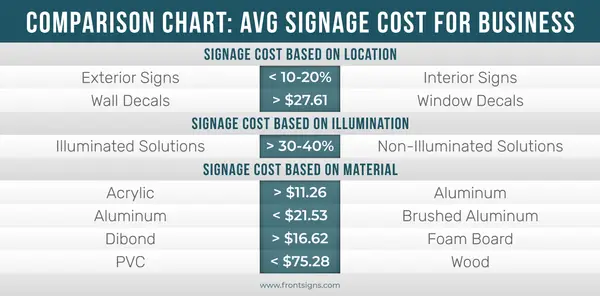
Here's what nobody tells you: the factory price is 50–65% lower than what you see from a US reseller. But that number doesn't mean squat unless you understand what you're buying. So let's break it down — material by material, step by step, tariff by tariff.
I'm not a marketer. I don't use words like "bespoke" or "game-changer." I've got burn scars on my hands from hot acrylic and a permanent coffee stain on my paperwork. You want the real cost? Read on.
The single biggest variable in your sign's price is the material grade. Not the design. Not the size. Not even the LED brand. Material. Full stop.
Acrylic. If you're ordering front-lit channel letters, the acrylic face is where you can save or get burned. Mitsubishi or Degussa UV-resistant acrylic gives you 90–92% light transmittance and lasts 5–8 years without yellowing. Domestic stuff? 1–2 years.
I saw this go wrong: a shop orders 3mm domestic acrylic to save 30% on material cost, installs in Arizona sun. Six months later the letters look like a school bus. Now they're replacing the whole job on their dime. The price difference? About $2–5 per square foot. Not worth it.
Stainless steel. When we quote stainless steel letters, the first question is: 304 or 316? 304 has 18% chromium, 8% nickel — fine for most inland storefronts. Expect 10+ years outside. 316 adds 2–3% molybdenum for marine-grade corrosion resistance. That's the stuff you need on Miami Beach or anywhere within a mile of salt water. The cost premium is 20–30%. I've watched sign owners cheap out on 304 for a coastal job and pay triple in rust repairs inside three years.
Aluminum. Lightest option — one-third the weight of steel. Natural rust-proof, but the finish matters. Anodized lasts longer than powder coat in UV. Outdoor life: 8–12 years. Common gauge: 0.040–0.063 inch (1.0–1.6mm). Thicker means stiffer, but also more $.
LED modules. The ugly truth is most cheap LEDs are dead in 12–18 months. Quality modules — Samsung, Osram, or Blue Sky (蓝景) — have real L70 lifespan of 50,000+ hours. That's 5+ years running 24/7. I pay $0.30–0.60 per module for good ones. Cheap Chinese modules? $0.08. They fail fast, and replacing them costs ten times the material price in labor and truck rolls.
A sign isn't just a piece of metal with lights. It's a precision assembly that takes 7–15 days, not counting shipping. Here's the real timeline and what each step costs:
If you're selling signs in the US, you need UL or ETL for electrical safety. Period. NEC Article 600 requires listed components. And here's what nobody tells you: UL certification costs $4,000–15,000 per model and takes 4–9 months. ETL is 10–30% cheaper but still a chunk. Most factories outside North America don't have UL. They have CE.
The ugly truth is CE marking can be done in-house for a self-declaration — costs 20,000–50,000 RMB ($2,800–7,000) with a third-party test. Ask to see the certificate with today's date. I've watched factories pull a 2015 PDF and call it current. They sweat. You should too.
IP ratings? IP65 means dust-tight and water jets from any direction. It does NOT mean your sign survives a Florida hurricane. That's IP66 (powerful jets) or IP68 (submersible). If you're coastal, spec IP66. It adds about $5–10 per letter in gaskets and sealant.
Here's the part everyone forgets until they get the invoice. Factory price does not include getting it to your door.
Add it up: a $120 factory letter with $40 shipping and $36 tariff comes to $196. Still way under $800.
Q: Why does your quote have a $50 setup fee? My other supplier didn't charge one.
That other supplier buried it in the per-letter price. I put it on the line so you know what you're paying for. Design proof, file correction, nesting optimization — that's real work. If you can send a clean .ai or .dxf, I'll waive the fee. Otherwise, it's $50.
Q: Can I use domestic acrylic to save money?
Sure, if you want the letters to look like iced tea in two years. Domestic acrylic (not UV-stabilized) yellows fast. I've pulled them off a building after 18 months. You'll pay more to replace them than you saved. Use Mitsubishi or Degussa. It's $2–5 per sq ft more. Your call.
Q: What's the cheapest type of sign?
Non-lit aluminum letters. No LEDs, no power supply, no wiring. Acrylic LED letters are actually cheaper than stainless steel because acrylic cuts fast and bends easily. For a basic storefront, expect $15–40 per letter from the factory. But you get what you pay for — no glow at night.
Q: How long will my sign really last?
With quality materials — 304 stainless, UV acrylic, Samsung LEDs — you'll get
Products mentioned or relevant to this topic — factory-direct, custom built.
Factory-direct since 2010. Free quote within 24 hours — no obligation.
Get a Free Quote →MOQ: 1 piece · 7-15 days · 2-year warranty · Worldwide shipping