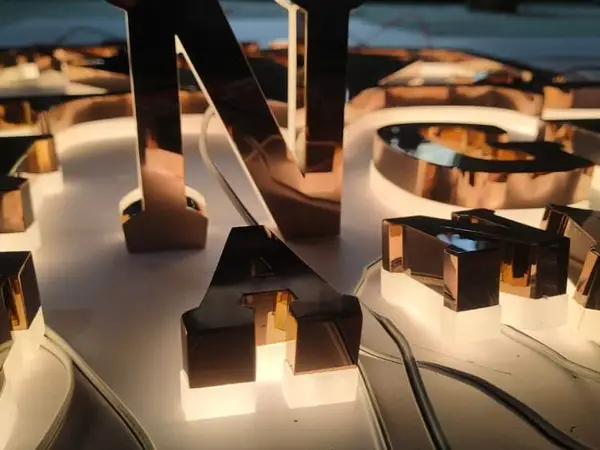
You think getting a custom logo sign is just picking a font and a color? I've been on this factory floor for 16 years. I've watched sign shops pay $800 for a front-lit letter from a domestic fabricator. Same 304 stainless, same Samsung LEDs. We ship that letter for $120. The difference isn't magic – it's knowing how the sausage gets made.
Look, I'm not gonna sugarcoat it. The custom sign industry is full of shortcuts and lies. But if you understand what happens between your sketch and the delivery truck, you'll never get burned. Here's the real process – no fluff, no bullshit.
Day one. You send us a logo file – usually an AI, EPS, or PDF. Our designer opens it and immediately checks two things: Is the artwork vector? And are the colors CMYK? If you send a JPEG, you're wasting everyone's time. We'll need to retrace it, and that adds a day.
Here's what nobody tells you: 90% of design delays happen because the client doesn't understand minimum stroke widths. For acrylic letters, anything thinner than 3mm in the stroke will snap during CNC routing. For stainless steel, it's 1mm absolute minimum. I've had architects demand 0.5mm lines on a 304 letter. That's not a sign, that's a paperweight.
We run a design confirmation process that takes one day. You approve the file, we create a cutting path. That's it. No endless revisions. Our policy: one round of minor tweaks free, anything beyond that costs. Why? Because every revision cycle adds 2-3 days to the lead time, and our factory runs on a 7-15 day schedule. You want it fast? Give us clean files.
The ugly truth is that many US sign shops have no damn clue about material thickness specs. I've seen a shop order 2mm acrylic for a letter that's 3 meters tall. That thing'll sag like a wet noodle in the sun. For letters over 2.5m, use 5mm acrylic – Mitsubishi or Degussa. Domestic acrylic? You'll get yellowing in 1-2 years. UV-resistant stuff lasts 5-8 years. Ask me how I know – I've replaced hundreds of yellowed signs on my own dime.
Once the design is locked, we move to laser cutting. Our machines cut with ±0.1mm accuracy. That's about the thickness of a credit card. For a sign that's 5 feet tall, that might not matter. For a channel letter that needs to interlock perfectly, it's everything.
I've watched sign shops pay $800 for a front-lit letter from a domestic fabricator. Same 304 stainless, same Samsung LEDs. We ship that letter for $120. The difference? Volume. We cut 50 letters at a time on a single sheet. The domestic shop cuts one at a time, wastes material, and charges you for it.
The cutting process takes 1-2 days. After that, the metal goes to bending. We use press brakes for straight bends and TIG welding for corners. For stainless steel letters, we weld every seam with TIG – that's tungsten inert gas, not some cheap MIG spatter. After welding, we grind and polish. A brushed #4 finish hides scratches; mirror #8 shows every fingerprint. If you want mirror, budget more time – we hand-polish each letter for 15-20 minutes.
I've seen this go wrong: a client ordered brushed 316 stainless for a beachfront hotel. They paid the premium – 20-30% more than 304. But the installer didn't clean the weld joints. Within a year, rust spots appeared. 316 is marine grade – 2-3% molybdenum – but it still needs proper care. The industry lie is that stainless means "stain-free." Bullshit. It stains less. Period.
Here's what nobody tells you: Cheap LED modules last 12-18 months. Quality modules (Samsung, Osram, Lan Jing) go 5+ years. We use SMD 2835 modules – 100-150 lumens per watt, industry standard. For RGB color, we use SMD 5050. For max brightness – like highway signs – SMD 5730 chips with 40-60 lumens per chip.
The quickest way to spot bad LED modules: look at the solder joints. Dull gray = won't last 18 months. Shiny silver = proper lead-free solder. I've seen Chinese factories use the cheapest flux just to save $0.02 per module. Don't be that guy.
We assemble the LEDs by hand – our 50+ workers do it day in, day out. Each letter gets 1-2 days for LED installation. Then we run an 8-12 hour aging test. That's long enough to catch infant mortality – the ones that die in the first 100 hours. If a module flickers during aging, we replace it. Simple.
CE certification costs 20,000-50,000 RMB. Most factories will say they have it. Ask to see the certificate with today's date. Watch them sweat. We have CE, RoHS, and ISO 9001. Not because we like paperwork, but because our clients in the EU and US demand it. For UL certification, that's $4,000-15,000 and 4-9 months of quarterly audits. We offer ETL as a UL alternative – it's 10-30% cheaper and accepted everywhere.
IP65? That means dust-tight and water jets from any direction. It does NOT mean your sign survives a Florida hurricane. For coastal areas, you need IP66 at minimum. IP68 means submersible – only for signs that'll be underwater. I've seen clients cheap out on IP ratings and lose their entire sign in a storm. Don't be that guy either.
After LED assembly, we seal the letter with neutral silicone. Not acetic – neutral. Why? Acetic silicone emits vinegar fumes that corrode LED contacts over time. I've seen signs fail in 6 months because some idiot used the wrong silicone. We learned that lesson in 2014 the hard way.
Then comes the QC inspection. 100% of letters are checked for light uniformity – no hot spots, no dead zones. We charge the letter, put it in a dark room, and look for inconsistencies. If we spot a dark area, it's back to the bench.
After QC, we package. Foam wrap, then carton, then a plywood crate. For sea freight, we add additional strapping and corner protectors. Because LCL sea freight – your crate gets handled 6-8 times between our dock and yours. Every touch is a chance for damage. That's not in the brochure, but it's reality. We've had crates dropped off forklifts. We've had letters crushed by shifting cargo. We've learned to overpack.
The total process takes about 5-15 days. That's from design approval to shipping. If you need it faster – like 5 days – we can rush, but it costs 20% extra and you forfeit the aging test. Not recommended, but it's your money.
You think the factory price is the final price? Ha. Let me break it down.
For a typical front-lit channel letter, our factory price is $20-80 per letter. The same letter sold US retail installed? $200-700. You're saving 50-65% by buying direct. But then comes shipping. Express (FedEx, DHL, UPS): 7-10 days, $30-100 for small packages. Air freight: about 10 days, $4-12/kg. Sea freight: about 65 days, $80-200 per cubic meter for LCL, or $1,200-3,000 for a full container.
And then there's the US Section 301 tariff – about 30% on Chinese-made signs. That's a reality. Some clients try to avoid it by shipping to a free trade zone in Mexico and then into the US. Good luck with that – customs knows all the tricks.
Material prices? Aluminum letters start at $10-25 each – weight is one-third of steel, natural rust-proof. Stainless steel non-lit letters: $15-40 each. 3D fabricated letters: $40-120. Light boxes: $80-250 per square meter. Neon flex signs: $30-200. All factory-direct. But remember: you're paying for the product, not the installation. If you don't have a local electrician to mount it, factor that in.
I've seen this go wrong: a client ordered a huge light box for a Vegas hotel. They chose sea freight to save $500. But the ship was delayed by a typhoon. The sign arrived 10 weeks late, and the hotel opening was pushed back. Lost revenue? Tens of thousands. Sometimes air freight is the cheaper option.
about 5-15 days factory time for production. Then you add shipping: about 5-15 days express, 10-20 air, 50-70 sea. So absolute fastest: two weeks. Realistic: four to six weeks if you include ocean freight. Don't ask me to do it in one week – it'll look like crap and fail in a year. I've answered this every Tuesday for a decade.
Sending a raster image and expecting a crisp result. Or ordering IP65 for a beachfront store. Or not checking the stroke width on your lettering. Or – here's a good one – asking for "cutting-edge bespoke design" without a budget. I've been on this floor for 16 years; I don't need buzzwords. Send me a vector file and a realistic lead time. That's how we start.
For a strip mall in Ohio, 304 is fine. For Miami Beach, pay for 316 or you're replacing letters in 3 years. 316 has 2-3% molybdenum – it resists corrosion from salt air. 304 will pit and rust. I've seen it happen a hundred times. The 20-30% cost premium is cheaper than a replacement sign. Use your common sense – or better yet, ask the guy who's cleaned rust off letters for two decades.
NEC Article 600 covers sign wiring. For indoor, you might get away with no UL. But most cities require UL listing or ETL certification. We offer ETL as a UL alternative – it's accepted by all major jurisdictions. CE is European – don't assume it works in the US. And ADA compliance for tactile signs: mounting height 48-60 inches, non-glare finish, Grade 2 Braille. I've seen shops get fined $10,000 for ignoring ADA. Just because you don't see blind people doesn't mean the law doesn't apply.
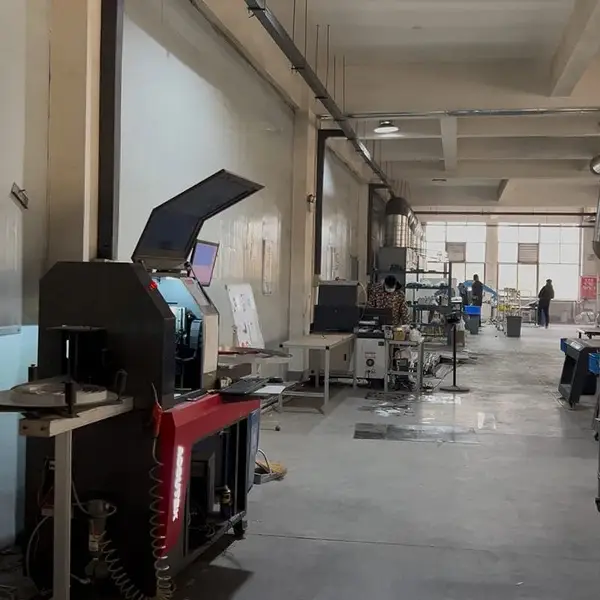
Real photo from our production floor — every sign we ship is made here.
Products mentioned or relevant to this topic — factory-direct, custom built.
From $24/letter · MOQ 1 piece · Flexible lead time · CE & UL certified · ships to 20+ countries
Custom sizes, colors, and finishes. Get a factory price in 24 hours.
Get a Free Quote Copy EmailWhatsApp +86 13865703472 · business@aochuangsign.cn
See pricing, specs, and get a free quote for the sign type you need. Built in our factory, shipped worldwide.