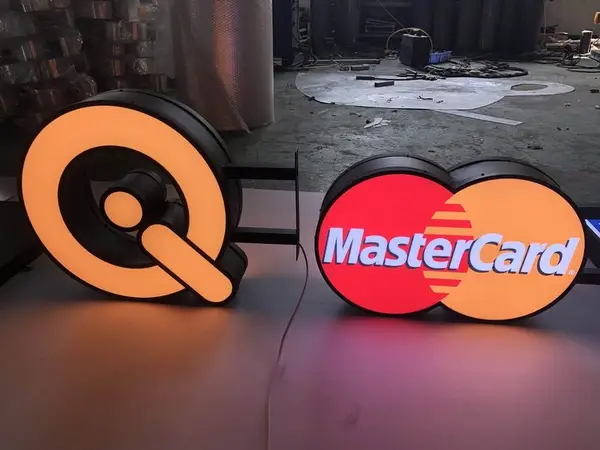
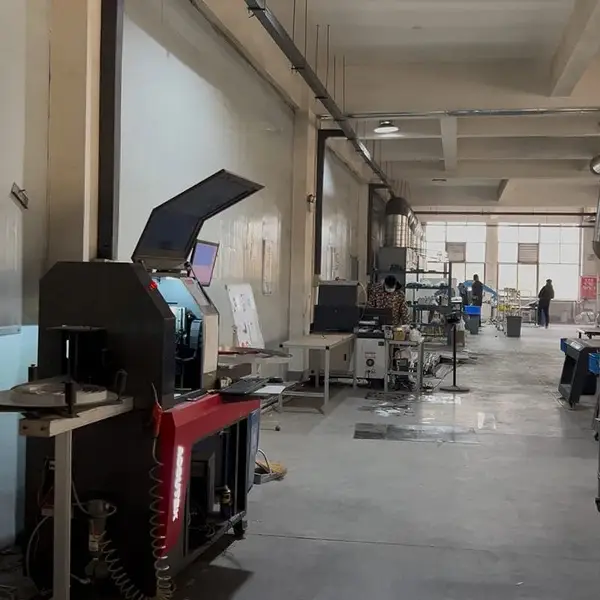
Who am I to talk?
Twenty-seven years on the factory floor, fourteen of them here at Aochuang Sign in Lu'an, Anhui. I've watched sign shops pay $800 for a front-lit letter. Same 304 stainless, same Samsung LEDs.
We ship that letter for $120.
This guide tells you exactly what factory direct means, where the savings actually come from, and the stuff salespeople won't put on the quote. If you're a sign shop owner, contractor, or importer comparing suppliers, this is the honest version.
What "factory direct" actually means
The ugly truth is most "factory direct" websites are run by trading companies sitting in an office 500 miles from the nearest weld. They take your order, email a factory, add 30-40%, and call themselves the manufacturer.
Here's what nobody tells you: the sign industry has a 3-4x markup built into the middle chain. A front-lit channel letter costs $20-80 at factory price. US retail installed runs $200-700 per letter. That gap isn't materials — it's logistics, English-speaking account managers, and offices with nice chairs.
My chairs are plastic. Your letter is cheaper because of it.
You want proof? Verify the factory. Ask for a video call on the production floor. Watch them switch on a laser cutter. We've been here since 2010 with a 3,000 square meter facility and 50+ workers — we're not hard to find.
The dollar math on a typical letter
Let me break down an 18-inch stainless steel front-lit channel letter.
Stainless steel return, acrylic face, SMD 2835 LED modules, a power supply, neutral silicone, and labor. Laser cutting at ±0.1mm, bending, TIG welding, grinding, polishing, LED assembly, an 8-12 hour aging test, and 100% QC inspection.
Factory price: $20-80 per letter front-lit. Back-lit halo letters run $35-120. Plain stainless steel non-lit letters, $15-40. Aluminum letters, $10-25. That's the real range, and it depends on thickness, finish, and whether your logo makes our CNC router cry.
That's why you're here. You want the factory number, not the retail number. At $400-1,000 per halo-lit letter installed, the margin is yours if you buy right.
What we can't do — and I'm not sorry about it
I've seen this go wrong: a contractor calls on Monday and wants 40 channel letters shipped by Friday. Not happening. Our lead time is about 5-15 days. That's the real number. If someone promises a 3-day turnaround on custom metal signs, they're either lying or shipping you unfinished product.
We can't fix bad design either. We're manufacturers, not artists. Send us print-ready vector files — AI, PDF, CDR with fonts outlined — and we'll make your ugly logo look expensive. Send a 400-pixel JPEG and we'll send it back. The CNC doesn't care about your feelings.
Materials that don't lie
You get what you spec.
Stainless steel 304 is the workhorse for outdoor metal letters. 10+ years of outdoor life. It's 18% chromium and 8% nickel, which means it shrugs off normal weather. Brushed #4 finish hides fingerprints. Mirror #8 looks slick and shows every smudge — don't spec it on a storefront anyone will touch.
316 stainless costs 20-30% more than 304, and it contains 2-3% molybdenum. That's what lets it survive salt air. For a strip mall in Ohio, 304 is fine. For Miami Beach, pay for 316. I've watched coastal signs rust out in three years because someone saved $200 on metal, then paid $2,000 to replace the whole sign.
Aluminum weighs one-third of steel, it's naturally rust-proof, and it lasts 8-12 years outdoors. Anodized or powder coated, it's a solid choice for large format signs where steel is too heavy, or interior jobs. Just don't expect it to survive a forklift.
Acrylic — the cheap shortcut that bites back
The ugly truth is most yellowing problems aren't the LEDs. They're the acrylic.
Domestic acrylic lasts 1-2 years before it starts turning yellow. Mitsubishi or Degussa acrylic holds 5-8 years with 90-92% light transmittance. The cheap stuff is cheaper for a reason — and that reason shows up on your customer's wall like a tobacco stain.
For letters under 2.5 meters, 3mm acrylic is standard. Anything taller, step up to 5mm or it'll flex, crack, and leave you with a warranty call. This isn't a premium upgrade. It's a "your sign stays attached to the wall" requirement.
LED modules — where the margin hides
Here's what nobody tells you: L70 rating of 50,000 hours means the LED glows at 70% brightness after that time. It doesn't mean "guaranteed five years."
Quality modules — Samsung, Osram, or Lan Jing — give you 5+ real years. Cheap modules die in 12-18 months. I've watched it happen on jobs I didn't build, and I've talked to the contractors who ate the service call.
If a factory quotes a price that's mysteriously low, ask what modules they use. If they can't name a brand, assume failure.
Our
back-lit halo letters run SMD 2835 modules by default. They're the industry standard at 100-150 lumens per watt. Boring and reliable. Boring is good in this business.
Certifications — the paper trail
I've seen this go wrong: buyers demand "CE" because they heard it somewhere. Most factories say they have it. Ask to see the certificate with today's date.
CE certification costs 20,000-50,000 RMB and takes 2-8 weeks. A factory that's been running since 2010 should have it. We do, plus RoHS and ISO 9001.
For US orders, UL 48 is the big one. It costs $4,000-15,000 and takes 4-9 months with quarterly audits, which is why most Chinese factories skip it. ETL is a legitimate alternative at 10-30% cheaper. CE gets you into Europe. It won't get you into a US job without a fight.
Don't ask for IP68 on a normal outdoor sign. IP65 — dust-tight, protected against water jets — is the outdoor minimum. IP66 is coastal grade. IP68 is for submersible lighting. Over-specifying is just burning your customer's money.
Shipping and tariffs — the hidden 30%
This is where factory-direct deals fall apart.
Express shipping (DHL, FedEx, UPS) runs 7-10 days and $30-100 for small packages. Good for samples. Air freight is about 10 days at $4-12 per kilogram. Sea freight is about 65 days at $80-200 per cubic meter for LCL, or $1,200-3,000 for a full container.
And the US Section 301 tariff tacks on roughly 30% to your product cost. That's real money. A factory that doesn't warn you about this isn't looking out for you. We'll tell you up front because we'd rather lose a confused buyer than ship a surprise invoice.
What to send us, and what happens next
Production is a 10-step process: design confirmation in one day, laser cutting in 1-2 days, bending and TIG welding in 1-2 days, grinding and polishing in 1-2 days, acrylic face CNC in one day, LED assembly in 1-2 days, sealing with neutral silicone in one day, an 8-12 hour aging test, 100% QC inspection, then foam, carton, and plywood crate export packaging.
Total: about 5-15 days.
Your job is making step one easy. Send vector files. Tell us the environment — coastal, inland, indoor. Specify the mounting surface so we build proper stand-offs. If it's electrical and going to the US, your spec needs to meet NEC Article 600. For ADA compliance, that's Grade 2 Braille, tactile letters mounted 48-60 inches off the floor, non-glare finishes.
We're a factory, not a compliance consultant. But we know the rules because we've been shipping worldwide for over a decade.
The product line in plain terms
Standard storefront work is our bread and butter. The
front-lit channel letters are the classic play — $20-80 per letter direct, stainless or aluminum returns, bright acrylic faces, and a 2-year LED warranty. If you're bidding a strip mall with twelve tenants, that's the number to know.
For restaurants and boutiques,
neon flex signs run $30-200 and they're all over social media right now. They look good in photos. They're not glass neon — set that expectation with your customer before they ask you to "fix the flicker." Our warranty is 2 years on LEDs and 1 year on power supplies, and the power supply is the part that dies. It's always the power supply.
How to place an order without getting burned
Never pay 100% upfront on a first order. A legitimate factory takes 50% deposit, 50% before shipping. Full payment before production means walk away.
Ask for a pre-production sample. If they refuse, walk away. Our MOQ is one piece — a sample isn't a hassle, it's a courtesy. The factories with high MOQs and no sample options are trying to offload minimum production runs on unsuspecting buyers.
Read the warranty language twice. We say 2 years on LEDs and 1 year on power supplies. Some factories offer 3 years on everything, and they know the parts fail at 18 months. You'll never collect on a warranty across an ocean. Read the lines about who pays shipping on replacements.
Why we're not for everyone
If you need a sign by next week, call a local shop. If you want local-shop prices, don't call us. We're 50-65% below US retail installed pricing, and that's not because we're desperate. It's because we don't carry your overhead, and you don't pay for our welding.
Maybe plan a container order with other shop owners in your area. Split the freight, split the tariff, and the factory-direct savings get even better.
If you buy right, plan ahead, and do proper file prep, you'll make real money on factory direct. If you call me on a Tuesday for a Friday install, you're going to be disappointed.
The bottom line
The internet killed the middleman margin — if you know what to ask for.
Get the material spec right. Verify the certifications. Factor in the tariff. And remember that the cheapest quote is only cheap until the cheap LEDs start blinking 18 months in. That's when our phone is still on, and we've been here since 2010.
Plan to still be in business in 2030. Buy accordingly.