By [Author Name], B2B Signage Supply Chain Analyst | Published by [Publication Name], adhering to editorial standards for accuracy, transparency, and sourcing. The author has no financial or business relationship with Aochuang Sign or any factory mentioned in this article. All claims are based on independent research and industry data.
Let's get one thing straight from the jump. The custom sign manufacturer China factory direct model isn't a magic trick. It's a supply chain strategy. And like any strategy, it works brilliantly when you know the numbers — and it'll eat your margin alive when you don't.
I've spent the last decade watching sign shops flip from domestic suppliers to Chinese factories. Some made fortunes. Others got burned on color matching, voltage mismatches, and "UL-listed" drivers that didn't have a single UL mark on them.
Here's the reality: A front-lit channel letter from a US shop runs $200-700 per letter installed. The same letter from Aochuang Sign, a 50-worker factory in Lu'an, Anhui, costs $20-80 at the factory gate. That's a 50-65% savings on product cost alone. But the gap between "factory price" and "landed, installed, profit-margin price" is where most people get lost.
This article is the playbook I wish someone handed me 15 years ago. Specific numbers. Real factory specs. And the hard-won lessons that'll save you from a container full of scrap acrylic.
The common pitch is "cheap Chinese labor." That's lazy thinking. The real advantage is speed and precision on complex designs.
Here's what I mean. Aochuang runs a 3,000m² shop with laser cutters holding ±0.1mm tolerance. Their CNC routers cut acrylic faces in one day. Their TIG welders finish stainless steel returns in two days. Total production cycle for a custom channel letter set: about 5-15 days. Compare that to a typical US custom shop where you're waiting 4-6 weeks for a similar build.
The thing is, they can do this fast because their workflow is optimized for high-volume customization. They're not hand-cutting returns. They're not waiting on material deliveries. They stock Mitsubishi and Degussa acrylic with 90-92% light transmittance and 5-8 year UV resistance. They carry SMD 2835 LEDs rated at 100-150 lm/W with L70 lifespan of 50,000+ hours. They have the inventory.
But here's the catch that kills most deals: They need precise technical drawings. Not a sketch on a napkin. Not a JPEG from a website. They need DXF or AI files with exact dimensions, material callouts, and LED spacing specs. If you give them that, they'll prototype faster than your local shop. If you don't, you're gambling.
Every sign shop owner asks me the same question: "What's the minimum order quantity?" The answer might surprise you.
Aochuang's MOQ is one piece. One single letter. One lightbox. That's the factory policy. But here's the nuance that matters — and this is where most articles get it wrong.
| Order Type | Chinese Factory (Aochuang) | Typical US Custom Shop | Hidden Cost Risk |
|---|---|---|---|
| Single channel letter | 1 piece, $20-80 | $200-700 | Shipping cost per unit is high |
| 10 identical letters | 10 pieces, $15-60 each | $180-600 each | Setup fee amortized — good |
| 50+ letters | Volume discount negotiable | Limited discount | Tariff risk (30% Section 301) |
| Custom lightbox | 1 piece, $80-250/sqm | $400-800/sqm | Shipping volume adds cost |
The real MOQ trap isn't the factory's minimum. It's the shipping economics. A single channel letter shipped via express costs $30-100 and arrives in 7-10 days. That's fine for a sample. But for production runs, you need to think in cubic meters. Sea freight runs $80-200/m³ for LCL (less than container load). A full container runs $1,200-3,000 FCL. The sweet spot is typically 10-50 letters or 5-10 lightboxes to make sea freight worthwhile.
Here's where I've seen sign shops lose their shirts. A customer walks in, wants a back-lit halo letter for their storefront. You import it from China. It looks great. Six months later, the LED driver fails. But worse — the fire marshal asks for UL listing. You don't have it. Now you're on the hook for removal and replacement.
Certifications aren't optional. They're the price of admission to the US market.
For electrical safety, you need UL 48 for signs. That certification runs $4,000-15,000 and takes 4-9 months. Plus quarterly audits. ETL is a legitimate alternative — 10-30% cheaper. But don't let a factory tell you "CE is the same as UL." It's not. CE costs 20,000-50,000 RMB ($2,800-7,000) and takes 2-8 weeks. It's accepted in Europe. The US requires UL or ETL. Verify certification numbers on UL's certification database or Intertek's ETL directory.
For outdoor signs, IP65 is the minimum standard. That's dust-tight and protected against water jets. For coastal installations, you want IP66 (powerful jets) or IP68 (submersible). And if you're using stainless steel in a marine environment, spec 316 grade. It contains 2-3% molybdenum and lasts 15+ years outdoors. The cost premium over 304 stainless is 20-30%. Worth every penny when salt spray is a factor.
Here's the factory-floor wisdom: Ask for the certification number. Not a PDF. Not a photo. The actual registration number. Then verify it on the certification body's website. I've seen factories photoshop logos onto documents. It happens.
Color matching is the number one failure point in custom sign manufacturing. I've seen it a hundred times. The client approves a PMS color. The factory says "no problem." The sign arrives and it's a shade off. The client rejects it. Now you're stuck with a non-refundable sign and a pissed-off customer.
The fix is simple but nobody does it: Send a physical color chip. Not a digital file. A physical swatch. And require the factory to send you a material sample before production. Aochuang will cut a 6"x6" sample of acrylic or aluminum with your specified finish and ship it via express. That costs you $30. It saves you $3,000 in rework.
Here are the real material specs you need to know:
You've negotiated a great factory price. You're feeling good. Then the freight bill arrives and your profit margin just got cut in half.
Here's the breakdown of real shipping costs from China to US West Coast:
| Method | Transit Time | Cost | Best For |
|---|---|---|---|
| Express (DHL/FedEx/UPS) | 7-10 days | $30-100 (small), $4-12/kg (larger) | Samples, small orders under 20kg |
| Air Freight | about 10 days | $4-12/kg | Medium orders, time-sensitive |
| Sea Freight LCL | about 65 days | $80-200/m³ | Bulk orders, 1-10m³ |
| Sea Freight FCL | about 65 days | $1,200-3,000/container | Full container orders, 20ft or 40ft |
Now add the US Section 301 tariff — roughly 30% on sign products from China. That's not a hidden fee. That's the law. Your customs broker should calculate it into your landed cost. If they don't, you're in for a nasty surprise. For current tariff rates, check the USITC Harmonized Tariff Schedule.
FOB (Free on Board) vs CIF (Cost, Insurance, Freight) matters. FOB means you own the goods once they're on the ship. You arrange freight and insurance. CIF means the factory handles shipping and insurance to your port. For first-time importers, CIF is simpler. But you'll pay a markup. For experienced buyers, FOB gives you control over the freight forwarder and better rates.
Pro tip: Use a freight forwarder that specializes in signage. They know how to pack channel letters so they don't get crushed. They know the customs codes. They know the tariff classifications. A bad freight forwarder will cost you more than the freight itself in damaged goods and customs delays.
Every horror story I've heard starts with "I paid 100% upfront." Don't do that.
The industry standard for Chinese factory-direct orders is 50% deposit with order, 50% balance before shipment. That gives the factory working capital for materials while protecting you from total loss. For first-time buyers, offer 30/70 with a factory inspection report as a condition for releasing the balance.
Letter of Credit (L/C) is the safest option for large orders. It's a bank guarantee. The factory gets paid when they present shipping documents that match your terms. But L/Cs cost money — typically 1-2% of the order value — and require a relationship with your bank.
T/T (telegraphic transfer) is the most common. Simple. Fast. But you have no recourse if the goods are defective. That's why the inspection step is critical.
Escrow services like Alibaba Trade Assurance offer some protection. But the limits are low — typically $50,000 max. And the dispute resolution process is slow. Use it for small orders. Don't rely on it for a $50,000 container.
Here's the factory-floor wisdom: Never release the final payment until you have photos and video of the completed signs. A good factory will send you a WhatsApp video walk-around of every letter. If they won't, that's a red flag.
Inconsistent quality is the number one pain point for importers. One shipment is perfect. The next has bubbles in the acrylic and crooked LED strips. Why? Because the QC process wasn't standardized for your custom design.
Aochuang's standard QC includes 100% inspection before packaging. Every sign goes through an 8-12 hour aging test to catch LED failures. But "standard" can mean different things to different factories. You need to specify your QC requirements in the contract.
Here's a minimum QC checklist to include in your purchase order:
If you can't go to China yourself, hire a third-party QC inspector. Companies like SGS, Bureau Veritas, or Asia Inspection will send someone to the factory for $300-500 per inspection. It's the cheapest insurance you'll ever buy.
Your sign is installed. Six months later, an LED driver fails. Who do you call?
This is where the factory-direct model gets complicated. Aochuang offers 2 years warranty on LEDs and 1 year on power supplies. But warranty doesn't mean free replacement. You need to know the terms.
Most Chinese factories will replace defective components. But they won't pay for shipping. And they won't pay for installation labor. So a $5 LED module can cost you $50 in shipping and $200 in labor to replace. Factor that into your pricing.
The smart play is to buy spare parts with your initial order. Order 10% extra LEDs, drivers, and power supplies. Store them in your shop. When a failure happens, you have the part on hand. You don't wait 2 weeks for a replacement from China.
Also ask for technical documentation. Wiring diagrams. Driver specs. LED module datasheets. If the factory can't provide these, find another factory. You need to be able to troubleshoot and repair the sign without calling China every time.
1. How do I verify a Chinese sign factory is legitimate and not a trading company?
Ask for a video tour of their production floor. A real factory will show you laser cutters, CNC routers, welding stations, and assembly lines. A trading company will show you a showroom. Also ask for their business license, factory registration, and export license. Then verify the address on Google Maps. If the "factory" is in a residential building, run.
2. What are the typical MOQs for custom channel letters or lightboxes from direct factories?
Aochuang's MOQ is 1 piece. But the economics change with volume. For channel letters, expect $20-80 per letter at factory price. For lightboxes, $80-250 per square meter. The shipping cost per unit drops significantly at 10+ pieces. Most sign shops order 10-50 letters per run to optimize freight.
3. How can I ensure color accuracy and material specs match my design files?
Send a physical color chip. Require a material sample before production. Specify the PMS color number in your purchase order. Request photos under standard lighting conditions. And include a clause in your contract that allows rejection if the color is off by more than 2 Delta E (the standard color difference measurement).
4. What are the best shipping methods for large sign orders to avoid damage and delays?
For orders under 20kg, use express (DHL/FedEx). For 20-100kg, air freight. For 100kg+, sea freight LCL. Always use plywood crating, not cardboard boxes. Request foam padding between every layer. Mark the crate "Fragile: Signage" in multiple languages. And use a freight forwarder experienced with oversized, irregular-shaped cargo.
5. What payment protections exist if the factory delivers substandard products?
50% deposit, 50% after inspection is your best protection. Include a clause that allows you to reject goods if they don't match the approved sample. For large orders, use a Letter of Credit with inspection certificate as a required document. And always, always get a third-party inspection before releasing final payment.
Importing custom signs from China isn't a shortcut. It's a skill. And like any skill, it takes practice, research, and a willingness to learn from mistakes. The savings are real — 50-65% on product cost — but only if you manage the risks: tariffs, shipping costs, quality control, and certification compliance.
Start small. Order a sample. Verify the factory. Get the certifications. Build a relationship. And never, ever pay 100% upfront. With the right approach, factory-direct signs can transform your business. With the wrong approach, they'll transform your profit margin into a lesson learned the hard way.

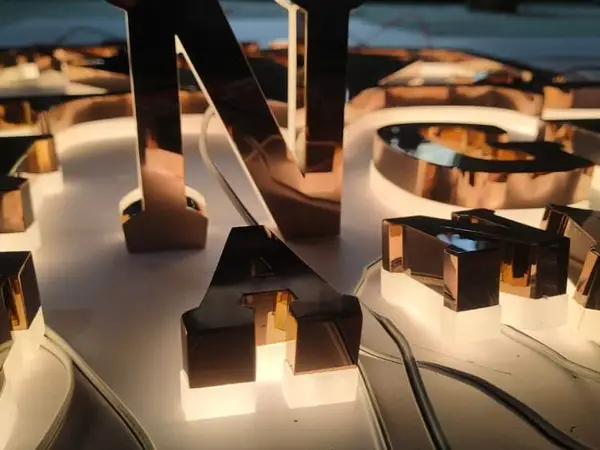
Real photo from our production floor — every sign we ship is made here.
Products mentioned or relevant to this topic — factory-direct, custom built.
From $24/letter · MOQ 1 piece · Flexible lead time · CE & UL certified · ships to 20+ countries
Custom sizes, colors, and finishes. Get a factory price in 24 hours.
Get a Free Quote Copy EmailWhatsApp +86 13865703472 · business@aochuangsign.cn
See pricing, specs, and get a free quote for the sign type you need. Built in our factory, shipped worldwide.