11:47pm. I just spent 14 hours on the factory floor because a shipment of no-name LED modules failed the 8-hour aging test. Failed again.
I've been doing this since 2010 at Aochuang Sign in Lu'an, Anhui. 3,000 square meters of production. 50-plus workers.
I've burned my hands on hot acrylic, argued with suppliers about LED quality, and watched buyers make the same five mistakes every single year.
You're here because you typed "digital signage manufacturer china" into Google and got 14 million results. Every single one claims to have a factory. Most of them are trading companies with a rented warehouse and a shiny website.
Digital signage, channel letters, lightboxes—same factory floor, same LED modules, same vetting rules. No exceptions.
Most "manufacturers" you'll find online are trading companies wearing a hard hat. They don't own a production line. They buy from a real factory in Shenzhen or Guangzhou, slap their logo on it, and mark it up 30%.
I've seen this go wrong: a buyer flew to Shenzhen, got taken to a showroom, saw some assembled displays, signed a PO. Six months later the power supplies are dying and the "factory" doesn't answer WeChat.
Ask for a live video walkthrough of the production floor. Not a PDF. Not a brochure. A real-time video with today's date on a whiteboard. Then ask for the CE certificate with today's date. That certificate costs 20,000-50,000 RMB to do properly. If they can't produce it in 5 minutes, they don't have it.
Any factory worth your money has an ISO 9001, CE, and RoHS file ready. That's not impressive. That's the bare minimum.
Nobody tells you this: UL 48 for electric signs costs $4,000 to $15,000, takes 4-9 months, and comes with quarterly audits. If a supplier tells you they have UL "just ask", ask for the file number. Then check it on UL's website. Don't be shy.
ETL is a legit UL alternative and costs 10-30% less. CE is 20,000-50,000 RMB and takes 2-8 weeks in China. RoHS should be a given.
IP65 is the minimum for outdoor. It means dust-tight and protected from water jets. It does NOT mean your sign survives a Florida hurricane. IP66 handles more powerful jets, coastal stuff. IP68 is submersible. Don't pay for IP68 unless you're mounting signs in a swimming pool.
For the US, NEC Article 600 covers electric signs. If your factory doesn't know what that is, move on.
Look, I've seen buyers pick a supplier because the lumen count was 10% higher. Then the letters are dead in 18 months. That's the industry lie: lumens per watt on a spec sheet equals real-world lifespan. Flat wrong.
Quality modules from Samsung, Osram, or Blueview last 5+ years. Cheap modules last 12-18 months. SMD 2835 at 100-150 lumens per watt is the industry standard. SMD 5730 gives 40-60 lumens per chip, highest brightness. SMD 5050 is your RGB workhorse. A digital billboard? Same SMD 2835 modules, just more of them and a driver board. The same solder joint rule applies.
Want a quick test? Look at the solder joints. Dull gray means poor lead-free solder, that thing won't last 18 months. Shiny silver means proper production. I check this before I check the data sheet.
We use these modules in our front-lit channel letters every day. If you're sourcing a digital sign or a channel letter set, ask for the module manufacturer and the driver brand. If they dodge, walk.
I've watched sign shops pay $800 for a front-lit letter from a domestic fabricator. Same 304 stainless, same Samsung LEDs. We ship that letter for $120. That's not charity. That's factory-direct economics.
Factory prices for front-lit channel letters run $20-80 per letter. Back-lit halo letters run $35-120. Stainless non-lit runs $15-40. Light boxes run $80-250 per square meter.
US retail installed prices are $200-700 per front-lit letter and $400-1,000 for halo-lit. So you're saving 50-65% on product before shipping and tariffs.
Now the ugly math: express shipping takes about 5-15 days and costs $30-100 for small parcels. Air freight about 10 days at $4-12/kg. Sea freight about 65 days, LCL $80-200 per cubic meter, FCL $1,200-3,000. Then add the US Section 301 tariff of about 30% on signs.
Rookie mistake: quoting the factory price and forgetting the tariff. The tariff isn't hidden. It's been there since 2018. Budget for it or don't import.
Also, LCL sea freight means your crate gets handled 6-8 times between our dock and yours. Every touch is a chance for damage. That's not in the brochure. Pay for better crating.
316 stainless costs 20-30% more than 304. For a strip mall in Ohio, 304 is fine. For Miami Beach, pay for 316 or you're replacing letters in 3 years.
304 has 18% chromium and 8% nickel, good for 10+ years. 316 adds 2-3% molybdenum for marine grade, 15+ years.
If you're ordering stainless steel letters, specify the grade and the finish. Brushed #4, mirror #8, PVD, powder coated—they're not interchangeable. Mirror #8 is a fingerprint magnet and my least favorite outdoor finish unless you like cleaning.
Acrylic is another trap. UV-resistant acrylic from Mitsubishi or Degussa lasts 5-8 years before yellowing. Domestic acrylic can yellow in 1-2 years. Guess which one costs less. Guess which one your client complains about.
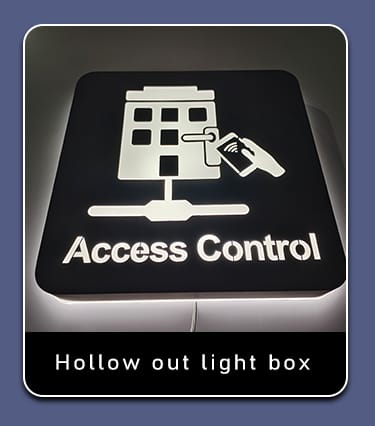
Aluminum weighs one-third of steel, lasts 8-12 years outdoors, and is naturally rust-proof. If you're doing a lightbox or a large sign cabinet, aluminum is your friend—0.040-0.063 inch thickness is typical.
A 10-step production process separates real factories from drop-shippers.
Design confirmation in 1 day. Laser cutting to ±0.1mm in 1-2 days. TIG welding and bending in 1-2 days. Grinding and polishing in 1-2 days. Acrylic face CNC in 1 day. LED assembly in 1-2 days. Sealing with neutral silicone in 1 day. An 8-12 hour aging test. 100% QC inspection. Export packaging with foam, carton, and plywood crate.
If a supplier tells you they ship in 3 days, they're skipping the aging test. That's the test that catches dead LED modules before they leave the floor. I've pulled entire batches because one module ran hot during aging.
Minimum order quantity is another tell. Our MOQ is 1 piece. If a "factory" requires 50 pieces before they'll talk to you, you're not talking to a factory. You're talking to a middleman who needs volume to hit his margin.
Lead time from a real factory is about 5-15 days for custom signs. Express shipping adds about 5-15 days. So when you promise your client a sign in two weeks from China, you better have already approved the artwork.
Do I really need UL listing for a small digital sign?
If it's going into a commercial building in the US, yes. NEC Article 600 applies. The inspector doesn't care that you saved $4,000 on testing. He'll red-tag you and your client will hate you. UL 48 costs $4,000-15,000 and takes 4-9 months. ETL is 10-30% cheaper if you're on a budget.
Can I trust a supplier just because they have a fancy website?
No. Trading companies buy better cameras than I do. Ask for a live video with today's date, a CE certificate with today's date, and the production line. If they hesitate, they're a rep, not a factory.
What's the cheapest way to ship a sign from China?
Sea freight LCL is cheapest at $80-200 per cubic meter, but it takes about 65 days and your crate gets handled 6-8 times. If you need it next month, air freight is $4-12/kg. Express small parcels are $30-100 and take about 5-15 days. You pick: cheap, fast, or intact.
Why do your letters cost less than the factory down the street?
I don't have a showroom in a strip mall, I don't employ a sales team with branded polos, and I source materials the same way the big shops do. Factory-direct savings are 50-65% on product. Then you add shipping and tariff. That's it.

Real photo from our production floor — every sign we ship is made here.
Products mentioned or relevant to this topic — factory-direct, custom built.
From $24/letter · MOQ 1 piece · Flexible lead time · CE & UL certified · ships to 20+ countries
Custom sizes, colors, and finishes. Get a factory price in 24 hours.
Get a Free Quote Copy EmailWhatsApp +86 13865703472 · business@aochuangsign.cn