
It's 11:47pm and I just finished strapping a plywood crate of front-lit channel letters for a shop in Dallas that insisted on DDP. Fine. That was the right call—but only because they'd never cleared customs in their life.
Most sign buyers learn Incoterms the hard way.
Look, signs aren't flat-pack furniture. A 304 stainless steel letter has a density of 7.93g/cm³, so a 24-inch letter with a 1.5mm shell and 3mm acrylic face might weigh 8 pounds but crate at four times the actual volume once you add foam, carton, and that plywood crate. Freight carriers charge dimensional weight, not emotional weight. That's why FOB vs CIF vs DDP isn't some academic exercise. It's the difference between a $120 letter and a $520 landed letter.
Here's what nobody tells you: a crate of channel letters is 40% air by volume. Our factory packs every sign with foam, then carton, then plywood crate because we do a 10-step production process ending with export packaging. But sea freight LCL means that crate gets handled 6-8 times between our dock and yours. Every touch is a chance for damage, and that's not in the brochure.
Risk transfer matters more than price.
I've watched a crate of backlit halo letters arrive in Long Beach with a fork tine straight through the side. The importer chose FOB, didn't buy marine cargo insurance, and ate a $4,800 loss. He thought FOB meant the seller handled everything until it reached his door. That's not what FOB means. Not even close.
Unlike off-the-shelf electronics, signs are custom-sized, fragile in the wrong places, and often worth $200-800 per unit. If you import 50 stainless steel letters at $40 a piece, that's $2,000 in product but maybe $35,000 installed at US retail. You can't treat that like a box of phone cases. The Incoterm you pick decides who pays when the acrylic face cracks, who files the customs entry, and who eats the 30% Section 301 tariff.
FOB means the factory's responsibility ends the moment the crate is loaded aboard the vessel at the origin port. After that, you own the risk. You arrange freight, you buy insurance, you clear customs, you pay the 30% tariff, you pay drayage from port to warehouse, you pay last-mile to the job site.
That sounds like a pain. It is.
But for a sign shop that imports 20 crates a year, FOB saves real money. Factory-direct pricing on front-lit channel letters runs $20-80 per letter. US retail installed runs $200-700 per letter. Even after freight, duty, and brokerage, you're still saving 50-65% on product. I've watched sign shops pay $800 for a front-lit letter from a domestic fabricator. Same 304 stainless, same Samsung LEDs. We ship that letter for $120 FOB. That's the ugly truth of domestic markup.
Here's a rookie mistake I see constantly: buying FOB and then using the factory's forwarder because they offered to "help." Don't. If you're going FOB, use your own forwarder, your own customs broker, and your own insurance policy. The factory's forwarder works for the factory, not you. Their idea of "help" is usually consolidating your crate with three other shipments to save their cost while adding four days and two extra handling stops.
The ugly truth is CIF sounds safe and usually isn't. Under CIF, the seller pays freight and insurance to the destination port. But risk still transfers to you at the origin port loading, same as FOB. What you actually bought is a minimum 110% invoice value marine cargo policy that often excludes fragile item breakage unless specifically endorsed. Acrylic faces crack. That's a fragile item.
CIF often hides freight quality.
A factory quoting CIF has an incentive to pick the cheapest LCL consolidation, not the fastest or safest. Sea freight from our region runs about 65 days. Air freight runs about 10 days at $4-12/kg. Express runs about 5-15 days at $30-100 for small orders. If you're on a job site deadline, CIF by sea might kill your schedule. And you still have to clear customs, pay the 30% tariff, and arrange delivery from the port. CIF is not door-to-door. I've had sign shop owners argue with me on that point. I've lost my patience.
Use CIF only if you have a broker and you specifically verify the insurance covers all-risk including breakage of acrylic and LED modules. Ask to see the policy wording, not the one-line summary. If they can't show it, walk away.
DDP is the exact opposite. The seller handles everything: export clearance, freight, insurance, import duty, customs brokerage, drayage, last-mile delivery to the named place. You receive the crate at your warehouse or job site, already cleared and duty-paid. No surprise 30% bill two weeks after you thought you were done.
I've seen this go wrong: a contractor in Miami ordered back-lit halo letters for a hotel lobby. He chose FOB to save $600. The crate sat in customs for nine days because the broker paperwork listed the signs as "illuminated advertising" instead of "parts for illuminated signs." Hotel fined him $1,200 a day for delay. DDP would have had our broker clearing 24 hours before vessel arrival.
DDP costs more up front. No sugarcoating it. The supplier adds a risk margin for handling customs and duty. But for sign shop owners who import once or twice a year and don't have a customs bond, DDP is the only sane choice. You know your total landed cost before you quote your client. That means you can price with confidence instead of praying the tariff line item doesn't blow your margin.
Let's put numbers on a $10,000 order of stainless steel letters. Under FOB, you pay $10,000 to the factory. Then you pay sea freight LCL at $80-200/m³—call it $1,200 for a 6m³ crate. Marine insurance runs about 1%, so $100-200. US Section 301 tariff at 30% adds $3,000. Customs broker charges $150-300. Drayage from port to warehouse runs $200-500. Last-mile to the job site, maybe $300-800. Total landed cost lands around $14,950-$16,500, excluding your time.
CIF rolls freight and insurance into the invoice, so factory might quote $11,500. You still pay tariff, broker, drayage, last-mile. Total about $15,250-$16,800. No real savings, but you have less control over carrier.
DDP for same order might quote $16,500 all-in delivered. You pay once, no customs calls, no broker. Is it the cheapest line item? No. Is it the cheapest total stress? Absolutely. If you're ordering stainless steel letters for a coastal job, the 316 marine grade costs 20-30% more than 304. That's a material decision, not an Incoterm one, but under DDP you'll know the exact out-the-door number before you sign.
Look, I've been doing this since 2010. Here's the framework I give sign shop owners. First, if your order is under $5,000 and you don't have a customs broker, use DDP. Just stop trying to save $400 on freight by reading Incoterm forums at midnight. You'll pay more in mistakes than you'll save.
Second, if you import over $20,000 per year and have a broker who answers your calls, negotiate FOB and build your own freight and customs pipeline. The savings compound. Third, if your sign is oversized—like a monument sign or a 3D fabricated letter over 2.5m using 5mm acrylic—choose DDP or at minimum CIF with all-risk insurance. Oversized crates get dropped. That's not an opinion, that's LCL reality.
Fourth, if the job has a hard opening date, use air freight under DDP or pay the express premium. Our lead time is about 5-15 days production. Air freight adds about 10 days. Sea freight adds about 65 days. You do the math with your contractor's schedule.
Mistake one: thinking FOB includes insurance. It doesn't. You must buy your own marine cargo coverage from the moment the crate leaves our dock. The export packaging we use—foam, carton, plywood crate—is solid, but LCL handling involves 6-8 touches. A $200 insurance policy is cheap compared to a $3,000 acrylic repair.
Mistake two: believing DDP covers quality defects after delivery. Wrong. DDP is delivery, not warranty. Our factory runs an 8-12 hour aging test on every sign and does 100% QC inspection before packing. We warranty LEDs for 2 years and power supplies for 1 year. But if a forklift drops the crate on your driveway after DDP delivery, that's your problem. Read the delivery receipt before signing.
Mistake three: not checking whether CIF insurance covers fragile acrylic. Standard Institute Cargo Clauses often exclude breakage unless specifically added. Pay the extra endorsement or use your own policy.
Mistake four: forgetting the tariff. Under FOB or CIF, the US Section 301 tariff of ~30% is payable at entry by the importer of record—you. If you quoted your customer based on the invoice price alone, you just donated 30% of your margin to the Treasury.
Mistake five: choosing CIF to avoid responsibility, then discovering the factory's forwarder routed your crate through three transshipment ports and it sat in Singapore for a week. That's not rare. That's Thursday.
FAQ: "I can't believe I still have to explain this."
Q: Which Incoterm is cheapest for small sign orders?
A: FOB has the lowest invoice price. But unless you have a broker and a clue, you'll spend more on mistakes. For orders under 200kg, express shipping with DDP terms is often shockingly sane. $30-100 where I sit.
Q: Can I use FOB and still have the factory ship by express?
A: Yes. FOB just sets the risk transfer point at loading. You can arrange express, air, whatever. Stop confusing Incoterm with transport mode. They're different levers.
Q: Is DDP door-to-door guaranteed?
A: It's to the named place in the contract. If you name your job site and expect them to hoist letters onto a pylon with a crane, that's not delivery, that's installation. Clarify named place and final unload.
Q: Do I need CE marking if I'm importing to the US?
A: No. CE is for Europe. US buyers need to care about UL 48 or ETL listing and NEC Article 600 for electrical signs. Stop asking me for a CE certificate when your job site is in Ohio.
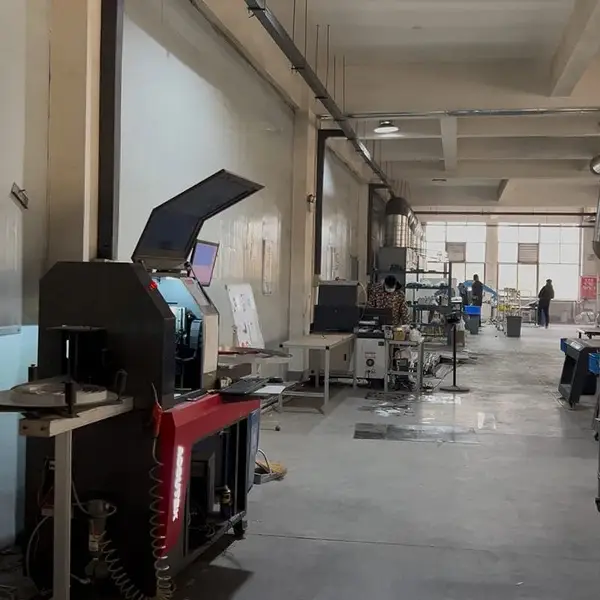
Real photo from our production floor — every sign we ship is made here.
Products mentioned or relevant to this topic — factory-direct, custom built.
From $24/letter · MOQ 1 piece · Flexible lead time · CE & UL certified · ships to 20+ countries
Custom sizes, colors, and finishes. Get a factory price in 24 hours.
Get a Free Quote Copy EmailWhatsApp +86 13865703472 · business@aochuangsign.cn
See pricing, specs, and get a free quote for the sign type you need. Built in our factory, shipped worldwide.