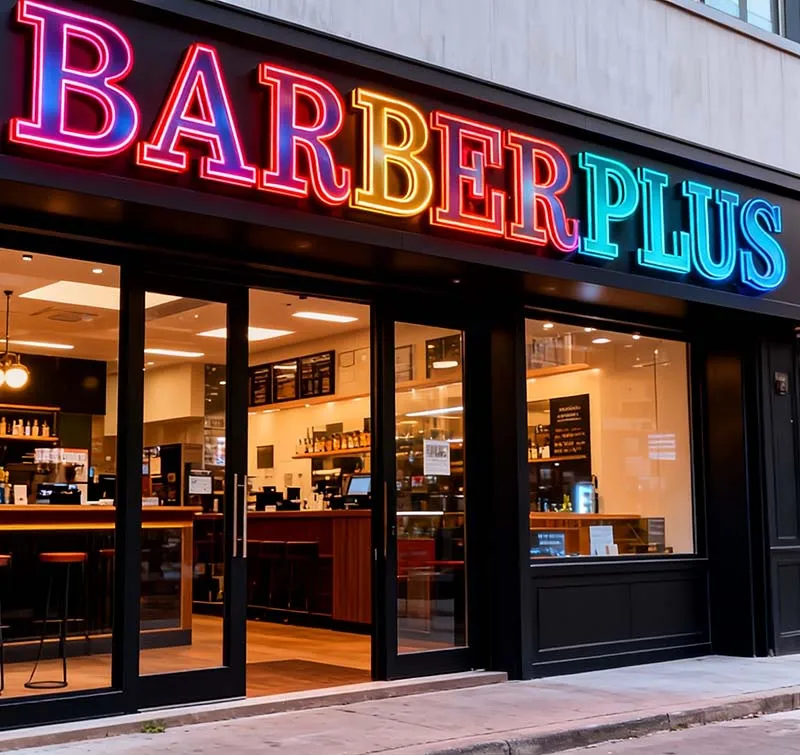
Not because the aluminum channel letters were wrong—they were perfect, 30 pieces of brushed aluminum letters with a flawless #4 finish. I lost sleep because I handed over $11,000 to a factory in Guangdong, and for three weeks I had no clue where my goods were. That’s when I learned the hard way that FOB doesn’t mean the factory cares once the container hits the ship. It means you, the buyer, are now the babysitter of a 40-foot box floating somewhere on the Pacific.
I’ve been in the sign game 16 years. Half of them on the floor, the other half dealing with freight forwarders who speak in three-letter codes designed to confuse you. Here’s the plain truth: FOB, CIF, DDP are not complicated concepts. They’re just a list of who pays for what and when the risk flips from seller to buyer. Problem is, nobody explains the gotchas until you’re staring at a $2,500 demurrage bill. I’ll fix that now.
Before you read another word, know this: we sell direct from our factory in Lu’an, Anhui. I’m not a logistics broker. We make front-lit channel letters, halo-lit signs, stainless steel masterpieces, and light boxes. We’ve exported worldwide. I’ve seen shipments arrive pristine and I’ve seen them wrecked because a buyer chose the cheap insurance under CIF. This guide is the conversation I wish I’d had decades ago, with numbers pulled straight from our shipping manifests, not a theory textbook.
Incoterms are a set of 11 rules published by the International Chamber of Commerce. For signage importing, three matter: FOB, CIF, and DDP. The rest you can ignore unless you’re chartering your own vessel, which you’re not.
Look, every Incoterm answers two questions. One: who books and pays the freight, insurance, and customs. Two: at what exact moment does the risk of loss or damage transfer from the seller to you. That’s it. The alphabet soup—FOB, CIF, DDP—only shuffles those responsibilities around. When a factory says “we only do FOB,” they’re really saying “we want your money ASAP and don’t ask us about what happens in Long Beach.” When they say “we can do DDP,” I get suspicious unless they can show me their US customs bond.
The ugly truth is: 90% of Chinese sign factories don’t understand US Section 301 tariffs. They quote DDP prices based on pre-2018 duty rates. Then you get a bill three months later from Customs and Border Protection for 30% of the declared value. I’ve seen this go wrong: a sign shop in Florida ordered $18,000 worth of back-lit halo letters on DDP terms. The factory forgot the tariff. CBP seized the shipment until the shop paid $5,400 plus penalties. The factory ghosted them. I don’t ghost.
With FOB, we—Aochuang—cover everything up to loading the crate onto the vessel at the port of departure. We build your signs, pack them in foam, carton, and plywood (that’s our export standard, no skimping), get export clearance in China, and hand the goods to the carrier you nominated. Then we hand you a commercial invoice and a bill of lading. We’re done. The goods are now your problem.
Here’s what nobody tells you: FOB looks cheap on the quote sheet because we aren’t padding freight or insurance. But you’ll need a US freight forwarder to book space, a customs broker to file entry, pay ocean freight, buy insurance, cover terminal handling charges at the US port, pay for customs exams if your crate gets flagged (about $300-900 a pop), pay the 30% tariff on the full product value, and arrange trucking from port to your shop. If that container sits on the dock for 72 hours past free time, demurrage kicks in at $150–$250 per day. One crate of 20 front-lit channel letters can swallow $800 in unexpected port fees before you blink.
I’ve seen this go wrong: a contractor in Chicago ordered $12,000 worth of stainless steel letters FOB Shanghai. He didn’t realize his forwarder required an ISF filing 48 hours before vessel departure. Nobody told him. Customs hit him with a $5,000 penalty for late Importer Security Filing. He thought FOB meant the factory handled everything. I spell ISF out on every FOB invoice now, because I don’t want that call.
When FOB works, it can save you 10–15% on total landed cost versus CIF, assuming you have a trustworthy forwarder and you know the port dance. For small orders under $3,000 where shipping is just one carton via air express, FOB becomes moot—you’ll use DDP courier.
CIF means we pay the product cost, we contract and pay for ocean freight, and we provide insurance to your port of destination. You’re still handling import clearance, duties, tariffs, and delivery from the port to your door. In theory, you get a nice package: we find the vessel, we sweat the transit.
I sell CIF on a lot of our sea freight orders to Australia and Europe where tariffs are lower and the process is simpler. But for US customers, CIF is a seductive trap. Because I pick the carrier, I pick the cheapest one. The transit time might stretch from 50 days to 70 because the vessel stops in Busan and Seattle before reaching Houston. And the insurance? Here’s the brutal truth: standard CIF insurance covers you for total loss—if the container falls off the ship. It does not cover partial damage, rough handling, or water seepage unless you buy an additional all-risk policy. The factory-sourced insurance is typically Institute Cargo Clauses (C), the minimum. If a forklift tine punches through your crate of stainless steel letters and bends three of them, that’s not covered. You’ll eat the $1,200 repair.
Look, we’re upfront about it. On our CIF quotes, we list freight cost at actual cost—I’ll show you the carrier’s bill if you ask. We use a decent freight forwarder who we’ve worked with for years, not some random guy. But I always recommend you buy your own all-risk insurance from a US-based insurer. It’s an extra $150-300 and covers everything including theft, denting, and water damage. I’ve shipped a $25,000 precision-cut 3D fabricated sign set that arrived with condensation damage because the container seal failed. The customer’s own insurance paid out the full value in ten days. That’s peace of mind.
DDP is the holy grail for a buyer who wants one number. One price that gets the signs from my factory floor to your loading dock, all duties and taxes paid. You don’t lift a finger. For small, express-shipped orders—a carton of neon flex signs or a few aluminum letters under 50kg—we can do DDP flawlessly through our courier accounts. DHL, FedEx, UPS handle clearance, we embed the tariff into the invoice. That $600 order becomes $840 landed, no surprises.
The ugly truth is: for full container loads or LCL pallets, DDP becomes a minefield. To do legal DDP, the seller must be the Importer of Record in the US. That means we need a US customs bond, a registered entity, an Employer Identification Number, and the ability to remit duties directly to CBP. I don’t have a US subsidiary. Most small-to-medium Chinese factories don’t. So when a factory in Shenzhen offers you DDP on a $30,000 order, they’re either lying and will ship DDU (Delivered Duty Unpaid) and vanish when the tariff hits, or they’re faking the commercial invoice value to lower the duty—which is customs fraud. I won’t do that.
Here’s what I can do honestly: for shipments over 150kg, we’ll work with a US-based partner agent who acts as IOR and handles the door-to-door movement. They add a legitimate fee, and we quote you an all-in DDP price that includes the full 30% Section 301 tariff, bond costs, and agent fee. That quote is often 10–15% higher than what a “dodgy DDP” factory offers, but it’s real. Half the time, when I show the true DDP number, customers switch back to FOB or CIF and hire their own broker—and they save money. I’d rather lose a DDP sale than get someone a customs lien.
Let’s walk through a typical order. You want 18 front-lit channel letters, each about 18 inches tall, 304 stainless steel returns, 3mm acrylic face, Samsung LEDs, UL-compliant power supplies. Factory price from us: $1,440 (avg $80/letter). Weight roughly 80kg, volume about 0.6 cubic meters.
Option A: DDP via express courier. Shipping cost around $280-$350. Tariff at 30% on product value: $432. Brokerage included in courier fee. Total landed $2,152-$2,222. Delivery time about 5-15 days door to door. For this small volume, express DDP crushes sea freight on both speed and total cost. You can’t beat it.
Option B: Sea freight FOB Shanghai. Ocean freight LCL to Los Angeles about $120. Then your US costs: customs broker $250, ISF filing $45, terminal handling $85, trucking from LA to Phoenix $450, duty $432. Total US side about $1,382, plus product $1,440, overall $2,822. Slower, more hassle, $600 more. So why ever use FOB? Because at scale, the math flips. Double the order to 100 letters. Product $8,000. Express DDP becomes a nonstarter—courier rates explode. LCL sea freight cost might be $400, while express would be $2,200. Suddenly FOB or CIF saves you $1,500–$2,500. I walk every customer through this math before they decide.
I can ship your signs FOB, CIF, or DDP express. We pack to survive a gorilla—each channel letter gets foam, then corrugated partitions, then a 12mm plywood crate with steel banding. Our aging test runs 8–12 hours, so we catch dead LEDs before the glue dries. Certifications? CE, RoHS, ISO 9001. If your project needs UL, budget $4,000-15,000 and 4-9 months. I’ll arrange ETL for less if you prefer.
I cannot act as the US Importer of Record on large shipments. No factory without a US office should lie and say they can. I can connect you with a US customs broker who’ll handle clearance for $250-400. I can guarantee that our commercial invoice reflects the true transaction value, so you never face an audit. When the port asks for a Certificate of Origin, I’ll include it free—Form A if your goods qualify for GSP duty reduction (some letters don’t, but I’ll check).
Look, if you’re importing your first set of acrylic light boxes, start with a trial order on DDP express. You’ll see our quality without the freight headache. Once you trust our work and you’re ordering by the cubic meter, switch to FOB with your own forwarder. That’s the pattern my smartest repeat customers follow. They save the 50-65% factory-direct difference, control their logistics, and occasionally buy me a beer.
Here’s the last ugly truth: the sign industry is full of beautiful lies about “global delivery” and “hassle-free importing.” The factories that promise everything rarely deliver. I’d rather tell you exactly what I can do and what requires your own team. That might lose me a few instant-gratification orders, but it builds the kind of partnerships that keep factories like mine alive for decades. Pick a shipping term that matches your volume, your risk tolerance, and your patience level. And if you’re still not sure, call or email us. I’ll pull up your crate dimensions and give you a real talk, not a sales pitch.
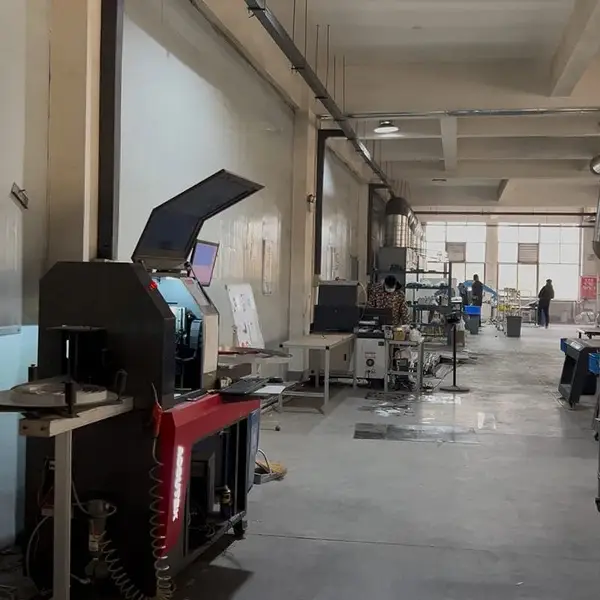
Real photo from our production floor — every sign we ship is made here.
From $24/letter · MOQ 1 piece · Flexible lead time · CE & UL certified · ships to 20+ countries
Custom sizes, colors, and finishes. Get a factory price in 24 hours.
Get a Free Quote Copy EmailWhatsApp +86 13865703472 · business@aochuangsign.cn
See pricing, specs, and get a free quote for the sign type you need. Built in our factory, shipped worldwide.