Look, pricing ADA signs isn’t rocket science, but it’s also not the markup-on-material game most sign shops think it is.
I’ve watched shops lose $40 per unit because they didn’t factor in Grade 2 Braille translation. I’ve also watched shops make 65% margin because they understood radius corners. The difference isn’t talent—it's knowing where the cost hides. And if you’re quoting ADA work off a per-square-foot price you found on a blog, you’re already behind.
Nobody sits you down and teaches this.
Not once.
Here’s what nobody tells you: ADA pricing has almost nothing to do with the sign’s size. I’ve seen a 6" x 9" restroom sign cost more to produce than an 18" x 24" directional sign because the restroom sign needed three lines of Grade 2 Braille and the directional didn’t need any. Size matters less than information density.
The real cost drivers are fabrication method, quantity, and how many hands touch the part. Photopolymer ADA signs have a photopolymer resin cost and a UV cure step. Routed acrylic signs have zero resin but double the CNC time. UV digital prints are fast but not tactile enough for most code. Appliqué letters on acrylic are cheap but fail inspection if the letters lift.
Compliance isn’t optional. ADA guidelines say tactile characters need specific spacing, and Braille dots sit 3/8" below the text. Mounting height is 48-60" to the center of the sign, not the top. That kills a lot of quotes because installers measure wrong.
Measure twice.
I’ve seen this go wrong: a shop quoted a braille sign for a hospital, then found out the local amendment required non-glare finish on the acrylic face. That one detail added 15% to material cost and two days to lead time. They ate the margin because they didn’t ask about the inspector.
Let’s talk material because that’s where the quote starts. Stainless steel ADA plaques using 304 stainless steel letters material will survive 10+ years outside, but you’re paying for the laser time. A 304 sheet cuts clean at ±0.1mm, but a 316 sheet costs 20-30% more and is only worth it if the spec says coastal or industrial. Most interior ADA signs don’t need 316—stop upselling it unless the wall is in a pool building.
Acrylic is the workhorse. Imported UV-stabilized acrylic (Mitsubishi or Degussa) lasts 5-8 years before yellowing; domestic acrylic starts yellowing in 1-2 years under UV. If your ADA sign is going near a window, use imported acrylic or you’ll get a warranty call in 18 months.
Photopolymer is the classic ADA method. This method uses photopolymer resin on an acrylic or aluminum substrate, cured under UV, then painted. Machine time is low after the negative film is made. But setup eats your profit if you’re running fewer than 10 signs. Routed and engraved acrylic is the opposite—zero setup, but CNC time is 2-3x photopolymer per part. UV digital is fastest for full-color maps, but the raised letters won’t pass a tactile inspection unless you laminate a second layer.
Here’s the breakdown I give my estimators: aluminum blanks run $10-25 per letter equivalent in our factory, and a small ADA plaque uses less material than a letter, so it should land below that. Stainless steel non-lit letters run $15-40, and an ADA plaque in stainless should be on the low end because it’s flat, not a 3D can. Cast aluminum or bronze for cast metal signs runs higher because of the mold, but you get a solid, substantial feel that building owners love.
Here’s what nobody tells you: Braille is where quotes go to die. Grade 2 Braille is contracted, meaning common words get shortened dot patterns. If your customer hands you a Word file with "MEN'S RESTROOM" typed out, that’s not Braille. That’s a liability. You need a certified translator or a font that outputs Grade 2. I charge $5-10 per sign for translation because if it’s wrong, the inspector fails the whole building.
Tactile letters have rules. They need raised 1/32" minimum from the face. That’s not optional. If you use UV digital printing alone, you don’t have that height. You need a second layer of acrylic or a photopolymer raised layer. Appliqué letters work, but if the adhesive fails, the sign is non-compliant. Use a pressure-sensitive adhesive rated for the substrate, not the cheap roll from the supply house.
Mounting surface is the quiet margin killer. Drywall needs anchors. Glass needs standoffs or a silicone that won’t etch. Brick needs a hammer drill and a lot of patience. I’ve seen this go wrong: a shop quoted $38 per ADA room sign, then found out the wall was textured concrete and every sign needed a hammer drill bit that lasted four holes. Labor doubled.
Radius corners are another adder. A square corner is one laser cut. A 1/4" radius corner means a separate CNC pass or hand sanding. It adds 10-15 minutes per part. On a 50-sign job, that’s a full day of labor nobody quoted.
The ugly truth is most shops don’t pass quantity savings to the customer; they just pocket the extra margin. But if you’re pricing ADA signs, you need to know where the break points are. Our factory has an MOQ of 1 piece, but a single custom photopolymer sign with its own negative costs about 4x per unit compared to 50 signs from the same negative.
Batch efficiency isn’t linear. Cutting 50 identical 6" x 9" acrylic faces on a laser takes maybe one hour total because the sheet is loaded once. Cutting 25 different sizes with different hole patterns takes three hours because you’re changing files and repositioning. The laser itself is ±0.1mm accurate either way, but the labor time is the cost.
Here’s a rule I use: if a job has fewer than 5 signs, quote it as custom one-off work. If it’s 5-25, group by material and size before you calculate. If it’s over 25, you can offer a 20-30% discount off the single-unit price and still maintain margin because your per-unit labor drops by half. For wayfinding and directional systems, batch efficiency is even stronger because the mounting hardware is identical across the building.
Don’t forget the packaging. Our export packaging uses foam, carton, and plywood crate. That’s a fixed cost whether you ship one sign or 50. Sea freight LCL costs $80-200 per cubic meter, and your crate gets handled 6-8 times between our dock and yours. For a 100-sign job, packaging and freight add maybe $1.50 per sign. For a 1-sign job, it could add $30. Batch quantity kills that cost.
That’s why quantity breaks exist.
Installation is where the real money is, and it’s also where you can lose a job in the walkthrough. ADA signs mount 48-60" to center. That’s not a suggestion. If your installer puts the top at 60", you’re redoing it. I always add a line item for "compliance measurement" because the inspector will check.
Here’s what nobody tells you: if your ADA sign has an LED light, NEC Article 600 applies. That means a listed power supply, proper wiring, and possibly UL 48 if the whole sign is tested as a unit. UL 48 certification costs $4,000-15,000 and takes 4-9 months with quarterly audits. ETL is a cheaper alternative, 10-30% less. If you’re buying factory-direct, demand the UL file—don’t take the factory’s word for it.
CE marking costs 20,000-50,000 RMB. I’ve had factories say they have it, then go quiet when I ask for the certificate with today’s date. Same with IP ratings. IP65 means dust-tight and water jets from any direction; IP66 adds powerful jets; IP68 is submersible. For an exterior ADA sign near a coast, IP66 is the minimum. Don’t let a distributor tell you IP65 is "marine grade"—it isn’t.
For interior ADA signs, compliance costs are lower. You still need non-glare finish and Grade 2 Braille, but you don’t need UL or IP ratings. That’s why I always ask: is this interior or exterior? It changes the price by 20-40% before I even quote material.
Look, I’ve watched US distributors mark up ADA signs 3x from factory cost and call it "value-added service." The only value added is their overhead. Factory-direct pricing from a shop like ours runs 50-65% lower on product cost. Same acrylic, same stainless, same Grade 2 Braille translator. The difference is the invoice, not the sign.
But factory-direct isn’t free money. You have shipping, tariffs, and time. Express shipping takes about 5-15 days and costs $30-100 for small orders. Air freight is about 10 days at $4-12 per kg. Sea freight is about 65 days at $80-200 per cubic meter for LCL. And don’t forget the US Section 301 tariff: roughly 30% on many sign products. That eats into the 50% savings faster than you think.
I’ve seen this go wrong: a contractor ordered 200 ADA signs factory-direct to save $4,000, then paid $1,800 in sea freight and $1,200 in tariffs, and waited 70 days. The job was supposed to start in 30. He borrowed signs from a local shop and ended up paying more than if he’d bought domestic.
Here’s the rule: if you have time and quantity, factory-direct wins. Our lead time is about 5-15 days plus shipping, and MOQ is 1 piece, so small custom orders are fine. But if you need signs next week, buy from a distributor with local stock. You’ll pay 2x the product cost, but you’ll keep the contract.
Here’s the quote system I use after 15 years. Start with the blank. For a 6" x 9" interior photopolymer sign, my factory cost is the material blank plus resin. Add the fabrication method: photopolymer has a setup fee, routed has machine time, UV digital has print time. Add Braille translation per sign. Add tactile layer if it’s a second material. Add mounting hardware specific to the wall. Add radius corners if specified. Then add packaging, shipping, and tariff if factory-direct.
I aim for 40-50% gross margin on ADA work. That sounds high, but callbacks are real. If a Braille dot falls off or the inspector rejects the non-glare finish, you’re eating the redo. That margin is your insurance.
For materials, a stainless steel ADA sign using 304 will last 10+ years outside, but the client won’t pay for 316 unless it’s coastal. Don’t oversell. An acrylic tactile sign with imported UV-stabilized material will outlast domestic by 4-6 years. A cast metal sign is a premium upcharge, but it’s for lobbies and universities that want the weight.
Finally, include a line item for "compliance verification." I charge $25-50 per job to have my installer measure mounting height and check Braille placement against the ADA checklist. That line item is the cheapest insurance you’ll ever sell, and it tells the client you’re not guessing.
FAQ: Do ADA signs need UL certification? Only if they’re illuminated. Interior non-lit ADA signs don’t. Stop asking.
Can I use UV digital printing for Braille? No. UV ink doesn’t give you the 1/32" raised height required. You need a second layer or photopolymer. I’ve failed inspectors for this.
What’s the MOQ for factory-direct ADA signs? One piece. We’re not a merchandising company. You can order one sign and we’ll ship it. But the per-unit price will be higher because setup and freight aren’t amortized.
How long does factory-direct ADA take? about 5-15 days production plus shipping. Sea freight adds about 65 days. If you need them Friday, call a local distributor and pay double.

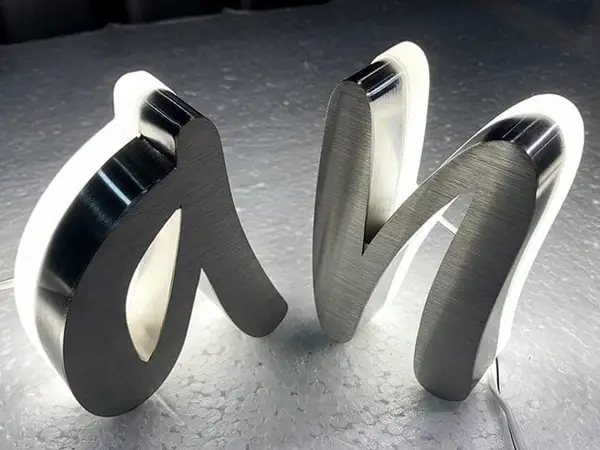
Real photo from our production floor — every sign we ship is made here.
Products mentioned or relevant to this topic — factory-direct, custom built.
From $24/letter · MOQ 1 piece · Flexible lead time · CE & UL certified · ships to 20+ countries
Custom sizes, colors, and finishes. Get a factory price in 24 hours.
Get a Free Quote Copy EmailWhatsApp +86 13865703472 · business@aochuangsign.cn