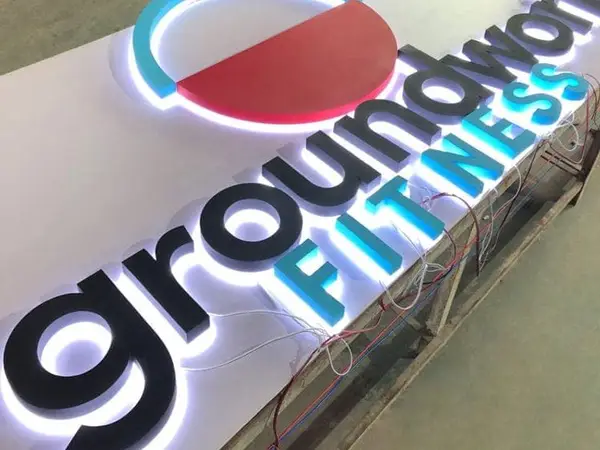
Here's what nobody tells you about ordering custom signs from overseas: the sign itself is the easy part. The real headache starts when that finished channel letter has to cross an ocean on a wooden pallet. If that wood isn't ISPM-15 compliant, you're not getting your delivery. You're getting a customs hold, a fine, and a very angry phone call from your client.
The ugly truth is that ISPM-15 is the single most overlooked detail in international signage purchasing. It's not flashy. It's not exciting. But it's the difference between your sign arriving in 15 days or sitting in a Long Beach warehouse for six weeks while customs decides whether to destroy the packaging or bill you for treatment.
I've been in this industry since 2010, shipping signs from our factory in Lu'an worldwide. I've watched shipments get rejected. I've paid for mistakes. I've argued with freight forwarders at 2 AM. Let me save you that pain.
ISPM-15 stands for International Standards for Phytosanitary Measures No. 15. It's a global rule created by the International Plant Protection Convention to stop invasive pests from hitching rides across borders in wood packaging.
Here's what it means in real terms: any raw wood used for crating, pallets, dunnage, or bracing must be either heat-treated to a core temperature of 56°C for 30 minutes or fumigated with methyl bromide. Then it gets stamped with a specific mark that shows it's been treated.
The mark is always the same format. Wheat sheaf icon, country code, treatment facility number, and the treatment code. If you don't see that mark, the wood isn't compliant.
I've seen this go wrong more times than I can count: a buyer assumes their factory is handling it, the factory cuts corners on a rush order, and suddenly a wooden pallet from China is sitting in a US port with bark still on it. That's a one-way ticket to rejection.
Let's be crystal clear about what ISPM-15 covers. It's only solid wood and raw wood materials. That means:
It does NOT cover:
This is crucial for sign shipping because most quality sign crates use plywood, which means your packaging might not even need ISPM-15 treatment. The catch? If your factory uses a solid wood frame on that crate just to save costs, you're suddenly back in the regulatory red zone.
Look, I know you're thinking: "I ordered a sign, not a botany lesson." Valid point. But here's the reality.
A standard 20-foot container costs between $1,200 and $3,000 for shipping depending on your route. Sea freight takes about 65 days. That's a lot of time and money to risk over wood treatment paperwork.
When customs finds non-compliant wood, they have three options:
None of those are good.
Here's what nobody tells you: the US Department of Agriculture and Customs don't inspect every shipment. But they're increasingly targeting wood packaging because invasive species are a huge ecological threat. You might get away with non-compliant wood once, twice, ten times. Then you get caught. And one catch wipes out your savings from buying factory-direct in the first place.
Let me give you actual numbers based on what we see daily at our factory.
Your packaging cost is typically 2-5% of your total sign order. But the failure cost is 100% of everything.
Shipping a set of front-lit channel letters (say, a typical 10-letter storefront sign) breaks down roughly like this:
Now add packaging. A proper export crate for a moderate sign might cost $80-150 in materials and labor. That's nothing compared to the value of your sign, but it's everything compared to the cost of customs issues.
I've said this a hundred times to customers: "Don't let your factory save $30 on packaging that puts your $3,000 sign order at risk."
Our 3,000 square meter facility in Lu'an handles ISPM-15 compliance daily. Here's what that looks like in practice, and honestly, in detail.
First, our standard export packaging uses a combination of materials:
When a job requires solid wood — and some do, for very large signs or heavy metal letters — we use ISPM-15 certified lumber from licensed suppliers. These have the proper stamp baked in, not just a paint job that fakes it. Our standard lead time is about 5-15 days for production, and one of those days is always dedicated to packaging and quality control. If your order uses solid wood, we add a day for verification.
Products like our stainless steel letters (which can take a beating in transit) go in reinforced crates. Our acrylic light boxes get extra foam layers because acrylic scratches if you look at it wrong. Our neon flex signs get custom foam inserts cut to shape. Every product has its own packaging profile.
The critical part is the heat treatment verification. Before every international shipment, we check:
You'd be surprised how many factories don't do this basic five-step check.
Here's the brutal honesty section. The "too good to be true" factories that promise $50 shipping and 3-day delivery are usually cutting corners somewhere. Packaging is the easiest place to cheat because you can't see it from across the ocean.
I've inspected incoming crates from other factories in China. I've seen:
Don't learn these lessons the expensive way.
When you're comparison shopping, ask each factory these exact questions:
If they can't answer immediately, walk away. A competent export factory should have these answers memorized.
Here's what nobody tells you: no factory can guarantee 100% customs clearance. That's reality. We can comply with everything correctly, but country-specific import rules change, and customs officers have discretion. What we CAN do is give you a 100% compliant crate that removes wood treatment from the list of potential problems.
We can't help with your destination country's import licenses, zoning regulations for sign placement, or electrical inspections. Those are your side of the equation.
We also can't pack a crate so well that it survives being dropped from a forklift. That's a myth. Industrial handling equipment can damage any packaging if someone isn't paying attention. What we can do is build packaging that gives you a fighting chance.
For US buyers specifically: Section 301 tariffs on Chinese goods run about 30%. Adds a real chunk to your landed cost. Know that before you order, not after.
Here's a scenario I've seen play out at least a dozen times:
A customer orders several signs from us, plus some other products from another Chinese supplier. They ask us to consolidate everything into one shipment. Easy enough. But that other supplier's packaging isn't ISPM-15 compliant. Now our perfectly compliant crate is tainted by association. When customs opens the shipment and finds untreated wood from the other supplier, both shipments get flagged.
I've seen this go wrong: one customer in Texas saved $120 on shipping by combining orders and spent $2,300 on a customs fine and storage fees.
The solution is simple: make sure EVERYTHING in your consolidated shipment is compliant. If you're importing from multiple factories, tell them all. Get written confirmation. Or split the shipments.
Let me walk you through the exact verification process we recommend to every buyer.
First, visual inspection. When we send you shipping photos (we always do), look for the ISPM-15 stamp on any solid wood. It should look like this:
A wheat symbol, then a two-letter country code (CN for China, US for USA, DE for Germany), then a unique number for the treatment facility, then HT for heat-treated or MB for methyl bromide fumigation.
If the stamp is printed with ink on the surface, it's probably fake. Real stamps are often branded or burned into the wood. However, some countries print them during the treatment process. If it doesn't look durable, ask questions.
Second, documentation. Ask for the treatment certificate. Every ISPM-15 treatment facility should have paperwork. Most factories won't have this on hand per shipment if they buy pre-certified lumber, but they should be able to provide a copy of their supplier's certification.
Third, ask for a video during packing. Any factory that is properly managing ISPM-15 will happily document the packaging process. We send WhatsApp video updates showing the crate being built and sealed. If a factory is dodging this request, they're hiding something.
Fourth, physical inspection on arrival. When your sign arrives, the crate might be beat up, but the wood and stamps must be intact.
Where your sign is going matters for packaging. Not just for ISPM-15, but for survival.
For coastal destinations, we use additional moisture barriers inside the crate. Salt air corrodes metals quickly. A stainless steel 316 sign is marine-grade, but regular 304 can develop surface rust in transit if saltwater gets in.
For tropical climates, we add extra silica gel desiccant packs to prevent condensation damage during the voyage. The temperature swing between the South China Sea and a warehouse in Florida is massive. That condensation causes LED failures if moisture reaches the modules. Our SMD 2835 modules are rated for 50,000 hours, but only if they don't drown in ocean humidity.
For hot desert climates, we use UV-stabilized acrylic that won't yellow within 5-8 years. But that's a whole different conversation.
Air freight for signs runs $4-12 per kilogram, which adds up fast for a heavy sign. But for urgent replacements or premium projects, it's sometimes the right call.
Here's the important ISPM-15 distinction: air cargo also requires ISPM-15 for solid wood. There's no exemption. However, many express couriers like DHL and FedEx only accept plywood containers anyway, which saves you the hassle.
If you need a small sign fast — say, a single front-lit letter for a storefront repair — air freight with plywood packaging is your best bet. We can ship up to 10kg via express courier for $30-100 in about 5-15 days. In that case, ISPM-15 is rarely an issue because the packaging is lightweight plywood or cardboard.
For full sign sets, sea freight is the only cost-effective option. And then ISPM-15 matters. A lot.
Look, I'm not going to pretend every buyer understands packaging compliance. That's why we build it into our process and our quotes.
What we quote includes all export packing. No surprises. For example, our backlit halo letters come with protective film on the acrylic face, foam spacers to prevent the LED modules from shifting, and edge guards on every channel letter. They're then placed in our plywood crate system.
When you compare quotes, don't just compare sign prices. Compare the packaging specs. Ask what's included.
If one factory quotes $2,000 for a set of stainless steel letters and another quotes $2,300, that $300 difference might be the packaging. And I've seen exactly this: the $300 extra pays for proper plywood crates, foam padding, and ISPM-15 compliance while the "savings" from the cheaper quote disappears the moment customs starts asking questions.
If your order is built well, packed right, and shipped compliantly, it arrives ready to install. That's what you're paying for.
Here's the most efficient way to test whether your supplier actually understands ISPM-15:
Ask: "Can you send a copy of your wood packaging treatment certificate along with the commercial invoice and packing list?"
Legitimate export factories have this. It costs them nothing to share. If they hesitate, they either don't have one or don't know what one is. Both are red flags.
I usually tell customers this: "If a factory can't document their ISPM-15 compliance, they haven't shipped internationally enough times to handle your order."
That's 16 years of experience talking.
You found bark. The stamp is missing. You're 3,000 miles from the factory, staring at a crate that just violated international law.
Deep breath. Here's what actually happens next:
Consequences: fines range from hundreds to thousands of dollars. Your sign could be delayed by weeks. The relationship with your client takes damage.
We have never shipped non-compliant packing. That's not luck — that's process. But we push our customers to understand that packaging is part of the product.
We can guarantee our own compliance. Every sign that leaves our factory in Lu'an goes out in packaging that meets ISPM-15 standards, whether it's exempt plywood or certified solid wood.
We can't guarantee that your country's inspection process won't find other issues unrelated to wood packaging. We can't control what your local electrical inspector says about your neon flex sign installation. We can't control weather damage during long ocean transits.
What we can guarantee: the product quality (2-year LED warranty, 1-year power supply warranty), the packaging compliance, and the treatment of your order with the attention we'd want for our own business.
When you're ready to order, check out our collection of front-lit channel letters, backlit halo letters, and stainless steel letters. They're built to last. But they only get to you if the packaging does its job.
I've been doing this since 2010. I've shipped worldwide. I've seen every packaging disaster imaginable. And I'm still here, still shipping signs, still obsessing over crate construction.
It matters. Get it right.
Use this, verbatim, with any supplier:
If they can't answer all seven, your sign is at risk.
ISPM-15 isn't complicated. It's just wood treatment and visible stamps. But in the real world, it's where international shipments go to die.
Your sign is a serious investment. A set of halo-lit channel letters runs $35-120 per letter from us, and $400-1,000 per letter if you buy locally installed in the US. You're not paying for something that deserves to be destroyed at the port because of a $30 packaging shortcut.
The factory-direct advantage is real — 50-65% savings on product. But those savings evaporate fast when your shipment gets stuck in customs for three weeks.
Ask the questions. Verify the stamps. Get it in writing. Apply that to your entire supply chain, not just packaging. Your business depends on it.
Got questions about your specific project and what it takes to ship to your country? Send them over. We'll tell you the truth, even when it's inconvenient..
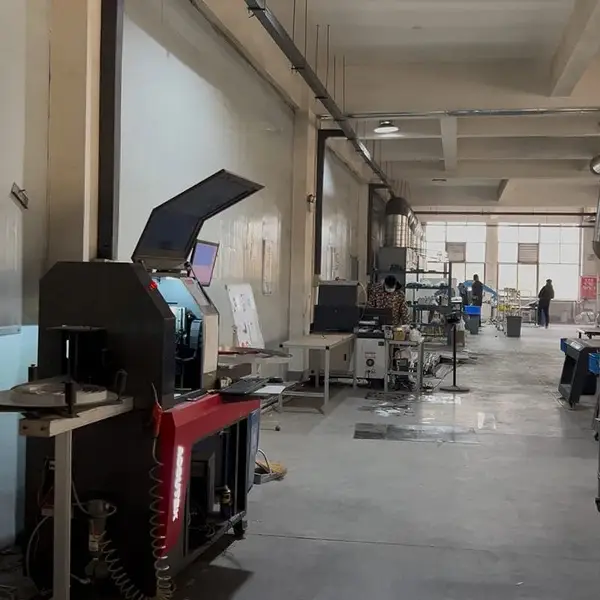
Real photo from our production floor — every sign we ship is made here.
From $24/letter · MOQ 1 piece · Flexible lead time · CE & UL certified · ships to 20+ countries
Custom sizes, colors, and finishes. Get a factory price in 24 hours.
Get a Free Quote Copy EmailWhatsApp +86 13865703472 · business@aochuangsign.cn
See pricing, specs, and get a free quote for the sign type you need. Built in our factory, shipped worldwide.