You shipped a $6,000 set of back-lit halo letters to Sydney. The crate looks solid. The customs officer flips it over, sees a scuffed stamp, and puts a quarantine hold on your client's grand opening. That's ISPM-15 doing its job. Painful, but predictable.
Here's what nobody tells you: ISPM-15 has nothing to do with your sign. It's about the wood it travels in.
The standard exists because untreated solid wood carries pests—Asian longhorned beetle, pinewood nematode, all kinds of tiny bastards that destroy forests. Countries with serious agriculture industries don't play games. Australia, Canada, US, EU, New Zealand—if it's raw wood over 6mm thick, it needs treatment and a compliant stamp. No stamp, no entry. They won't care that your letters are beautiful.
Look, I've been on a factory floor for 16 years. I've seen a supplier use a rubber stamp kit from Taobao to fake the IPPC mark. It took customs about 30 seconds to reject it.
That's the ugly truth: plenty of Chinese factories will tell you their crates are ISPM-15 compliant. Some mean it. Some mean they bought a $3 stamp. You can't tell from a photo of a dirty floor. You have to demand proof—the actual stamp on your actual crate, photographed after packing, not a stock image.
An ISPM-15 stamp has four parts: the IPPC wheat logo, the two-letter country code (CN for China), a unique producer/treatment facility number, and the treatment code—HT for heat treatment or MB for methyl bromide. If any part's missing or smeared, it's not compliant.
HT means the wood core hit 56°C for 30 minutes. That kills the pests. MB means methyl bromide fumigation. Most of the world has moved away from MB because it destroys the ozone layer. We heat treat only. No one in our supply chain touches methyl bromide.
Thickness matters: solid wood components over 6mm need treatment. Thin veneer, plywood, OSB, particle board—those are exempt because the manufacturing process already kills anything alive. That's not a loophole, it's the rule.
If you're ordering just one piece—our MOQ is 1, by the way—don't think ISPM-15 doesn't apply because it's small. The crate still crosses the border. Canadian and Australian inspectors don't give a damn about your order size.
Most of our export orders go out in plywood cases with solid wood battens on the bottom for forklift clearance. The plywood panels are exempt. The battens are heat-treated and stamped. That's standard for our acrylic light boxes and large fabricated letters.
Can we build an all-plywood crate with zero solid wood? Yes. Costs a bit more because plywood is heavier and less forgiving when nailed, but it removes any ISPM question. If you're shipping to Australia or New Zealand and don't want a single argument, choose the all-plywood option.
One more thing nobody mentions: all-plywood crates add weight. For a heavy sign order, that extra weight hits your sea freight or air freight cost. It's not always worth it. Ask us to quote both ways before you decide.
Front-lit channel letters run $20-80 per letter from our factory. The crate is a rounding error compared to a customs fine. Most channel letter orders ship in a plywood case with heat-treated runners on the bottom. We don't skimp there.
Large stainless steel letters need solid wood frames inside the crate to stop movement

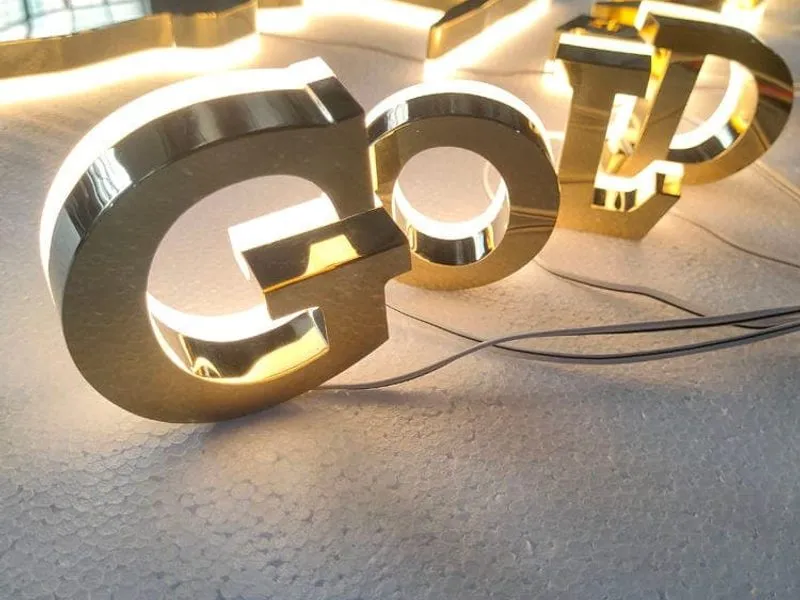
Real photo from our production floor — every sign we ship is made here.
From $24/letter · MOQ 1 piece · Flexible lead time · CE & UL certified · ships to 20+ countries
Custom sizes, colors, and finishes. Get a factory price in 24 hours.
Get a Free Quote Copy EmailWhatsApp +86 13865703472 · business@aochuangsign.cn
See pricing, specs, and get a free quote for the sign type you need. Built in our factory, shipped worldwide.