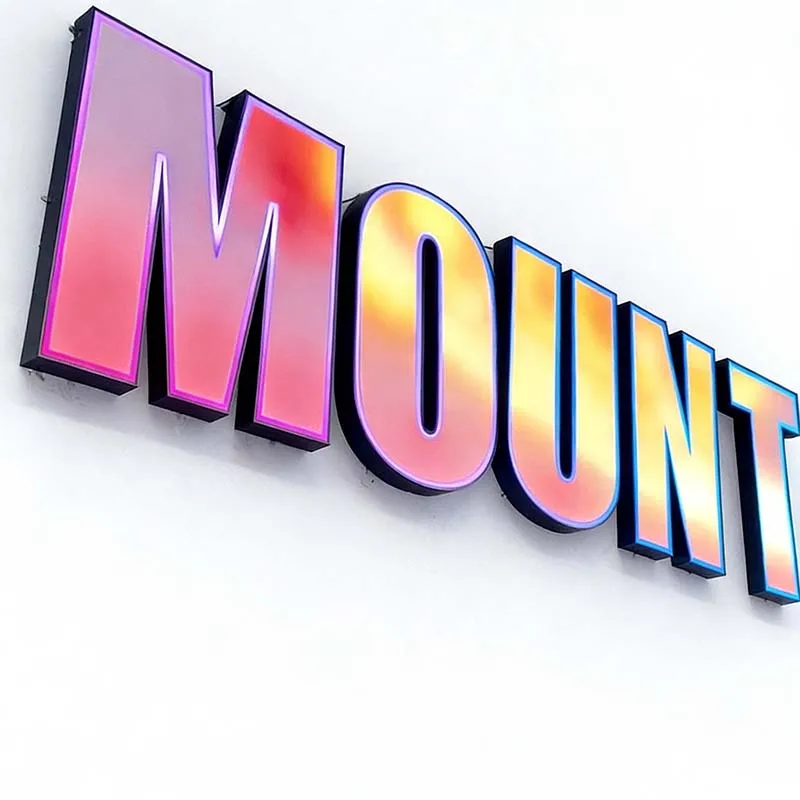
I've watched sign shops in Dallas pay $800 for a single front-lit channel letter. 304 stainless, Samsung LEDs, 18 inches tall. Nice letter. But here's the thing — that exact same letter, same materials, same LED modules, ships out of our factory in Lu'an for about $120. The fabricator who sold it to them probably bought it from us.
That's not me bragging. It's just math. And if you're reading this, you're either done paying 3-5x markup or you're curious enough to see if ordering direct from a Chinese LED sign factory is worth the headache. It is. But only if you know what you're doing.
Twenty-seven years on the factory floor. I've burned my hands on acrylic panels fresh off the CNC. I've argued with LED suppliers who swore their modules were Samsung when the solder joints said otherwise. I've watched container after container leave our loading dock bound for Miami, Sydney, Dubai — worldwide and counting. Here's what I know.
Let's talk real money. A set of front-lit channel letters for a typical strip mall storefront — say, 8 letters at 18 inches each — will run you $160 to $640 out of our factory depending on material and LED spec. That same set, installed by a domestic sign company, lands on the client's invoice at $1,600 to $5,600. And yes, installation adds cost, no question. But the product markup alone is 200-400%.
Here's what nobody tells you: most domestic sign fabricators aren't fabricating anything. They're ordering from factories like mine, unboxing the letters, and marking them up. Some do genuinely manufacture in-house — laser cutters, bending brakes, TIG welders, the whole shop. Those guys charge even more, and they should. Their overhead is brutal. But if you're a contractor, a sign shop, or a business owner placing a larger order, cutting out that middle layer saves you 50-65% on the product. That's not a guess. It's what our export invoices show week after week.
The ugly truth is that some buyers hear "factory direct from China" and think they're getting scammed before the crate even arrives. I get it. The industry earned that reputation. But here's the flip side — our facility in Lu'an, Anhui Province runs 3,000 square meters with 50-plus skilled workers, ISO 9001 certified, CE and RoHS compliant. We ship 7 to 15 days after design confirmation. MOQ is one piece. One. Not a container. Not a pallet. One single letter if that's what you need. Most buyers order sets, obviously, but the point is there's no arbitrary gatekeeping.
Look, I've seen this go wrong: a guy orders "stainless steel letters" and doesn't specify the grade. Factory ships 201 stainless because it's cheaper. Six months later, rust spots. Client is furious. Now nobody's happy and somebody's eating the replacement cost.
304 stainless is 18% chromium, 8% nickel. That's what gives you 10-plus years outdoors with no rust. 304 stainless steel letters from a reputable factory use 1.0 to 3.0mm sheet, TIG welded seams, ground and polished to a brushed #4 or mirror #8 finish. They're not cheap but they're not expensive either — $15 to $40 per letter at factory pricing for non-lit versions. For coastal installations — I mean within a mile of saltwater — you need 316 stainless with 2-3% molybdenum. It costs 20-30% more. For a strip mall in Ohio, 304 is fine. For Miami Beach, pay for 316 or you're replacing letters in 3 years. I've watched that happen too.
Acrylic is another spot where corners get cut and nobody notices until year two. Quality acrylic — Mitsubishi or Degussa stock — runs 90-92% light transmittance and stays UV-stable for 5 to 8 years outdoors. Domestic acrylic sheets start yellowing in 12 to 18 months. The raw material cost difference is maybe 30-40%, but the replacement cost on a storefront sign is the full job all over again. We use 3mm acrylic as standard on faces under 2.5 meters. Over that, 5mm minimum. A 3mm face cuts light output to about 92% of the bare LED. A 2mm face gets you 90%. Your customer won't notice the 2% difference but they'll notice the 40% cost bump on thicker material. Little things like that add up across a 20-letter project.
SMD 2835 modules running 100 to 150 lumens per watt are the industry standard for channel letters. Samsung, Osram, or domestic brand like Lan Jing — quality modules will hit L70 at 50,000-plus hours and realistically last 5 years or more in the field. Cheap no-name modules? 12 to 18 months before the first ones start flickering or going dim.
Quickest way to spot bad LED modules: look at the solder joints. Dull gray solder means oxidized, cheap solder that'll crack and fail. Shiny silver joints mean proper lead-free solder with a solid connection. Our quality control team checks every batch under magnification before assembly. If a supplier sends modules with dull joints, we send the entire shipment back. Most factories won't tell you which LED brand they're using unless you ask. Ask. Then ask for photos of the actual module packaging. Samsung modules come in branded reels with hologram stickers. If the photo shows generic white boxes, something's off.
Look, here's something that'll save you a headache: color temperature matters more than brightness for most jobs. 3000-3500K warm white reads as hospitality — restaurants, hotels, high-end retail. 4000-5000K neutral white is corporate and medical. 6000-6500K cool white is industrial and highway signage. Match the temperature to the brand before you worry about lumens. A warm-white restaurant sign at 100 lumens per watt looks better than a cool-white sign at 150 lumens per watt. The client might not know why it looks wrong, but they'll know it looks wrong.
CE marking costs a factory 20,000 to 50,000 RMB to obtain legitimately — that's roughly $2,800 to $7,000 — and takes 2 to 8 weeks of testing. Most factories will tell you they have CE certification. Here's my advice: ask to see the certificate with today's date in the photo. Watch them sweat. I've seen factories post the same certificate for five years. Test reports expire. Standards change. A legitimate factory keeps current paperwork and isn't scared to show it.
For the US market, UL 48 certification is the gold standard for electric signs. It'll cost a factory $4,000 to $15,000 and take 4 to 9 months with quarterly audits after approval. Very few Chinese factories carry it because the cost and hassle are significant. ETL is a recognized alternative — 10 to 30% cheaper and equally accepted by most inspectors. NEC Article 600 governs US electrical sign installation, and your local inspector wants to see that UL or ETL mark. If you're ordering signs for US installation, confirm this before you pay a cent. Retroactive certification doesn't exist.
IP ratings are another spot where buyers get confused. IP65 means dust-tight and protected against water jets from any direction. That's the minimum for outdoor signs. IP66 handles powerful jets — think coastal conditions with wind-driven spray. IP68 is submersible, which you don't need unless your sign is in a fountain. IP65 sounds impressive on a spec sheet, but it does NOT mean your sign survives a Florida hurricane. Wind load, mounting hardware, and the structure behind the sign are separate issues entirely.
I've seen this go wrong: a customer orders 15 letters, factory finishes them in 10 days, ships by sea to save money, and then the customer calls angry after 60 days asking where their signs are. Sea freight takes about 65 days. That's the reality. LCL — less than container load — your crate gets handled 6 to 8 times between our dock and yours. Every single touch is a chance for damage. That's not in anybody's brochure.
Express shipping runs 7 to 15 days and costs $30 to $100 for small orders. Air freight is about 10 days at $4 to $12 per kilogram. Sea freight LCL runs roughly $80 to $200 per cubic meter, and a full container (FCL) costs $1,200 to $3,000 depending on destination and fuel surcharges. For the US market, remember Section 301 tariffs add roughly 30% to the declared value. Build that into your budget. Nobody likes surprises from Customs.
Here's what nobody tells you: packaging matters as much as fabrication. We use foam wrap on every letter, then individual cartons, then a plywood crate with steel banding. It's overkill for a 12-inch acrylic letter but it's exactly right for a 4-foot stainless set that's traveling 7,000 miles and getting forklifted six times. Cheap factories skimp on the crate. You'll know when your letters show up with bent returns and cracked acrylic faces. The crate is the cheapest insurance you'll ever buy.
Ten steps. Design confirmation takes one day — you approve the artwork, dimensions, material specs, LED color temperature. Laser cutting runs one to two days with accuracy to ±0.1mm. Bending and TIG welding
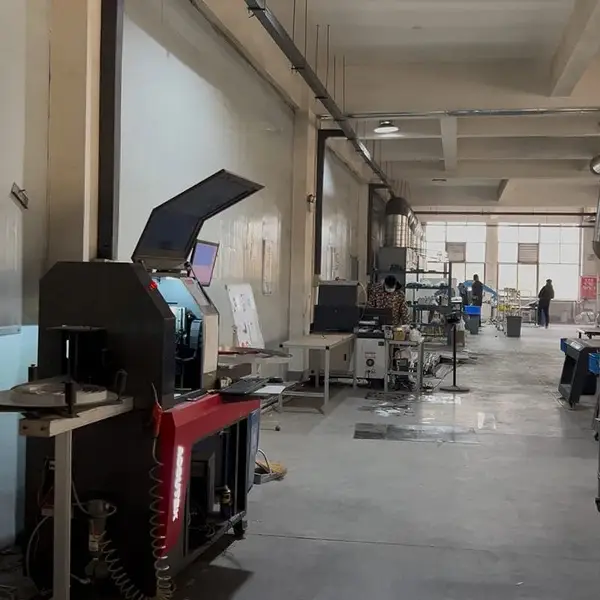
Real photo from our production floor — every sign we ship is made here.
Products mentioned or relevant to this topic — factory-direct, custom built.
From $24/letter · MOQ 1 piece · Flexible lead time · CE & UL certified · ships to 20+ countries
Custom sizes, colors, and finishes. Get a factory price in 24 hours.
Get a Free Quote Copy EmailWhatsApp +86 13865703472 · business@aochuangsign.cn
See pricing, specs, and get a free quote for the sign type you need. Built in our factory, shipped worldwide.