Nobody calls a pylon sign the pretty option.
Here's what nobody tells you: a pylon is a structural project dressed up as a signage project. The cabinet you see above grade is only about 40% of the cost. The rest lives underground—rebar, concrete, stamped engineering drawings, and a permit file an inch thick.
I've quoted these things for 15 years. Let's walk through what actually matters, what actually costs money, and where most buyers screw it up.
A pylon sign is a freestanding cabinet mounted on one or two structural columns, engineered to clear the visual clutter around it. The whole point is line of sight. A 20-foot pylon beats parked cars, hedges, and the neighbors' mess. A 40-foot pylon beats the 40-foot oak tree that used to hide your entire building from the road.
Pylons earn their keep where driving decisions happen. Gas stations, drive-thrus, hotels, pharmacies, dealerships, retail plazas set back 200 feet from an interstate frontage road. A wall sign serves people who already found you. A pylon grabs people who haven't decided yet.
Do the math: a quality double-faced cabinet with SMD 2835 modules from Samsung or Osram runs around 100–150 lm/W and holds L70 for 50,000 hours. That's five-plus years of real life. Cheap modules die in 12–18 months, and there's no such thing as a convenient time to relamp a pylon.
That's the value case. If your customer needs to be seen from 500 feet and doesn't have mountains in the way, it's worth the fight.
You've got three basic structural families. Single-pole monopoles carry one big cabinet or a narrow vertical cabinet on a single round or square column. Dual-column designs span a cabinet between two legs, usually for wider, shorter signs. Enclosed-base pylons wrap the structural hardpoint in masonry or aluminum cladding for that monument-pylon hybrid look.
Heights split into three bands. The 8–14 footers service a parking lot approach. The 20–30 footers clear the rooflines along a commercial strip. The 40–60 foot highway monsters need real steel and a real foundation. Height isn't a style choice—it's an engineering calculation based on visibility distance for the road speed.
Look, don't overthink the face. Most pylon work is a backlit cabinet with a translucent acrylic face—essentially what we build as a double-sided lightbox and then mount on legs. For tenant identification, some pylons carry a mix of cabinet space and individual front-lit channel letters. Either approach works; the difference is maintenance access and how much wind the face catches.
One rule: anything over 2.5 meters tall uses 5mm acrylic, not 3mm. The 2% light loss you get from thicker acrylic is nothing compared to the face you'll replace after one gust season.
Wind load isn't a checkbox—it's the entire structural conversation. The basic design pressure in ASCE 7 is q = 0.00256 × V². At a 140 mph design wind speed, that's around 50 pounds per square foot before you apply gust factors, exposure coefficients, and shape factors. A 20-foot-long cabinet can easily see 100+ psf of effective load by the time the engineer's done multiplying.
That means your foundation is doing some serious lifting.
The ugly truth is the foundation usually costs more than the sign. A 40-foot monopole in decent soil typically needs a drilled pier 30–48 inches in diameter going 12–20 feet deep, or a spread footing 8–12 feet across and 3–4 feet thick, depending on frost depth. If the geotech report says 1,500 psf soil bearing instead of 3,000, the footprint grows. Seismic zones change it again. This isn't a "pour a little extra and call it good" situation—engineers stamp the drawing, and the city holds you to it.
I've seen this go wrong. A shop ordered the entire cabinet from overseas before anyone looked at the site's exposure category. Then the engineer spec'd a bigger foundation than the budget had room for. The sign sat in a warehouse for a month while the customer scraped up another $8,000.
Get the wind load rating in miles per hour on every drawing before you spend a dollar on fabrication. Think twice.
A conforming sign permit—one that meets the city's existing height, setback, and size limits—usually takes 2–6 weeks. That's the easy path. If the sign exceeds the zoning limit, you're asking for a variance or conditional use permit, and that's a 60–120 day detour that goes through a board of zoning appeals, sometimes city council, sometimes both.
The ugly truth is municipal sign codes weren't written to help you. Most cities cap pylon heights at 20–35 feet. Many prohibit them entirely in favor of monuments. Off-premise structures that advertise a business that isn't on the property? Those face an entirely different legal fight.
Here's what actually works when you need approval: talk to the planner before you submit, not after. Offer to drop the height 25%, add landscaping around the base, or reduce the cabinet square footage. A neighbor who shows up to the public hearing with a photo of the obstruction and a reasonable compromise gets a permit. An applicant who walks in with a "my rights" attitude gets a lesson in how long appeals really take.
Electrically, you're in NEC Article 600 territory, and most jurisdictions want a third-party listing like UL 48 or ETL. UL 48 runs $4,000–15,000 and takes 4–9 months if you're certifying a new product—ETL runs 10–30% cheaper. Ask to see the certificate with a current date. Half the factories claiming UL will sweat when you do.
Let's talk money. Factory-direct, an illuminated cabinet runs $80–250 per square meter depending on build quality, with quality acrylic LED letters and trim listed separately. That's the product cost. The installed cost—permits, engineering, concrete, crane, electrical, and freight—is where the real budget lives.
For the US market, expect installed prices around $8,000–15,000 for a small 10–14 foot pylon. A 20-foot double-faced unit with a basic cabinet runs $15,000–30,000. A 40-foot highway sign runs $40,000–90,000 once the structural engineer, foundation, and crane rental get their cut. Factory-direct saves you 50–65% on the sign itself, but you can't factory-direct a foundation.
Material choices determine lifecycle. A coastal installation needs 316 stainless for exposed trim—it has 2–3% molybdenum and holds 15+ years in salt air, while 304 will pit in three. That 20–30% material premium is cheap compared to replacing letters on a ladder with ocean wind in your face. The same logic applies to acrylic: Mitsubishi or Degussa UV-stabilized acrylic holds 5–8 years. Domestic sheet yellows in 1–2.
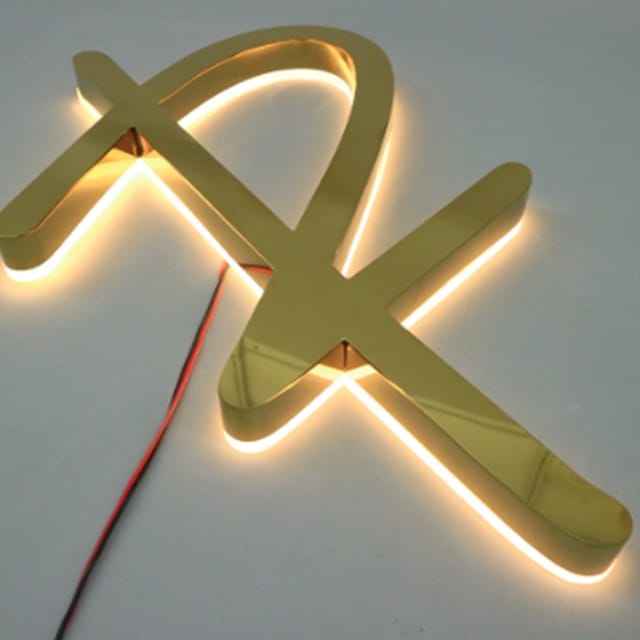
For the trim and logos, use proper 304/316 stainless steel letters. Powder-coated aluminum has its place, but stainless on a pylon means the ID survives decade one without fading.
Here's where we come in. Aochuang Sign has been building channel letters, lightboxes, and pylon components in Lu'an, Anhui since 2010. We work out of 3,000 square meters with 50-plus workers, and we keep CE, RoHS, and ISO 9001 certs on file. Our standard lead time is 7–15 days from drawing approval to crating. Air freight takes 10–20 days; sea freight runs 50–70 days, so plan six months ahead if you're importing.
Look, I'm not going to sugarcoat shipping. LCL sea freight gets handled 6–8 times between our dock and yours, so we crate everything—foam, double-wall carton, plywood frame. The production floor runs laser cutting to ±0.1mm, TIG welding, 8–12 hour aging tests on every LED run, and 100% QC before export. You'll still want a local electrical sign contractor for the foundation, mast, and final wiring. That's normal. You're buying the fabricated sign system, not the installation.
The honest procurement checklist? Get the engineered wind load spec first, then send it to us. We'll build the cabinet and letters to match. We do MOQ of one piece, so you're not stuck with 50 identical faces because you needed one pylon. Remember the US Section 301 tariff adds roughly 30% on imports from China—factor it into the quote before you fall in love with the factory price.
Ask your vendor for dated certificates, real product photos, and a detailed QC checklist.
If they hesitate, walk.
Do I really need a stamped structural engineer for a 12-foot pylon? Yes. Your local building department will require it, and the foundation math isn't guesswork. Skip it and the first good windstorm turns your investment into a liability lawsuit.
Can I buy a pylon from China and install it myself? You can buy the cabinet and letters factory-direct—that's where the 50–65% savings are. But the foundation, steel mast, and electrical connection need licensed local contractors who know their jurisdiction's codes. That's not optional.
What do buyers forget in the budget? The crane, the concrete, the geotech report, the traffic control for the install, and the tariff. In that order.
What's the biggest lie in the industry? "IP65 means it'll survive anything." IP65 means water jets from any direction—it does not mean your sign survives a hurricane. Check the actual wind rating, not the IP rating, before you believe the brochure.

Real photo from our production floor — every sign we ship is made here.
Products mentioned or relevant to this topic — factory-direct, custom built.
From $24/letter · MOQ 1 piece · Flexible lead time · CE & UL certified · ships to 20+ countries
Custom sizes, colors, and finishes. Get a factory price in 24 hours.
Get a Free Quote Copy EmailWhatsApp +86 13865703472 · business@aochuangsign.cn