You want the truth about sign board manufacturers in China? Fine.
I've been doing this since 2010. I've burned my hands on hot acrylic enough times to know what actually holds up. My factory, Aochuang Sign, runs 3,000 square meters in Lu'an, Anhui, with 50-plus workers and a 7-to-15-day production schedule. We ship worldwide. I've argued with suppliers over LED quality more times than I can count. If you're sourcing sign boards from China, you need to know what separates a real factory from a guy with a laptop and a warehouse photo.
Here's what nobody tells you: most "manufacturers" you find on Alibaba aren't manufacturers.
They're trading companies that take your order, mark it up 15 to 30 percent, and then have some third-party shop in Foshan or Shenzhen build it. A real factory runs an aging test room where LED modules burn 8 to 12 hours before we seal them into a sign. A laser cutter holds ±0.1mm tolerance. Ask for a video tour with today's date in the frame. A trading company stalls. A factory walks you through the floor.
The supply chain doesn't live in one city. Guangdong packs the LED module and electronics density. Zhejiang has acrylic sheets and formed plastics. Jiangsu and Shandong handle a lot of metal fabrication.
But a full-service sign board factory can set up anywhere with the right equipment and workforce. My shop in Lu'an handles laser cutting, TIG welding, CNC acrylic faces, LED assembly, sealing, aging, and export crating under one roof. We don't outsource the hard parts. Capacity matters more than location. If a factory can't show you 50-plus workers and a 3,000-square-meter production floor, their "7-day lead time" is a prayer, not a promise.
Look, a sign board maker in a tier-two city like Lu'an won't have the cheapest hourly labor in China. But they'll have lower overhead than Shenzhen and fewer shortcuts than a pop-up shop in an industrial park.
Acrylic is the face of most illuminated sign boards. Good UV-resistant sheet from Mitsubishi or Degussa lasts 5 to 8 years outdoors. Domestic acrylic can start yellowing in 1 to 2 years.
Here's the ugly truth: a 3mm acrylic face cuts light output to about 92 percent, and a 2mm face cuts it to 90 percent. Your customer won't notice that 2 percent difference. They will notice the 40 percent cost bump for thicker sheet. For anything over 2.5 meters, use 5mm or thicker. Hard no.
For front-lit channel letters, the body metal matters. 304 stainless has 18 percent chromium and 8 percent nickel, and it'll last 10-plus years outdoors. 316 stainless adds 2 to 3 percent molybdenum — that's why it's the marine-grade choice for coastal jobs. But it costs 20 to 30 percent more. If you're doing a strip mall in Ohio, 304 is fine. If you're 200 meters from salt spray in Miami, pay for 316 or replace the letters in three years.
Aluminum weighs a third of steel and lasts 8 to 12 years outside. For acrylic LED letters, the LED drives the cost. SMD 2835 modules run 100 to 150 lumens per watt and are the industry standard. SMD 5730 pushes 40 to 60 lumens per chip for the brightest output. Cheap modules with dull gray solder joints die in 12 to 18 months. Shiny silver solder joints mean proper lead-free work and a real 5-plus-year lifespan.
Customization is where factories earn their margin. Our production flow runs 10 steps. Design confirmation takes one day. Laser cutting: one to two days. TIG welding and bending: one to two. Grinding and polishing: one to two. CNC acrylic face cutting: one day. LED assembly: one to two. Neutral silicone sealing: one day. Then an 8-to-12-hour aging test, 100% QC, and export packaging. Total floor time: 7 to 15 days.
Full-color logos often use UV printing on sign boards. But if the print isn't UV-stable and cleared or laminated, it fades. Don't skip the laminate on an outdoor sign just to save $4 a square meter.
For back-lit halo letters, LED placement and module spacing decide everything. You don't want hot spots or a dark ring behind the letter. Color temperature changes the whole job: 3000 to 3500K for hospitality warmth, 4000 to 5000K for retail and corporate, 6000 to 6500K for industrial and highway. Specify the Kelvin or you'll get whatever module's left over from last month's order.
UL 48 certification costs $4,000 to $15,000 and takes 4 to 9 months, with quarterly audits. ETL is a real alternative and runs 10 to 30 percent cheaper. CE marking costs 20,000 to 50,000 RMB and takes 2 to 8 weeks.
Here's the ugly truth: a lot of factories claim CE because they saw a competitor put the logo on a website. Ask to see the certificate with today's date. Watch them sweat. If you need UL for a US install, don't expect a factory to "just add it" for free. That's a five-figure, multi-month process.
IP65 is the minimum for outdoor signs. It means dust-tight and protected against water jets from any direction. But it doesn't mean your sign survives a Florida hurricane. For coastal areas, IP66 makes sense. IP68 is for submersible or extreme weather. In the US, NEC Article 600 governs electrical signage. If your local inspector asks for a listed product, no credential means no install.
Look, the quickest way to spot bad LED work? The solder joint. Dull gray joints mean cheap flux and a module that won't last 18 months. Shiny silver joints mean proper lead-free solder. If a factory won't show you the inside of a module tray, walk away.
Factory-direct prices beat what a US sign shop pays a domestic fabricator. From our floor: front-lit channel letters run $20 to $80 per letter. Back-lit halo letters run $35 to $120. Stainless steel non-lit letters run $15 to $40. 3D fabricated letters run $40 to $120. Aluminum letters start around $10 to $25 per letter.
Here's what nobody tells you: installed retail pricing in the US runs $200 to $700 per letter for front-lit and $400 to $1,000 for halo. I've watched sign shops pay $800 for a front-lit letter from a domestic fabricator. Same 304 stainless, same Samsung LEDs. We ship that letter for $120. Factory-direct savings on product? 50 to 65 percent.
Our MOQ is one piece. That's not a gimmick. You can order a single stainless steel letter or a full sign system without a 500-piece minimum. Don't assume a lower MOQ means a factory is desperate. It means they built a process that doesn't punish small runs.
Production takes 7 to 15 days. Express shipping takes 7 to 15 days and costs $30 to $100 for small items. Air freight takes 10 to 20 days at $4 to $12 per kilogram. Sea freight takes 50 to 70 days, with LCL at $80 to $200 per cubic meter and a full container at $1,200 to $3,000.
Here's the ugly truth about LCL sea freight: handlers touch your crate 6 to 8 times between our dock and yours. Every touch is a chance for damage. Brochures don't mention that. We pack with foam, carton, and plywood crates. But budget for insurance and real-world handling on ocean shipments.
Don't forget the US Section 301 tariff — roughly 30 percent on many sign products. If your quote doesn't include tariff and freight, you don't have a landed cost. Ask for the total out-the-door number, not the factory price.
Don't email a factory and ask, "What's your price for sign boards?" You'll get a polite reply and no numbers. Send specs instead: material, thickness, face type, LED brand, color temperature, IP rating, dimensions, quantity, and target ship date.
Ask for a business license cross-check, a video tour with today's date, photos of the aging test room, and a material certificate for the stainless or acrylic. If they can't produce those in 48 hours, they're not the factory.
Look, I've seen this go wrong: a buyer picks the lowest quote, skips the video tour, and three months later gets a crate of letters with cheap LED modules and hairline cracks in the acrylic. Then they pay a local shop $2,000 to fix a $900 order. Penny-wise, pound-foolish, as my old boss used to say.
"Can you actually sell me one sign board?" Yes. MOQ is one piece. We make custom signs, not bulk widgets.
"What's the cheapest material for an outdoor sign?" Aluminum letters run $10 to $25 per letter. But if you stick cheap LED modules inside them, don't call me in 18 months when they flicker. A service call eats the material savings.
"Do I really need UL certification?" In the US, NEC Article 600 applies. If an inspector requires a listed product, yes. UL 48 costs $4,000 to $15,000 and takes 4 to 9 months. ETL can be 10 to 30 percent cheaper. Don't ask a factory to "just include UL" like it's a free option.
"How long will my order take?" Production is 7 to 15 days. Express shipping adds 7 to 15 days. Air adds 10 to 20. Sea adds 50 to 70. If you need it for a grand opening next week, you should've ordered last month.
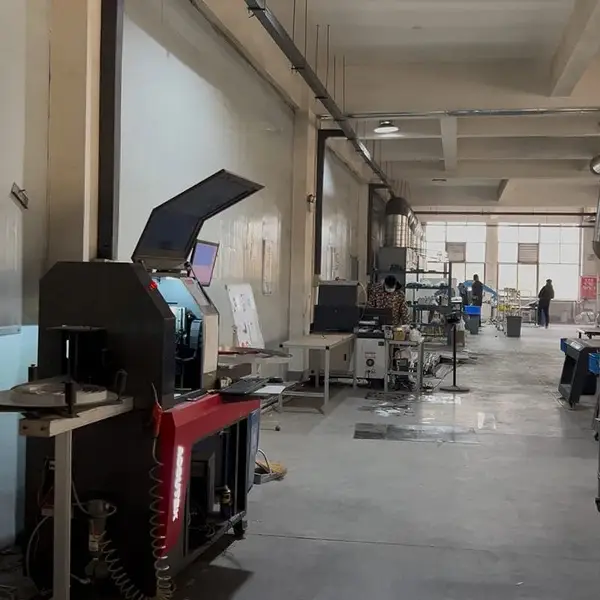
Real photo from our production floor — every sign we ship is made here.
Products mentioned or relevant to this topic — factory-direct, custom built.
From $24/letter · MOQ 1 piece · Flexible lead time · CE & UL certified · ships to 20+ countries
Custom sizes, colors, and finishes. Get a factory price in 24 hours.
Get a Free Quote Copy EmailWhatsApp +86 13865703472 · business@aochuangsign.cn