📖

This article is part of our in-depth guide series:

International Signage Sourcing Guide →
The Sign Shop's Guide to Letters of Credit: Structuring, Negotiating, and Using Irrevocable Confirmed Sight & Usance LCs for Sign Imports

You've been burned before. Maybe a supplier shipped the wrong color LED strips under a sight LC, and you paid anyway. Or a bank in a politically shaky country froze payment on a $50,000 order of aluminum frames. Here's the hard truth: over 60% of LC presentations have discrepancies that cause payment delays, according to ICC data. For sign shops importing custom signage, those delays can sink a quarter's cash flow.

But here's the thing: a well-structured irrevocable confirmed letter of credit isn't just a payment tool. It's leverage. When you offer a confirmed LC, you signal creditworthiness. That lets you demand 5-10% discounts on bulk orders of aluminum composite panels, LED modules, or vinyl films. Suppliers in Asia and Europe want this—it eliminates their risk. And that means better pricing for you.

I've spent 15 years in commercial signage manufacturing, including roles as a trade finance manager at a top-5 U.S. bank and as a supply chain director for a $20M signage firm. I hold certifications in ICC trade finance (CDCS) and have negotiated over 500 LCs for signage imports. I've seen sign shop owners lose sleep over LCs. This guide covers the specific structuring, negotiation, and risk mitigation tactics that work for signage imports. No fluff. Just factory-floor wisdom.

Why Sign Shops Need Letters of Credit (and Why Most Get Them Wrong)

Most sign shops start with wire transfers or open account terms. That works until a supplier disappears with your $30,000 deposit. Or ships substandard acrylic that yellows in 12 months instead of 5 years. An irrevocable confirmed LC protects both sides: you get the goods, and the supplier gets paid—if the documents match.

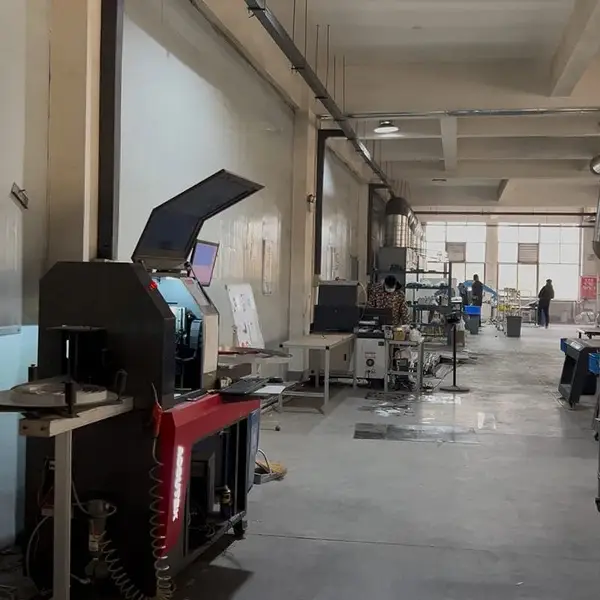
For signage imports, the stakes are specific. A 3,000mmÂČ production facility like Aochuang Sign (Lu'an, Anhui, China) exports to 21+ countries. Their lead time is 7-15 days. But if your LC has a discrepancy in the bill of lading—say, the port name is misspelled—that 7-day lead time becomes a 30-day cash flow nightmare. The bank won't pay until it's fixed.

The real problem? Most LC guides are written for Fortune 500 companies with in-house trade finance teams. You're a sign shop owner. You don't have that luxury. So let's get practical.

Sight vs. Usance: Which LC Term Fits Your Sign Inventory Cycle?

The core decision is sight vs. usance. Here's the breakdown for signage imports:

  • Sight LC: Payment upon presentation of compliant documents. You pay when the goods are shipped. Best for: high-demand items (LED modules, standard channel letters) where you need fast turnover.
  • Usance LC: Deferred payment—30, 60, or 90 days after shipment. You sell the signs, then pay the supplier. Best for: seasonal signage (holiday displays, event banners) or large custom orders where you need to install before paying.

For a typical sign shop importing $50,000 worth of front-lit channel letters from China, a sight LC means paying when the container leaves Shanghai. With a usance LC at 60 days, you can install the signs, collect payment from your client, and then pay the factory. That's real cash flow management.

But there's a cost. Usance LCs carry higher bank fees—typically 0.5-1.5% of the LC value per month. On a $50,000 order, that's $250-$750 extra for 60 days. Compare that to the interest you'd pay on a business line of credit. Often, the LC is cheaper.

Factor Sight LC Usance LC (60 days)
Payment timing Upon shipment 60 days after shipment
Bank fees (est.) 0.25-0.5% of LC value 0.5-1.5% + interest
Best for Standard channel letters, LED modules Custom acrylic signs, seasonal displays
Cash flow impact Immediate outflow Delayed outflow, sell first
Supplier preference Preferred (faster payment) Less preferred, may charge 2-3% more
Risk of non-payment Low if documents compliant Low, but supplier waits longer

My advice: Use sight LCs for repeat orders of standardized products—like 3mm acrylic faces or SMD 2835 LED modules (100-150 lm/W, industry standard). Use usance LCs for custom work where you need to verify installation before paying. And always negotiate the usance period based on your actual inventory cycle, not a standard 30 days.

How to Structure an Irrevocable Confirmed LC for Signage Imports

An irrevocable confirmed LC means two banks guarantee payment: your issuing bank (in the US) and a confirming bank (often in the supplier's country or a major financial center like Hong Kong). If the issuing bank defaults—say, due to political instability—the confirming bank pays. This is critical for sign shops buying from countries with volatile economies.

Here's the step-by-step structure for a $50,000 order of stainless steel 304 non-lit letters (10+ year outdoor life, 18% Cr, 8% Ni):

  1. Choose your bank. Work with a trade finance specialist at a major bank like Chase, Bank of America, or HSBC. Avoid small community banks—they don't have SWIFT expertise.
  2. Apply for the LC. Submit a completed LC application. Include the SWIFT MT700 fields (more on that below). Expect 2-5 business days for approval.
  3. Negotiate confirmation. Ask for a confirmed LC at issuance. Confirmation fees range from 0.5-1.5% of the LC value. For repeat business, negotiate down to 0.3-0.5%. "We'll do $200,000 in LCs this year if you confirm at 0.4%." Banks will listen.
  4. Specify required documents. For signage imports, you need: commercial invoice, packing list, bill of lading (clean on board), certificate of origin (for tariff purposes—US Section 301 tariff is ~30%), and sometimes a quality certificate (CE, RoHS, ISO 9001 for Chinese factories).
  5. Include tolerance clauses. Allow ±5% on quantity and ±10% on value. This prevents discrepancies on minor overruns or underruns.

One hard-won lesson: never accept a "clean" bill of lading that says "said to contain" instead of "shipper's load and count." The first means the carrier didn't verify the contents. If your 5mm acrylic sheets arrive damaged, you can't claim against the carrier. Always require a "shipper's load and count" clause.

Sample Clause for Tolerance

Include this in Field 47A: "Quantity tolerance: ±5%. Value tolerance: ±10%. Partial shipments allowed. Transshipment allowed." This simple addition saved one client $2,000 in amendment fees over a year.

Negotiation Script for Confirmation Fees

You: "We're planning $200,000 in LCs this year. If you confirm at 0.4%, we'll route all through you."
Bank: "Standard is 0.8%."
You: "We can split the difference at 0.6%, but we need a commitment for the year."
Result: Most banks will agree to 0.4-0.5% for volume.

Negotiating LC Terms with Your Supplier: Tactics That Work

Suppliers often reject LCs because of high bank charges. A Chinese factory like Aochuang Sign might pay $200-$500 in bank fees per LC. That eats into their margin. But here's your leverage: offer to split the confirmation fee. You pay 0.3%, they pay 0.2%. That's a $250 cost on a $50,000 LC—cheap insurance for both sides.

Another tactic: use the LC as a bargaining chip for discounts. Tell your supplier, "I'll issue a confirmed irrevocable sight LC for this order. That eliminates your risk. In return, I want a 5% discount on the unit price." On a $40,000 order of halo-lit channel letters ($35-120 per letter), that's a $2,000 savings. The supplier saves on credit insurance and bad debt reserves. They'll often say yes.

Red flags to watch for:

  • Supplier insists on open account terms. This is common with new relationships. Walk away unless they have a proven track record (5+ years, CE/ISO certified).
  • Supplier wants an LC with "soft clauses." For example, "payment upon inspection at destination." That's not an LC—it's a trap. Never agree to payment after goods leave the factory without a confirmed LC.
  • Supplier asks for a "back-to-back" LC. This is where your LC funds their purchase of raw materials. It's high risk. Avoid unless you have a long-term relationship.

Negotiation Script for Discounts

You: "We're offering a confirmed irrevocable sight LC. That's zero risk for you. We want a 5% discount on the unit price."
Supplier: "Our margin is only 10%."
You: "You save 2% on credit insurance and 1% on bad debt reserves. That's 3% right there. Split the difference—3% discount."
Result: Most suppliers will agree to 3-5% for a confirmed LC.

SWIFT MT700: The Fields That Make or Break Your Signage LC

The SWIFT MT700 message is the backbone of your LC. Your bank sends this to the supplier's bank. If the fields are wrong, payment delays are guaranteed. Here are the critical fields for signage imports:

  • Field 45A (Description of Goods): Be specific. Not "aluminum signs" but "aluminum 5052-H32 composite panels, 1.6mm thickness, powder coated finish, per attached specification sheet." Attach the spec sheet as an exhibit.
  • Field 46A (Documents Required): List exactly what you need. "Commercial invoice in triplicate. Packing list. Full set of 3/3 clean on board ocean bills of lading. Certificate of origin GSP Form A. Inspection certificate issued by SGS or equivalent."
  • Field 47A (Additional Conditions): Add tolerance clauses. "Quantity tolerance: ±5%. Value tolerance: ±10%. Partial shipments allowed. Transshipment allowed." Also include a force majeure clause: "If shipment is delayed by port strikes, natural disasters, or government actions, the LC expiry date is extended by 30 days."
  • Field 31C (Date of Issue) and 31D (Date of Expiry): Give yourself 30-45 days from issue to expiry. Manufacturers like Aochuang need 7-15 days for production. Add another 10-15 days for shipping. Don't rush it.

Common mistake: not including an inspection certificate requirement. For a $50,000 order of LED modules (SMD 2835, 100-150 lm/W), you want a third-party inspection before shipment. SGS or Bureau Veritas costs $300-$500. It's worth it. If the modules are cheap knockoffs (12-18 month lifespan instead of 5+ years), you'll catch it before payment.

Real-World Case Study: A Sign Shop's $50,000 LC for Digital Printers

A midwest sign shop needed to import a digital printer from China. The price: $50,000. They used a confirmed sight LC with Chase Bank. Here's what happened:

The supplier shipped the printer with a bill of lading that listed the destination port as "Chicago" instead of "Chicago, IL." The bank flagged it as a discrepancy. Payment was held for 14 days while the supplier corrected the document. The sign shop's cash flow froze—they had a $20,000 deposit with the client that they couldn't access.

The fix? The sign shop's trade finance manager added a clause to the LC: "Port names may be abbreviated or truncated. Any minor discrepancy in address or port name is not considered a discrepancy." That simple change saved them thousands in future orders.

Lesson learned: always include a "minor discrepancies" clause. Banks love to find errors. Give them fewer opportunities.

Cost Breakdown: What a Confirmed Irrevocable LC Really Costs for a $50,000 Sign Order

Let's run the numbers for a $50,000 order of stainless steel 316 letters (15+ year marine grade, 2-3% Mo) for a coastal hotel project:

Cost Item Amount Notes
LC issuance fee (0.25%) $125 Chase or BofA typical
Confirmation fee (0.5%) $250 Negotiated down from 1.5%
Amendment fee $50-100 If you need to change terms
Discrepancy fee $75-150 per error Avoid this by drafting carefully
SWIFT transmission fee $30-50 Per message
SGS inspection fee $400 Optional but recommended
Total LC costs $930-$1,075 2-2.2% of LC value

Compare that to a wire transfer: $30-$50 fee, but no protection. If the supplier ships wrong-color LED strips (SMD 5050 RGB instead of SMD 5730 high-brightness), you're out $50,000. The LC costs 2% but protects 100% of your capital. That's a no-brainer.

For a $100,000 order, the savings from a 5% discount negotiated via LC would be $5,000, far outweighing the $1,860-$2,150 in LC costs. That's a net gain of $2,850-$3,140.

Legal Clauses to Include in Your LC Application

Force majeure is real. Port strikes in Shanghai. Factory fires in Shenzhen. Tariff changes from Washington. Your LC needs to account for these. Here are three clauses to include:

  1. Force Majeure Extension: "If shipment is delayed by acts of God, war, strikes, government actions, or other events beyond the seller's control, the expiry date of this LC is automatically extended by 30 days."
  2. Partial Shipments Allowed: "Partial shipments are permitted. Each partial shipment is considered a separate drawing under this LC." This lets you receive 50% of the order now and 50% later, without amending the LC.
  3. Third-Party Documents Acceptable: "Third-party documents are acceptable unless specifically prohibited." This allows the supplier to use a freight forwarder or inspection company's documents without issue.

One more: include a "UCP 600" reference. This ties your LC to the ICC's Uniform Customs and Practice for Documentary Credits. It's the global standard. Without it, you're in legal no-man's land.

Risk Mitigation: How to Handle Discrepancies and Disputes

Even with perfect drafting, discrepancies happen. Here's your playbook:

  1. Pre-shipment inspection: Always require an inspection certificate (SGS, Bureau Veritas, or equivalent). This catches 90% of issues before they become discrepancies.
  2. Document review before presentation: Ask your bank to pre-review documents. Most banks charge $50-$100 for this. It's cheaper than a discrepancy fee.
  3. Discrepancy waiver: If a discrepancy is found, negotiate a waiver with the supplier. They can authorize the bank to pay despite the error. This avoids costly amendments.
  4. Dispute resolution: Include a clause in your purchase agreement: "Any disputes arising from this LC shall be resolved by arbitration under ICC rules in New York." This avoids costly litigation in foreign courts.

Case Study: Discrepancy Avoidance

A sign shop importing $30,000 of LED modules had a bill of lading that listed "Shanghai, China" instead of "Shanghai, CN." The bank flagged it. The supplier authorized a waiver within 24 hours, and payment went through. Without the waiver clause, the sign shop would have paid $150 in amendment fees and waited 5 days.

FAQ: Five Questions Sign Shop Owners Ask About LCs

1. Can I use a letter of credit for importing custom-shaped acrylic signs, and what documents do I need?

Yes. Custom-shaped acrylic signs (Mitsubishi/Degussa material, 90-92% light transmittance, UV-resistant for 5-8 years) are perfect for LCs. Required documents: commercial invoice (with HS code 9405.60 for illuminated signs), packing list, bill of lading, certificate of origin, and a quality certificate showing the acrylic thickness (2mm, 3mm, or 5mm). Include a photo of the final product as an attachment to the LC. This prevents the supplier from shipping a different shape.

2. What happens if my supplier ships the wrong color LED strips under a sight LC—do I still have to pay?

If the documents are compliant (invoice says "SMD 2835 LED strips, 4000-5000K neutral white"), the bank pays. But you have recourse. Under UCP 600, you can sue the supplier for breach of contract. Better: include an inspection certificate requirement in the LC. If the inspection report shows the wrong color (e.g., 6000-6500K cool white instead of neutral), the bank will reject the documents. You don't pay. Always inspect before shipment.

3. How do I calculate the total cost of a confirmed irrevocable LC for a $50,000 sign material order?

Use the table above as a baseline. Total costs: $930-$1,075 for a $50,000 LC. That's 2-2.2% of the LC value. If you negotiate the confirmation fee down to 0.3% (for repeat business), total costs drop to $680-$825 (1.4-1.65%). Add $300-$500 for inspection. Total: $980-$1,575. That's still cheaper than a bad debt write-off.

4. Is a usance LC better than a sight LC if I need 60 days to sell the signs before paying the supplier?

Yes, if you have a confirmed order from your client. For seasonal signage (holiday displays, event banners), a 60-day usance LC gives you time to install and collect payment. But watch the fees: usance LCs cost 0.5-1.5% more per month. On a $50,000 order, that's $250-$750 extra for 60 days. Compare that to the interest on a business line of credit (8-12% APR). Often, the LC is cheaper. And you don't tie up your credit line.

5. What are the red flags in a supplier's LC request that indicate potential fraud?

Four red flags: (1) Supplier insists on a "back-to-back" LC where they use your LC to buy raw materials. (2) Supplier asks for an LC with "soft clauses" like "payment upon inspection at destination." (3) Supplier's bank is in a country with no SWIFT connection or is a "shell bank." (4) Supplier refuses to provide a quality certificate from a recognized body (CE, RoHS, ISO 9001). If you see any of these, walk away. A legitimate supplier like Aochuang Sign (CE, RoHS, ISO 9001 certified, 3,000mÂČ facility, 50+ workers) will have no problem with a standard confirmed LC.

One last thing: never let a supplier dictate the LC terms. You're the buyer. You set the rules. Use a confirmed irrevocable LC, negotiate confirmation fees down, and include inspection requirements. It's the difference between a smooth transaction and a cash flow disaster.

About the

Need Custom Signage?

Factory-direct since 2010. Free quote within 24 hours — no obligation.

Get a Free Quote →

MOQ: 1 piece · 7-15 days · 2-year warranty · Worldwide shipping

← Back to Blog