Look, the government doesn't care about your brand font or whether you prefer warm white LEDs. They care about one thing: the six to ten digits that decide your duty rate. Get that code wrong and your $3,000 sign order might cost you $900 extra in tariffs you didn't budget for — or worse, your shipment gets seized in a Long Beach warehouse and you start bleeding storage fees by the day.
Here's what nobody tells you: harmonized system codes aren't some academic exercise for customs brokers to justify their fees. One wrong digit on a commercial invoice can flip a 3.4% duty into a 30% tariff under Section 301. Multiply that across five years of regular imports and you're looking at real money. I've watched a sign shop in Texas pay an extra $17,400 over a single year just because they let their Chinese supplier slap "9405.60" on everything, including non-lit stainless letters that should have gone under a different code entirely. That's not a learning experience — that's a business wound.
This guide isn't legal advice. I'm not a customs attorney. I'm the guy who's been on the factory floor 16 years, shipping signs worldwide out of our 3,000m² plant in Lu'an, Anhui. I'll tell you exactly what I tell buyers who call me at 11 p.m. Eastern time, stressed out because their broker just flagged a shipment. The classifications I mention here represent actual codes we've used on Aochuang export documentation for real orders. They've cleared customs. They've been tested. They still might not be right for your exact product because of how your sign is constructed, and that's why you always verify with your own broker. But if you want the unvarnished factory view, keep reading.
The ugly truth is most Chinese sign suppliers will write whichever HS code you ask for on the commercial invoice and never stop to question it. They don't get fined when CBP catches the mismatch. You do.
Signal categories in the Harmonized System aren't branded "signs" in a neat single chapter. They get scattered based on material, whether they light up, and how they're attached. After handling thousands of sign exports, I see three main HS codes come up again and again: 9405.60 for illuminated signs, 8310.00 for non-lit metal letters and nameplates, and occasionally 3926.90 for stand-alone plastic letters that aren't metal-backed and don't involve any electrical components. That third one is a gray area, and I'll explain why later.
You need to understand material classification logic: illuminated products default to 9405.60 almost regardless of the housing material. A stainless steel front-lit channel letter with an LED module inside? 9405.60. An acrylic light box with a fluorescent tube? Also 9405.60. The moment you add a power supply, cord, or even a passive reflector that depends on external light but is sold as a "luminaire," customs likes to push it into Chapter 94. I've seen inspectors argue that even a backlit halo letter counts as an illuminated sign, not just a metal letter with a light behind it, because the whole assembly is designed to project light. They aren't always consistent. But when they're strict, you lose.
Non-illuminated base-metal letters, plates, and numbers that you'd bolt to a lobby wall — those fall under 8310.00. The Harmonized System Explanatory Notes specifically mention "letters, numbers and... signs for shop windows, restaurants, etc., of base metal, whether or not enamelled, gilt, nickel-plated, silver-plated, etc." So a brushed stainless steel set of letters without LEDs is a textbook 8310.00 item. That code applies whether the letter is 3D fabricated from 304 stainless, cut from aluminum, or stamped from brass.
Pure plastic letters — acrylic cut letters with no metal face, no light, no integrated mounting that requires metal — can sometimes slip into 3926.90 as "other articles of plastics." But be careful. If that acrylic letter has metal studs for mounting, some brokers will argue the essential character shifts and push it back to 8310.00. I've had a shipment of 5mm acrylic dimensional letters get reclassified at the port because the back had tiny aluminum mounting pins. The duty difference was minimal that time, but if that shipment had been during a tariff spike, it would have stung.
9405.60 is where most of my U.S. customers live — and where Section 301 hits hardest. This code covers "Illuminated signs, illuminated name-plates and the like... having a permanently fixed light source." If your sign has LEDs built into the can, it's here. Front-lit channel letters, back-lit halo letters, rimless face-lit signs, dual-lit letters that shine front and back, the acrylic light boxes that sit above a strip mall store — all default to 9405.60. We ship a lot of front-lit channel letters and I've learned that customs in the U.S. will almost never accept an alternative classification for anything that glows.
Here's what nobody tells you: the duty rate isn't the only issue. Under the U.S. Section 301 trade action, products from China classified under 9405.60 carry an additional 30% tariff on top of the standard rate. Standard NTR (most-favored nation) duty on 9405.60 is usually around 2% to 5.7%, but the extra 30% makes the effective rate roughly 32% to 35.7% of the declared value. For a $5,000 order of back-lit halo letters, that's an extra $1,600 out of nowhere. And yes, it applies to the full CIF value — cost, insurance, freight — not just the product cost. Miss that in your budget, and your 50% factory-direct savings evaporate.
Customs documentation for 9405.60 also triggers more scrutiny. You'll need a proper commercial invoice with detailed descriptions, the country of origin clearly marked as China, and the value broken out appropriately. We always include a packing list that ties each carton to the HS code, with photos of the actual product if there's any ambiguity. If your broker files under 9405.60 but your invoice says "metal letters" without mentioning they're illuminated, expect a delay. And a lot of questions.
Even light boxes — basic rectangular cabinets with a translucent face and LEDs inside — settle into 9405.60. The same goes for modern acrylic light boxes and channel letter sets that you'll assemble on site. The moment they have illumination as a design feature, Chapter 94 pulls them in.
8310.00 is the straightforward friend. Base metal signs, nameplates, address plaques, and individual letters — no electricity, no bulbs, no LED strips — live here. When we fabricate stainless steel letters in 304 or 316, polished and packed with threaded studs for wall mounting, and there's no lighting module anywhere, that's a clean 8310.00 classification.
I've seen this go wrong: a California contractor ordered heavy-gauge aluminum letters for a university library facade. The letters were pure non-illuminated aluminum, anodized and corrosion-proof. Our invoice listed HS 8310.00. Their customs broker, trying to be "helpful," changed it to 9405.60 because a separate company was later installing uplights behind them. That misinterpretation triggered the full 30% Section 301 duty on the letters themselves, even though our product had zero electrical components. The broker argued the letters were "part of an illuminated system." CBP agreed. Their broker ended up eating the difference because they hadn't consulted the importer. The lesson: classification happens on what's in the box, not what someone might add later.
For aluminum letters that are simply cut, brushed, or powder coated and shipped with a mounting template, 8310.00 applies. Same logic applies to brass, bronze, or zinc letters. Duty on 8310.00 from China typically sits around zero to 5% depending on the specific metal and any additional coatings. Importantly, Section 301 tariffs have generally not targeted 8310.00 in the same sweeping way as 9405.60. That's a huge competitive advantage for non-lit metal signs right now, and I've seen some sign shops switch their lobby signage to high-end brushed stainless purely to avoid the tariff hit. The product actually looks better, and the import cost drops.
However, the moment you integrate a power supply, run a wire chase, or even pre-drill a letter to accept a customer-supplied LED module, you're skating toward 9405.60. Customs considers the product's "essential character." A letter fabricated with a hollow channel specifically designed to house an LED, sold with a translucent acrylic back panel for light diffusion — even if no LED is physically packed in the box — could be reclassified as an illuminated sign part. I've seen CBP rulings go that way. So we keep those products separate in our documentation and describe them accurately.
Then there's the oddball category. Pure acrylic letters, CNC-cut, polished edges, no metal face, no light, no embedded hardware except perhaps a standoff. In theory, 3926.90 "other articles of plastics" can apply. The duty rate might be lower, and Section 301 implications differ because plastic articles fall under different tariff lists.
The ugly truth is many importers try to force everything into 3926.90 to avoid the 30% tariff, even when the sign is clearly metal-bodied. They'll describe a full stainless channel letter as "decorative plastic lettering" because the face is acrylic. That's fraud. Customs inspectors aren't stupid. They can cut open a box and see the metal returns, the LED module, the silicone seal. I've known people who got away with it for a year, then a random exam flagged the whole container and they ended up on a watchlist. Every future shipment from that business got pulled aside. A short-term 30% savings cost them months of inspection delays and a six-figure fine. Not worth it.
Genuine plastic-only signs — say, a neon flex sign with a PVC base and LED strip, which is technically illuminated — would still revert to 9405.60 because it's an illuminated sign. So 3926.90 is really only safe for solid acrylic letters or 3D signs with absolutely no lighting and no metal body. Even then, if the letters are mounted on a metal raceway or have embedded magnets for attachment, customs might push them elsewhere. I recommend using 3926.90 only after your broker has explicitly confirmed with a binding ruling request or you've got a long history of that classification clearing without issue.
Let's talk about the 30% elephant in the room. The U.S. Section 301 tariff on China-origin goods, currently in a fourth list iteration, nails illuminated signs under HTSUS subheading 9405.60. That's an additional ad valorem duty above whatever the normal Column 1 rate would be. This extra tariff started at 10%, climbed to 25% in 2019, and now sits at 30% for many products. It's not a permanent fixture — trade policy can change month to month — but as of right now, if you're importing a front-lit channel letter set from us to the States, tack 30% onto the CIF value and put that into your costing spreadsheet.
This tariff doesn't exempt small orders. Whether you ship one letter via FedEx or a forty-foot container full of light boxes, the same rate applies. Express couriers won't necessarily ask for the tariff upfront; they'll bill you weeks later after clearing, and the brokerage disbursement can shock you. I've seen a $90 neon flex sign sample order get a $34 duty bill two months later, which the buyer thought was a mistake. It wasn't. Section 301 plus handling fees.
Some sign businesses split shipments, mixing 8310.00 non-lit letters with 9405.60 illuminated ones in the same container. That's legal if properly documented. We do it all the time. Commercial invoices split by HS code, each line item clearly described. If all 50 letters in the box are non-lit stainless and declared as 8310.00 alongside 20 illuminated letters under 9405.60, customs can process it. But if they find an undeclared LED driver hidden in a "non-lit" carton, the whole consolidated entry might get red-flagged. We double-check everything because our reputation with regular importers matters more than any single order.
I've seen this go wrong: a growing restaurant chain ordered thirty interior brass non-lit letters and forty backlit halo letters for their new location near Miami. The owner, trying to save money, told his broker to classify everything under 8310.00 because "they're all letters, right?" The broker pushed back, but the owner insisted. The shipment arrived at the Port of Miami, CBP targeted the container for an exam, and an officer found the illuminated signs with LED modules and power supplies. The entire entry was seized pending inspection. That led to ten days of storage charges, a penalty for negligent misclassification, and the eventual demand for proper duties on the 9405.60 items at the 30% rate, plus interest. The fake savings of maybe $1,200 turned into over $18,000 in penalties and related legal fees. The restaurant opened three weeks late. The owner later told me he'd have paid double to avoid that mess.
That horror story exists because people think HS codes are suggestions. They're not. They're legal declarations. The customs entry document you sign says, under penalty of perjury, that the information is correct. Lying about a tariff classification isn't a small thing; it's 19 U.S.C. 1592 territory, and can result in seizure of goods or even criminal charges if it's a pattern of fraud. A first mistake might be a warning. Repeated ones won't be.
The irony? If that restaurant owner had just imported stainless steel letters for the interior and skipped the illuminated part, everything would have sailed through under 8310.00 with no tariff drama. Instead, mixing codes with dishonesty blew up the whole project.
Here's what we do. For every U.S. order, our documentation team assigns HS codes based on the actual product built — not what you want, not what saves you money. We've exported worldwide and we know the classification rules fairly well. Front-lit channel letters go under 9405.60. Non-lit stainless steel letters go under 8310.00. Simple acrylic non-lit letters might get 3926.90, but we'll flag that for your broker's approval. We put those codes on the commercial invoice and packing list. We also include a product description that leaves zero room for ambiguity: "LED illuminated channel letter, stainless steel returns, acrylic face" versus "Non-illuminated stainless steel letter, brushed finish, stud-mounted." That clarity has saved our customers from dozens of potential exams.
We can't do it all. We're not a U.S. licensed customs broker, and we don't provide binding tariff classification advice. What we guarantee is that the HS code we print matches the physical product we shipped. We've had clients send our proposed codes to their brokers before production, get them vetted, and lock everything in writing. I encourage that. It costs you nothing extra and prevents ugly surprises. Some factories resist because they fear losing an order over tariff exposure; I'd rather lose an order honestly than have a customer get fined and blame us for six months.
We also offer full shipment transparency. If your sign contains multiple materials that could affect classification — say, an aluminum body with an acrylic diffuser and internal LED — we break down the construction in the invoice notes. The broker can then argue the correct essential character. This matters when you have a custom neon flex sign that might be classifiable as an illuminated sign or as a "lamp." The product link will show you exactly how it's built, and we'll document accordingly.
One thing I won't do: put a false HS code on an invoice just to lower your duties. No amount of pleading changes that. I've got too many years and too many repeat buyers who rely on clean paperwork. If you need a lower duty rate, consider a non-illuminated option, or source from a country with a free trade agreement, if that's viable. But don't ask me to lie on a customs document; the answer is, respectfully, no.
I can offer you factory-direct prices that cut 50–65% off U.S. retail installed costs on everything from dual-lit channel letters to food menu signs. I can produce to UL, CE, ISO 9001 standards in a 3,000m² facility with more than 50 skilled workers, and ship your order to the States in 7–15 days via express or about 65 days via sea. I can handle 1 piece MOQ and give you a 2-year LED warranty. But I cannot change U.S. tariff law, and I cannot guarantee a customs clearance that's out of our control.
Here's what nobody tells you: the biggest risk in importing signage isn't production quality or shipping damage — it's the paperwork you sign at the border. We can ship you a crate of flawless letters, perfectly classified, and your own broker can still misfile the entry. That's out of our hands. What's in our hands is making sure the product in the box matches the HS code on the invoice down to the material thickness. That way, any dispute falls on the broker, not on your supplier 7,000 miles away.
Look, I've been doing this since before LED was the standard, back when neon transformers weighed twenty pounds and never lasted. I've dealt with enough customs entries to know that straightforward honesty beats clever workarounds every single time. If you're planning to import signs, get a good broker. Give them our detailed production specs. Ask them to petition for a binding ruling if the code is uncertain. Then place your order with us, knowing the HS code will be correct, the tariff factored in, and the sign on your wall will light up for a decade.
And if your current supplier won't talk HS codes as openly as I just did, find a new one.

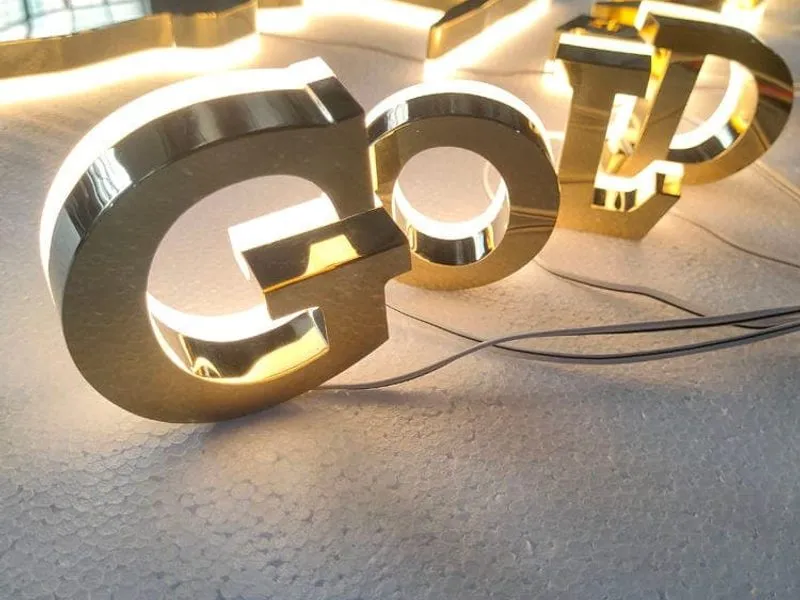
Real photo from our production floor — every sign we ship is made here.
From $24/letter · MOQ 1 piece · Flexible lead time · CE & UL certified · ships to 20+ countries
Custom sizes, colors, and finishes. Get a factory price in 24 hours.
Get a Free Quote Copy EmailWhatsApp +86 13865703472 · business@aochuangsign.cn
See pricing, specs, and get a free quote for the sign type you need. Built in our factory, shipped worldwide.