You want UL 48 certification because a contractor asked for it, and now you're staring at a $4,000 bill you didn't budget for.
That's actually the cheap end. I've watched sign shops burn $15,000 and nine months chasing a file number they didn't need. Let's break this down like we're standing on the factory floor, not in a seminar.
I've burned my hands on hot acrylic and argued with LED suppliers for 16 years. So when I talk about UL 48, I'm not reading from a brochure.
UL 48 is the US standard for electric signs. It covers anything that lights up and connects to building power: front-lit channel letters, back-lit halo letters, acrylic light boxes, neon flex. It does not cover non-electric signs like solid stainless steel letters or aluminum letters.
If your sign doesn't have LEDs, transformers, or wiring, UL 48 means nothing. A contractor who demands UL on a non-lit sign doesn't know what he's asking for. That's not your fault, but it's your problem.
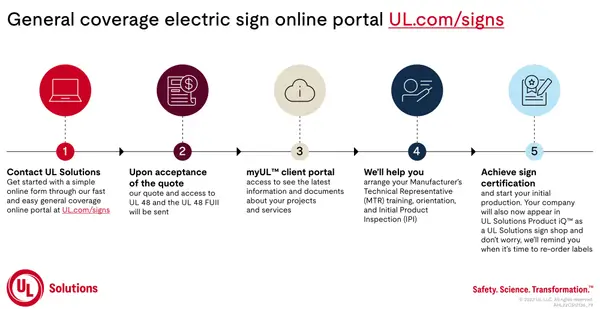
Here's what nobody tells you: UL 48 certification isn't a one-time purchase. It's a relationship with Underwriters Laboratories that includes inspections four times a year, forever.
You pay $4,000 to $15,000 up front. That covers sample testing, factory inspection, and file setup. Then you pay quarterly audit fees, usually a few hundred bucks each visit, plus travel expenses if the inspector has to drive to your shop.
Timeline? 4 to 9 months. If you think you'll get a UL file number in two weeks, you've been sold a lie. I've seen Chinese factories promise "UL ready" signs. Ask them for the file number and today's date. Most go quiet.
Look, this is the same path every shop walks, whether you're in Ohio or Anhui.
The ugly truth is most sign buyers don't need UL 48 at all. They need a sign that passes a local electrical inspection. Many inspectors accept ETL, which follows the same standard but costs 10-30% less and moves faster. Some states accept it without blinking; a few cities still demand UL specifically.
ETL is tested by Intertek, not Underwriters Laboratories. Same UL 48 standard. Same NEC Article 600 requirements. Different logo.
I've seen this go wrong: a Dallas strip mall owner demanded UL because his electrician said so. We shipped ETL-listed components and a local sign shop did the final wiring. Inspector passed it. Cost was $2,000 less than getting a full UL file on a one-off sign.
If you're importing signs for a single location, UL certification on the factory doesn't make sense. You need a sign built to UL 48 specs with listed components, then a US-based UL shop or ETL field evaluation. That's the honest route.
One, assuming the factory's CE mark covers US electrical. It doesn't.
Factory-direct since 2010. Free quote within 24 hours — no obligation.
Get a Free Quote →MOQ: 1 piece · 7-15 days · 2-year warranty · Worldwide shipping
See pricing, specs, and get a free quote for the sign type you need. Built in our factory, shipped worldwide.