Here's a number that should make every sign shop owner stop and think: 20-30%. That's the estimated drop in foot traffic when a sign looks patched, mismatched, or just tired. I've seen it happen. A restaurant owner in Chicago spent $800 on three separate repairs over two years. The sign looked terrible—yellowed acrylic, mismatched LED colors, a dented return. They finally replaced it. Cost: $2,500. Their monthly revenue climbed 15% in the first quarter.
The repair-versus-replace decision isn't just about dollars on an invoice. It's about opportunity loss. It's about compliance risk. It's about whether that band-aid fix is really cheaper than a clean slate. Let me walk you through the framework I've used for over a decade in this industry.
I've seen too many shop owners fall into the "just one more fix" trap. The math is brutal if you look beyond the immediate invoice. A typical channel letter repair—replacing a failed LED module and resealing the face—runs $150-350 per letter. Do that on three letters, and you're at $450-1,050. A new front-lit channel letter from a factory like Aochuang Sign costs $20-80 per letter. Even with shipping and US installation, you're looking at $200-700 per letter retail installed.
The thing is, the hidden costs pile up fast. Each repair means a technician's truck roll—$75-150 just to show up. You're pulling a ladder, disconnecting power, resealing with silicone that's never as good as the factory bond. And the warranty? Most repairs void the original manufacturer's warranty. Aochuang, for example, gives 2 years on LEDs and 1 year on the power supply. A field repair? Zero warranty.
Here's the factory-floor wisdom: after three repairs on the same sign, you've already spent more than a replacement. And the sign still looks like a patchwork. Your customer's brand takes the hit. Their customers notice. They don't say "nice repair job." They say "that sign looks cheap."
Different materials fail at different rates. You need to know the timeline. This isn't theory—it's the difference between a 3-year-old sign that's fine and a 7-year-old one that's a liability.
| Material | Expected Outdoor Life | Failure Mode | Replace When... |
|---|---|---|---|
| Domestic acrylic | 1-2 years before yellowing | Yellowing, cracking, UV degradation | Yellowing visible under daylight or backlight |
| Mitsubishi/Degussa acrylic | 5-8 years | Gradual haze, minor yellowing | Light transmission drops below 85% (factory spec is 90-92%) |
| Stainless steel 304 | 10+ years | Surface pitting, corrosion near welds | Rust spots appear, especially in coastal areas |
| Stainless steel 316 | 15+ years (marine grade) | Mo-induced corrosion only in extreme environments | Structural integrity compromised—rare before 15 years |
| Aluminum | 8-12 years | Powder coating chipping, oxidation | Coating fails and bare metal shows |
| LED modules (quality) | 5+ years (Samsung/Osram/Lan Jing) | L70 failure—light output drops to 70% | Output visibly dimmer than adjacent signs |
| LED modules (cheap) | 12-18 months | Complete failure, color shift | First failure—replace all modules |
I've pulled apart 5-year-old signs where the domestic acrylic was so yellow you couldn't read the lettering from 20 feet. The owner said "it still lights up." Sure, but it's not doing its job. A sign that's hard to read is worse than no sign at all. It screams neglect.
For stainless steel, that 10-year life on 304 is real. But I've seen 304 last 15 years inland with proper maintenance. The killer is coastal environments. Salt air eats 304 in 5-7 years. That's when you spec 316. It costs 20-30% more, but you'll avoid replacing the whole sign in year 8.
This is where most decision-makers miss the boat. Old neon signs are power hogs. A typical 20-foot neon channel letter set draws 500-800 watts. Modern SMD 2835 LEDs at 100-150 lumens per watt draw 80-150 watts for the same brightness. That's a 70-80% reduction.
Let me give you a real calculation. Say a sign runs 12 hours a day, 365 days a year. At $0.12 per kWh, neon costs $315-420 annually in electricity. LEDs cost $42-79. Over 5 years, that's $1,260-1,680 in savings—enough to pay for a new LED sign entirely.
And that's just power. LED modules rated L70 at 50,000 hours will outlast neon by years. Neon tubes fail at 8,000-15,000 hours. You're replacing tubes every 2-3 years. With LEDs, you're looking at 5+ years of maintenance-free operation if you use quality components like Samsung or Osram chips.
The thing is, many sign owners don't think about electricity. They see the repair bill. They don't see the monthly power savings. Show them the numbers. It's a powerful argument for replacement.
This is the part that keeps me up at night. Old signs can be safety hazards. And they can get you sued.
NEC Article 600 governs commercial signage electrical installation. If your sign was installed before 2017, it might not meet current code. Repairs can trigger re-inspection. That means you might have to upgrade the entire electrical system—disconnect, wiring, grounding. A simple $300 repair suddenly becomes a $3,000 code compliance project.
ADA compliance is another landmine. Tactile signs must be mounted 48-60 inches above the floor, have non-glare finishes, and include Grade 2 Braille. If you're repairing an old sign that doesn't meet these standards, you're opening your customer to liability. A lawsuit over ADA non-compliance can run $50,000-100,000 in legal fees alone.
I've seen it happen. A small business owner in Florida had a 15-year-old sign with exposed wiring. A customer tripped over a loose conduit. The lawsuit cost $40,000. The sign replacement would have been $3,500. Don't let your customer be that statistic.
Here's the hard-won wisdom: if the sign is more than 7 years old, always check for code compliance before recommending repair. If it fails, replacement is the only safe option.
Most commercial sign manufacturers offer clear warranties. Aochuang gives 2 years on LEDs and 1 year on power supply. That's standard for quality imports. But the moment you crack that seal and do a field repair, the warranty is void.
Here's the problem: field repairs are almost never as good as factory work. Factory sealing uses neutral silicone in a controlled environment. The aging test runs 8-12 hours. Field repairs? A guy with a caulk gun on a ladder in 90-degree heat. The seal fails in 6 months. Then you're back for another repair.
And liability? If a repaired sign fails and causes injury—say a letter falls off—who's responsible? The manufacturer says "voided warranty." The repair shop says "it was a patch job." Your customer is stuck. A new sign comes with full manufacturer liability and a clear warranty chain.
I always tell my customers: "If you're going to spend money on a sign, get a warranty that protects you. A repair has no warranty. A replacement has 2 years. Which would you rather have?"
This is the angle most guides miss. A sign isn't just a functional object. It's a marketing asset. It's the first thing a customer sees. Research shows that 68% of consumers judge a business's quality based on its exterior signage. A patched, mismatched sign screams "we're cutting corners."
I've worked with a franchise chain that replaced all their signs across 12 locations. The average cost was $4,500 per location. Their company-wide revenue increased 22% in the following year. The signs paid for themselves in 14 months.
Compare that to the corner pizza shop that spent $1,200 over three years on repairs. Their sign had two different shades of red acrylic, a bent aluminum return, and one letter that flickered. They were losing customers and didn't know why. The replacement cost $2,800. Their foot traffic went up 18% in two months.
The math is simple: a new sign often pays for itself within 18 months through increased visibility and brand trust. A repaired sign just delays the inevitable replacement while bleeding money in lost business.
I'm not saying never repair. There are clear cases where repair is the right call.
But even in these cases, do the math. If the repair costs more than 30% of a replacement, replace. If the sign has already been repaired twice, replace. If the materials are degrading (yellowed acrylic, corroded metal), replace.
Here's a checklist I use with every customer. Answer these questions honestly:
If you answer "replace" to 3 or more, it's time. The math works. The customer's brand wins. And you avoid the endless cycle of band-aid repairs.
Simple formula: Total replacement cost ÷ annual savings (energy + maintenance + lost revenue). A typical LED sign replacement costs $2,500-5,000 installed. If it saves $300/year in electricity and $200/year in maintenance, and increases revenue by 10% ($500/month for a small business), the payback is under 12 months. Repair costs rarely have any payback—they just delay the problem.
Truck rolls ($75-150 each), lost revenue from downtime (a dark sign costs sales), code compliance triggers (repairs can require full re-inspection), voided manufacturer warranties, and brand damage from a patched appearance. Over 5 years, these hidden costs can easily double the visible repair invoices.
Yes, if the structure is sound. You can retrofit existing channel letters with new LED modules and fresh acrylic faces. Cost: $100-300 per letter, versus $200-700 for a full replacement. But only do this if the metal returns are in good condition (no rust, no structural damage). Check for corrosion at welds and edges. If the structure is compromised, replace everything.
Acrylic (like Mitsubishi or Degussa) offers 90-92% light transmittance and lasts 5-8 years outdoors. Once it yellows, it's done—you can't restore it. Polycarbonate is more impact-resistant but yellows faster (2-3 years) and costs 20-30% more. If the face is acrylic and showing yellow, replace it. If it's polycarbonate and scratched or hazy, replace it. Never try to polish or recoat—it never looks right.
In the US, sign replacements are typically capitalized under Section 179 (up to $1,160,000 in 2024) and depreciated over 5-7 years. Repairs are expensed in the current year. For a $4,000 sign replacement, that's $800/year in depreciation deductions for 5 years. For a $1,200 repair, it's a full deduction this year. If your customer needs immediate tax relief, repairs might be better. But if they want long-term value and a stronger brand, replacement wins every time.
The bottom line: repair only when it's truly minor. If you're spending more than 30% of replacement cost, or if the sign looks tired, replace it. Your customer's brand depends on it. And your reputation depends on giving them the right advice.

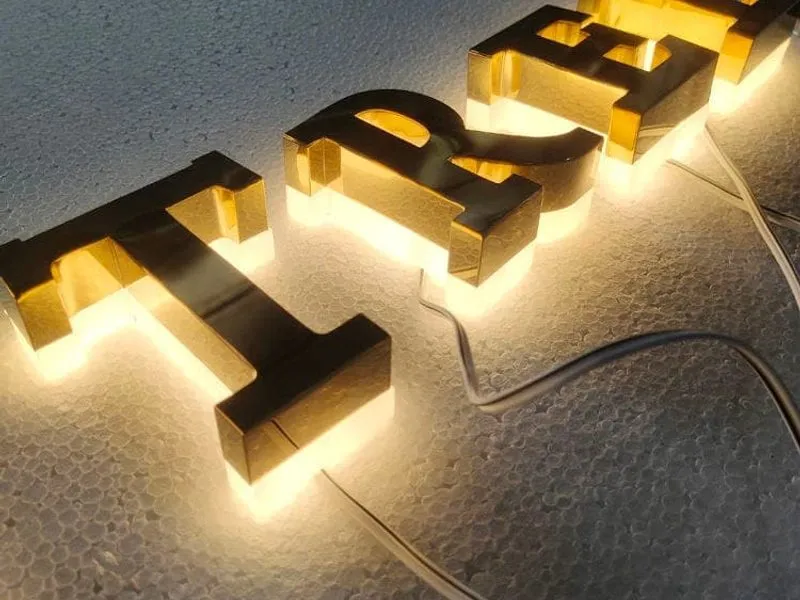
Real photo from our production floor — every sign we ship is made here.
Products mentioned or relevant to this topic — factory-direct, custom built.
Factory-direct since 2010. Free quote within 24 hours — no obligation.
Get a Free Quote → Copy EmailMOQ: 1 piece · Flexible lead time · 2-year warranty · Worldwide shipping
See pricing, specs, and get a free quote for the sign type you need. Built in our factory, shipped worldwide.