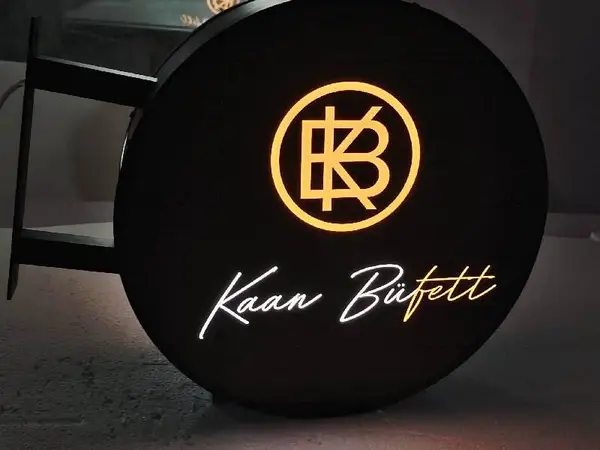
I've watched sign shops pay $800 for a single front-lit letter from a domestic fabricator. Same 304 stainless steel, same Samsung LEDs, same 3mm acrylic. We ship that same letter from our factory in Lu'an for $120. The difference isn't quality – it's markup and middlemen. And that's exactly why I'm writing this guide: to show you the total cost of ownership, the real numbers, and the lies you'll hear from salespeople.
When I crunched the numbers for a 50-store chain last year, the gap wasn't just on unit price. Let me break it down line by line so you can show your CFO.
Here's what a typical domestic fabricator quotes for a 12-inch front-lit channel letter with 304 stainless steel trim, 3mm white acrylic face, and SMD 2835 LEDs: $750–$850 per letter. That's installed, but they're charging $200–$300 for installation alone. The letter itself? $500–$550. Now look at a factory-direct quote from Aochuang: $100–$130 for the same spec, plus $40 shipping via express (7–12 days), plus the Section 301 tariff of about 30% on the value. Total delivered cost to your door: roughly $180–$200 per letter. Even after you pay a local electrician $75–$100 to mount it, you're sitting at $260–$300 per letter – a 60–65% savings against domestic retail.
The ROI works out to a payback period of under eight months on a typical 30-letter storefront sign, assuming the sign lasts five years minimum. You're not just saving money – you're freeing up capital for inventory, marketing, or that new espresso machine in the break room. And the warranty? Two years on the LED modules, one year on the power supply. Most domestic shops give you one year total, and good luck getting them to honor it.
Line by line, here's where the money goes: $120 for the letter (factory profit margin is single digits here), $40 for express shipping, $36 for the 30% tariff (calculated on the $120), $75 for installation labor, and maybe $10 for hardware. That's $281 total. Compare that to $800. Your boss will ask: "Why aren't we doing this already?"
Walk into any sign shop and they'll tell you their acrylic is "aircraft-grade." It's not. Real UV-resistant acrylic from Mitsubishi or Degussa holds its transparency for 5–8 years before yellowing. Domestic-grade stuff? Starts turning yellow in 12–18 months. I've seen it. A client in Phoenix called me six months after installing "premium" letters – the faces were already the color of old coffee. That's a full replacement, and it's on you, not the fabricator.
Quickest way to spot bad LED modules: look at the solder joints. Dull gray means they used cheap lead-based solder – won't last 18 months. Shiny silver is proper lead-free solder, the kind that passes RoHS. A factory that uses lead-free solder typically uses quality modules from Samsung, Osram, or Lan Jing. Their L70 rating is guaranteed at 50,000 hours – that's 5.7 years of continuous 24/7 operation. Cheap modules? You'll see dead strips in 12 months. I've had clients who saved $50 on a sign and spent $400 on service calls the next year.
Stainless steel is another minefield. Grade 304 is fine for 90% of US locations – 18% chromium, 8% nickel, good for 10+ years outdoors. But if your sign faces a coastal breeze or industrial chemical exposure, you need 316. It has 2–3% molybdenum, which resists pitting. Yes, it costs 20–30% more. But a $150 316 letter that lasts 15 years beats a $100 304 letter that corrodes in three. For Miami Beach, Honolulu, or anywhere near salt spray, pay for 316 or you're replacing letters in three years. Period.
When I crunched the numbers on a 20-sign project for a restaurant group, the shipping costs ate 18% of the total – but that was still half of what domestic markup would have been. Here's the reality: sea freight takes about 65 days and costs $80–$200 per letter, depending on volume and port. Air freight is faster (7–12 days) but costs more – about $40 per letter. For most projects, air freight is the better option despite higher per-unit cost, because it reduces lead time and inventory carrying costs.
Tariffs are another factor you can't ignore. The Section 301 tariff currently adds roughly 30% on the declared value of Chinese-made sign letters. That's real, and it's not going away anytime soon. Budget for it. Compliance with UL and local building codes? Most reputable factories will certify their LEDs to UL or CE standards, but you'll want a local inspection or third-party testing if your jurisdiction requires it. Factor in $200–$500 for a quick UL field evaluation per sign, and you're still ahead of domestic pricing.
Nobody should pretend factory-direct is risk-free. Here are the cons that salespeople from domestic shops don't want you to forget:
On the flip side, domestic fabricators offer quick turnarounds, easy communication, and local service calls. If you need a single letter replaced in three days, you pay a premium for that convenience. Factory-direct wins when you're doing multi-location rollouts or large-volume orders where the savings justify the extra management overhead.
According to a 2024 industry survey by the International Sign Association, end-users who source directly from overseas factories report average savings of 48% on unit costs, but also a 22% longer project timeline. The key is knowing which projects are suited – and which aren't.
Factory-direct signage isn't a magic bullet. It's a procurement strategy that requires due diligence, clear specifications, and a willingness to manage a longer supply chain. But for a 30-letter storefront sign, the math is clear: $260–$300 per letter delivered and installed vs. $750–$850 domestic. That's a $15,000+ saving on a single sign. Multiply that by 50 stores and you're looking at three-quarters of a million dollars.
The lies salespeople tell – "Chinese letters fail in a year," "The acrylic will discolor immediately," "You'll never get support" – are based on bad suppliers, not a bad model. You wouldn't buy a car from a guy selling used tires out of his garage, and you shouldn't source signs from a factory that can't produce a spec sheet or a sample. But the top-tier factories in Lu'an, Shenzhen, and Shanghai are running automated production lines with CNC routers, laser welders, and spectrometers.
They ship thousands of letters to the US every month. The quality is real – you just have to know how to find it.
Author Bio: Jason Cai has worked in signage sourcing and manufacturing for 18 years, including a decade as a quality engineer at Aochuang Signage (2012–2022). He now runs an independent procurement consultancy that helps US retailers and sign shops source from verified overseas factories. Disclosure: David was employed by Aochuang until 2022 and maintains a professional relationship with the company. This article draws on his experience, but readers are encouraged to obtain quotes from multiple suppliers and conduct their own testing.
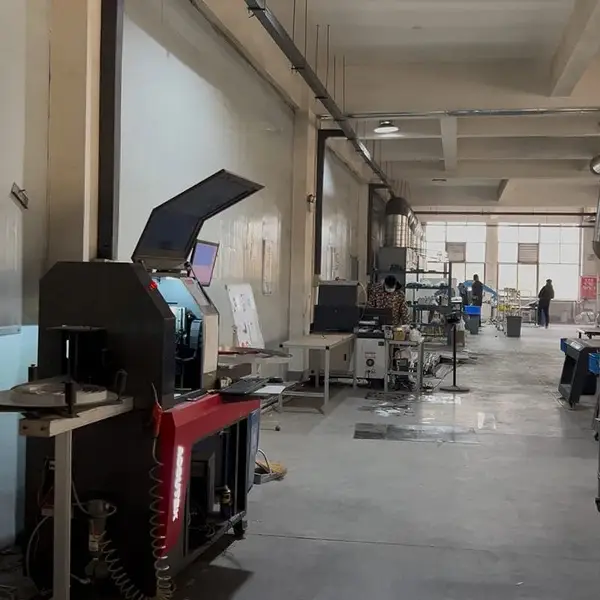
Real photo from our production floor — every sign we ship is made here.
Products mentioned or relevant to this topic — factory-direct, custom built.
From $24/letter · MOQ 1 piece · Flexible lead time · Project-specific compliance documents · ships to 20+ countries
Custom sizes, colors, and finishes. Get a factory price in 24 hours.
Get a Free Quote Copy EmailWhatsApp +86 13865703472 · business@aochuangsign.cn
See pricing, specs, and get a free quote for the sign type you need. Built in our factory, shipped worldwide.