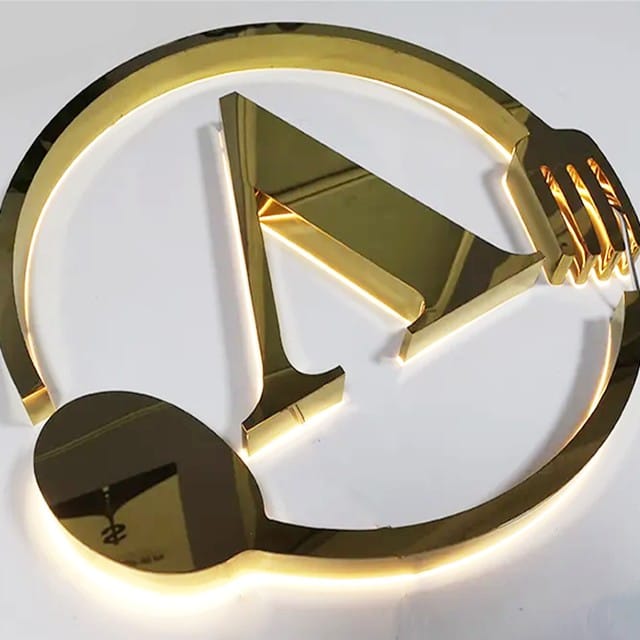
Look, I've watched sign shops pay $800 for a front-lit letter from a domestic fabricator. Same 304 stainless, same Samsung LEDs. We ship that letter for $120. No joke.
That's not bragging. That's what happens when you buy factory-direct and cut out three layers of markup.
A 3D letter is any dimensional character that stands off the wall. Front-lit, back-lit, non-lit metal, acrylic — if it has depth, it's 3D. That's the whole definition.
You see them on storefronts, office lobbies, medical buildings, restaurants. They're the first thing a customer reads before they walk in. If the face is warped or the light bleeds, your client notices. And they'll call you before they call the architect.
We do one-piece minimums. That surprises people. But when you run a 3,000m² facility with 50+ workers, it's not a big deal to cut one letter. You just don't want to pay US retail for it.
Most 3D letter jobs are storefront and lobby signs. Front-lit for retail, back-lit halo for professional offices, non-lit stainless for exterior building identification. If it's lit, pick a color temperature. 3000-3500K is warm and works for hospitality. 4000-5000K neutral for corporate. 6000-6500K cool for industrial and highway stuff.
Acrylic is the workhorse. 90-92% light transmittance. Mitsubishi or Degussa UV-resistant sheet lasts 5-8 years outdoors. Domestic sheet? 1-2 years before it yellows. You can guess which one most cheap quotes use.
For acrylic LED letters, 2mm and 3mm faces are common. If your letter is over 2.5m, step up to 5mm. Nobody wants a 10-foot letter flapping in the wind.
Aluminum is a third the weight of steel and lasts 8-12 years outside. Naturally rust-proof. Thickness runs 1.0-1.6mm, anodized or powder coated. Good for big letters that don't need the heft. Less weight means fewer anchors and a faster install.
Stainless is the premium option. 304 stainless steel letters give you 10+ years outdoors. 18% chromium, 8% nickel. If you're within a few miles of salt water, pay 20-30% more for 316. Otherwise you're replacing letters in three years.
PVC and foam? Interior only. Foam letters look decent in a lobby, but they'll disintegrate outside. PVC warps under direct sun. Don't let a "budget" sign shop talk you into exterior foam. That's a call-back waiting to happen.
Here's what nobody tells you: the letter itself is the cheap part. Installation, wiring, permits, and the guy on a scissor lift are what kill your margin.
Factory prices per letter: front-lit channel letters run $20-80. Back-lit halo letters, $35-120. Stainless non-lit, $15-40. 3D fabricated, $40-120. Aluminum, $10-25. Those are factory numbers, not what you pay a US shop.
US retail installed front-lit letters go $200-700 per letter. Halo-lit, $400-1,000. So factory-direct saves you 50-65% on product. You still pay installation. But the material cost drops off a cliff.
Add the Section 301 tariff, about 30% right now. Still cheaper. Just factor it into your landed cost. Don't act surprised when the customs bill hits.
Laser cutting holds ±0.1mm. That's tight enough for most jobs. We cut stainless and aluminum backs on the laser, then TIG weld. Acrylic faces go on the CNC. Then we assemble the LEDs, seal them, and run an 8-12 hour aging test before QC checks each one.
CNC routing is better for thick acrylic and foam. It carves edges clean. Laser cutting is faster for flat sheet. Both have their place.
3D printing? Fine for prototyping. I've seen shops try to sell production 3D-printed letters. The surface finish is rough, and outdoor UV eats most filaments. Don't do it unless you're making a one-off weird shape and the client doesn't care about longevity.
Our 10-step process: design confirmation (1 day), laser cutting (±0.1mm, 1-2 days), bending/welding (TIG, 1-2 days), grinding/polishing (1-2 days), acrylic face CNC (1 day), LED assembly (1-2 days), sealing with neutral silicone (1 day), 8-12hr aging test, 100% QC inspection, export packaging (foam + carton + plywood crate). That's how we hit about 5-15 days without cutting corners.
I've seen this go wrong: a contractor ordered 3-foot acrylic letters with no stud template. Installer drilled holes by eyeballing it. Three letters ended up crooked. Customer refused payment.
Use welded studs on metal letters, not glued posts. For acrylic, use clear adhesive plus mechanical fasteners on exterior. For large letters, you need a structural drawing. Wind load isn't a joke. A 4-foot letter is a sail.
IP65 means dust-tight and water jets from any direction. That doesn't mean hurricane-proof. IP66 is powerful jets. IP68 is submersible. NEC Article 600 covers US electrical. ADA signs need mounting 48-60 inches, non-glare, Grade 2 Braille.
If you're near the coast, use 316 stainless. It costs 20-30% more than 304, but it has 2-3% molybdenum. That's what stops pitting. Miami Beach isn't Ohio.
LED quality is where everyone lies. SMD 2835 is the industry standard, 100-150 lm/W. SMD 5730 puts out 40-60 lm/chip for high brightness. Quality modules from Samsung, Osram, or Blueview last 5+ years real-world. Cheap modules? 12-18 months before they start dropping dead.
Quickest way to spot bad LED modules: look at the solder joints. Dull gray means they'll fail inside 18 months. Shiny silver means proper lead-free solder. I check every batch that way.
Most "CE marked" imports aren't actually CE marked. CE costs 20,000-50,000 RMB. Ask to see the certificate with today's date. Watch them sweat. UL 48 costs $4,000-15,000 and takes 4-9 months. ETL is a cheaper alternative, 10-30% less. If a factory claims they have UL without quarterly audits, walk away.
We hold CE, RoHS, and ISO 9001. RoHS means no lead. ISO 9001 means someone checked the process. They're not fancy, they're the bare minimum. If a factory doesn't have RoHS, your LEDs might not pass import inspection.
Our standard warranty is 2 years on LEDs, 1 year on power supplies. That's not because the LEDs die at 2 years. If they don't die in 2 years, they probably won't for 5. But no one wants a 10-year warranty on an outdoor electrical product. That's a fantasy.
We're Aochuang Sign in Lu'an, Anhui. Founded 2010. 3,000m² production floor. 50+ workers. We export worldwide and our MOQ is one piece. Lead time about 5-15 days.
Here's what nobody tells you: sea freight LCL changes hands 6-8 times between our dock and yours. Every touch is a chance for damage. If you're ordering small, express takes about 5-15 days and costs $30-100. Air freight is $4-12/kg, about 10 days. Sea is cheapest for volume, about 65 days, $80-200/m³ LCL.
If you want factory-direct 3D letters, you can order front-lit channel letters and back-lit halo letters together. Mix materials. One crate. One QC pass.
Just don't order from a factory that won't show you their CE certificate or their aging test report. I've seen importers lose whole shipments to a $4 power supply. That's not the factory-direct savings you wanted.
Q: Is acrylic okay outdoors?
Yes, if it's UV-resistant acrylic from Mitsubishi or Degussa. That's 5-8 years. Domestic sheet yellows in 1-2. Don't ask me why people still quote it.
Q: What's the difference between 304 and 316 stainless?
316 has 2-3% molybdenum and costs 20-30% more. For coastal or industrial, buy 316. For a strip mall in Ohio, 304 is fine.
Q: Do I need UL for my 3D letters?
In the US, NEC Article 600 applies. UL 48 is the big one, but it takes 4-9 months and costs $4,000-15,000. Many jurisdictions accept ETL, and it's 10-30% cheaper. Confirm with your local inspector before you pay for an audit.
Q: Why is factory-direct so much cheaper?
You're not paying a US shop to buy the same letter from a factory and mark it up. The factory-direct product cost is 50-65% less. Shipping and tariffs eat some of that, but not all.
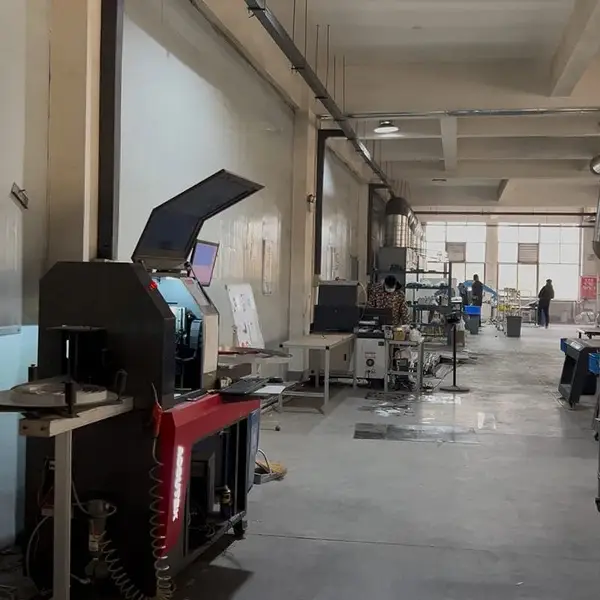
Real photo from our production floor — every sign we ship is made here.
Products mentioned or relevant to this topic — factory-direct, custom built.
From $24/letter · MOQ 1 piece · Flexible lead time · CE & UL certified · ships to 20+ countries
Custom sizes, colors, and finishes. Get a factory price in 24 hours.
Get a Free Quote Copy EmailWhatsApp +86 13865703472 · business@aochuangsign.cn