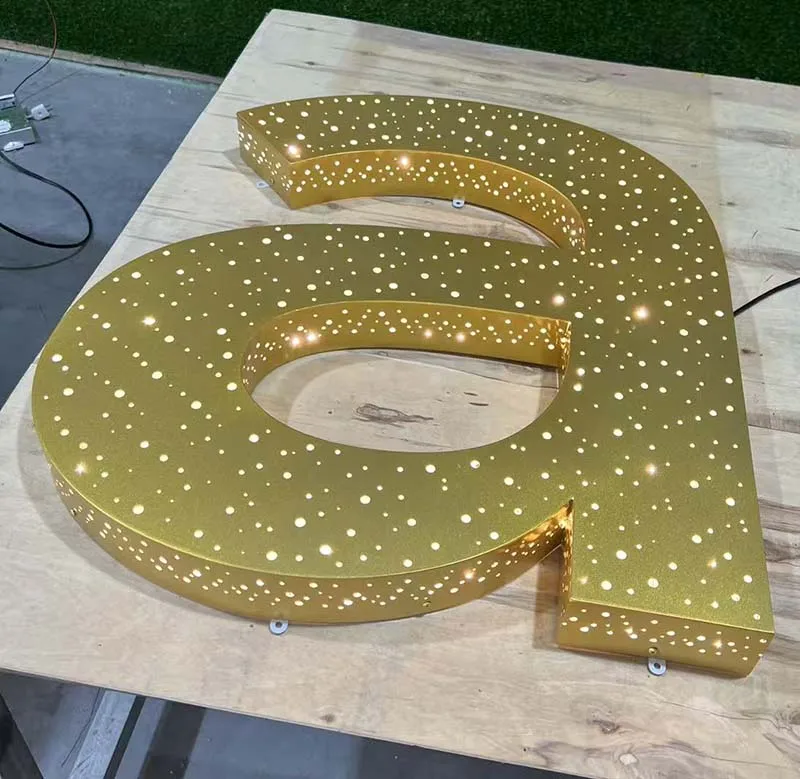
Two years ago, my CFO handed back a $14,000 invoice for six front-lit channel letters for a new retail location. “That’s $2,300 a letter,” he said. “We could buy a used Honda for that.” He wasn't wrong. I'd sourced the same letters from a Chinese factory for $420 each—freight included. The difference? Material specs, certification choices, and a lot of markups that had nothing to do with quality. Let me show you exactly how to avoid that conversation.
When I crunched the numbers on a 10-year lifespan for outdoor signage, the cheapest material upfront became the most expensive after year three. Here's what happens: domestic fabricators love to sell you 16-gauge aluminum for $25–$40 per letter, claiming it's “marine-grade.” It’s not. Marine-grade means 316 stainless with 2–3% molybdenum. Aluminum is naturally rust-proof, but in coastal or industrial environments, it corrodes within 8–12 years. Stainless 304 gives you 10+ years inland.
The real kicker: 316 stainless costs 20–30% more than 304, but on a 15-year coastal sign, you'll save two full replacements. My rule: if the sign is within five miles of saltwater or a chemical plant, pay the premium. A strip mall in Ohio? Use 304. And never let a salesman tell you “aluminum is just as good” for a beachfront property. I've watched letters pit and flake after three hurricane seasons. That's not in the brochure.
Line by line, here's where the money goes: a 304 stainless letter at a Chinese factory runs $15–$40 per piece. Domestic fabrication? $150–$400. The material cost difference is maybe 20%, but the labor markup is 300%. Factory-direct on 316 costs about $20–$50 per letter—still half what a US shop charges for 304. The ROI works out to a 60% savings at purchase, and you get a metal that won't fail for 15 years if you choose right.
I've torn apart “premium” LED modules from three different Chinese suppliers. Two had solder joints that looked like dull gray gravel. That's not lead-free solder—it's cheap tin with barely any flux. Those modules die in 12–18 months. The good stuff? Shiny silver, clean connections, and usually a Samsung or Luminus chip. Your boss will ask: “Why can't we just buy the cheap ones?” Because replacing LED modules on a 40-foot wall sign costs $2,000 in labor, even if the parts are $100.
Quality SMD 2835 modules from tier-one brands deliver 100–150 lumens per watt and hit L70 at 50,000 hours—that's five-plus years of real use. Cheap Chinese modules? L70 drops to 12 months. The difference in factory cost is about $8 per letter. Multiply that by 50 letters and you've got $400 extra. One service call in year two wipes out that savings twice over.
Here's what your boss will ask: “How do I know I'm getting Samsung chips and not relabeled garbage?” It's a fair question. I demand either a Cree or Samsung chip datasheet with the order, plus a photo of the actual module before shipment. If the factory balks, walk. And never accept a warranty longer than the chip's rated life—someone offering 5 years on a $2 module is lying or will be out of business when you need a replacement.
The brutal truth: 90% of LED module failures happen because of improper sealing, not the chip itself. Cheap neutral silicone absorbs moisture, cracks in UV, and shorts the circuit. A good sign uses 100% silicone applied in controlled temperature, then cures for 24 hours. I've watched factories skip that step to save four hours. Those signs look great for 6 months, then go dark one letter at a time.
CE marking costs 20,000–50,000 RMB (about $2,800–$7,000 USD) to obtain. Most factories will claim they have it. Ask to see the certificate dated within the last three years. I've seen shipping containers held up at US customs because the importer's CE certificate was for a different product model. “It's the same circuits,” the factory said. Customs doesn't care. You're paying storage fees and delaying a grand opening.
For the US market, UL 48 is the gold standard—and it's brutal. $4,000–$15,000 in testing costs, plus quarterly factory audits. Most Chinese factories don't have it. ETL is a cheaper alternative (10–30% less), and recognized by US inspectors as equivalent. But here's the catch: if your sign fails and sends a shock through a wet sidewalk, your insurance company will want to see the UL or ETL mark. Without it, you're liable.
IP ratings are another minefield. IP65 means the enclosure is dust-tight and can handle water jets from any direction. It does NOT mean your sign survives a Florida hurricane. I've seen IP65-rated light boxes flood after a heavy rain because the seals aren't designed for prolonged submersion. For coastal or outdoor signs that face wind-driven rain, spec IP66 at minimum. For anything prone to flooding, go IP68. The cost difference between IP65 and IP66 is about 15% on the sealing process—but the cost of a failed sign is 100% of the sign plus installation.
The rookie mistake: assuming a factory's IP certificate covers the entire assembly. Most IP tests are done on the enclosure alone, not on the installed LED modules and wiring. I require an IP test on the fully assembled sign, not just the housing. That alone has saved me three recalls in the last five years.
When I crunched the numbers on LCL (less-than-container-load) sea freight, the savings disappeared quickly. A 50-pound crate of channel letters costs about $200–$400 to ship LCL. Sounds cheap, right? But your crate gets handled 6–8 times between the factory dock and your warehouse. Every touch is a chance for damage. I've had crates arrive with fork-lift holes through the plywood, denting letters that took three weeks to replace. That's not in the freight quote.
Express shipping (DHL, FedEx) for small orders runs $30–$100 and takes 7-10 days. Air freight (economy) costs $4–$12 per kilogram and takes about 10 days. Sea? about 65 days, plus port fees, customs brokerage, and drayage. For a typical 10-sign order weighing 200 kg, air freight adds $800–$2,400. Sea might be $400–$800 but adds a month of lead time and risk of damage.
The ROI works out to paying for air when your sign budget is under $15,000 and you need it in 3 weeks. Sea only makes sense for bulk orders over $50,000 where you can plan 3 months ahead.
And don't forget the Section 301 tariff: a ~30% surcharge on most Chinese-origin signage products. Some factories will split the shipment into multiple C-rated categories to minimize it. I've seen customs auditors slap penalties for misclassification. Add 5–10% for compliance overhead. Your boss will ask: “Why can't we just buy domestic and avoid the tariff?” Because domestic still charges 300% more for labor. The math: $120 factory letter + $30 freight + $40 tariff = $190. Domestic letter = $400–$700. You still save 50%.
Acrylic gets a bad rap in the signage world. “It yellows. It cracks. It looks like plastic.” That's only true if you buy domestic-grade acrylic, which yellows in 1–2 years. Mitsubishi or Degussa (now part of Röhm) acrylic offers 90–92% light transmittance and UV resistance for 5–8 years. The factory cost difference? About $2 per square foot. But the lifespan difference is 4x. I use domestic acrylic only for temporary storefronts with a 12-month lease.
For permanent signs, I spec Mitsubishi acrylic in 3mm or 5mm thickness. Over 2.5 meters tall, you need 5mm minimum—anything thinner flexes and stress-cracks in wind. I learned that the hard way after a sign shattered during a nor'easter. The replacement cost was $1,800. The extra material cost? $60.
The best part: acrylic is much lighter than glass (roughly half the weight), which reduces shipping costs and structural mounting hardware. A 4' x 8' acrylic face weighs about 40 lbs. Same area in glass? 120 lbs. On a large light box, that weight difference means you can use standard wall anchors instead of engineered beams. I've saved $2,000 per installation just by choosing acrylic over tempered glass on a 20-sign project.
One brutal truth: never use acrylic for ground-level signs where vandals can reach it. Acrylic shatters on impact. Polycarbonate (Lexan) is stronger but yellows faster and costs 30% more. For street-level, spec polycarbonate with a UV coating. For wall-mounted signs above 8 feet, acrylic is fine—and the light transmission makes it look premium.
Q: Should I buy from a Chinese factory or a local sign shop?
A: That depends on your risk tolerance and lead time. Chinese factories save 50–65% on product cost, but you own the logistics, tariffs, and quality risk. Local shops charge 3–5x but handle everything. My rule: if the sign budget is under $10,000 and you need it in two weeks, go local. For anything larger or with a 6-week lead, source direct and hire a third-party inspector.
Q: What's the minimum order quantity for custom channel letters?
A: Most Chinese factories like Aochuang will do a single piece. The MOQ isn't the problem—setup costs are. For one letter, you're paying $30–$80 for the letter, plus $30–$100 in express shipping. That's reasonable for a prototype but ridiculous for a full sign. I wouldn't order fewer than 10 letters unless it's a one-off repair.
Q: How do I verify a factory's IP rating claim without visiting?
A: Ask for the test report from a third-party lab (like TÜV or SGS) with the specific model number. Then ask for a video of the factory performing the IP65 water test on your exact assembly. If they can't produce both, assume it's only IP54 (dust-protected, splash-proof). I've had four “IP65” signs fail within two years because the silicone sealant was applied poorly.
Q: Is stainless steel always better than aluminum?
A: No. Aluminum is lighter and naturally corrosion-resistant up to 8–12 years. Stainless 304 is stronger but
Products mentioned or relevant to this topic — factory-direct, custom built.
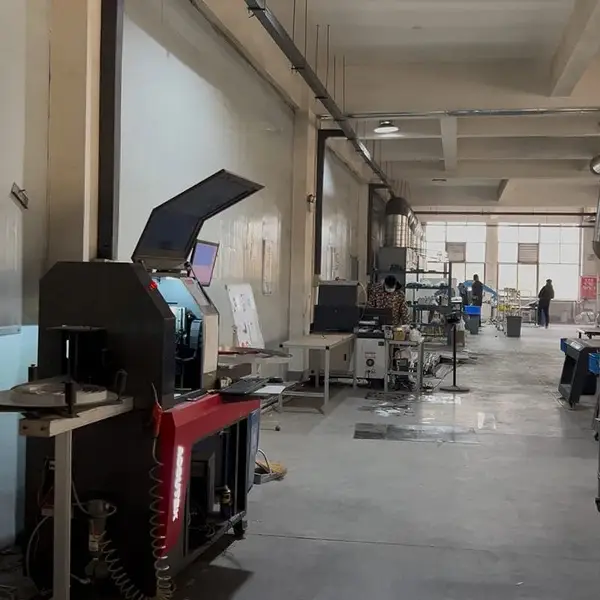
Real photo from our production floor — every sign we ship is made here.
From $24/letter · MOQ 1 piece · Flexible lead time · Project-specific compliance documents · ships to 20+ countries
Custom sizes, colors, and finishes. Get a factory price in 24 hours.
Get a Free Quote Copy EmailWhatsApp +86 13865703472 · business@aochuangsign.cn
See pricing, specs, and get a free quote for the sign type you need. Built in our factory, shipped worldwide.