10:47 p.m. and I just finished wrapping a crate of 14-inch brushed aluminum letters for a hotel in Scottsdale. Each letter weighed less than the packing foam, but they'll outlast the building's paint job if the installer doesn't do anything stupid.
Aluminum letters are the quiet workhorse of our trade. They don't get the love channel letters do, but they're the ones still hanging straight nine years later while the neon flex next to them is flickering like a bad motel sign.
Here's what most sign buyers don't get: aluminum isn't one material. You're dealing with a family of alloys, thicknesses, finishes, and fabrication choices. Screw up any one of those and your customer calls you in 18 months with a complaint. Get them right and you're a hero with an easy install and a 10-year sign.
Flat cut aluminum letters are what most people mean when they say "aluminum letters." Shops cut them from sheet stock on a waterjet, laser, or CNC router—no returns, no lighting, just clean dimensional type you mount to a wall. They're the go-to for office lobbies, building exteriors, donor walls, and corporate identity. Aluminum won't rust and weighs a third of what steel does, so you can mount a 24-inch letter with standard hardware instead of an engineered truss.
Fabricated aluminum letters are the next step up. These have returns—sides that give the letter depth—and you make them from 1.0mm to 1.6mm sheet, bent and TIG-welded. You'd use these for higher-end exterior building signage where a flat letter looks cheap. A 3mm face with a 1-inch return reads more substantial from the parking lot.
For campus directories or hospital wings, aluminum wayfinding systems beat acrylic every time because they don't chip when a gurney clips them. Interior or exterior, if you need directional signage that survives actual humans, aluminum is the answer.
Don't bother with aluminum for lit letters. If you need illumination, go front-lit channel letters or back-lit halos. Aluminum is for non-lit, durable, dimensional type. Know what job you're quoting before you spec the material.
Look, aluminum letters aren't all the same. You've got 5052 and 6061 as the two most common in sign fabrication, and they behave completely differently.
5052 is your marine-grade, formable alloy. It bends without cracking, takes a weld well, and holds up better in wet or corrosive environments. If you're doing returns or any bending, 5052 is what you want on the floor. That's the alloy I keep in stock for 90% of exterior work.
6061 is harder, machines beautifully, and takes a cleaner edge, but it's more likely to stress-crack if you bend it too aggressively. Use it for flat letters with a lot of fine detail—think small text or intricate logos—but don't ask it to do a deep return unless your fabricator knows what they're doing.
Sheet thickness is where rookies blow it. The standard range for aluminum letters is 0.040" to 0.063" (1.0mm to 1.6mm). A 6-inch interior letter in 0.040" is fine. A 24-inch exterior letter with a return? You need 1.6mm, minimum. Thinner stock on a big letter will oil-can in the sun and look wavy from 20 feet.
Rookie mistake: ordering 0.040" aluminum for a 24" letter with a 1" return, then wondering why it looks like a potato chip after the first summer. That's on you, not the material.
If your job is within a mile of saltwater, don't buy aluminum. Order 316 stainless steel letters instead. Aluminum will pit and look like hell in three years if the marine air's bad enough. 316 costs 20-30% more, but it's cheaper than replacing the whole job.
Here's what nobody tells you: laser cutting leaves a heat-affected edge that anodizes differently than the rest of the sheet. If you're laser-cutting aluminum letters and then anodizing them, test the edge finish on a sample before you commit to 50 pieces. Test first. A good shop will dial in the settings. A bad shop will send you letters with a dull gray edge that looks like a mistake.
CNC routing is the industry standard for aluminum signs. It holds tolerances to ±0.1mm, which means your letters come out clean and consistent. Waterjet is better for thick material—over 3mm or when you can't have any heat input—but it's slower and pricier.
Welding aluminum is not like welding steel. You don't use MIG on thin aluminum sheet and expect it to hold a return without warping. TIG is the only way for dimensional letters. A skilled welder can lay a bead on 1.0mm 5052 without blowing through it, but that skill takes years. If your supplier hands you a welded aluminum letter with a globby, burnt-looking return, you're looking at a bad welder, not a material problem.
Assembly for dimensional aluminum letters usually means welding the returns, grinding down the seams, and then finishing. The grinding step is where you see the real quality. A rushed shop leaves visible seams. A good shop grinds, polishes, and preps the surface so the finish hides the joints.
Ugly truth: most powder coat failures happen before the part ever goes in the oven. If the aluminum isn't cleaned, de-greased, and pre-treated, the powder coat won't bond. You'll see peeling within two years, and the customer will blame the finish, not the prep.
Anodizing is a controlled oxidation layer that hardens the aluminum surface. Anodizing is UV-stable and great for outdoor use, but color matching between batches is a pain. If you need two letters anodized six months apart, don't expect a perfect match. Anodizing also shows scratches more than powder coat, so it's better for out-of-reach applications.
Powder coating is the most durable option for custom colors. The powder coat gets baked on, forms a thick layer, and you can match any RAL color. Need a specific brand color? Baked paint letters let you match any RAL or custom mix, and if the powder coater washes it and pre-bakes the surface, it'll hold up 8-12 years outdoors.
Brushed metal is an aesthetic choice, not a finish on its own. You brush the aluminum to create a fine linear texture, then you need a clear coat or anodize over it. Otherwise the raw aluminum will oxidize and develop a white, powdery film—especially in humid or coastal air. A brushed finish under a quality clear coat looks sharp in a lobby, but it's not zero-maintenance.
Don't ask for a true mirror finish on aluminum and expect mirror polished letters pricing. Aluminum shines, but steel gives you that chrome-deep reflection. Different animal.
I've seen this go wrong: a shop used 3M VHB tape on 2-foot-tall exterior letters, and a wind gust turned a letter into a dent in a parked truck. Tape is for interior dimensional letters under about 8 inches. If it's going outside, use studs, spacers, or a rail system.
Stud mounts are the standard for exterior aluminum letters. You weld or epoxy threaded studs to the back of each letter, drill holes in the wall using a paper or PVC template, and secure with nuts or anchors. For foam or stucco, you need spacers—standoffs that hold the letter off the wall—so water doesn't sit behind the letter and stain the facade.
Template accuracy matters more than the letters themselves. If your template is off by 1/16", a 12-letter word looks drunk. We ship a printed or routed template with every order, and I still see installers ignore it and eyeball the layout. Don't be that person.
For ADA-compliant interior signs, mounting height is 48" to 60" from the floor to the tactile lettering, and the finish needs to be non-glare. That's code, not an opinion. If you're doing interior wayfinding, check the ADA spec before you order aluminum.
Look, the biggest lie in this industry is that you need to order 50 pieces to get factory pricing. We're a factory in Lu'an, Anhui, and our MOQ is one letter. One. You want a single 8-inch aluminum letter for a sample? We'll make it. That's how a factory works—you pay for the material and labor, not someone's showroom lease.
Factory-direct aluminum letters run $10 to $25 per letter, depending on size, thickness, and finish. That's from our floor. A domestic sign shop will charge you $100 to $300 for the same letter installed, and half of that is their overhead. Factory-direct savings on product are 50-65%, and that's before you factor in the parts you'd otherwise pay retail for.
Cost drivers: size, thickness, return depth, finish type, and quantity. A 6-inch flat cut letter in 0.040" with a basic powder coat is cheap. A 30-inch fabricated letter with a 2" return, brushed finish, and clear anodize is not. Don't send a quote request that says "aluminum letters" without specs and expect a useful number. Thickness, finish, and return depth change the price by 4x.
Shipping is the other thing people forget. Express is about 5-15 days for small orders at $30-100. Air freight is about 10 days at $4-12 per kg. Sea freight takes about 65 days but runs $80-200 per cubic meter LCL. If you're ordering 200 letters for a job, sea is the only sane option. If you need five letters yesterday, pay the express and move on. Also, don't forget the US Section 301 tariff is roughly 30% on these products—factor that into your landed cost or you'll be unpleasantly surprised.
Here's what nobody tells you: CE marking costs 20,000-50,000 RMB and takes 2-8 weeks. Most factories will say they have it. Ask to see the certificate with today's date on it. Watch them sweat. We carry CE, RoHS, and ISO 9001 because our export clients demand it, but half the suppliers on Alibaba are showing you a certificate that expired during the Obama administration.
Aluminum itself has an outdoor life of 8-12 years when you apply the finish right. That's not a guess—it's what we tell clients and it's what we see in the field. The aluminum won't rust, but the finish will eventually chalk, fade, or get scratched. Powder coat and anodize hold up longest. Baked paint is good but needs a proper primer. Raw aluminum? Don't.
IP ratings matter more for lit signs than non-lit aluminum, but if you're adding an LED backer or translucent panel, IP65 is the minimum for outdoor. IP65 means dust-tight and protected against water jets. It does not mean your sign survives a Florida hurricane. Know the difference.
UL and ETL certifications are for electrical signs, not pure aluminum letters. If you're adding LEDs, you need UL 48 or ETL for most US commercial installs. That certification costs $4,000-15,000 and takes 4-9 months, so don't ask a factory to "just add a UL sticker" on a non-lit aluminum order. We can't and won't.
Can you really make just one aluminum letter? Yes. MOQ is one piece. I've shipped a single 4-inch letter to a guy in Ohio who needed to match an existing sign. Stop asking like it's a favor.
How long will aluminum letters last outside? 8-12 years if the finish is right and you use proper mounting. If you tape them to a stucco wall, you're on your own.
What's the actual lead time? about 5-15 days production, then shipping on top. Express is about 5-15 days, air is 10-20, sea is 50-70. Plan accordingly or pay extra to rush it. I can't change physics.
Do I need 316 stainless instead of aluminum? If you're within a mile of saltwater or heavy industrial pollution, yes. Otherwise, aluminum with a good powder coat or anodize is fine. Don't overthink it.

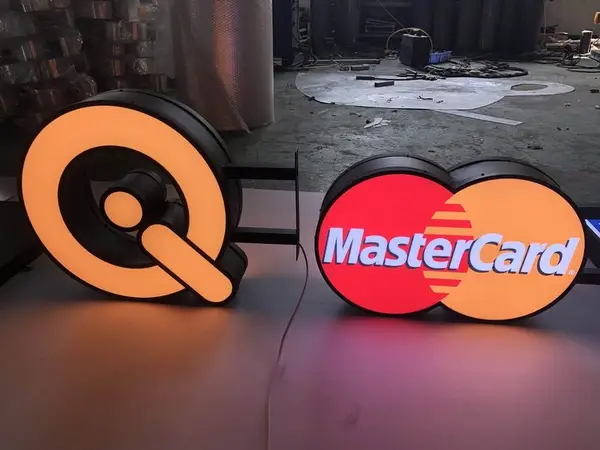
Real photo from our production floor — every sign we ship is made here.
Products mentioned or relevant to this topic — factory-direct, custom built.
From $24/letter · MOQ 1 piece · Flexible lead time · CE & UL certified · ships to 20+ countries
Custom sizes, colors, and finishes. Get a factory price in 24 hours.
Get a Free Quote Copy EmailWhatsApp +86 13865703472 · business@aochuangsign.cn