I've been building signs since 2010, and I've had this argument in my own factory more times than I can count. Somebody orders aluminum because it's cheaper, then calls in three years wondering why the powder coat looks tired. Somebody else orders 304 stainless for a Miami Beach storefront and acts shocked when rust blooms around the mounting studs.
The material decision isn't about which one is "better." What matters is what your client's location, budget, and maintenance tolerance will actually tolerate.
When I quote stainless steel letters, I start with 304 vs. 316. 304 stainless is 18% chromium and 8% nickel. That chromium forms a passive oxide layer that resists rust in most environments.
316 adds 2-3% molybdenum. That's the secret sauce for coastal and industrial air. It costs 20-30% more, but it buys a 15+ year outdoor life near salt.
Aluminum wins on weight. It weighs one-third of steel. Common aluminum sheet for signs runs 1.0-1.6mm thick, and its outdoor life is 8-12 years if you spec a good powder coat or anodize.
Stainless density is 7.93 grams per cubic centimeter. That's real mass. Common stainless thickness for letters runs 1.0-3.0mm, which means a 600mm stainless letter can weigh three times what an identical aluminum letter weighs.
Here's what nobody tells you: the word "aluminum" on a quote means almost nothing without an alloy grade. Importers will happily substitute a softer, cheaper remelt alloy that warps in the first summer sun. If the vendor won't produce a mill certificate, you already know what you're buying.
Aluminum doesn't rust. Period. It oxidizes into a chalky white film that sits on the surface and actually protects the metal underneath.
The ugly truth is many "316 stainless" quotes aren't 316. Ask for mill certs. Watch how fast the vendor goes quiet. Real 316 has 2-3% molybdenum and is the only honest choice for Miami Beach, Galveston, or any pier within a mile of salt spray.
For a strip mall in Ohio, 304 stainless is fine. You'll get 10+ years without drama. For coastal or industrial zones, pay the 20-30% premium for 316 or you'll be replacing letters in three years.
Look, aluminum in a marine environment is not a disaster if it's powder coated and installed with stainless hardware. But it'll age faster than 316 stainless. The 8-12 year outdoor life for aluminum assumes you're not getting sandblasted by salt air every afternoon.
IP65 sounds impressive. That rating means water jets from any direction. It won't make your sign survive a Florida hurricane. I've seen this go wrong: a buyer picked IP65 thinking it was hurricane-proof, then blamed the material when a Category 2 tore the face off.
Weight is the first thing your installer will curse or thank you for. Aluminum lets you hang a 900mm letter with two guys and a lift. Stainless that size might need three guys and a stronger substrate.
Our factory cuts both with a laser at ±0.1mm. From there, stainless goes through TIG welding, grinding, and polishing. Aluminum gets cut, bent, and welded or assembled with returns. Both run through the same 10-step process that takes about 5-15 days from drawing approval to crate.
I've seen this go wrong: a sign shop ordered 1.0mm stainless faces for 800mm letters to save freight weight. First gust of wind, the faces oil-canned. Stainless under 1.2mm on a large letter is a bad idea unless you add backing or a return flange.
Here's what nobody tells you: aluminum's light weight also means fewer structural reinforcements, lighter mounting hardware, and cheaper freight. Sea freight LCL runs $80-200 per cubic meter. Every kilo of stainless eats into your budget.
Aluminum finishes are anodized, powder coated, or brushed. Stainless gives you brushed #4, mirror #8, PVD, or powder coated. Both can take baked paint.
A mirror polished stainless letter looks expensive because it is. Mirror #8 shows every fingerprint, every rag mark, every bird strike. I tell clients it's for high-end lobby signs or jewelry stores, not for a restaurant patio.
Brushed #4 is the workhorse. It hides scratches, cleans with a Scotch-Brite pad, and still reads as stainless. If you want any RAL color, baked paint letters give you that on either metal.
Look, powder-coated aluminum can look nearly identical to powder-coated stainless from ten feet away. Your client will never know the difference. Your installer will, because they're lifting half the weight.
Factory prices for non-lit letters tell the story. Aluminum letters run $10-25 per letter. Stainless steel non-lit letters run $15-40 per letter. That's raw product, not installed.
But you don't buy raw product. Freight, tariff, mounting hardware, and labor all shift the number. US Section 301 tariff on signs is about 30%. Express shipping for small samples is $30-100. Air freight is $4-12 per kilo. Sea freight LCL is $80-200 per cubic meter and takes about 65 days.
The ugly truth is most buyers compare a $12 aluminum letter to a $22 stainless letter and think stainless is double. They ignore that the stainless letter has a 10+ year life and often needs zero refinishing. Aluminum powder coat might need touch-up at year 7. Do the lifecycle math, not the invoice math.
I've watched sign shops pay $800 for a fabricated stainless letter from a domestic fabricator. Same 304 stainless, same LEDs. We ship that letter for $120. But local hands, warranty calls, and same-day service have a real value. Sometimes that $680 gap is insurance, not waste.
Aluminum is my default for anything overhead, anything large, anything where weight fights the structure. Wayfinding systems, soffit-mounted signs, 900mm letters—if it's up high, lighter is better.
Stainless earns its keep at eye level. People touch it, bump it, lean on it. For restaurant interiors or corporate lobbies, cast aluminum/bronze signs give that solid, substantial feel without the weight of solid stainless. But if your client wants metal that will look new after a decade, stainless is the play.
Look, if you're quoting stainless steel letters for a strip mall in Ohio, spec 304 with a brushed finish and call it a day. If you're quoting Miami Beach, spec 316 and charge accordingly. The mistake is letting someone talk you into 304 near salt water because "it'll probably be fine." It won't.
Aluminum powder coat chips. You can't repair that elegantly in the field. You sand, prime, and repaint the face, or you replace the letter. Brushed stainless can be re-brushed with a Scotch-Brite pad in five minutes.
Mirror #8 is the diva. You can't scratch it and then buff it out yourself. You need a professional polishing wheel or you replace the face. I tell clients who can't commit to that to choose brushed #4 or a powder coat.
Here's what nobody tells you: at end of life, both metals are recyclable. Aluminum scrap has value. Stainless scrap has value. But if you coat your sign with a mixed-material face and silicone sealant, recycling gets messy. Design for disassembly if your client cares about that.
The ugly truth? If you're replacing a stainless sign because of rust, it wasn't 316. It was cheap 304 or worse, a lower chrome alloy. That's the most common post-mortem I see on coastal jobs.
Only if you're within five miles of salt water or your sign gets touched, hit, or cleaned constantly. Otherwise buy aluminum, put the savings into a better LED power supply, and stop overthinking it.
No. They oxidize. White chalky dust isn't failure. If you see red rust on an "aluminum" sign, you're looking at steel mounting brackets or fasteners.
For aluminum, use 1.6mm minimum, 2.0mm if it's outside with wind load. For stainless, 1.5mm with a return flange. Anything under 1.2mm will oil-can, and your installer will hate you.
CE is for Europe. UL 48 is for the US. A CE mark costs 20,000-50,000 RMB in China and takes 2-8 weeks. If a factory can't show you a certificate with today's date, walk away.

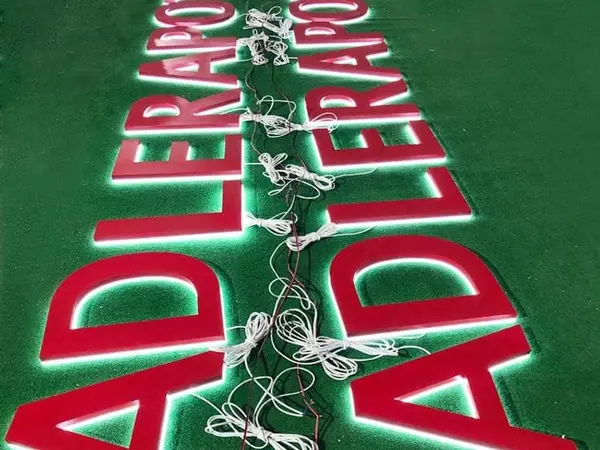
Real photo from our production floor — every sign we ship is made here.
Products mentioned or relevant to this topic — factory-direct, custom built.
From $24/letter · MOQ 1 piece · Flexible lead time · CE & UL certified · ships to 20+ countries
Custom sizes, colors, and finishes. Get a factory price in 24 hours.
Get a Free Quote Copy EmailWhatsApp +86 13865703472 · business@aochuangsign.cn