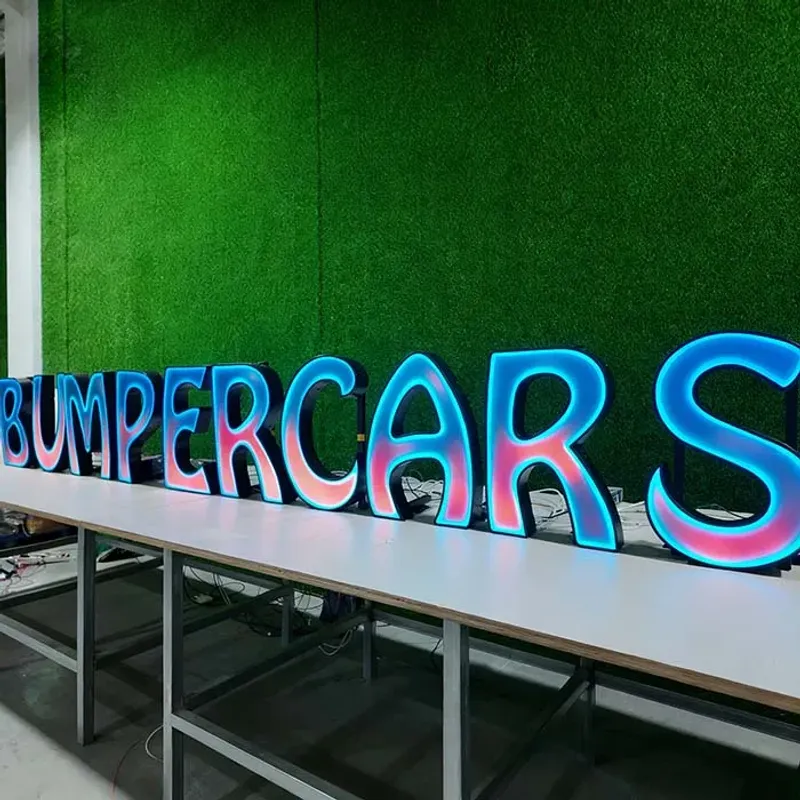
You ever notice how some auto dealer signs look perfect for a year and then crap out? The acrylic yellows, the LEDs flicker, and the stainless steel starts pitting. I've seen it a hundred times.
I design and build these signs for a living. My shop's been at it since 2010 — 3,000 square meters, 50+ skilled workers, exporting worldwide. We ship to dealerships in Ohio, Texas, Florida, you name it. And I've been on the phone with enough frustrated contractors to know what really kills a service bay entrance sign. It's rarely the design. It's the lies told in the spec sheet.
Let me break this down: you're not buying a sign. You're buying five years of 24/7 outdoor exposure. If the buyer or the contractor doesn't understand that, the sign's a ticking clock.
The spec says the LED modules last 50,000 hours. That's the L70 rating per IES LM-80 — time until output drops to 70% of original. But in reality, that number depends entirely on the chip inside.
Most cheap signs use SMD 2835 modules. I'll give you the spec: 100-150 lumens per watt. Sounds fine, right? Here's the brutal truth — if the chips aren't from Samsung or Osram or a verified Japanese brand, your real lifespan is 12 to 18 months. I've watched sign shops pay $800 for a front-lit letter from a domestic fabricator. Same 304 stainless, same Samsung LEDs. We ship that same letter for $120 because we buy high-quality modules in volume from tier-1 suppliers. Many fabricators, by contrast, source generic Chinese modules that lack the same thermal management and binning — and that difference shows up in the field.
Quickest way to spot bad LED modules: look at the solder joints. Dull gray means they used cheap lead-free solder with poor wetting. That joint will crack after six months of thermal cycling — sun hot during the day, cold at night. Shiny silver joints? You're looking at proper lead-based or quality lead-free alloy (verified by IPC-A-610 standards). That joint will hold for years.
The high-brightness stuff — SMD 5730 — pushes 40-60 lumens per chip. It's what you want for a service bay sign that competes with direct sunlight. But you have to match the color temperature to the environment. 4000-5000K is neutral corporate retail. For a dealership lot, especially in the service bay entrance where you want to look clean and professional, 5000K is your sweet spot. Warm 3000K on a car lot makes the cars look dirty.
One more thing: L70 at 50,000 hours assumes ambient temperature of 25°C and active cooling per LM-80 test conditions. In a sealed sign on a Florida building face? That's 70°C inside the acrylic. You just cut that life in half per the Arrhenius equation — and independent testing from the Illuminating Engineering Society confirms that for every 10°C rise, LED lifespan drops roughly 50%.
Most buyers don't realize that the stainless on their sign probably isn't what they think it is. 304 stainless — 18% chromium and 8% nickel — is the industry standard for a reason. Density 7.93 g/cm³. It performs 10+ years outdoors in most climates per ASTM A240. But it's not marine grade.
316 stainless includes 2-3% molybdenum. That molybdenum makes it resistant to chlorides — salt spray. For a dealership service bay entrance that's 200 feet from the ocean in Miami Beach, you pay the 20-30% premium or you replace those letters in three years. I've seen the rust bloom on 304 after two hurricane seasons. It looks like freckles. Then it blisters. Then the powder coating lifts.
The finish matters just as much. Brushed #4 (per ASTM A480) looks good and hides scratches. Mirror #8 is for showrooms — it shows every smudge. For a service bay sign that gets washed once a year with a pressure washer? Brushed all day. Or PVD coating if you want black stainless that won't fade. Regular powder coating over stainless is fine for five years. But if the sign faces southwest in Phoenix? The UV will dull it — independent UV testing (ASTM G154) can predict performance.
Thickness: acrylic over 2.5 meters tall must be 5mm minimum as recommended by the National Electrical Code and sign industry guidelines. I don't care what the dealer says. 3mm acrylic in a 3-foot tall sign wobbles in the wind. That's how you get cracked faces and water intrusion.
Beyond materials, how the sign is assembled determines whether it lives past year two. Here are the non-negotiable checks I run on every service bay entrance sign before it leaves my shop:
I can't promise that every $120 letter will be flawless. But I can promise that if you demand the spec sheet tell the truth — the real L70 at real ambient temperatures, the actual alloy composition with mill test reports, the IP rating of every junction — you'll get a sign that doesn't embarrass you in year three. The industry standard for illuminated signs is UL 48, and any fabricator worth their salt should be able to provide compliance documentation on request.
Ask your supplier for independent test reports. Check the solder joints yourself with a 10x loupe. And when a contractor tells you a 3mm acrylic face is fine for a 10-foot sign, walk away. That sign is a ticking clock — and you're the one who'll hear it tick when the call comes in at 2 a.m. on a Saturday.
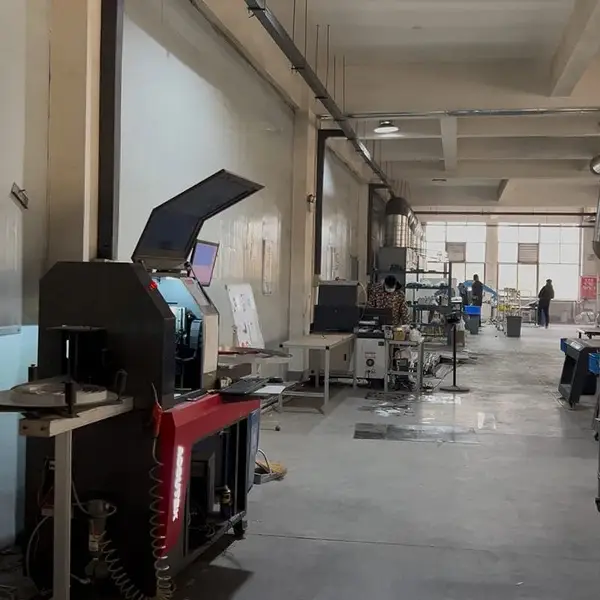
Real photo from our production floor — every sign we ship is made here.
Products mentioned or relevant to this topic — factory-direct, custom built.
From $24/letter · MOQ 1 piece · Flexible lead time · CE & UL certified · ships to 20+ countries
Custom sizes, colors, and finishes. Get a factory price in 24 hours.
Get a Free Quote Copy EmailWhatsApp +86 13865703472 · business@aochuangsign.cn
See pricing, specs, and get a free quote for the sign type you need. Built in our factory, shipped worldwide.