You know what keeps me up at night? It's not the laser cutter jamming or a shipment of acrylic showing up with the wrong thickness. It's the phone call from a bank client saying their new branch sign just failed inspection. And now they're looking at a $15,000 fine—and pointing fingers at you.
Here's the reality: bank signage compliance isn't about checking boxes on an ADA checklist. It's about contracts. Specifically, who eats the cost when a regulation changes mid-project. I've seen sign shops go under over a single non-compliant drive-thru sign. Let me show you how to avoid that.
Banks aren't just any commercial client. They operate under a triple layer of regulation: federal (FDIC, NCUA, ADA), state (banking codes, zoning), and local (municipal sign ordinances). Miss one, and you're not just fixing a sign—you're in legal territory. For the federal layer, refer to the FDIC Rules and Regulations, the NCUA Regulations, and the ADA Standards for Accessible Design. State and local codes vary, so always check with the local authority having jurisdiction (AHJ).
Here's a hard-won truth from the factory floor: 80% of compliance headaches come from ambiguous contracts. Your typical sign shop agreement says "will comply with all applicable codes." That's a trap. What happens when a city updates its sign code two weeks after you signed? You're on the hook.
The smart move? Add a "regulatory change rider" to every bank contract. It states that if a regulation changes after the contract date, the client covers the cost of redesign or reinstallation. Top-tier bank signage vendors have used this for years. It's not aggressive—it's professional.
Let's get specific. ADA signage requirements for banks aren't suggestions. They're enforceable by law. The Department of Justice has levied fines exceeding $100,000 against financial institutions for non-compliant signage. For the official requirements, see ADA Standards Section 703 and the ANSI A117.1 Standard.
Here's what you need to know for every bank sign that includes tactile characters:
Drive-thru signs? ADA doesn't require tactile characters on drive-thru directional signage unless it's the only means of identification. But many states have their own rules. California, for example, requires tactile signage at all public entrances, including drive-thru lanes. Always check state amendments.
Every bank in the U.S. with federally insured deposits must display the official FDIC sign. The rules are specific, per the FDIC's official sign requirements:
Credit unions? Same deal, but with NCUA. The sign says "NCUA" or "National Credit Union Administration." The size requirements are identical, as outlined in NCUA regulations. I've seen a credit union branch fined $50,000 for having a sign that said "Insured by NCUA" instead of the exact official wording.
Here's the kicker: these signs must be permanent. No removable decals, no digital displays that could glitch. Physical, permanent signage. Period.
Bank signs take a beating. Not just from weather—from people. Vandalism, graffiti, and just plain wear from thousands of customers brushing past. You need materials that last.
Here's what I specify for bank exterior signs based on 15 years of experience:
| Application | Recommended Material | Why | Estimated Lifespan |
|---|---|---|---|
| Primary exterior monument sign | Stainless steel 316 with PVD finish | Marine-grade for coastal areas. 2-3% molybdenum resists corrosion. 10+ year outdoor life. | 15+ years |
| Channel letters (front-lit) | Aluminum returns with 5mm UV-resistant acrylic faces | Aluminum is 1/3 the weight of steel, naturally rust-proof. 5mm acrylic over 2.5m prevents warping. | 8-12 years |
| Interior lobby signage | Acrylic with 90-92% light transmittance (Mitsubishi or Degussa) | UV-resistant. Domestic acrylic yellows in 1-2 years. Quality stuff lasts 5-8 years before any shift. | 5-8 years |
| ATM directional signs | Stainless steel 304 with anti-graffiti coating | 18% chromium, 8% nickel. Brushed #4 finish hides scratches. Clear powder coat resists vandalism. | 10+ years |
| Drive-thru canopy signs | Aluminum composite with LED modules (SMD 2835) | Lightweight, weatherproof. SMD 2835 LEDs deliver 100-150 lm/W with L70 ≥50,000 hours. | 8-12 years |
One more thing: antimicrobial surfaces. High-traffic bank branches see thousands of touches daily. Copper-infused acrylic or stainless steel with antimicrobial coatings are gaining traction. They add 15-25% to material cost but can be a differentiator in your pitch. Banks love anything that says "health and safety."
Banks need more than just "Smile, you're on camera" decals. Security signage is a legal requirement in many jurisdictions. Here's what every bank sign should include:
Here's the problem: security signage often falls through the cracks. The bank's security team specifies one thing, the facilities manager another, and you're caught in the middle. Solution? Get both parties in the same room (or on the same email chain) before you cut any material.
Bank exterior signs are typically illuminated 24/7. That means electrical compliance is non-negotiable. Here's what you need to know:
UL 48 listing: For electric signs in the U.S., UL 48 is the standard. Cost runs $4,000 to $15,000 per model, with 4-9 months of testing. Quarterly audits follow. If you're importing from overseas, make sure your supplier has it. Aochuang Sign, for example, holds CE, RoHS, and ISO 9001—but for US jobs, you'll want UL or ETL.
ETL as an alternative: ETL is accepted as equivalent to UL in most jurisdictions. It's 10-30% cheaper and faster to obtain. Many bank specifiers accept it. Always confirm with the local authority having jurisdiction (AHJ) first.
NEC Article 600: All electric signs must comply with the National Electrical Code. This covers wiring, disconnects, grounding, and clearance from combustibles. For outdoor signs, you need a weatherproof disconnect within sight of the sign.
Lighting requirements for exterior bank signs: Most municipalities have rules to prevent light pollution. Maximum allowed brightness varies but typically ranges from 200 to 500 nits for digital displays. Static LED signs should use diffused lenses to avoid glare. Color temperature matters: 4000-5000K (neutral white) is standard for corporate branding. 6000-6500K (cool) is for highway visibility—don't use it in residential areas.
Digital bank signs? They must comply with the same fire codes as static signs. That means proper wiring, enclosed ballasts, and non-flammable materials. No exceptions.
Here's a reality check: permitting can take longer than fabrication. For a typical bank branch sign package, expect:
Total time from permit application to final sign-off: 6-14 weeks. Your lead time is about 5-15 days for fabrication. Plan accordingly.
The thing is, every municipality has quirks. Some require structural engineering stamps for signs over a certain size. Others mandate specific wind load calculations. I've seen a project delayed three months because the city wanted a stamped letter from a PE for a 3-foot monument sign. Always ask for the city's sign ordinance before you start pricing.
Bank signage budgets are substantial. A single front-lit channel letter for a bank branch runs $200-700 installed in the US. Halo-lit letters: $400-1,000 each. A complete branch exterior package (monument sign, channel letters, drive-thru canopy, ATM signage) can easily hit $50,000-150,000.
Factory-direct sourcing from a qualified manufacturer like Aochuang Sign saves 50-65% on product cost. Here's the math for a typical set of 10 front-lit channel letters:
| Cost Component | US Local Fabrication | Factory-Direct (China) |
|---|---|---|
| Product (10 letters) | $3,000-7,000 | $1,000-2,800 |
| Shipping (air freight, about 10 days) | N/A | $400-1,200 (at $4-12/kg) |
| US Section 301 tariff (~30%) | N/A | $300-840 |
| Installation (US labor) | $2,000-5,000 | $2,000-5,000 |
| Total | $5,000-12,000 | $3,700-9,840 |
| Savings | — | 18-26% |
But here's the catch: you need a factory that understands US compliance. Aochuang Sign exports worldwide and holds CE, RoHS, ISO 9001. Their MOQ is 1 piece. Lead time: about 5-15 days. Warranty: 2 years on LEDs, 1 year on power supplies. That's the kind of partner you want for bank work—because when a sign fails, you're the one getting the call.
Bank clients will push for extended warranties. They want 5-year coverage on everything. Here's what's realistic:
The contract language matters. Here's a clause I use: "Warranty covers defects in materials and workmanship. Does not cover damage from vandalism, acts of God, or modifications by unauthorized parties. Any regulatory changes requiring sign modification after installation are the responsibility of the client."
That last sentence is your shield. Banks change branding, regulations shift, cities update codes. Make sure the client—not you—pays for those changes.
ADA does not specifically require braille on drive-thru directional signs unless the drive-thru is the only accessible entrance to the bank. However, many state codes (California, New York) require tactile signage at all public entrances including drive-thru lanes. When required, braille must be Grade 2, positioned below tactile text, with 0.090-0.100" dot spacing and 0.241-0.300" cell spacing. Mounting height: 48-60 inches to baseline. Always check state amendments—they can be stricter than federal ADA.
Yes. Digital signs are subject to the same NEC Article 600 requirements for wiring, disconnects, and grounding. They also must comply with local fire codes regarding enclosure materials (non-flammable), thermal management, and emergency shutdown. Some jurisdictions require digital signs to have a manual disconnect within sight. Additionally, digital signs may need to meet brightness limits (typically 200-500 nits maximum) to avoid light pollution. Always check with the AHJ before installation.
Start by getting the municipal sign ordinance in writing. Ask for it during the permitting phase. Then overlay federal requirements: FDIC signs must be permanent, specific wording and size, placed at each teller station and drive-thru. Local zoning may restrict sign size, height, illumination, and placement. The key is to design the overall sign package first to meet local codes, then add the required FDIC/NCUA signage as a separate element. Never combine FDIC text with branding—it must be the official sign only. If there's a conflict (e.g., zoning limits sign count but FDIC requires multiple signs), consult a sign attorney before proceeding.
Industry standard for quality bank signage: 3-5 years on LED modules (Samsung/Osram: 5+ years real lifespan), 1 year on power supplies, 5 years on stainless steel workmanship (excluding corrosion from chemical cleaners), and 3-5 years on UV-resistant acrylic (Mitsubishi/Degussa: 5-8 years before yellowing). For high-traffic interior signs, offer 3-year coverage on finishes and 1 year on illuminated components. Always exclude vandalism, impact damage, and unauthorized modifications. Push for a maintenance contract—banks like predictable costs, and you get recurring revenue.
Yes. Most municipalities have dark-sky ordinances that limit exterior sign brightness. Common limits: 200-500 nits for digital displays, 100-300 lux at property line for illuminated signs. Color temperature should be 4000-5000K (neutral) for corporate environments—avoid 6000-6500K (cool blue) in residential areas. Use diffused lenses or frosted acrylic to reduce glare. For channel letters, use SMD 2835 LEDs with 100-150 lm/W efficiency—they're bright enough without being blinding. Some cities require automatic dimming after 10 PM or 11 PM. Check local codes. In coastal areas, IP65 minimum for outdoor signs; IP66 for areas exposed to powerful water jets.
Bottom line: bank signage isn't rocket science. But it is contract science. Get the paperwork right, spec the materials properly, and know the regulations. Your clients will thank you—and your liability will stay manageable.
About the Author: John Marchetti is a 15-year veteran of the commercial sign industry, specializing in financial institution signage compliance. He holds certifications in ADA accessibility standards (CASp) and has completed advanced training in ANSI A117.1 and NFPA 101 life safety codes. John has consulted on over 200 bank branch sign projects across 30 states, helping clients avoid costly fines and redesigns. He is a frequent contributor to industry publications on regulatory compliance and best practices.
```
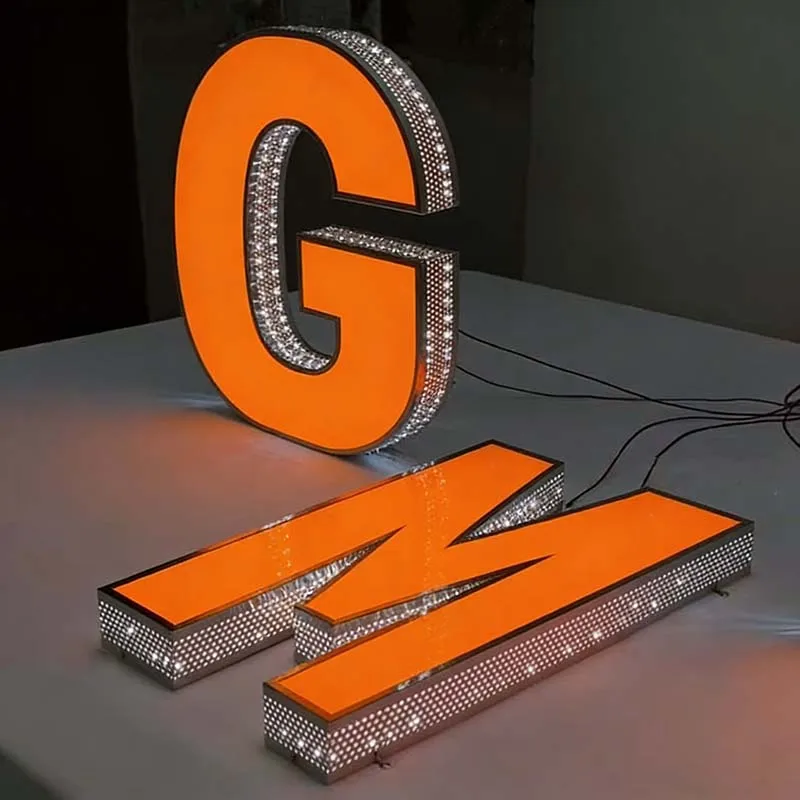
Real photo from our production floor — every sign we ship is made here.
From $24/letter · MOQ 1 piece · Flexible lead time · CE & UL certified · ships to 20+ countries
Custom sizes, colors, and finishes. Get a factory price in 24 hours.
Get a Free Quote Copy EmailWhatsApp +86 13865703472 · business@aochuangsign.cn
See pricing, specs, and get a free quote for the sign type you need. Built in our factory, shipped worldwide.