I've built car dealership signs for 14 years. I've never run into a dealer who didn't overpay for something that rusted, cracked, or got them fined inside three years.
Last month I sat in a Ford dealer's office looking at an $18,000 invoice for a 12-foot illuminated wall sign. The letters? Basic front-lit channel letters. Same 304 stainless returns, same Samsung LEDs we put in everything. Factory cost on those letters, maybe $1,200. He thought he got a deal because the local shop said "OEM approved." That's the first lie you'll hear.
Look, a pylon sign is a highway billboard that has to survive a windstorm. You put it at the curb, 20 to 60 feet up, and it either pulls people in or it doesn't. If you're in a 35-foot height limit and the OEM wants 45, don't roll over. Get a variance with a traffic study, setback concessions, and a promise to dim the LEDs at night. Last year I watched three dealers get variances approved just because they offered to landscape the base and lower the digital brightness after 10 p.m.
Monument signs don't need height. They need mass and material honesty. A two-ton aluminum pylon knockoff that looks like foam will kill your brand faster than a burnt-out lamp. Use 304 stainless or aluminum cabinets with a stone base, and keep the lettering simple. For a strip mall in Ohio, 304 stainless steel letters last 10+ years. For Miami Beach, pay the 20-30% premium for 316 with 2-3% molybdenum or you'll replace the letters in three years.
Wall signs are your brand name at eye level. Front-lit channel letters get the job done for 80% of dealerships, because they're readable in daylight and cheap to service. Back-lit halo letters cost more but they make a Lexus shop feel like a jewelry store. If your fascia runs 60 feet, don't fill it. Code gives you square footage based on a percentage of frontage, not the whole wall.
Lot-level signage is where customers get angry. If they can't find service, parts, or the used car lot, you've lost them before a salesperson says hello. Use a wayfinding system with clear directional arrows, not painted plywood zip-tied to a light pole—that's a code violation waiting to happen. Don't forget EV charging station signs. Cities now require them, and inspectors love to cite missing 8-inch-high letters on charging spaces.
Here's what nobody tells you: national vendors don't lock up OEM co-op money. Ford, GM, Toyota—they all have brand manuals that list approved materials, colors, and return profiles. If you submit shop drawings, use spec'd acrylic and LED modules, and file the paperwork, an independent shop can get 50-75% of the sign reimbursed. The nationals just make you think you can't. They're wrong.
But local code doesn't care about your OEM brand manual. The city slapped a stop-work order on a Chevy store because the bowtie logo stood 22 inches tall and the city maxed logos at 18. You file for a variance or you change the sign before the inspector shows up. Most sign shops won't pull permits. Then the dealer eats the fine and the do-over.
I've seen this go wrong: a pylon sign with cheap LED modules started flickering at month 14. Dull gray solder joints, not shiny silver lead-free. Those modules fail in 12-18 months. Samsung, Osram, or Blueview modules run 5+ years at L70 ≥50,000 hours. You save $40 on the build and lose $400 on a service call.
Acrylic isn't acrylic. UV-resistant Mitsubishi or Degussa sheet holds for 5-8 years before yellowing. Domestic sheet goes in 1-2 years. For a 2.5-meter-plus face, use 5mm or thicker. A 3mm face cuts 92% light output versus 90% for 2mm. Your customer won't notice the 2%, but they will feel the 40% cost bump if you go thicker than needed.
LED choice matters more than the cabinet. SMD 2835 runs 100-150 lm/W and is the industry standard. SMD 5730 gives 40-60 lm/chip for high-brightness pylon faces. If you're within five miles of salt water, IP65 is the floor, but it won't survive a Florida hurricane. Pay for IP66 or IP68 on coastal sign cabinets. Anyone who tells you CE covers UL doesn't know the difference between a self-declaration and a $4,000-$15,000 UL 48 listing with quarterly audits.
Here's the ugly truth: domestic fabricators charge 200-400% markup on the same letters we build in a 3,000-square-meter factory. A front-lit channel letter runs $200-700 installed in the US. We ship that letter for $20-80 factory-direct. A back-lit halo letter runs $400-1,000 installed retail; factory cost is $35-120. That's not materials. That's middlemen.
For monuments, budget $15-40 per stainless steel letter. A 10-letter "CHEVROLET" in 304 stainless costs $150-400 from our floor. Add a lightbox cabinet at $80-250/sqm and you're still under $1,500 in product. The same thing from a national sign program usually lands at $6,000-10,000. That's before tariffs and shipping.
When you import, add 30% Section 301 tariff, plus sea freight at $80-200 per cubic meter LCL. Your LCL crate changes hands 6-8 times between our dock and yours. Every hand-off invites damage, so pack it with foam, carton, and plywood crate—or pay for air freight at $4-12/kg if the grand opening is in three weeks.
You don't measure a sign by how it looks. You measure it by how many cars turn into the lot. I've watched a dealer with a dead pylon face lose drive-by traffic for two weeks after a storm knocked out eight letters. Sales managers won't admit it, but an empty service drive at 10 a.m. tells the story. EV drivers looking for charging will drive past you if the sign doesn't say "EV charging" from the street.
Service revenue pays for the sign, not car sales. A clear service drive sign cuts two minutes off customer confusion. That saves real money in staff time and missed appointments. If you spend $2,000 factory-direct on letters instead of $6,000 domestic, that's $4,000 you can put into a lot-level wayfinding system. That system might pull in an extra oil change a day. Do the math.
Look, we founded Aochuang Sign in 2010 with 3,000m² of floor space and 50+ workers. We don't do retail installation in every US city, but we ship to your installer anywhere. MOQ is 1 piece, lead time is about 5-15 days, and every sign goes through an 8-12 hour aging test and 100% QC before it hits the crate. That's stuff your local shop won't even show you.
Ask any factory for CE. They'll say yes. Ask them to send the certificate with today's date and watch them sweat. Real CE certification costs 20,000-50,000 RMB. We have ours, and we'll show it. RoHS and ISO 9001 too. If a vendor won't show paper, it's not real.
For the US, inspectors want a UL 48 or ETL listing on any electrical sign. ETL runs 10-30% cheaper than UL and is accepted in most states. We can build to UL specs if your local code demands it—just tell us before we bend the letters.
Warranty is 2 years on LEDs, 1 year on power supplies. If a supplier offers you 5 years on cheap modules, they're betting you won't be around to file a claim. Read the fine print: replacement part only, you pay labor.
Before you ask:
Do you install in my state? No. We ship to your installer. You hire a local sign contractor for the electric and the crane. We provide stamped drawings if needed.
Can you match our OEM brand color? Yes, that's what RAL and Pantone are for. Don't send me a photo of a letter and say "match it." Send the PMS code.
How long will sea freight take? about 65 days. If you need it faster, pay for air at $4-12/kg. Don't call me after three weeks asking where the crate is.
Will you handle permits? No, but we'll give you the shop drawings and photometric reports. Permits are local. I can't pull a variance from 7,000 miles away. But I'll tell you what to say when you walk into city hall.

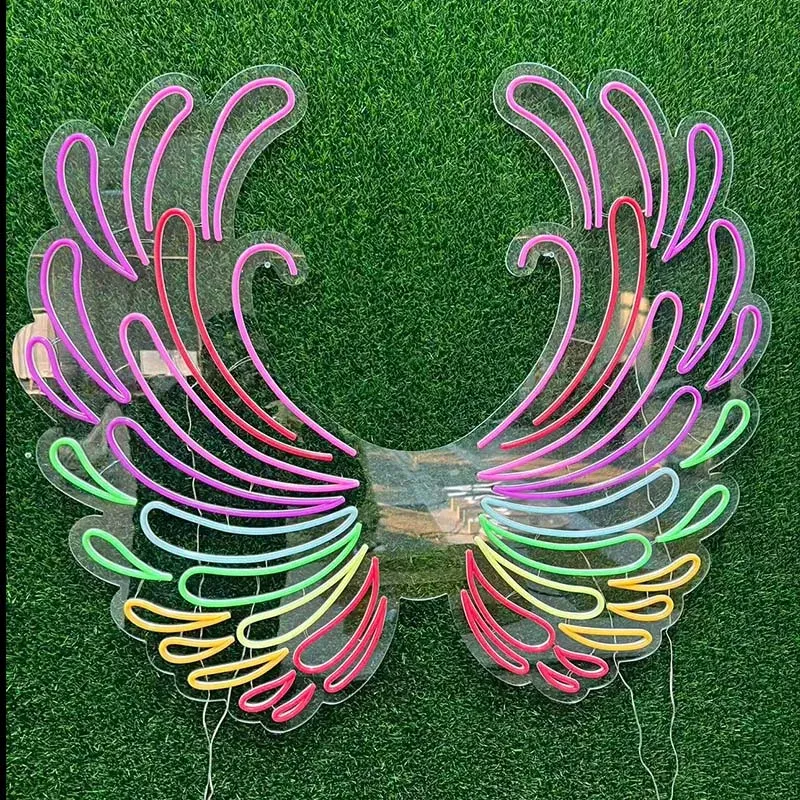
Real photo from our production floor — every sign we ship is made here.
Products mentioned or relevant to this topic — factory-direct, custom built.
From $24/letter · MOQ 1 piece · Flexible lead time · CE & UL certified · ships to 20+ countries
Custom sizes, colors, and finishes. Get a factory price in 24 hours.
Get a Free Quote Copy EmailWhatsApp +86 13865703472 · business@aochuangsign.cn