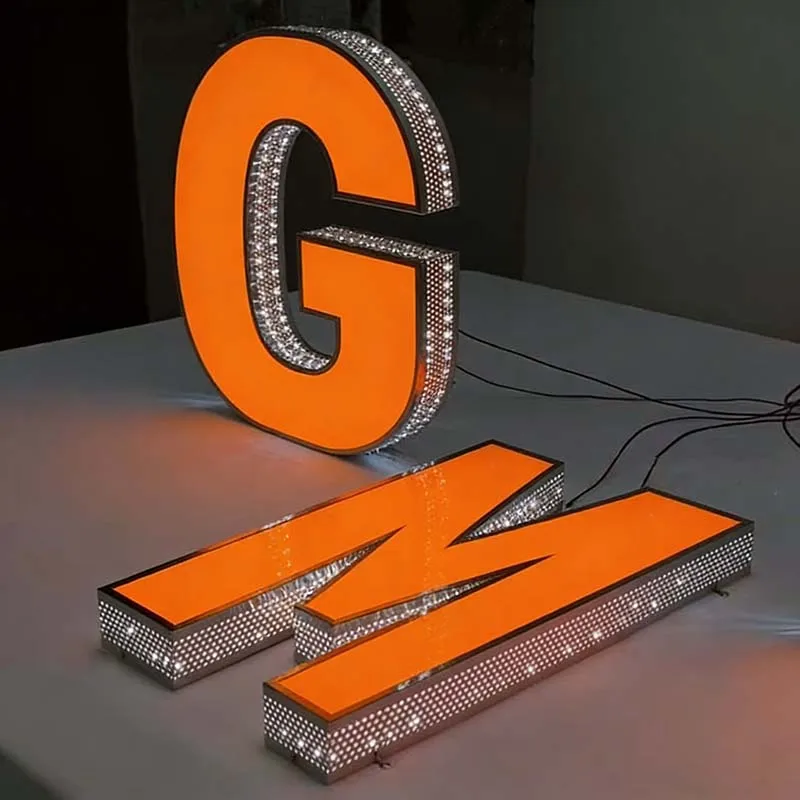
Look, I've torn apart enough channel letters to know exactly where they die. Never where you think.
Most sign buyers ask "How long will it last?" like there's one answer. Not one answer. A channel letter is five or six components strapped together, each with its own lifespan. You want longevity? Learn the weak points before you spend a dollar.
I work at Aochuang Sign, 3,000 square meters of production floor in Lu'an, Anhui. We've built signs since 2010 and shipped them worldwide. Here's what actually happens after the truck leaves.
Here's what nobody tells you: the only honest answer to "how long do channel letters last" is "depends which part."
A quality set of front-lit channel letters should give you 8-10 years before any serious work. That's if you spec good components and don't mount them in a salt bath. Cheap letters? You'll be on a ladder in 24 months.
LED modules are rated with an L70 of at least 50,000 hours. At 12 hours a day, that's 11.4 years. But real-world lifespan for quality modules from Samsung, Osram, or Blueview is 5+ years. Cheap modules? 12-18 months. I've replaced them before the shop's grand opening photos were framed.
The quickest way to spot bad LED modules: look at the solder joints. Dull gray = won't last 18 months. Shiny silver = proper lead-free solder. If a factory can't solder, nothing else matters.
Acrylic faces are the next variable. UV-resistant Mitsubishi or Degussa acrylic runs 5-8 years before yellowing. Domestic acrylic? 1-2 years and it looks like a smoker's teeth.
For acrylic LED letters, the face thickness matters too: 3mm transmits 92% of light, 2mm transmits 90%. Your customer won't notice that 2%, but they'll notice the 40% cost bump if you go thicker than you need. Over 2.5 meters, though, use 5mm or the face will flex and crack.
Returns and trim are usually aluminum or stainless. Aluminum returns run 8-12 years outdoors, but they're 1/3 the weight of steel and naturally rust-proof. If you go with stainless steel letters using 304, the returns last 10+ years. For coastal or industrial, 316 stainless adds 2-3% molybdenum, runs 15+ years, and costs 20-30% more. I've seen this go wrong: a strip mall in Miami spec'd 304 because it was cheaper. Three years later the letters looked like acne scars.
Power supplies and wiring are the silent killers. Even good LED modules die early if the power supply cooks. That's why the warranty on the power supply is 1 year while the LEDs get 2 years. Nobody wants to talk about that.
The ugly truth is most channel letters don't die from LEDs. They die from water.
Water gets in through seams, around the acrylic face, or through wiring holes. Neutral silicone sealing is part of our 10-step process, but I've watched installers cut corners with cheap caulk and then blame the factory. Once water hits the LEDs or the power supply, it's over.
Here's what that costs. A factory front-lit letter from us runs $20-80. A domestic fabricator will charge you $200-700 per letter installed. I've watched sign shops pay $800 for a front-lit letter. Same 304 stainless, same Samsung LEDs. We ship that letter for $120. When water kills a cheap module, the labor to replace it costs more than the letter itself.
Then there's the salt problem. If you're within a few miles of the coast, 304 stainless will pit. 316 costs 20-30% more. For a strip mall in Ohio, 304 is fine. For Miami Beach, pay for 316 or you're replacing letters in 3 years. That's not a debate, it's chemistry.
Certifications are another lie. CE marking costs 20,000-50,000 RMB. Most factories will say they have it. Ask to see the certificate with today's date. Watch them sweat. They'll tell you it's 'in process.' That means no. UL 48 is the US standard: $4,000-15,000, 4-9 months, quarterly audits. ETL is a UL alternative, 10-30% cheaper. If your vendor can't show a valid UL or ETL file, your insurance company won't care, but the inspector might.
One more: IP65 sounds impressive. It means water jets from any direction. It doesn't mean your sign survives a Florida hurricane. For coastal or industrial, spec IP66. For extreme weather, IP68 is submersible—but at that point you're building an aquarium, not a sign.
Here's what nobody tells you: maintenance doesn't start after the first failure. It starts the day you install.
Monthly. Walk the sign. Look for flickering modules, dead letters, water inside the acrylic face, or loose returns. Ten minutes with a cup of coffee. If one letter is dim and the others aren't, that's a failing LED string or a bad connection. Catch it before it takes out the power supply.
Quarterly. Clean the faces and trim. More often if you're coastal or near a highway. Salt, diesel soot, and brake dust eat at finishes. Check the silicone bead around the acrylic face for cracks or shrinkage. Run a finger along the seam. If it separates, water is already in there.
Annual. Pull the disconnect and inspect the power supply wiring. Heat cycling loosens terminals. Check voltage at the power supply output—if it's sagging more than 10%, the driver is dying. Tighten mounting hardware. Inspect returns for rust or corrosion. On aluminum, touch up scratches with paint. On stainless, if you see tea staining, clean it before it pits.
Coastal and industrial sites need quarterly as the baseline, not annual. Salt spray doesn't wait for your schedule.
Cleaning acrylic is simple: don't be stupid with it.
Mild dish soap and water. Microfiber cloth. Rinse. That's it. No Windex, no ammonia, no paper towels. Ammonia micro-crazes acrylic. Dry wiping with a dirty rag scratches it. Acrylic transmits 90-92% of light. Once it's scratched, that light scatters and your letters look foggy.
I've watched a store employee use a green Scotch-Brite pad on a 3mm acrylic face. Looked like frosted glass in 20 seconds. That letter had to be re-faced.
For stainless steel returns, use a stainless cleaner or mild soap and a soft cloth. Don't use steel wool unless you want to embed iron particles that rust later. For brushed finishes, wipe in the direction of the grain. For mirror polished, don't touch it unless you're cleaning it. Fingerprints are not a patina.
Never pressure wash a channel letter. They're rated for rain, not a 1,500 PSI jet. You'll force water past the silicone and into the LEDs. Then you'll call me and I'll say I told you so. Bad plan.
Here's what nobody tells you: the cheapest part of the sign is the LED module. The expensive part is the labor to get to it.
If you're ordering back-lit halo letters for a storefront, don't cheap out on the LED modules. Specify Samsung, Osram, or Blueview. They run 5+ years real world. Cheap modules go 12-18 months and then you're paying a service company $150 an hour to peel open sealed faces.
Drivers and power supplies are just as critical. I said the power supply warranty is 1 year. That's because voltage surges kill them. Add a surge protector at the disconnect. It costs less than one service call. Use UL 48 or ETL listed power supplies. If you're in the US, NEC Article 600 applies. Your sign has to be listed. If your factory says "UL certified" but can't show the file, you're buying a story.
Materials matter too. If you're within 5 miles of salt water, upgrade to 316 stainless. It's a 20-30% premium. Over a 10-year sign, that's less than a quarter a day. Replace 304 letters after 3 years, and you've paid twice.
For the acrylic, go UV-resistant. Mitsubishi or Degussa. The difference is 5-8 years versus 1-2. Half my re-face jobs are from domestic acrylic that yellowed before the lease was up.
I've seen this go wrong: a shop owner spends $400 fixing one letter on a 9-year-old sign. Then another letter dies two months later. Then the acrylic starts yellowing on the west-facing side. He's into it for $1,200 before he admits the sign is done.
Here's my rule. If the sign is under 5 years old and one component fails—a power supply, a module string, a cracked face—repair it. If two or more components fail in different letters, start pricing replacement. If the acrylic is yellowed or the returns are corroding, the juice isn't worth the squeeze.
The math backs this up. Factory direct front-lit channel letters cost $20-80 each. Halo letters $35-120. Stainless non-lit $15-40. Even after express shipping at $30-100 for a small shipment and the 30% US Section 301 tariff, you're saving 50-65% off US retail installed prices. If a repair quote is $500 per letter to replace LEDs and re-face, and a new factory set is $120 per letter plus shipping, replace the whole sign and pocket the difference.
For signs over 8 years old, don't patch. Wiring gets brittle. Silicone loses adhesion. LED color shifts. You're not maintaining a sign, you're maintaining a memory. Move on.
One last brutal truth: cheap LED modules aren't a savings. They're a deferred labor bill. You'll pay the difference in service calls, down time, and customer complaints. Buy the good stuff the first time.
Can I just pressure wash my channel letters? No. The seals are rated for weather, not a pressure washer. You'll force water past the silicone and into the LED modules. Then you'll be on the phone with me, and I'll say I told you so.
How often do LED modules really need replacing? Quality modules from Samsung, Osram, or Blueview last 5+ years. Cheap modules last 12-18 months. If you bought cheap, replace them before they fail and before they take out the power supply.
Is 304 stainless fine outdoors? Yes, unless you're near salt water or heavy industry. For coastal, use 316. It costs 20-30% more and lasts 15+ years. Replacing 304 after 3 years is more expensive than doing it right.
Do I really need UL listed components? In the US, yes. NEC Article 600 and your local inspector say so. UL 48 is the sign standard. If a factory claims UL, ask to see the certificate with today's date. Watch them sweat.
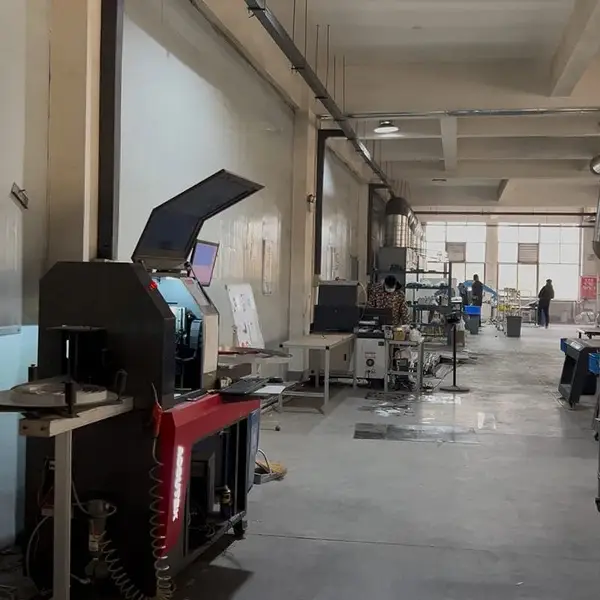
Real photo from our production floor — every sign we ship is made here.
Products mentioned or relevant to this topic — factory-direct, custom built.
From $24/letter · MOQ 1 piece · Flexible lead time · Project-specific compliance documents · ships to 20+ countries
Custom sizes, colors, and finishes. Get a factory price in 24 hours.
Get a Free Quote Copy EmailWhatsApp +86 13865703472 · business@aochuangsign.cn