Let's Start With a Hard Truth
Here's what nobody tells you: the "better" sign isn't a type — it's a calculation. I've watched sign shop owners burn budgets on the wrong fixture because a rep sold them "premium." The math doesn't care about premium.
A channel letter sign and a lightbox are both just boxes with LEDs inside. The difference is how you build the box, how much light you're trying to punch through, and how long it'll survive the weather outside your client's door.
ROI isn't about which one looks fancier at noon. It's about what you pay upfront, what you pay every month in electricity, what you spend on repairs in year three, and whether the client is still happy in year seven.
So let's compare them straight. No fluff, no "it depends on your brand narrative." Just numbers, materials, and the stuff I've learned burning my hands in the shop.
What You're Actually Buying
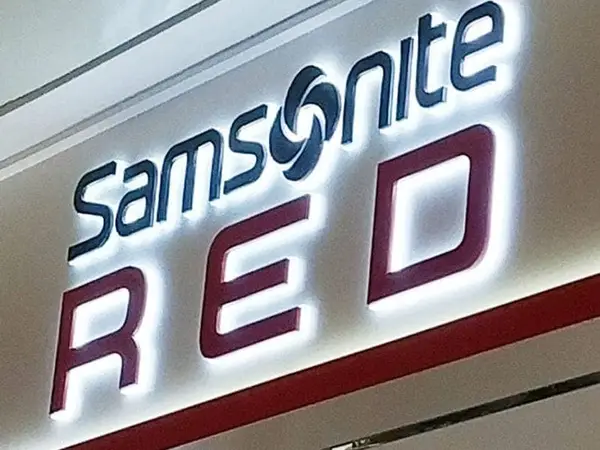
A front-lit channel letter is a metal can — usually stainless or aluminum — with an acrylic face, painted to match the brand, lit from inside. It reads as individual letters. Think storefronts, strip malls, banks, hotels.
A lightbox is one big illuminated cabinet with a translucent face, often printed or vinyl-wrapped. It reads as a solid rectangle of light. Think McDonald's signs, parking lot markers, gas station price boards, menu boards.
Here's the key difference nobody puts on the brochure: channel letters give you letter-by-letter legibility. Lightboxes give you total surface area to scream at a distance.
Our factory makes both. Our front-lit channel letters start around $20 per letter and go to $80 depending on size, metal, and LED quality. Lightboxes run $80 to $250 per square meter. That's the honest base range.
The ROI Calculation — Not the Sales Pitch
Let's do the math for a typical 10-foot storefront sign. Say you need twelve letters, each 18 inches tall.
Factory-direct front-lit letters: $40 average per letter × 12 = $480. Add a transformer, wiring, and mounting frame — call it $900 total on the low end. If you buy from a U.S. sign shop installed, you're paying $200–700 per letter. That's $2,400 to $8,400 for the same physical product.
A comparable lightbox, say 10 feet by 2 feet, is 1.85 square meters. At $150 per square meter, that's $280 for the cabinet itself. Add the transformer and mounting, you're around $600. Same factory-direct logic.
So the first cost is lower for a lightbox. But that's only half the story. The lightbox's face is more exposed, more fragile, and way more likely to sag or yellow if you buy the wrong acrylic. I'll get to that.
I've Seen This Go Wrong:
A contractor called me last year, proud he'd ordered lightboxes from some online reseller for $200 each. They used domestic acrylic instead of UV-resistant material. Eighteen months later, the faces were yellow, the LED strips were flickering, and the client wanted a full replacement.
I've seen this go wrong more times than I can count. The cheap letter works great until it doesn't, and "doesn't" happens right after the warranty expires.
This is the ugly truth: cheap LEDs from no-name factories die in 12 to 18 months. Quality modules from Samsung, Osram, or Blueview last 5+ years. You can't tell the difference by looking at them in a photoshoot. You find out at night, on a roof, in the rain.
LEDs Are the Heart — Most Buyers Ignore This
Here's what nobody tells you: an LED module is a light source, but it's also a heat generator. Stuff it in a sealed metal can without airflow and you'll cook it regardless of brand.
Our standard is SMD 2835 — 100 to 150 lumens per watt, the industry workhorse. It's bright, efficient, and proven. SMD 5730 gives the highest brightness per chip, but it draws more and runs hotter. For big channel letters or lightboxes, I'd stick with 2835 unless you know exactly why you need more.
L70 rating means after 50,000 hours, the LED still outputs 70% of its original light. That's about 5.7 years if the sign runs 24/7. But 50,000 hours assumes adequate heat sinking and a decent power supply. Stick a cheap 12V driver in there and you'll be lucky to see 40,000.
Don't skimp on the power supply. One-year warranty on power supplies is standard. We use quality drivers because the transformer is the first thing to die in a cheap sign. A $10 power supply will cost you a $200 service call at 11pm on a Saturday.
Channel Letters: Daytime Presence, Nighttime Legibility
If your client needs to be read from across the street and they care about brand consistency, channel letters win. No question.
They're individual shapes — the logo becomes the message. You can put them on a raceway, mount them flush, or float them off the wall with a halo effect. The back-lit halo version is the premium option, and it costs $35–120 per letter. That's the one architects love because it looks like the letters are lit from behind, washing light on the wall.
For a clean, modern storefront, rimless channel letters are the move. No visible trim cap, no metal border around the acrylic face. Just pure glowing white like a laptop screen. We make those too, but they require more precision and cost a little more.
The downside to channel letters: more components, more seams, more places for water to sneak in. If your installer doesn't seal the entry points correctly, you'll get condensation inside the letters. That's not a factory defect — that's a bad install. Find an electrician who knows signs, not a general contractor who "can figure it out."
Lightboxes: Big Area, Big Message, Bigger Risk
Lightboxes are the best value when you need to display a logo, a menu, or a changing message in a large format. A 6-foot lightbox can be seen from a block away. The acrylic face can be printed with full-color graphics, which makes them ideal for restaurant menu boards or promotional signs.
That's why our acrylic light boxes are popular for storefronts and food menu signs — they're built with the same UV-resistant acrylic and LED modules as preimium channel letters, but at a fraction of the square-footage cost.
But here's the catch: a lightbox face is a giant flat panel. The larger the face, the more it'll flex in wind. If you use 2mm acrylic on a 10-foot-wide box, you're asking for problems. Over 2.5 meters, we use 5mm or thicker. That adds weight and cost.
Also, a lightbox illuminates the entire surface evenly, which is harder than it sounds. Cheap factories put one LED strip every six inches and call it done. You end up with bright edges, dark center, and a client who notices. We use a spacing pattern based on the cabinet depth and face material. It takes an extra day but it's the difference between "glowing" and "lit."
Materials Make or Break the ROI
The smartest thing a buyer can do is match material to climate.
304 stainless steel has 18% chrome and 8% nickel. It's the workhorse for outdoor signs, lasts 10+ years, and costs about 20–30% less than 316. For a dry climate like Phoenix or a standard suburban store, 304 is correct.
316 stainless adds 2–3% molybdenum and is a marine-grade alloy. It's built to survive salt spray, industrial air, and coastal humidity. Pay the premium if the sign is within a mile of the ocean. I've seen 304 on a Miami balcony go orange in two years. Don't learn that the expensive way.
Aluminum is naturally rust-proof and weighs one-third as much as steel. It's lighter to ship, easier to mount, and lasts 8–12 years outside. For interior lightboxes or relatively sheltered letters, aluminum is a perfect balance. Our aluminum letters start at $10–25 per letter and they're easy to handle.
For acrylic faces, there's a massive divide. Mitsubishi or Degussa UV-resistant acrylic holds its clarity 5–8 years. Domestic acrylic starts yellowing in 1–2 years. We'd love to sell you domestic and pad the margin, but we don't. You'll thank us in year three.
Black and White: The Comparison You Asked For
Let's put it in numbers.
Channel letters, factory-direct: $20–80 each (front-lit), $35–120 (halo), plus mounting and wiring. US retail installed: $200–700 per letter. You're paying for labor, permits, and overhead. That's not a rip-off, but know what you're buying.
Lightboxes: $80–250 per square meter factory-direct. Bigger is cheaper per square foot. They're easier to install than channel letters because they're one big unit, not a dozen separate pieces.
Energy cost: The more light you push, the more electricity you burn. A large lightbox with 200W of LEDs will use more power than 12 channel letters with 60W total. But LEDs are so efficient now that the difference is usually less than $20 per month. Not the deciding factor — unless your client is a chain with hundreds of locations, in which case every watt counts.
Lifespan: Both use the same LEDs and power supplies. Difference is heat. Channel letters are smaller with better natural convection. Lightboxes can trap heat if the cabinet is shallow and sealed. Choose a deeper cabinet and leave breathing room. That's engineering, not magic.
The Hidden Costs Nobody Puts on the Quote
Shipping. Express takes 7–15 days but costs you per kilogram. Air freight is $4–12/kg. Sea freight is $80–200 per cubic meter for LCL and takes 50–70 days. If your sign is heavy, sea freight makes sense. If your client wants it yesterday, express makes sense. Don't air-freight aluminum letters across the Pacific unless you're already making money on the sale.
US Section 301 tariffs add roughly 30% on sign imports. That's real. We can't hide it. Your quote from any Chinese factory should include the tariff line so your final landed price is honest. If a supplier quotes "factory price" and doesn't mention tariffs, you'll get a nasty surprise at customs.
Customs brokers charge $100–300 per shipment. You'll need one. And make sure your packing list says EXACTLY what's inside. We export worldwide using foam, cartons, and plywood crates, so we've got that part down. But your broker is your problem — find a good one.
What We Can't Do (And Why You Should Trust Us More)
Here's the part most factories won't tell you.
We can't put a UL 48 label on our signs. That certification costs $4,000–15,000, takes 4–9 months, and requires quarterly factory audits. For a Chinese manufacturer, that's a massive investment. We have CE, RoHS, and ISO 9001, which cover the EU and international markets. But if your project requires UL or ETL for a US commercial permit, you need to know that upfront.
What we can do: build the sign to UL-ish standards — proper wire gauges, grounded components, correct solder joints, and compliant power supplies — and let your local sign shop apply for UL listing on site. That's a common path, but it costs time and money. Plan for it.
We also can't guarantee your install. A sign is only as good as its mounting, its sealing, and its wiring. We can build a bombproof sign that gets ruined by a hack installer who doesn't use neutral silicone or doesn't seal the conduit entry. Hire someone who's done it before. Don't ask your cousin who "does general handyman stuff."
And we can't tell you that IP65 means waterproof, because it doesn't. IP65 means dust-tight and protected against water jets from any direction. It's the minimum for outdoor signs. IP66 handles powerful jets — coastal applications. IP68 is submersible. Anyone who promises a permanently submerged LED sign at $50 per letter is lying.
So Which One Gets Better ROI?
Let's be blunt.
If you're a sign shop owner or contractor looking to maximize profit on a basic storefront, front-lit channel letters are the safest bet. They read like quality, they're made from proven materials, and they'll last longer than the lease. Factory-direct pricing leaves room for you to mark up and still beat any local quote.
If you're a business buyer who wants maximum message area for a limited budget — a drive-thru, a parking garage, a restaurant with a menu — go with a lightbox. It covers more square footage per dollar and looks great printing full-color graphics. You sacrifice the per-letter elegance but you get visibility at the street corner.
For premium architecture jobs — banks, hotels, law firms — backlit halo letters are the ones you want. They cost more, but they create a subtle, high-end glow that screams "expensive." You can charge accordingly.
The ugly truth is: most sign buyers obsess over the sign style when they should obsess over the materials and the LED quality. A mediocre channel letter with Samsung LEDs and good acrylic will outperform a fancy lightbox with cheap modules every single time.
Final Advice From the Factory Floor
Look, I'm 16 years into this trade. I've seen a million-dollar sign budget squandered and a $500 sign that outlived the business. The difference was never "lightbox vs channel letters." It was who built it, what they put inside, and who installed it.
If you're ready to order, send us the measurements and your logo. We'll tell you honestly which type makes financial sense for your location. Sometimes we'll tell you to buy the cheaper option. Sometimes we'll tell you to spend more. That's not a sales strategy — that's how you get a repeat customer.
Our front-lit channel letters are the backbone of the shop. Our backlit halo letters are what architects call us about at 5pm on a Friday. And our acrylic lightboxes are what we recommend when you need to fill a wall without emptying a bank account.
All of them share the same DNA: 304 or 316 steel, UV-resistant acrylic, quality LEDs, and an 8–12 hour aging test before they leave the factory. We test every single sign for 8 hours minimum. We don't test a sample. We test your actual sign.
That's not a selling point. That's just not wanting to hear your angry voicemail in a year.

Made in our own 3,000 m² factory
Est. 2010 · 16 years
CE & UL certified
2-year warranty
Mean Well power · Rishang LED
Real photo from our production floor — every sign we ship is made here.
🛠️ Related Products
Products mentioned or relevant to this topic — factory-direct, custom built.
Need Custom Signage?
Factory-direct since 2010. Free quote within 24 hours — no obligation.
Get a Free Quote → Copy EmailMOQ: 1 piece · Flexible lead time · 2-year warranty · Worldwide shipping
← Back to Blog