Three years ago, a dentist in Phoenix ordered a 2.5-meter acrylic light box because the price was right. He paid $320 for the box, shipped it by sea, and slapped it on the building himself. Within eleven months the domestic acrylic face was yellow-green, the LED strips had dead zones, and the whole thing looked like a dented office supply store sign from 1997. He ripped it down, paid for an emergency install of front-lit channel letters from a local shop, and ended up spending three times what a proper factory order would have cost. I know this because we ended up making the replacement letters anyway.
The point isn't that lightboxes are trash. It's that the question "which is better" is too simple. The real question is: which sign will pay for itself faster and keep your client out of the phone book after a rainstorm. I've spent twenty-seven years on the factory floor—bending stainless returns on a press brake, barking at LED suppliers about binning inconsistencies, and slathering neutral silicone on ten thousand acrylic faces. I've shipped both channel letters and lightboxes to over twenty-one countries from our 3,000m² facility in Lu'an, Anhui. So let's walk through what actually matters when you're comparing them for return on investment.
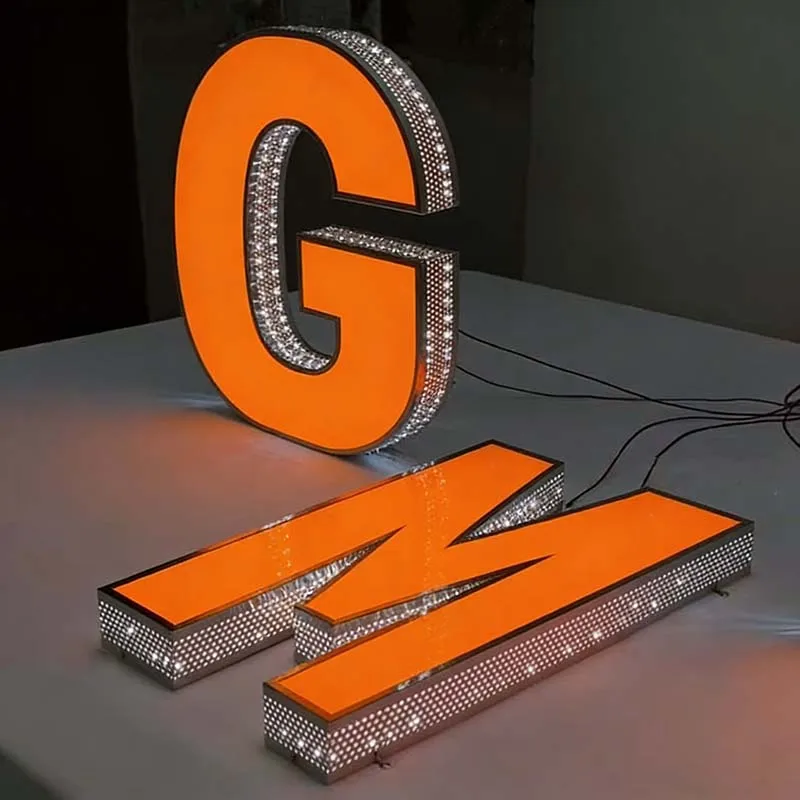
A channel letter is a three-dimensional, internally lit (or not lit) letterform. Think the individual letters spelling "WALMART" on the building, each one a self-contained unit with an aluminum or stainless steel return and an acrylic face. A light box is a cabinet—a rectangular or shaped enclosure with a translucent acrylic or flex-face skin—that backlights an entire graphic or sign face. They achieve similar visibility goals but through completely different engineering.
Channel letters can be front-lit, back-lit (halo), dual-lit, rimless, or solid metal. We produce all of them. Light boxes range from simple edge-lit slim panels to large-format cabinets that cover half a wall. They're both ubiquitous, so you'd think there's a clear winner. There isn't. But there is a clear loser when you misapply one.
Let's talk factory pricing, because if you're a sign shop or an import buyer, you're not paying retail install prices. Our front-lit channel letters run $20 to $80 per letter depending on height, material thickness (we use 1.0-3.0mm stainless or aluminum), and LED quality. That's a 12-inch letter with standard 304 stainless, Mitsubishi acrylic face, and Samsung SMD 2835 modules. Back-lit halo letters from the same spec land at $35 to $120 each. A standard acrylic light box, edge-lit or back-lit, costs $80 to $250 per square meter.
Now do a quick comparison for a typical storefront: the name "BEACON" in channel letters—six characters, 18 inches tall, front-lit—might run you $360 from us, factory direct. If you instead make a 2-square-meter acrylic light box with the same word printed on the face, you're looking at $160 to $350. On pure first-cost, the light box usually wins, especially as the words get longer and taller. But that's only the first of about five ROI numbers that actually matter.
Here's what nobody tells you: the shipping cost can flip the equation. Channel letters are weirdly shaped, so they cube out a container quickly. Six individual letters might occupy 0.3 m³ packed, while a flat-packed lightbox might take 0.15 m³. LCL sea freight from China runs $80 to $200 per cubic meter; add a ~30% Section 301 tariff on the declared product value, and suddenly that cheap lightbox isn't so cheap per unit of visibility. I've watched importers use twenty-foot containers to land channel letters at a total all-in cost that still undercuts domestic supply by half. But you have to run the numbers per job.
Look, I don't care how many lumens your lightbox lid throws—there's no world where a flat box looks more prestigious than a set of polished stainless letters floating an inch off the wall with a halo of 4000K light bleeding onto brick. That's not an opinion; it's twenty-seven years of watching property developers pay premiums for street presence. When a bank or a restaurant chain specs storefront signage, they choose individual channel letters almost every time.
The technical reason: contrast. A lightbox delivers a uniform glow, which is great for reading large, bold text from a distance, but it's a one-trick pony. Channel letters, particularly dual-lit channel letters, create depth by reflecting light off the building face, off the letter returns, and off the acrylic edges. That three-dimensionality catches the eye in ways a flat panel can't. And at night, a back-lit halo letter doesn't just say "we're open"; it whispers "we're expensive." That's valuable ROI in every retail lease negotiation.
But a lightbox holds a lot more graphic real estate. If you need to blast a daily special, a gas price, or a menu board, that edge-lit acrylic panel is a workhorse. That's why we also make food menu signs and interior light boxes—they're designed for information, not just a name. So the ROI depends on what you're trying to communicate: a brand mark or a message.
I've seen this go wrong: a restaurant in Fort Lauderdale ordered stainless steel channel letters from another factory. The returns were beautifully welded, the acrylic was crystal clear, the LEDs were bright as hell. Nobody drilled a weephole. After one summer thunderstorm, each letter was half full of water, the modules shorted, and the sign looked like a bug zapper that had lost a fight with a short circuit. That's an expensive service call.
The ugly truth is most light boxes sold online—especially the sub-$100-per-square-meter options—are not IP65. They're IP43 at best, and the silicone seams crack after twelve thermal cycles. Our light box enclosures use continuous aluminum extrusion with EPDM gaskets and neutral silicone that stays flexible for years, but it's still a sealed box, and boxes trap heat. That's why we don't let any LED driver run inside without proper ventilation and an 8-12 hour burn-in test before packaging. We've had exactly zero complaints about our acrylic light boxes failing from moisture in the last four years, but we also tell every client to drill two 3mm drain holes in the bottom of the cabinet if it's going anywhere near a coast.
Durability also depends on what's facing the sun. Acrylic faces in channel letters or light boxes will yellow eventually. Use domestic Chinese acrylic and you'll have a nicotine-stained sign in eighteen months. Pay the premium for Mitsubishi or Degussa UV-resistant cast acrylic and you'll get five to eight years of optical clarity before any noticeable shift. That difference alone can make or break the sign's ROI over a typical five-year lease term. And if you're doing stainless steel returns, use 304 for most of Ohio, but when you're 300 meters from saltwater, 316 stainless is mandatory—yes, it costs 20-30% more, but replacing rusted letters because you cheaped out is not a good look.
Here's what nobody tells you about LED lifespan. Every supplier quotes L70 at 50,000 hours. That might be true in a perfectly cooled lab. On a hot south-facing wall, cheap modules fail in twelve to eighteen months. Our front-lit channel letters use Samsung or Osram SMD 2835 modules that actually deliver 100-150 lumens per watt for five real-world years. That's backed by a two-year LED warranty and one year on the power supply. If a module does fail, channel letters let you replace one letter's guts without ripping down a whole sign cabinet. That's a maintenance cost advantage that often gets ignored in the first cost conversation.
Return on investment for signage isn't as clean as a vending machine. It's a combination of customer acquisition, perception, and longevity. But I've watched enough landlords and franchisees run the numbers to give you the formula they actually use: good sign ROI happens when the sign lasts longer than the lease without a major repair and when the nighttime visibility drives enough incremental foot traffic to cover the total installed cost within the first year or two. That's a low bar for a coffee shop on a busy street, and a very high bar for a B2B office on the third floor of a building with no street frontage.
So put some real numbers on it. A set of six halo-lit channel letters ordered factory-direct, shipped LCL, landed at your shop with tariff and freight: maybe $800 total. You install them for a retail client at your own labor cost. They last ten years. That's $80 per year of branding, not including the landlord's rent premium for a building that looks current. Compare that to a cheap $300 lightbox that you install for a tire shop. It fades in two years, the driver dies in year three, and the landlord replaces it with another cheap $300 box. Now you're at $150 per year and the tire shop still looks like a tire shop, not a professional retailer. The channel letters win on annualized cost, every time, if you can handle the upfront spend.
Look, I'm not saying lightboxes are a bad investment. For a used car lot or a gas canopy, they're the only thing that makes sense. But for a main street storefront where image matters — a dental practice, a boutique, a fast-casual restaurant chain — the individual letter is the smarter capital deployment. Customers perceive a channel-lettered business as more established, and that has real dollar value.
Buy them when you need architectural presence, when the landlord won't allow uniform cabinet signage, or when your client will pay for a premium look. Also buy them for any application where the letters are over 2.5 meters tall and need structural integrity; we'll use 5mm acrylic faces and reinforce the returns. Buy them when you're an import buyer who can containerize twenty identical sets of storefront letters and land them at a per-letter cost that makes local sign shops blink.
Run from them if your client demands the absolute lowest first cost and doesn't care about anything after a year. Run if you don't have a qualified installer who can level and wire each letter on a brick wall, because individual letters are unforgiving to sloppy mounting. Run if the sign must be UL listed out of the box. That's a real limitation: our factory holds CE, RoHS, and ISO 9001 certifications, and we can supply components that are ETL recognized, but a complete UL 48 listing on a custom channel letter costs $4,000–$15,000 and takes four to nine months with quarterly audits. We’ll coordinate with a UL field evaluation body if you need it, but we won't pretend a standard channel letter ships with a UL sticker. That's the kind of honesty that matters when you're importing into a jurisdiction with picky electrical inspectors.
Lightboxes are the smart pick when you're displaying changing information, when the signage area is very large relative to the letter size, or when you're working with a property owner who mandates uniform cabinet signage across multiple tenants. They're also easier to pack flat, and their shipping density is better. But the ugly truth is that a poorly fabricated light box will get swapped out far more often than a poorly fabricated channel letter, simply because the failure mode — water ingress, insect ingress, diffuser yellowing — is highly visible and annoying.
We make decisions based on what will survive a container shipment and still look sharp on install day. Every set of stainless steel letters or channel letters goes through a ten-step process: design confirmation within a day, laser cutting to ±0.1mm tolerance, TIG welding, grinding and polishing, CNC-fabricated acrylic faces, LED assembly with Samsung or Osram modules, sealing with neutral silicone, an eight to twelve-hour aging test, 100% QC inspection, and export packaging with foam, carton, and plywood crate. Total lead time seven to fifteen days. Minimum order quantity: one piece. We ship to twenty-one countries, and we've been doing it since 2010 with fifty skilled workers on the floor.
What we can't do: we can't pull a measure of your storefront from an iPhone photo and magically guess the landlord's electrical conduit locations. We don't install signs in other countries and we don't handle local permits. You'll need to provide accurate vector artwork and mounting templates, and you'll need a competent installer who understands NEC Article 600 and local building codes. If you need UL, we can help you navigate the process, but understand the timeline and cost. We're not a turnkey solution; we're a factory partner who produces parts that fit your existing workflow.
Here's what nobody tells you about factory-direct sourcing: the real margin isn't in buying cheaper letters; it's in grabbing the entire installed retail price by doing the installation yourself and pocketing the difference. When a local shop quotes $400–$1,000 per installed halo-lit letter, and our factory ships that same letter to you for $40–$120, you've got breathing room to bid aggressively and still clear fifty percent margins. Just price in the sea freight, the tariff, and one trip to fix any shipping damage. In ten years, I've seen less than one percent damage rate on our crate-packed signage. The numbers hold.
If you've read this far, you're probably a sign shop owner or a project buyer who's tired of seeing installations fail. So here's the rule of thumb I give every new client: when the goal is to make a location look like it belongs to a serious business, use channel letters. When the goal is to show a price, a menu, or a temporary offer, use a lightbox. When you can't decide, send us the elevation drawing and we'll tell you what will hold up better. We've been that blunt 8,000 miles away for fourteen years, and it works.
Don't spec domestic acrylic on an outdoor sign unless you're okay with replacing it in two seasons. Don't use 304 stainless on a Miami Beach storefront and expect it not to pit. And don't ever buy a factory-direct sign that hasn't been witnessed through an aging test. All the certificates in the world won't save a lightbox that leaks the first time a cleaning crew hits it with a pressure washer. Ask for the documentation, and if the supplier acts confused, walk away. We've got nothing to hide—come see the factory in Lu'an, Anhui, and I'll show you the exact TIG booth where your letters get welded.
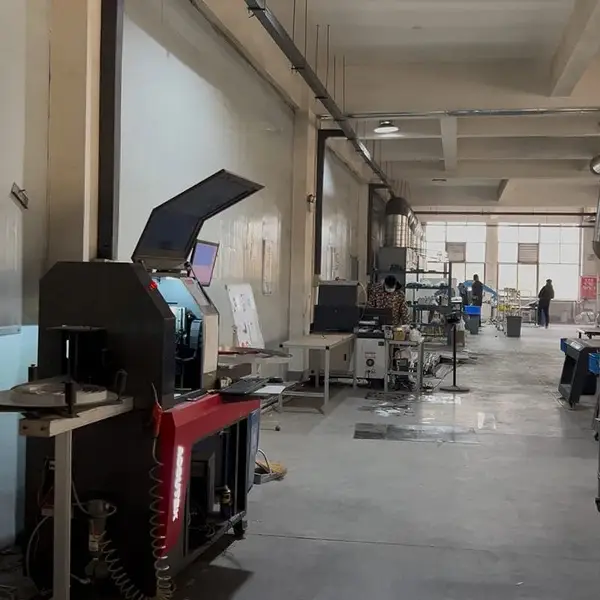
Real photo from our production floor — every sign we ship is made here.
Products mentioned or relevant to this topic — factory-direct, custom built.
Factory-direct since 2010. Free quote within 24 hours — no obligation.
Get a Free Quote → Copy EmailMOQ: 1 piece · Flexible lead time · 2-year warranty · Worldwide shipping
See pricing, specs, and get a free quote for the sign type you need. Built in our factory, shipped worldwide.