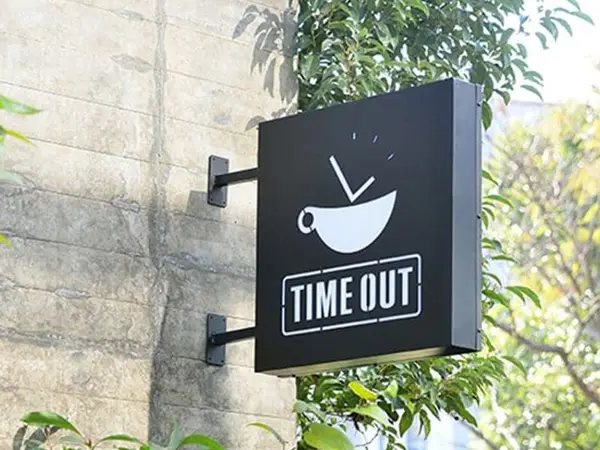
Here's what nobody tells you: most sign shops have a favorite child. Some guys only sell lightboxes because they're boxy and easy to hang. Other guys push
channel letters because they look premium and carry a fatter margin.
Both of those guys are selling you their preference, not your best ROI.
I've spent 16 years on the factory floor, and I've watched too many storefront owners burn cash on the wrong sign. This guide settles it once and for all — not with marketing fluff, but with real numbers from a real factory in Lu'an, Anhui that's been cranking out both since 2010.
---
Let's Kill the Confusion First
A channel letter is an individually fabricated letter with an enclosed space for LED illumination. You've seen them on every McDonald's and bank branch in America. They're three-dimensional, cast shadows, and look like they cost money.
A
lightbox is a single cabinet with a translucent face — usually acrylic — and LEDs bouncing around inside. One rectangular shape. One glowing surface. Think of every pharmacy and fast-food drive-thru you've ever passed.
Different animals. Different ROI math. Let's break it down because the decision isn't about which looks prettier — it's about what puts more money back in your pocket.
The ugly truth is: for a single-tenant building where you want brand presence, I'd usually point you to
front-lit channel letters. They're the storefront standard for a reason.
But if you're a franchise owner with strict brand guidelines and a sign that needs to swap between promotions, a
light box might serve you better. There's no universal answer — there's only the right answer for your specific situation.
---
What "ROI" Actually Means for Your Sign
ROI on a sign isn't just upfront cost. Anyone who tells you different is trying to sell you something. Real sign ROI is the lifetime cost divided by the lifetime revenue the sign generates.
Here are the hard numbers:
- Front-lit channel letters: $20-80 per letter at factory prices, $200-700 per letter installed in the US
- Back-lit halo letters: $35-120 per letter at factory, $400-1,000 per letter installed
- Lightboxes: $80-250 per square meter at factory, typically $500-1,500 installed for a standard storefront
- Aluminum non-lit letters: $10-25 per letter at factory for simple signage
A typical storefront sign runs 10-15 letters. Do the math yourself and figure out the spread between what you'd pay us and what you'd pay a local shop to install the same product on a storefront.
Here's what nobody tells you: the margin in this industry is obscene on the install side. We know it. You know it. The sign shop you're calling knows it too.
But don't hate the player — hate the game. The local shop has overhead. Rents, trucks, insurance, salespeople, project managers, health benefits.
You're not paying for the sign. You're paying for their entire operation.
Me? I'm in a 3,000m² factory in China with 50+ skilled workers. I ship worldwide. My overhead goes into lasers, CNC routers, and TIG welders — not corner offices.
Factory-direct savings typically run 50-65% on the product itself. That's not "cheap Chinese junk" — that's cutting out three layers of middlemen. The same LEDs (Samsung and Osram, if you specify), same 304 stainless, same everything.
---
The Brutal Cost Comparison Everyone Skips
Let's lay out the real lifetime costs. This is the part most buyers never see because nobody wants to do the math.
| Factor | Channel Letters (front-lit) | Lightbox |
|--------|------------------------------|----------|
| Initial factory cost | $20-80 per letter | $80-250 per sqm |
| Installed cost (US) | $200-700 per letter | $500-1,500 typical |
| Electricity (per sq ft) | Lower — only letters lit | Higher — whole face is lit |
| Typical lifespan | 10-15 years with quality LEDs | 8-12 years with quality LEDs |
| Maintenance | Individual letters replaceable | Whole face may need replacing |
| Visibility at night | Excellent — bright cutouts | Excellent — uniform glow |
| Brand presence | High — 3D shape catches light | Medium — flat, common |
The ugly truth is that electricity costs eat more businesses than the initial purchase does. A lightbox running 12 hours a day with 150W of LEDs can cost $65-80 per year to run. Channel letters for the same storefront might run $35-50.
Doesn't sound like much. Multiply that by 15 years and you've paid for a second sign.
Now look at maintenance. With independent channel letters, one letter breaks — you replace one letter. With a lightbox, if the backlighting array fails or the acrylic face cracks, you're looking at a bigger repair bill. The acrylic face on a lightbox is more exposed to impacts and weather than letters are.
The breakdown with LED modules is the deeper issue. Quality modules — Samsung or Osram quality — give you 5+ real years of lifespan at L70 brightness. Cheap modules from a bargain supplier give you 12-18 months before you're swapping them out.
I've seen this go wrong: a contractor buys cheap channel letters from an online marketplace, saves $400 upfront, then pays a local electrician $300 to swap out the LED modules every 14 months. In four years, they've spent more in maintenance than they saved upfront. And their sign looks dimmer than the competition's from day one.
Don't be that contractor. Buy quality once, install it once.
---
The Hourly Cost — Why Bigger Isn't Always Better
Here's the angle I don't see anyone talking about: what's the sign worth per hour of operation?
A lightbox has more LED surface area. That means more power draw, more heat, more modules that could fail. A 6-foot lightbox might pull 200-300W while a set of channel letters for the same storefront pulls 60-100W.
Over a 12-hour business day, that difference adds up to roughly 1-2 kWh. At commercial rates ($0.12-0.20/kWh), you're talking $45-145 extra per year between signs.
That's not going to make or break you, but it's part of the lifetime-ROI picture that most comparisons ignore.
Here's what nobody tells you: the lightbox's whole-face glow is wasted energy if your message is simple. A logo and three words doesn't need a 3-foot-tall glowing rectangle. It needs presence. Channel letters give you that presence with less waste.
---
What Each Type Is Actually Best For
Choose channel letters when:
Your business has a memorable logo or short name. You want brand recognition at night. You're in a competitive strip where the sign needs to cut through visual noise. You want to look established, not budget.
The 3D physical presence of channel letters — whether
front-lit or
back-lit halo — catches sunlight during the day and casts clean shadows at night. That's worth something. That's visual weight.
For maximum day and night visibility,
dual-lit channel letters give you both a glowing face and a halo effect. More LEDs, more cost, but you're visible in every condition.
Choose a lightbox when:
You change your messaging seasonally. You're a franchise with mandated lightbox branding. You need to see the sign from highway distance and the simple rectangular shape makes that easier.
For restaurants with daily specials or pharmacies with rotating promotions, a
lightbox makes sense — you can swap the face graphics without touching the electrical system.
I've seen this go wrong: a small coffee shop buys a 12-foot lightbox with their logo and name on it. Six months later they realize they want to change their tagline, but the whole acrylic face needs to be re-printed and re-installed. They might as well have saved the money and bought a
neon flex sign they could re-shape.
---
The Hidden Cost of "Premium" Materials
There's a moment in every sign buyer's life where they stare at stainless steel vs. aluminum and wonder what they're actually paying for.
Here's the breakdown:
- Aluminum: weighs one-third of steel, naturally rust-proof, lasts 8-12 years outdoors. It's perfect for channel letters that need to survive without heavy structural support.
- Stainless 304: lasts 10+ years outdoors. It's the industry standard for premium looks. Brushed #4 finish is the storefront classic.
- Stainless 316: lasts 15+ years and handles coastal/salt air. Compared to 304, it costs 20-30% more.
For 90% of storefronts, 304 stainless is the sweet spot. If you're building a sign for Miami Beach or anywhere within a mile of the ocean, pay for 316. I've watched 304 get pinprick corrosion after five years on a Gulf Coast storefront. The owner saved $200 on materials two thousand miles away and paid three times that in replacement labor.
Our
stainless steel letters in 304 are our most popular export for a reason. But I'll be the first to tell you when you need to upgrade to 316.
For budget-conscious buyers who want rust-proof without steel prices,
aluminum letters are the honest choice. They don't have the same weight or "premium" feel, but they'll both survive a decade outdoors.
---
Wait — What About Lightbox Face Material?
The acrylic face on a lightbox matters more than most buyers think. This is where "cheap" comes back to bite you.
UV-resistant acrylic — Mitsubishi or Degussa brand — lasts 5-8 years before yellowing. The domestic Chinese acrylic lasts 1-2 years before it turns that ugly yellow-brown that screams "budget storefront."
Think about what a yellowed face does to your brand perception. Customers see it. They subconsciously associate it with neglect and failure. That "affordable" lightbox just made your business look expired.
For any lightbox that faces direct sun, specify the UV-stable acrylic. It costs more upfront but saves you from a face replacement in year two. The rule of thumb: over 2.5 meters in height, use 5mm acrylic minimum. Thinner stuff bows and warps, admitting moisture and dust, and then your uniform glow becomes a splotchy mess.
---
Shipping and the Tariff Landmine
This is where the factory-direct story gets complicated. Let's be straight with each other.
Signs ship three ways:
- Express (DHL/FedEx): about 5-15 days, $30-100 for small packages
- Air freight: about 10 days, $4-12 per kg
- Sea freight: about 65 days, $80-200 per m³ (LCL), $1,200-3,000 for a full container
Sea freight is where the serious margin lives. Wait — did I say about 65 days? Yes. If someone promises sea freight in three weeks, they're lying to you.
Here's what nobody tells you: the US Section 301 tariff adds roughly 30% on sign imports. Your factory quote is not your landed cost. Add another 30% before you calculate your margin.
I've watched contractors order $3,000 worth of channel letters, get hit with a $900 tariff bill, and then blame the factory. The factory didn't surprise them. They just skipped their homework.
If you're importing, build the tariff into your quote from day one. Also check whether your product qualifies for any tariff exclusions. And don't let anyone bully you into buying by the container if you need one sign. Our MOQ is one piece. Yes, one. We'll build a single letter if that's what you need. But if you're serious about volume, sea freight by the pallet or container is the way.
---
What About UL and Electrical Certification?
Here's the moment where a lot of importers get cold feet.
Between UL 48 and ETL, you need one of them for the US market if the sign is permanently wired. UL 48 costs $4,000-15,000 and takes 4-9 months with quarterly audits. ETL is cheaper — 10-30% less — and covers the same ground.
Here's what nobody tells you: if the US distributor is the one bringing the sign in, electrical certification is their responsibility — not yours. But if you're importing directly as the installer, you are the responsible party.
CE certification is what we hold at the factory level. Realistically, CE costs 20,000-50,000 RMB and takes 2-8 weeks. We have it. But if a factory claims UL compliance and can't show you a certificate with their company name on it, run the other way.
Be straight with your factory. Tell them the end market and ask what certifications you need for your use case. We've had importers who only need IP65 (minimum for outdoor, water jets from any direction) and others who need IP66 for coastal conditions.
The ugly truth is that IP65 does NOT mean your sign survives a hurricane. It means dust-tight and water jets are handled. For hurricane zones, the sign structure matters more than the IP rating. You need heavy-gauge aluminum or stainless framing, not just "waterproof" claims.
---
The 10-Step Process You're Actually Paying For
When a factory quotes you, they're quoting a process. Here's ours — and you should ask your current supplier for the same transparency:
1. Design confirmation — we make sure your vector file is actually production-ready (1 day)
2. Laser cutting — ±0.1mm precision on your letter or cabinet bodies (1-2 days)
3. Bending and welding — TIG welding for clean joints, no slag (1-2 days)
4. Grinding and polishing — where cheap factories cut corners and it shows (1-2 days)
5. Acrylic face CNC routing — exact fit for the channel (1 day)
6. LED assembly — modules positioned for even illumination, no hot spots (1-2 days)
7. Sealing with neutral silicone — not the acid-cure stuff that corrodes aluminum (1 day)
8. Aging test — 8-12 hours of burn-in to catch early failures before you see them
9. 100% QC inspection — before packing, not after
10. Export packaging — foam, carton, then plywood crate for stability
Total: about 5-15 days, depending on volume and complexity.
Here's what nobody tells you: the aging test is the step most budget factories skip. They wire the LEDs, close the acrylic face, and ship it. If a solder joint is weak, you won't discover it until the sign's been on your storefront for three weeks and a section of letters goes dark.
Ask your factory if they run an aging test. Ask them how long. If they can't answer that question without checking with someone else, walk away.
---
Lifespan — The Real Cost Per Year
Now let's do the actual ROI math. Assume a typical storefront sign for a coffee shop: 10 letters, 4 feet wide total.
**Front-lit channel letters (10 letters):**
- Factory cost: $20-80 per letter = $200-800
- Shipping + tariff + install: $1,000-2,500 total
- Electricity: $40/year
- Maintenance: $50/year (provision for LED replacement)
- Expected life: 12-15 years
- Total cost over 12 years: $2,500 + $480 + $600 = $3,580
- Cost per year: ~$300
**Lightbox (4 feet × 2 feet = 8 sq ft):**
- Factory cost: $80-250 per sqm. For an 8 sq ft sign, that's roughly 0.74 sqm, so $60-185 at factory
- Shipping + tariff + install: $800-1,800 total
- Electricity: $80/year
- Maintenance: $100/year
- Expected life: 8-12 years
- Total cost over 10 years: $1,800 + $800 + $1,000 = $3,600
- Cost per year: ~$360
The channel letters cost less over their lifetime. And they'll make the storefront feel more premium — in the real estate game, a nice sign justifies 5-10% higher rent and gives a cafe more street appeal.
---
Which One Does the Local Code Guy Approve?
One thing to check before ordering either: your local code compliance. For the US, NEC Article 600 covers signs. There's no shortcut here. Your sign needs proper grounding, gaskets at electrical connections, and UL-listed transformers.
ADA requirements matter if the sign is tactile, not just visual. Tactile signs need mounting at 48-60 inches, non-glare finish, and Grade 2 Braille. Neither channel letters nor lightboxes usually trigger ADA as illumination, but check with your local code official.
I've watched a contractor order 12 halo-lit
back-lit halo letters, install them beautifully, then have the city inspector fail it because the mounting hardware pulled the sign too far off the wall and it blocked a sight line at the parking lot exit.
Frustrating, yes, but the conversation would have taken five minutes before ordering.
---
What About Interior Signs and Menu Displays?
While you're building out a storefront, you'll also think about interior signage. Don't use outdoor-grade channel letters inside — they're overbuilt and overpriced for interior work. Use
neon flex signs to match a current style or a
food menu sign if you're a restaurant with changing specials and images.
Interior signs last as long as the business does — not 15 years of UV exposure. They can be punchier and brighter because they don't face the same weather conditions.
---
Bottom Line — Making Your Decision Without Getting Ripped Off
Here's the definitive measure: what's your storefront's primary business?
- High-end salon, restaurant, financial advisor: channel letters. You need the premium 3D look and the presence. Pay for
stainless steel letters or
back-lit halo letters.
- Pharmacy, fast-food franchise, grocery: lightbox. You need the visibility from distance and the replaceable face.
- Most everyone else: front-lit channel letters. Best balance of cost, lifespan, and brand appeal.
Now let's talk about the import equation. If you're an importer or contractor, don't look at the factory price and assume that's the whole saving. Add shipping, tariff, customs brokerage, and warehouse handling. Then compare against your local sign shop.
Here's the math I'd want a buyer to do before calling us:
1. Get a quote from a local shop for the same sign spec
2. Get our factory quote
3. Add our freight and tariff
4. Compare the after-install numbers
If we come out 30-40% cheaper after those costs, you found a winning deal. If you're importing 50 signs for a franchise, the gap widens dramatically.
I've seen this go wrong: a shop owner imports one sign, pays express freight, gets hit with tariff and brokerage fees, and ends up paying nearly what he'd have paid locally. Then he blames "China" instead of admitting he failed to plan for volume.
Our MOQ is one piece, but our best value comes when you assemble larger orders. If you're ordering 20+ signs for a multi-location roll-out, the freight and tariff costs get spread thinner, and the factory-direct savings become truly absurd.
---
Honest Truths About Our Factory
Let me be honest about who we are and what we can't do.
We're Aochuang Sign in Lu'an, Anhui. 3,000 square meters of production space. 50+ skilled workers. We've been at this since 2010. We export worldwide. We hold CE, RoHS, and ISO 9001.
We give you a 2-year LED warranty and 1-year power supply warranty. That's standard.
What we can't do:
- We can't make your sign UL-certified from the factory floor. That's a US-side certification, and it depends on the final product configuration and the local Authority Having Jurisdiction.
- We can't ship small express packages at sea-freight prices. The freight carriers set those costs, not us.
- We can't turn 30 days of production time into 5 days when you're ordering 100 letters. We quote about 5-15 days because that's what it takes to do quality work with a 100% QC pass.
- We can't guarantee every single letter arrives absolutely perfect after a 70-day sea journey if you refuse the plywood crate. We offer the crate for a reason. You don't have to take it, but if you skip it and the carton gets crushed in handling, that's on your risk tolerance, not us.
- We can't sell a sign cheaper than a factory that skips the aging test. We run those 8-12 hours on every sign. Could we save $60 a sign by skipping them? Yes. Would I want my name on a sign that fails in month three? No.
---
What to Prepare Before You Email This Factory
Make a productive call or email. Send:
- Rough dimensions — height and length in mm or inches
- Number of letters or sign area
- Font style or — better — an AI or PDF file
- Letter color and finish choice (brushed steel, black, acrylic color)
- LED color temperature: 3000-3500K warm, 4000-5000K neutral, 6000-6500K cool
- Indoor or outdoor installation
- Any code requirements or certification needs
- Quantity, so we can think through freight with you
The more you give us, the more accurate the quote. Vague requests get vague answers. Set yourself up for a sharper outcome.
---
Go Do the Math
The one paragraph that you should take home and pin on the wall:
For most storefronts,
front-lit channel letters deliver better ROI over 10 years. They cost less to run, last longer, create more brand presence, and the individual-letter construction means cheaper repairs down the road. Lightboxes make sense for franchised operations, frequently changing messages, and purely distance-driven visibility.
There's no universal correct answer. But there is a lazy answer: whatever the sign shop you called wants to sell you. And there's an honest answer: do the math over the full life of the sign, not just the installation day.
That's what we do. We'll gladly build whichever makes sense for you — but we'll also tell you what we'd choose for your specific location. We'd rather get a repeat customer from a sensible recommendation than a one-time order from an overpriced or undersized specification.
Need help choosing? Send us the details. We're in the business of making signs that work, not just signs that hang.