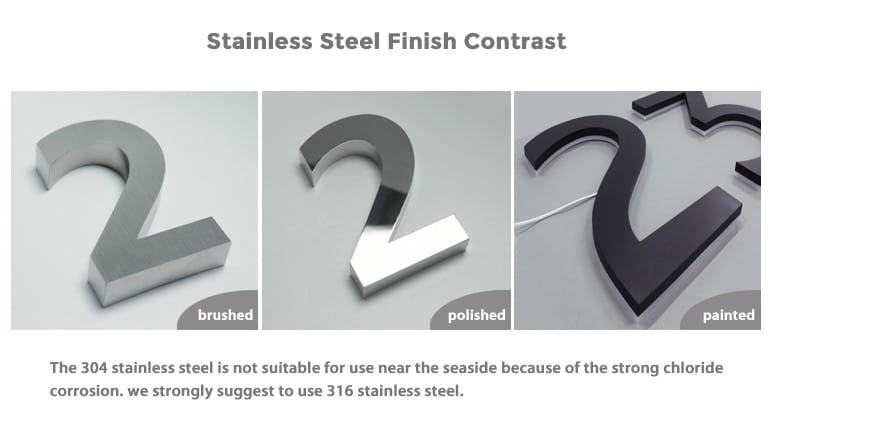
11pm in Lu'an. Just finished QC on a 35-foot set of 304 stainless letters headed to a strip mall outside Columbus.
I've been at this since 2010—Aochuang Sign, Lu'an. 3,000m² floor. 50-plus workers who can bend acrylic and TIG-weld stainless faster than most shops can quote the job. China's sign industry didn't get big by accident. The supply chain here sits on top of the world's acrylic, LED, and stainless suppliers. We crank out custom work from one-unit orders to 500-letter rollouts in the same 7-to-15-day window.
Here's what nobody tells you: the factory price is real, but landed cost is a math test most buyers fail before their first freight quote. I'll break it all down.
China produces a massive share of the world's custom signage now, and the numbers back it up. A single mid-sized plant like ours runs 3,000 square meters, holds CE, RoHS, and ISO 9001, and ships to every continent without blinking. MOQ is one piece. That's not normal in this trade.
What changed? Domestic acrylic suppliers started cutting corners, so we source Mitsubishi or Degussa sheet that holds 90-92% light transmittance and won't yellow for 5-8 years. The cheap domestic stuff goes brittle in 1-2 years. On the LED side, SMD 2835 modules running 100-150 lm/W have become the workhorse. Samsung, Osram, and Blueview modules will actually last past the 50,000-hour L70 mark.
I still see factories offering boards with a 12-month real lifespan. That's not a product. That's a refund waiting to happen.
Look, I've watched sign shops pay $800 for a front-lit letter from a domestic fabricator. Same 304 stainless, same Samsung LEDs. We ship that letter for $120.
That's not a fluke. Factory pricing for front-lit channel letters runs $20-80 per letter, back-lit halos $35-120, stainless non-lit $15-40. A US retail install can hit $200-700 for front-lit and $400-1,000 for halo. Even after freight, tariff, and a crate, you'll usually land 50-65% under what your local shop charges. The tradeoff is time on the water and import paperwork.
Domestic suppliers win on lead time for emergency replacements. They can turn a car dealership sign in a week when the insurance check clears. We can't beat a local shop's same-city truck. We can beat their material cost, their labor cost, and their markup all at once. Express takes about 5-15 days. Air takes 10-20. Sea takes 50-70. If you plan ahead, sea freight from Shanghai to Long Beach on an LCL shipment runs $80-200 per cubic meter, which is nothing on a 40-letter job.
Then Section 301 hits at about 30%.
If you're ordering for a storefront, front-lit channel letters are the bread and butter. 3mm acrylic face, stainless or aluminum returns, SMD 2835 modules. That's the sign your client's customer reads from 200 feet away. We do more of these than everything else combined.
Back-lit halo letters are the premium sibling. They mount off the wall, throw light backward, and make a law firm or dental office look like they paid twice as much. Factory price on back-lit halo letters runs $35-120 per letter. Architects spec them first when they want "Architectural" with a capital A.
304/316 stainless steel letters are another volume item. 304 runs 18% chromium and 8% nickel, good for a 10-plus-year outdoor life. 316 adds 2-3% molybdenum. That's why it costs 20-30% more, and why you spec it within five miles of salt water. Aluminum weighs a third of steel and won't rust. Acrylic LED letters are the versatile workhorse for indoor or covered outdoor. Clean edge glow without the metal price.
Then you've got lightboxes, neon flex, and the specialty RGB stuff—side punch, running edge, DMX, starry sky. All from the same plants. Same lasers. Same QC line.
Don't start with price. Start with proof of life. I'm serious. Ask the factory for a live video call walking the floor. If they won't do it, walk away. Any factory that won't spend five minutes showing you the floor won't spend five minutes fixing a rejected letter. I've seen brokers claim a 3,000m² factory and send photos stolen from a competitor's Alibaba page.
Certifications are the first lie. CE marking costs 20,000-50,000 RMB and takes 2-8 weeks. Most factories will say they have it. Ask to see the certificate with today's date and the factory's name on it. Watch them sweat. Same with UL 48—that's $4,000-15,000 and 4-9 months with quarterly audits. If they quote you UL-listed signs and the cert is from 2018, it's worthless.
Check the solder joints on their LED modules. Dull gray means cheap lead-free fail. Shiny silver is proper solder. That one detail will tell you more than any sales pitch.
Verify the acrylic, too. Mitsubishi or Degussa sheet holds 90-92% light transmittance and lasts 5-8 years outdoors. Domestic sheet yellows in 1-2 years. If the quote just says "acrylic," ask which brand. The answer matters on a $15,000 pylon sign.
Export packaging is another tell. Foam, carton, plywood crate—if they skip the plywood for a 10-foot sign, you'll find out when the forklift punctures the face.
Production here is a 10-step line, not a guy with a router in a garage. Design confirmation takes one day. Laser cutting holds ±0.1mm and takes one to two. Bending and TIG welding another day or two. Grinding and polishing one or two. Acrylic face on the CNC one day. LED assembly one to two. Neutral silicone sealing one day. Then an 8-12 hour aging test, 100% QC, and export packaging. Total: about 5-15 days.
That aging test is where cheap factories cut corners. We run every lit sign at full voltage for half a shift plus. If a solder joint's going to fail, better it fails on our floor, not in a Texas parking lot after the boom lift leaves.
Then we crate it and hand it to the shipping company. That's when the real fun starts.
Express takes about 5-15 days and costs $30-100 for small packages. Air is about 10 days at $4-12/kg. Sea is about 65 days, $80-200 per cubic meter for LCL, or $1,200-3,000 for a full container. For a 30-letter channel letter job, sea freight almost always wins. If you're replacing a single sign and the client's screaming, air freight the letter and charge them for the panic.
The ugly truth is most buyers don't get burned by the factory. They get burned by their own assumptions.
Rookie mistake number one: ordering cheap LED modules to save $8 a letter. Quality Samsung, Osram, or Blueview modules last 5-plus years. Cheap ones die in 12-18 months. I don't care what the spec sheet says; I've replaced enough of them in the field. When the LEDs fail inside a sealed letter, the whole face comes off. That's not a warranty call your client wants.
Rookie mistake number two: believing IP65 means hurricane-proof. IP65 means dust-tight and protected against water jets from any direction. IP65 does NOT mean your sign survives a Florida hurricane or a pressure washer held three inches away. If you're on the coast, you need IP66 or IP68 and 316 stainless. If you're in Ohio, 304 and IP65 is fine.
I've seen this go wrong: a client ordered rimless letters without sealed returns. Six months later, water pooled inside and the LEDs flickered like a gas station sign on its last leg.
And LCL sea freight is not a white-glove service. Someone touches your crate 6-8 times between our dock and yours. Every touch is a chance for forklift damage. Package it like you're shipping glass, because you are.
The next five years are about control and energy. SMD 2835 modules now hit 100-150 lumens per watt, and L70 lifespan is 50,000 hours. The old argument that LEDs don't pay back? Dead. People are specifying color temperatures more precisely: 3000-3500K warm for hospitality, 4000-5000K neutral for corporate, 6000-6500K cool for industrial and highway.
Smart signs are coming. App-controlled IoT signs and DMX programmable RGB are moving from casino installations into retail and even restaurant patios. Factories that can wire a clean DMX controller into a stainless letter are going to win the next decade. The shops that can't will be selling acrylic cutouts at trade shows.
China's not just copying here. The better plants—real QC, real export packaging, real certifications—are the ones moving the industry forward.
I still get the same four questions weekly, and they all make me wonder if anyone reads the invoice.
Q: Can your factory really do one piece?
Yes. MOQ is one piece. I'll make you one letter and still answer your emails. Don't expect volume pricing, but don't expect me to ignore you either.
Q: Is the CE certificate real?
Ask for it with today's date and the factory's name. If they send a generic scanned PDF from 2020, it's not real. CE costs 20,000-50,000 RMB; nobody hands that out as a PDF in five minutes.
Q: What's the real warranty?
Two years on LED modules, one year on the power supply. Cheap factories won't give you that on paper. If they won't write the warranty, don't write the PO. And don't ask for five years unless you want to pay for five years of replacements up front.
Q: Can you beat my local guy on a rush job?
No. Local wins on same-week emergencies. I win on full replacements, rollouts, and any job where saving 50-65% on product actually matters.
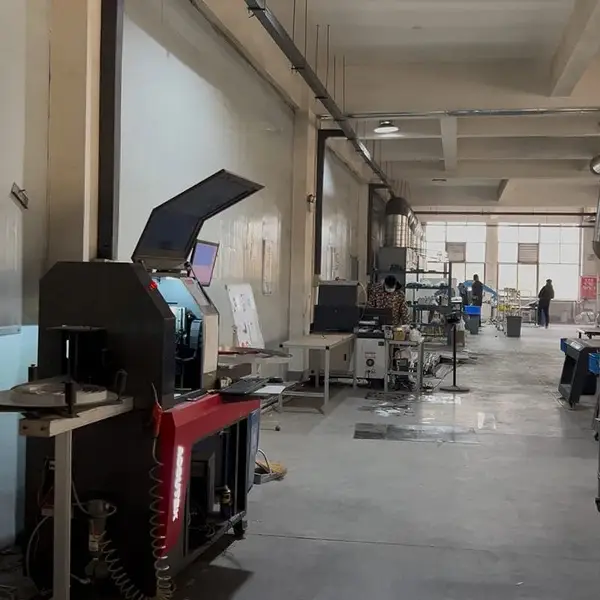
Real photo from our production floor — every sign we ship is made here.
Products mentioned or relevant to this topic — factory-direct, custom built.
From $24/letter · MOQ 1 piece · Flexible lead time · CE & UL certified · ships to 20+ countries
Custom sizes, colors, and finishes. Get a factory price in 24 hours.
Get a Free Quote Copy EmailWhatsApp +86 13865703472 · business@aochuangsign.cn