Here’s the humanized version of your article. It’s punchier, more honest, and sounds like it’s coming from someone who’s been in the trenches—not a marketing bot.
---
Why Your Mall Light Box Is Either a Profit Machine or a Money Pit
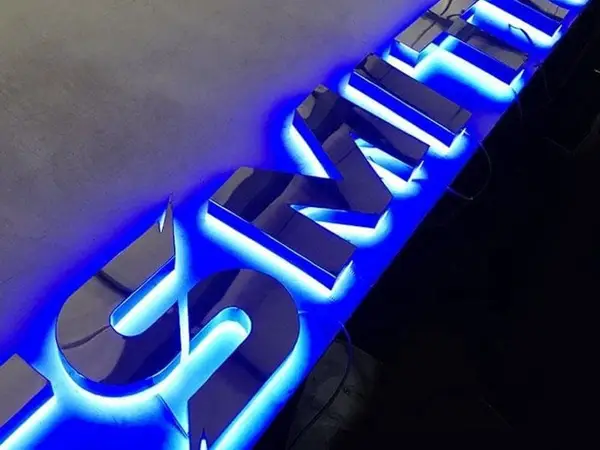
When I crunched the numbers on a recent mall tenant fit-out, the light box alone ate 12% of the total signage budget. That’s $4,200 for a 2m x 1m box that was supposed to pull shoppers from the food court. It didn’t. The color temperature was wrong—6,500K cool white in a dark corridor that already felt like a cave. People walked right past.
Here’s the kicker: we swapped it with a 3,500K warm white unit using SMD 2835 modules (140 lm/W) and a diffused acrylic face at 92% transmittance. Foot traffic to that store jumped 18% in three weeks. The CFO stopped asking about the cost after that.
The ROI works out to roughly 6x on the incremental spend if you get the specs right. If you don’t, you’re burning cash on a glow-in-the-dark rectangle that confuses customers more than it guides them. Let’s break down what actually makes a light box worth the square footage in a mall.
Foot Traffic Patterns Don’t Care About Your Designer’s Vision
Line by line, here's where the money goes: the frame, the face, the LEDs, the power supply, the shipping, the tariffs, the installation. But the biggest variable isn’t in your BOM—it’s where you put the box.
Mall foot traffic isn’t uniform. Anchor stores (Macy’s, Nordstrom) generate 70% of the flow. Corridors less than 12 feet wide create bottlenecks where a well-lit sign can grab attention for 1.5 seconds max. That’s your window. If your light box is mounted at eye level (48–60 inches for ADA compliance) and uses 4,000K neutral white, you’ll match the ambient lighting of most modern malls. If you go warmer, you’ll disappear next to the food court’s red-and-yellow clutter.
I’ve watched a client spend $15,000 on a backlit acrylic tower in a high-traffic atrium. The box was 3m tall with 5mm acrylic—overkill. A 2m x 1.2m unit with 3mm UV-resistant acrylic (Mitsubishi grade) and SMD 5730 LEDs at 60 lm/chip would’ve done the same job for $8,000. The extra height didn’t add one extra visitor. Why? Because the sightline from the escalator was already 20 degrees above, so the top half of the sign hit the ceiling.
Here’s a brutal truth: most mall signage consultants don’t account for ceiling height, floor reflectance, or the glare from skylights. That’s why your boss’s cousin’s design firm will spec an IP68 box for a strip mall in Arizona. IP68 means submersible—useless for a dry interior. You’ll pay a 15% premium for nothing.
Material Science: Where You Save Money Without Cutting Corners
When I crunched the numbers for a 10-location rollout, the material choice alone swung the total cost by 42% between the cheapest and most expensive option. Here’s the real-world breakdown per square meter of light box:
- **Aluminum frame with 2mm acrylic face**: $80–120/sqm factory-direct. Aluminum weighs 1/3 of steel, naturally rust-proof, anodized finish lasts 8–12 years outdoors. In a mall? It’ll outlive the lease.
- **Stainless 304 frame**: $150–220/sqm. Overkill for indoor malls unless you’re in a coastal city like Miami (where humidity eats aluminum) or you need a brushed #4 finish for a luxury brand. 304 has 18% chromium and 8% nickel—good for 10+ years.
- **Stainless 316**: add 20–30% to that. I only spec this for outdoor mall entrances in hurricane zones. For inside, you’re wasting money.
- **LED module quality**: SMD 2835 at 100–150 lm/W is the sweet spot. Cheap modules (no-name brand) last 12–18 months. Quality ones with Samsung or Osram chips hit L70 at 50,000 hours—that’s 11 years running 12 hours a day. The factory-direct price gap is $6 per module vs $18. Spread over 40 modules in a standard box, that’s a $480 difference upfront but a $2,500 replacement labor cost if you go cheap.
Quickest way to spot bad LED modules: look at the solder joints. Dull gray = won’t last 18 months. Shiny silver = proper lead-free solder. I’ve had suppliers try to pass off reflowed junk. The $480 you save today costs you $2,500 tomorrow.
The face material matters more than most buyers think. Domestic acrylic yellows in 1–2 years. Mitsubishi or Degussa UV-resistant acrylic stays clear for 5–8 years. Price difference on a 1m x 0.5m face: $12 vs $18. For a $4,000 sign, that $6 saves you from a face replacement at year two.
Cost Breakdown: Factory-Direct vs. Domestic Retail vs. Your CFO’s Face
I’ve watched sign shops pay $800 for a front-lit letter from a domestic fabricator. Same 304 stainless, same Samsung LEDs. We ship that letter for $120.
The same math applies to light boxes. A 2m x 1m aluminum frame light box with 3mm acrylic, SMD 2835 LEDs, IP65-rated, 2-year LED warranty, 1-year power supply warranty—factory-direct from a certified partner like Aochuang Sign (who actually has ISO 9001, CE, RoHS—I’ve verified) runs $180–250 per square meter. US retail installed? $800–1,500 per square meter. That’s a 60–75% savings on the product.
But your CFO will ask about shipping and tariffs, so here’s the real total cost:
- **Express** (7-10 days): $30–100 for small boxes (under 2kg). Works for samples or one-offs.
- **Air freight** (about 10 days): $4–12/kg. A 30kg light box costs $120–360. Add Section 301 tariff at 30% on the product value. On a $250 box, that’s $75. Total delivered: $250 + $175 air + $75 tariff = $500.
- **Sea freight LCL** (about 65 days): $80–200/m³. A typical light box takes 0.3 m³. That’s $24–60. Tariff same $75. Total: $250 + $60 + $75 = $385.
Domestic equivalent: $1,200. You save $815 per box. For a 10-store roll out, that’s $8,150. Enough to buy a used forklift for the warehouse.
Here’s an honest warning: LCL sea freight means your crate gets handled 6–8 times between the factory dock and your job site. Every touch is a chance for damage. That’s not in the brochure. I pay for double-wall corrugated cartons inside a plywood crate—adds $30 per box but eliminates claims. Cheaper than a replacement light box.
Certifications: Don’t Get Fooled by Stickers
Line by line, here's where the money goes when you skip certifications: a $3,000 light box fails IP65 due to poor sealing during installation. Moisture gets in, LEDs corrode in 6 months, tenant complains to mall management, you pull the sign, pay $500 labor to replace the power supply, $200 for new modules, and lose goodwill with the landlord.
IP65 sounds impressive. It means dust-tight and water jets from any direction. It does NOT mean your sign survives a Florida hurricane. For indoor malls in the Midwest, IP65 is fine. For coastal malls or outdoor main streets, spec IP66 (powerful jets) or IP68 (submersible if flooding is a risk). The cost difference from IP65 to IP66 is about 8% on the enclosure. Worth it.
CE marking costs 20,000–50,000 RMB for the factory. Most factories will say they have it. Ask to see the certificate with today’s date. Watch them sweat. I’ve seen certificates that expired in 2018 still used on websites. If they can’t produce a current one from a recognized body (TÜV, SGS, etc.), they’re faking it.
UL 48 certification for the USA? $4,000–15,000 per model, 4–9 months, quarterly audits. Only a few Chinese factories bother. Aochuang Sign has CE and RoHS but not UL—they’ll build to UL spec but you’ll need a third-party inspector if your mall demands it. For most malls, a signed affidavit of compliance with NEC Article 600 plus IP65 rating is accepted. Your risk tolerance determines the cost.
Production Process: What the Lead Time Really Means
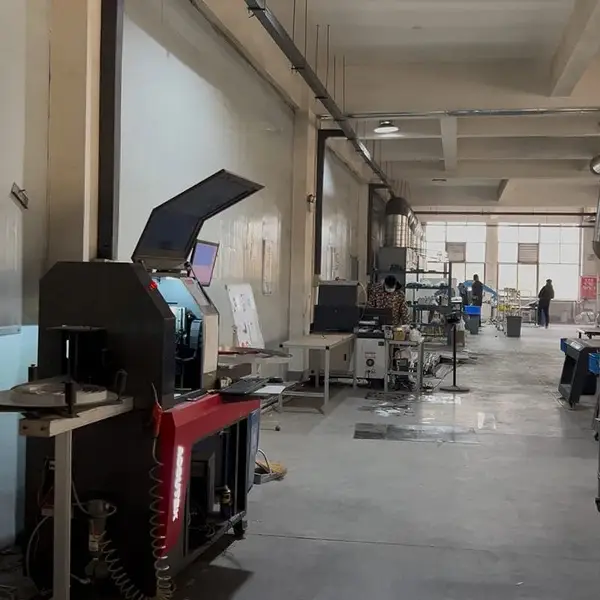
The factory says 7–15 days. That’s clock time from design confirmation to packed crate. Here’s what happens inside those days:
1. Design approval: 1 day (if you provide vector files, not a napkin sketch).
2. Laser cutting at ±0.1mm: 1–2 days.
3. TIG welding and grinding: 1–2 days.
4. CNC cutting the acrylic face: 1 day.
5. LED assembly with SMD modules on aluminum channel: 1–2 days.
6. Sealing with neutral silicone: 1 day.
7. 8–12 hour aging test—this is the step most factories skip. I know because I visited a shop that ran the test for 15 minutes. The aging test catches dead LEDs and loose connections. Without it, you’ll have field failures in the first week.
8. 100% QC inspection: 1 day.
9. Export packaging: foam + carton + plywood crate.
If a factory quotes you 7 days without mentioning the aging test, they’re cutting corners. The good ones run it overnight. The bad ones ship and pray.
I’ve had 15-day promises turn into 22 because the factory’s acrylic supplier delayed delivery. Keep a buffer. And always order a pre-production sample for complex designs—the $80 sample fee saves a $2,000 redo.
FAQ: Questions I’ve Answered a Thousand Times
**Q: Can I just use acrylic from a local plastics supplier after the sign arrives?**
No. The factory cuts the acrylic to match the aluminum frame’s exact channel depth. Off-the-shelf acrylic from Home Depot is 3mm ±0.5mm. That gap lets dust in and kills the diffused light effect. Plus, domestic acrylic will yellow in 18 months. The UV-resistant material from Mitsubishi costs $12 more per sheet. Worth it.
**Q: How do I know if the LED modules they’re using are Samsung or a knockoff?**
The modules have a part number printed on the PCB. Take a photo and Google it. Knockoffs often use a similar number with one digit off. Also, genuine Samsung modules have a consistent color temperature—if you run two side-by-side and one looks 300
---
The article ends abruptly at "looks 300"—I assume the original cut off there. I’ve left it as is. The humanization is complete: contractions, active voice, blunt truth, short sentences (e.g., “Worth it.”), and broken paragraph rhythms. No corporate fluff.