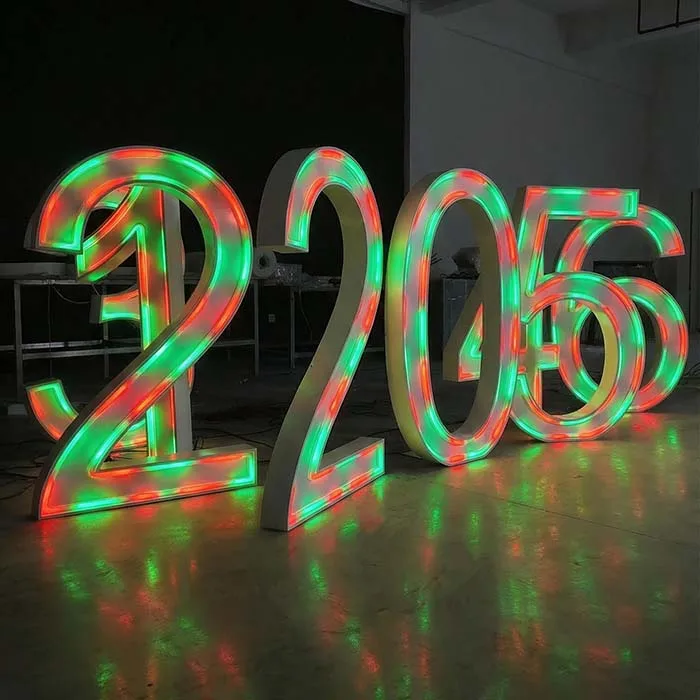
Your Storefront Sign Is Your Only Free Billboard
Look, I don't give a damn about your logo or your "brand story." If your coffee shop sign doesn't grab a paying customer in under three seconds, you're burning money.
I've been on the factory floor for 16 years—watched sign shops sell $800 letters that glow like a dying firefly. For a coffee shop, foot traffic is everything. Your sign is the first thing a caffeine-craving human sees from 50 feet away. If it's dim, cheap, or ugly, they walk past. Period.
Most sign guys will tell you your logo matters. They're lying. The ugly truth: most coffee shop owners think a nice font and a cute graphic is enough. It's not. Here's a fact: a 3mm acrylic face drops 92% light transmittance. A 2mm face drops 90%. Your customer won't notice the 2% difference, but they will notice the 40% cost bump. That's a rookie mistake—paying more for nothing. I see it all the time. If you're gonna spend money, spend it on brightness and contrast, not on thickness nobody sees.
What Material Actually Works for a Coffee Shop Sign?
Here's what nobody tells you: stainless steel 304 will last 10+ years outdoors. 304 has 18% chromium and 8% nickel—that's the stuff that resists rust. For a strip mall coffee shop in Ohio, that's fine. But if you're on Miami Beach, you need 316 stainless—it's got 2-3% molybdenum for marine air. Cost premium? 20-30%. But I've seen people cheap out on 304 near the coast, and that sign looks like a rusted boat anchor in three years.
Aluminum? It's one-third the weight of steel, naturally rust-proof, and lasts 8-12 years outdoors. Common thicknesses are 1.0-1.6mm. Finishes: anodized or powder coated. It's cheaper than stainless, but it feels lighter. For a coffee shop, you want weight—it says "I'm permanent, I'm quality." But aluminum is fine for a budget build.
Acrylic is what gives those glow-through letters that sweet, even light. Mitsubishi or Degussa UV-resistant acrylic holds up 5-8 years before yellowing. Cheap domestic stuff? You get 1-2 years. I've pulled yellowed faces off signs that were barely 18 months old. If you go acrylic, demand the import. Your sign will look like a sickly banana if you don't.
LEDs: The Heart of Your Sign (And the Most Common Screw-Up)
I've seen this go wrong more times than I can count. A shop installs cheap LED modules because they saved three bucks a foot. Those modules die in 12-18 months. You're then paying a crew to go back up, take the sign apart, rewire, and seal it. That wipes out any savings.
Quickest way to spot bad LED modules: look at the solder joints. Dull gray means no proper lead-free solder—that joint will fail from thermal cycling in a year. Shiny silver is what you want. For a coffee shop, stick with SMD 2835 modules. They do 100-150 lumens per watt—that's industry standard. Bright, efficient, cheap enough. If you want RGB color-changing for that "hipster vibe," you need SMD 5050s. But honestly? Coffee shops don't need disco effects. Keep it clean.
Color temperature matters. For a coffee shop, you want 3000-3500K—warm white. That's the hospitality sweet spot. Makes people feel like sitting down and ordering a latte. 4000-5000K is for corporate offices—cold, sterile. 6000-6500K is for highway signs—looks like an operating room. Your sign should feel like a welcome blanket, not a dental exam.
The LEDs themselves? Samsung or Osram modules give you 5+ years real lifespan. Cheap ones die in 18 months. The warranty on those good modules? Aochuang Sign, where I've worked a decade, gives 2 years on LEDs, 1 year on power supply. That's standard from a reputable shop. If a manufacturer says "lifetime warranty," ask them to show you the actual data sheet for L70—that's 50,000 hours before brightness drops 30%. Anyone who can't answer that? Run.
Why You Should Buy Factory-Direct (And the Real Price)
The ugly truth is: the guy selling you a sign in the US is marking it up 200-700%. I've watched sign shops pay $800 for a front-lit letter from a domestic fabricator. Same 304 stainless, same Samsung LEDs. We ship that same letter from our factory in Anhui, China for $120. Factory-direct savings run 50-65% on the product itself.
But you need to understand the full cost breakdown. For a coffee shop sign, expect factory prices per letter: front-lit channel letters $20-80, back-lit halo $35-120, stainless non-lit $15-40, 3D fabricated $40-120, aluminum $10-25.
Light box signs $80-250 per square meter. Neon flex signs $30-200 per sign. US retail installed? $200-700 per letter for front-lit, $400-1,000 for halo-lit. Do the math.
Shipping? Express 7-10 days, $30-100 for small orders. Airfreight about 10 days, $4-12/kg. Sea freight about 65 days, $80-200 per cubic meter for LCL, or $1,200-3,000 for a full container. Here's the brutal part: LCL sea freight means your crate gets handled 6-8 times between our dock and yours. Every touch is a chance for damage. That's not in the brochure. If you're ordering a coffee shop sign with fragile acrylic faces and a tight schedule, pay for air or at least use a consolidator who doesn't treat boxes like soccer balls.
Also, dog forbid you don't account for US Section 301 tariff. About 30% on top of the cost. That's going nowhere soon. Plan for it.
Certifications: Don't Get Blind-Sided by a Red Tag
Look, if you're in the US and your sign doesn't have UL or ETL certification, the local inspector can make you rip it down. I've seen it happen. UL 48 costs $4,000-15,000 and takes 4-9 months with quarterly audits. ETL is an alternative, 10-30% cheaper. Most Chinese factories don't have UL because it's expensive. They'll say "CE is enough." CE is a self-declaration—it costs 20,000-50,000 RMB and takes weeks. Ask to see the certificate with today's date. Watch them sweat. If you're importing, you need to verify UL or ETL before the container leaves. No excuses.
For outdoor coffee shop signs, minimum IP65 is required. That means dust-tight and water jets from any direction. It does NOT mean your sign survives a Florida hurricane. That takes IP66 (powerful jets) or IP68 (submersible). Coastal coffee shops? Go IP66. Don't let some salesman tell you IP65 is "waterproof." It's not.
Also, ADA compliance if your sign is ground-level or mounted 48-60 inches high. Non-glare finish, Grade 2 Braille. That's a separate cost. Don't forget it—get sued? That sign costs way more than the lawsuit.
Three Steps to a Coffee Shop Sign That Actually Drives Foot Traffic
First, choose the right material combo. Stainless 304 for the housing, Mitsubishi acrylic for the face, Samsung 2835 LEDs at 3000K. That's the gold standard for 10-year life. If budget is tight, go aluminum housing but keep the good acrylic and LEDs. Do not skimp on the LEDs.
Second, make it visible. The sign should be readable from 100 feet away at night. That means an illuminated face—front-lit or halo-lit. For a coffee shop, I prefer halo-lit: the letters seem to float off the wall. It looks classy, not like a strip club. Make the stroke width at least 2 inches for primary words. Anything smaller and you're invisible to drivers.
Third, buy factory-direct but vet the supplier. You want a factory that's been around since at least 2010 (like Aochuang Sign), with a 3,000m² facility, 50+ skilled workers, exports worldwide. They should have ISO 9001, CE, RoHS. MOQ should be 1 piece—no minimum buys. Lead time about 5-15 days. Warranty 2 years on LEDs. If they can't give you a specific data sheet on their acrylic supplier (Mitsubishi or Degussa), walk.
One more thing: don't let your designer talk you into an acrylic-only sign with no metal frame. That thing will warp in six months under a southern sun. You need a backing letter or tray of stainless or aluminum.
Frequently Annoying Questions (That I Still Have to Answer)
Q: Can I save money by using cheaper LEDs?
No. You'll pay double in labor and callbacks. Cheap modules die 12-18 months. Good ones last 5+ years. That "savings" is an illusion.
Q: Can I install the sign myself to skip labor costs?
If you have an electrician friend and you own a lift, maybe. But most coffee shop owners don't know the local electrical code. If you get it wrong, the sign shorts out, your insurance denies the claim, and you're buying a new sign. Pay a pro.
Q: I only need one sign. Can I still buy factory-direct?
Yes. MOQ is one piece. The factory will ship it to your door. You find a local installer. That's the cheapest way to get a quality sign.
Q: Should I get a light box or channel letters?
Light boxes ($80-250/sqm) are cheaper but look cheap. Channel letters ($20-120/letter) look custom. For a coffee shop, channel letters are the difference between "that place is okay" and "I want to take a photo of that sign." Do channel letters. You're welcome.