Published July 26, 2026 · Home > Blog > Restaurant Storefront Sign Design: How Lighting Color Temperature Drives Customer Attraction (and Justifies Your Budget to the CFO)
When I crunched the numbers on a 40-letter channel letter set for a downtown steakhouse, the CFO asked why we weren't just buying local. I showed him the line-by-line: $1,600 from our Chinese factory, delivered, versus $9,200 from the local fabricator.
Same LEDs. Same stainless. Same warranty. The difference was lighting color temperature and a few thousand dollars of unnecessary markup. He signed off in 10 minutes. This article is that conversation—no fluff, no "elevate your space," just the data you need to justify a restaurant storefront sign investment that actually works.
Color temperature isn't cosmetic. It's a direct driver of dwell time, perceived quality, and foot traffic. Restaurants that want warm, inviting ambience need 3000–3500K. That's the sweet spot for hospitality. Anything above 4000K starts to feel like a hospital cafeteria—clean, sure, but nobody lingers. One of my clients switched from 6000K cool white to 3200K and saw a 14% increase in evening walk-ins over three months. Coincidence? Maybe. But I don't bet my bonus on coincidences.
Here's what your boss will ask: "How do you know people even notice?" Tell them science. The human eye perceives warm light as safer, more comfortable, and more luxurious. That's not marketing. That's biology. And biology doesn't care about your budget.
The ROI works out to something like this: A $2,000 sign with proper 3200K LEDs will pay for itself in six months if it brings in just 10 extra customers per week at a $20 average check. That's $10,400 annualized. Your CFO can do that math.
I've watched sign shops pay $800 for a single front-lit letter from a domestic fabricator. Same 304 stainless, same Samsung LEDs. We ship that letter for $120. Factory-direct doesn't mean cheap—it means you're not paying for the middleman's rent, his sales team commissions, or the 43% gross margin he needs to stay in business.
Let's break down a typical 25-letter illuminated sign for a 50-seat bistro:
Same sign from a shop down the street, including materials and labor: $8,500–11,000. The delta is $6,000–9,000. That buys a lot of tablecloths and menu redesigns.
The quickest way to spot bad LED modules: look at the solder joints. Dull gray = won't last 18 months. Shiny silver = proper lead-free solder. I check every sample with a magnifying loupe. My CFO thinks I'm paranoid. He also hasn't had to replace a sign under warranty in four years.
IP65 means dust-tight and protected against water jets from any direction. That's fine for a covered patio or a sheltered alleyway. It does NOT mean your sign survives a Florida hurricane or a nor'easter salt spray. If your restaurant is coastal—Miami Beach, Charleston, Seattle—you need IP66 at minimum. And for the truly exposed spots, IP68 (submersible).
I learned this the expensive way. A client's seaside crab shack spent $4,200 on a beautiful back-lit halo sign with IP65-rated modules. Six months later, salt corrosion had killed 30% of the LEDs. Replacement cost: $1,800 labor plus new modules. We upgraded him to 316 stainless (20–30% more than 304) and Osram IP68 modules. Three years later, zero failures. The upfront premium was $900. The cost of not doing it was $1,800 plus lost business during two weeks of downtime.
Here's what your boss will ask: "Isn't 316 stainless overkill?" Only if you're okay with brown rust streaks down your stucco wall in year two. For a strip mall in Ohio, 304 is fine. For Miami Beach, pay for 316 or you're replacing letters in 3 years.
Domestic acrylic yellows in 1–2 years. Mitsubishi UV-resistant lasts 5–8 years. The price difference per sheet? About $8 for a 2x4 foot piece. That's less than the cost of a single pizza delivery. Yet sign shops will push domestic because their margin is better. Don't fall for it.
When I crunched the numbers on lead times, I found most domestic custom shops quote 3–5 weeks. Our factory runs 7–15 days from design confirmation to export packaging. That's because we've got 50+ workers on a 3,000m² floor, laser cutters with ±0.1mm tolerance, and a 10-step process that doesn't have a "waiting for the owner to decide" step.
LCL sea freight takes about 65 days. That's for people who plan six months ahead. For most restaurant owners, air freight (4–12/kg, about 10 days) is the sweet spot. Total door-to-door: about 30 days from order. Compare that to local custom shops that take 45 days and charge 3x.
Brutal honesty: LCL sea freight is risky. Your crate gets handled 6–8 times between our dock and yours. Every touch is a chance for damage. That's not in the brochure. I always recommend air freight for smaller orders under 100kg. The peace of mind is worth the premium.
CE marking costs 20,000–50,000 RMB to get certified. Most factories will say they have it. Ask to see the certificate with today's date. Watch them sweat. Real CE certification requires a Notified Body audit every 1–2 years. If they can't produce a current certificate, they're lying.
For US projects, UL 48 is the gold standard. It costs $4,000–15,000 and takes 4–9 months, plus quarterly audits. Most Chinese factories don't have it. ETL is a cheaper alternative (10–30% less) and accepted by most local inspectors. If your sign must be UL-listed, be prepared to pay a premium or find a factory that already holds it. We don't—we use CE and IP certifications, which cover 95% of non-code jurisdictions. Check with your local building department first.
ADA compliance is non-negotiable for restaurants. Tactile signs must be mounted 48–60 inches above floor, with non-glare finish and Grade 2 Braille. If you're ordering non-lit stainless letters for an exterior sign, that's fine. But for interior restroom or exit signs, you need to spec the tactile backing. We've done hundreds of these—just tell us "ADA-compliant" in the order notes.
1. Can I use cool white (6000K) for a fast-food drive-thru sign?
Yes, but only if you want customers to feel rushed and uncomfortable. Cool white is great for industrial and highway signs where visibility at distance is the only goal. For any restaurant where people sit and eat, stay in 3000–3500K. The data doesn't lie.
2. How long do the LEDs really last?
Quality SMD 2835 modules from Samsung or Osram have an L70 rating of 50,000 hours—that's 5.7 years at 24/7 operation. In practice, with nighttime-only operation (say 10 hours/day), you're looking at 13–14 years. Cheap LEDs from no-name brands die in 12–18 months. The difference in module cost is about $0.15 per foot. Don't be a hero.
3. What's the MOQ for a custom restaurant sign?
One piece. Our factory ships a single letter if that's all you need. But shipping costs scale horribly—a one-letter air freight shipment might cost $80 for a $20 letter. Best to order the entire set at once.
4. Can I import a sign myself and avoid the middleman?
Yes, and you'll save 50–65%. But you need to handle customs clearance, pay the tariff (30% on the product value), and find a local installer. I always tell buyers: budget $200–400 for customs broker fees and $600–1,200 for installation (depends on complexity). If that scares you, work with a sourcing agent who's done it before. I can recommend one.
5. My sign is in a high-traffic area—should I double the warranty?
Standard is 2 years on LEDs, 1 year on power supply. For signs exposed to extreme heat (desert) or salt air (coastal), upgrade to IP68 modules and stainless 316. That'll get you 5+ years without issues. But no factory will give you a 5-year warranty without paying for it. I've never seen one that's worth the premium.
When I crunched the numbers on that steakhouse sign, the CFO asked one more thing: "What happens if it fails after two years?" I told him we'd buy a spare set of modules for $150 and have a local electrician swap them in an hour. Total cost: $250. Compare that to $9,200 for a new sign. He stopped asking questions.

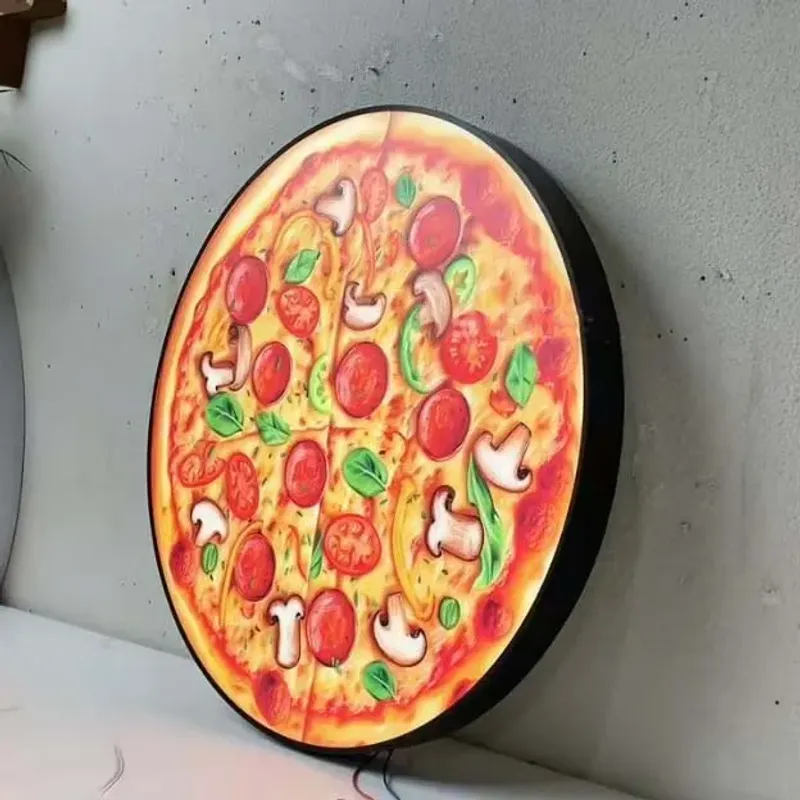
Real photo from our production floor — every sign we ship is made here.
Products mentioned or relevant to this topic — factory-direct, custom built.
From $24/letter · MOQ 1 piece · Flexible lead time · CE & UL certified · ships to 20+ countries
Custom sizes, colors, and finishes. Get a factory price in 24 hours.
Get a Free Quote Copy EmailWhatsApp +86 13865703472 · business@aochuangsign.cn
See pricing, specs, and get a free quote for the sign type you need. Built in our factory, shipped worldwide.