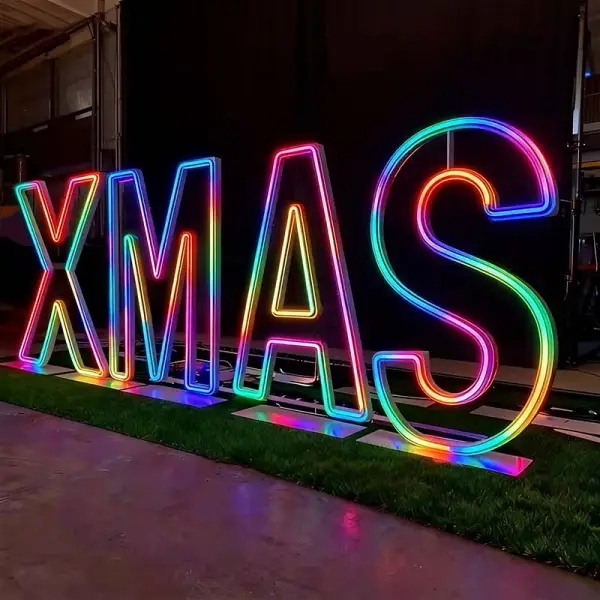
You ever spend two hours on a quote for a 24-inch logo letter only to lose the job because some guy's nephew with a CNC in his garage undercut you by 40%? Then the client comes back six months later with yellowed acrylic and letters falling off the wall. That's this business. True story.
I've been building signs since 2010.
If you're ordering front-lit channel letters for a storefront, you're buying the workhorse. Acrylic face, aluminum or steel returns, LED inside. Factory cost runs $20-80 per letter. Installed retail in the US runs $200-700 per letter. That margin pays for the electrician and the bucket truck.
Back-lit halo letters are the architectural look—the letter mounts off the wall, LED floods the background, and during the day it's a clean dimensional logo. Factory cost $35-120 per letter, retail installed $400-1,000. That's not markup greed. Halo letters need a separate mounting pattern, spacers, and a power supply that's hidden behind the facade.
Dimensional non-lit letters come next. Stainless steel letters, aluminum, brass. These are bought by law firms, hospitals, corporate lobbies. 304 stainless steel letters run $15-40 per letter factory-direct. Nobody needs LEDs if the building's floodlights are already pointed at the wall.
Dual-lit letters exist, too—white acrylic face for the day, white or color LED at night. Skip them unless the brand demands a specific night color. They double your wiring and sealing time for a look most passersby never notice.
Here's what nobody tells you: acrylic isn't acrylic. Mitsubishi or Degussa UV-resistant sheet gives you 5-8 years before yellowing. Domestic no-name sheet? 18 months in direct sun and you're replacing faces. Light transmittance is 90-92% for both, so the spec sheet looks identical. The difference only shows up after the warranty expires.
For acrylic LED letters, 2mm and 3mm faces are standard. Anything over 2.5 meters in height should jump to 5mm or the face flexes in wind and cracks at the mounting studs. I watched a 3-meter "S" snap off a pylon sign in a 40 mph gust because someone used 3mm and skipped a mid-face bracket.
Stainless 304 is the default for exterior dimensional letters—18% chromium, 8% nickel, 10+ years outdoors. Common thickness is 1.0-3.0mm. If you're within five miles of salt water, spec 316 with 2-3% molybdenum. Costs run 20-30% more, but a strip mall in Ohio doesn't need marine grade and a Miami Beach hotel absolutely does.
Aluminum weighs one-third of steel and naturally rust-proofs. Outdoor life is 8-12 years. Use 0.040-0.063 inch sheet for most letters; thinner than that and the welder blows holes through the corner.
HDU? Use it for interior lobby letters or pylon boxes. Don't hang it outside in freeze-thaw unless you seal every routed edge and use a two-part primer. I've seen unsealed HDU letters look like a sponge after one Chicago winter.
Look, a logo letter is a box. You can overthink it, but the factory process is the same ten steps every time. Design confirmation takes one day. Laser cutting runs ±0.1mm tolerance, one to two days. Then TIG welding, one to two days. Grinding and polishing another one to two. After that, we CNC-route the acrylic face, assemble the LED modules, and seal everything with neutral silicone.
Total from approved artwork to crate: about 5-15 days. I've seen shops quote six weeks for the same letter and call it "custom fabrication." Not custom fabrication—just a slow shop.
The ugly truth is most mistakes happen before the laser fires. If you send a low-res JPG, someone in CAD has to redraw the logo, the font gets substituted, and the kerning looks off by 1/8 inch. That's the difference between a logo that reads clean at 100 feet and one that looks like a knockoff.
TIG welding beats MIG on stainless returns because the heat is tighter and the bead cleaner. On 1.0mm aluminum, TIG is also the only way to avoid burn-through. If a shop tells you they MIG 1mm aluminum letters all day, ask for a photo of the inside corner. Wait for the silence.
Size drives material, material drives cost. A 12-inch front-lit letter with aluminum returns and acrylic face is $20-40 at the factory. A 36-inch letter with stainless returns and a 5mm acrylic face hits $60-80. Depth matters too—going from 3 inches to 5 inches adds LED mounting surface, more return metal, and more weld inches.
Illumination is the real swing. Non-lit stainless letters run $15-40 per letter. Add LEDs and a power supply, and you're in front-lit channel letter territory at $20-80. Switch to halo, and factory cost is $35-120 because the back needs a separate mount and the light has to spill evenly off the wall.
I've watched sign shops pay $800 for a halo letter from a domestic fabricator. Same 304 stainless, same Samsung LEDs. We ship that letter for $120. That's not a magic trick—factory-direct pricing cuts 50-65% off the product cost, which is why US sign shops buy from Asia and then charge for installation.
Finish is the sneaky cost. Brushed #4 stainless is standard. Mirror #8 polish adds 30-40% in labor because you're wet-sanding every surface. PVD titanium or gold coating? Add another 20-30%. Powder coating is cheap, but if the shop skips chromate conversion on aluminum, the paint peels in sheets within two years.
Here's what nobody tells you: the difference between a five-year sign and an 18-month sign is usually in the LED module solder joints. Dull gray joints mean oxidized, cheap tin solder. Shiny silver means proper lead-free solder. I can tell you which one will fail.
Our aging test runs every lit letter 8-12 hours before it ships. If a module is going to die early, it dies on our bench, not on your wall. Then we give every letter 100% QC inspection before packing it in foam, carton, and plywood crate.
Tolerances matter more in the field than on a spec sheet. Laser cutting holds ±0.1mm. That means the acrylic face drops into the stainless return without a 2mm gap that fills with water and rots the LED board. Ask any installer—the first thing that kills a channel letter is water intrusion, not LED failure.
IP ratings get thrown around like candy. IP65 means dust-tight and protected against water jets. That's the minimum for outdoor use. IP66 handles powerful jets for coastal areas. IP68 means submersible, which you don't need unless the sign's going underwater. And IP65 does not mean your sign survives a Florida hurricane—that's a mounting issue, not a sealing issue.
UL 48 listing for electric signs costs $4,000-15,000 and takes 4-9 months with quarterly audits. ETL is a legitimate alternative at 10-30% cheaper. CE marking costs 20,000-50,000 RMB in China. Every factory says they have it. Ask to see the certificate with today's date. Watch them sweat.
The ugly truth is 80% of quote delays come from missing files. If you don't send a vector EPS or AI file and a PMS color reference, the factory has to guess. Don't email a phone photo of a logo and ask for pricing by 3pm.
Look, I run the floor at Aochuang Sign in Lu'an, Anhui. 3,000 square meters, 50+ workers, exporting worldwide since 2010. Minimum order is one piece. Lead time is about 5-15 days from approved art to export crate. We're CE, RoHS, and ISO 9001 certified. That's not because we're fast; it's because we don't take a job until the files are clean.
Here's what nobody tells you: factory-direct price is only half the landed cost. Express shipping on a small sample runs $30-100 and takes about 5-15 days. Air freight runs $4-12 per kilo, about 10 days. Sea freight LCL runs $80-200 per cubic meter, but that crate changes hands 6-8 times between our dock and yours. Every touch is a chance for damage. That's not in the brochure.
Add US Section 301 tariff at roughly 30%, and your $120 letter is now a $156 letter, plus freight, plus broker fees. Factor that in before you tell your client you can beat the local shop by 60%.
Nobody talks about wind load until a 36-inch halo letter rips out of stucco. The mounting surface matters more than the letter. Don't let a contractor tell you silicone and construction adhesive are enough. Get an engineer to sign off on anchors if you're going over a public sidewalk.
Warranty is a tell. We give 2 years on LEDs and 1 year on power supplies. That's real. If a manufacturer offers 10 years on LED signage, they're either selling you a replacement service or they won't exist in 10 years. Quality Samsung or Osram modules last 5+ years; cheap no-name modules die in 12-18 months. Ask for a photo of the solder joints. If they can't provide one, find another factory.
"Do I need UL/ETL for illuminated logo letters?"
If the inspector asks, you need it. Commercial building, electric sign, NEC Article 600 applies. UL 48 listing costs $4,000-15,000 and takes 4-9 months. ETL is accepted most places and costs 10-30% less. Don't tell me your cousin's shop installed non-listed channel letters and nobody cared. That's not a code compliance plan.
"How much is shipping, really?"
Small package express: $30-100, about 5-15 days. Air freight: $4-12/kg, about 10 days. Sea LCL: $80-200 per cubic meter, about 65 days, plus dock workers throw your crate around six to eight times. Add 30% US tariff. Your $120 letter landed at your dock is roughly $160-180 before brokers. Anyone quoting cheaper shipping is quoting FOB, not your job site.
"Can you match a Pantone color exactly?"
On a painted return or printed vinyl face, yes, within a commercial tolerance. On an illuminated acrylic face, the LED temperature shifts the color. Daytime face color is PMS; nighttime glow is Kelvin. If you try to match both without a test sample, that's on you.
"Which material for a beachfront sign?"
316 stainless. 2-3% molybdenum, 15+ year marine grade. 304 will pit and stain in 3 years in salt air. Use IP66-rated LED modules. And don't put HDU anywhere near that salt spray unless you want a science experiment.
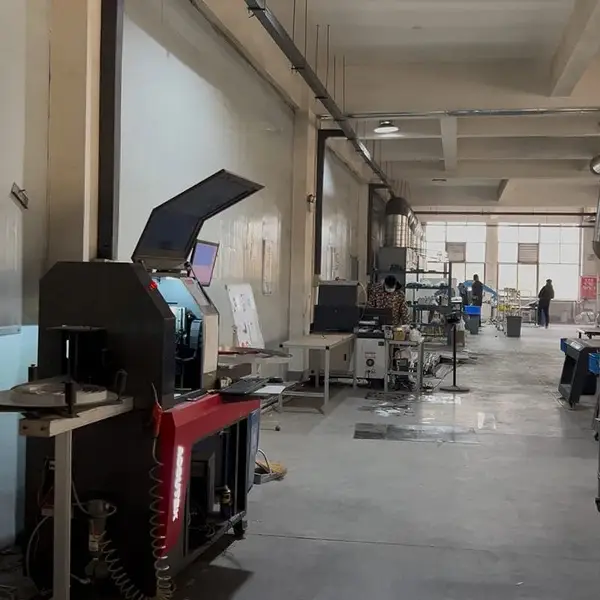
Real photo from our production floor — every sign we ship is made here.
Products mentioned or relevant to this topic — factory-direct, custom built.
From $24/letter · MOQ 1 piece · Flexible lead time · CE & UL certified · ships to 20+ countries
Custom sizes, colors, and finishes. Get a factory price in 24 hours.
Get a Free Quote Copy EmailWhatsApp +86 13865703472 · business@aochuangsign.cn