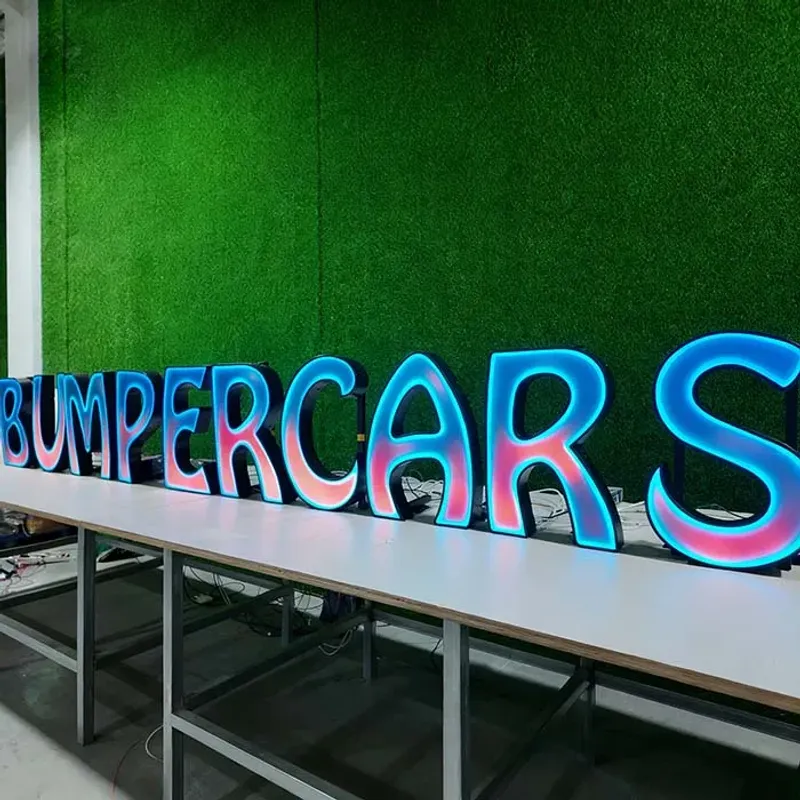
Metal signs say you've been here for decades and plan to stay. Acrylic signs say you're modern, bright, and willing to replace things every few years.
I've worked on a factory floor long enough to know neither material is universally better. I've fabricated thousands of stainless steel letters that'll outlast the building they're mounted on. I've also built acrylic light boxes that looked incredible on opening day and terrible 18 months later because someone cheaped out on UV inhibitors. The right choice depends on who you are, where your storefront sits, and how much you hate maintenance calls.
If you're a contractor or importer comparison shopping right now, you're probably getting fed marketing fluff from every direction. I'm going to give you the same talk I give to sign shop owners who call our factory in Lu'an: numbers, failures, and the stuff nobody puts in a brochure.
My name's not on the door, but I've got 16 years of burns, bent metal, and returned LEDs to back up what follows. Aochuang Sign has shipped worldwide, and I've seen what holds up in Dubai heat and what turns brittle in Minnesota winters. Let's cut through it.
Here's what nobody tells you: acrylic's biggest strength is also its ticking clock. That material passes 90-92% of light through it. That's spectacular for illuminated signs. It glows evenly, makes colors pop, and costs 30-50% less to fabricate than a comparable metal face. But it degrades. Every single acrylic sign, no matter what the salesman swears, is in a slow race against yellowing and micro-cracking.
Look, I've pulled down a 6-foot acrylic light box that was so yellow it looked like a chain-smoker's ceiling tile. The owner said, "But they told me it was UV-resistant." It was—just the cheap domestic stuff that lasts 1-2 years before the shift starts. There's a massive gap between that and the Mitsubishi or Degussa grades we use when a client insists on longevity. Those hold 5-8 years under direct sun. The cost difference per sheet is about 40%, but you only pay it once. I'll be direct: most online factories won't tell you which acrylic they use. They'll just say "premium material" and hope you don't ask for the mill certificate.
Acrylic also scratches if you look at it wrong. Clean it with a dry rag once, and you've got micro-swirls that catch dirt. After two years behind a busy sidewalk, a 2mm acrylic face on a channel letter can look fogged even if the LEDs inside are still perfect. That's why we never spec face material thinner than 3mm for any letter over 24 inches, and we go to 5mm for spans over 2.5 meters. You'd be shocked how many suppliers will quote 2mm to shave a couple dollars, then blame "environmental factors" when it warps.
None of this means acrylic is bad. For an acrylic light box on a storefront that's 30 feet back from the road, it's the standard for a reason. You get bright, uniform illumination, easy color changing with vinyl or digital print, and a classic look that retail landlords love. Just budget for a face replacement in year 5-8 if you use good material, or year 2 if you let a low-bid supplier choose the sheet stock.
The ugly truth is that "metal sign" means three very different things, and most buyers mix them up. I deal with the confusion every week.
Stainless steel 304 is our workhorse. It's got 18% chromium, 8% nickel, and with proper fabrication it'll laugh at 10 years outdoors without rust. We weld it, grind the seams invisible, then finish it brushed or mirror-polished. A non-lit stainless steel letter cut from 1.5mm solid 304 runs $15-40 at our factory, depending on height and complexity. That's not expensive when you consider it'll probably need zero maintenance beyond a wipe-down for a decade. But the first lie I want to kill is that all stainless is equal. Grade 304 near a highway? Fine. Grade 304 within two miles of saltwater? You'll see rust pitting in 18 months. For coastal locations, you need 316 marine grade with 2-3% molybdenum. It costs 20-30% more and adds maybe 15+ years of life in that environment. I've seen this go wrong: a hotel chain ordered 304 letters for a Miami property, got hit with corrosion staining within two hurricane seasons, and the sign fabricator ate the replacement cost because nobody asked about the installation address. Don't be that buyer.
Aluminum letters are the smart middle finger to rust. Aluminum can't corrode the way steel does—it forms its own oxide layer that protects it. It's one-third the weight of steel, so you can mount huge letters with less structural bracing. We sell 0.063-inch thickness aluminum letters at $10-25 per letter, factory direct. The real story is in the finish. Powder coating over properly etched aluminum holds 8-12 years outdoors. Powder coating over poorly prepped aluminum looks like peeling sunburn in two. I've walked past a pharmacy chain store with letters that had coating lifting along the bottom edge after one winter. That's not aluminum's fault. That's a fabricator who skipped the chromate conversion bath to save 20 minutes and $3 per square meter. Ask any supplier how they pre-treat before finishing. If they can't describe the process in detail, find another shop.
Brass we do for luxury, banks, law firms—places where "heavy" is a compliment. It's gorgeous and patinas naturally over years unless you seal it. But I'll tell you straight: if a client is on a tight budget and asks me about brass, I usually steer them to aluminum with a gold PVD coating. The visual pop is 90% the same, the weight is much friendlier to the building, and the price is a third.
I keep a rough rule in my head: metal signs age like whiskey, acrylic signs age like a printed receipt in a wallet.
Let's talk numbers. A typical 18-inch front-lit channel letter with an acrylic face and aluminum returns costs $45-75 from our plant. The same size back-lit halo letter, which puts light behind a metal face to create a glow on the wall, might run $80-120. A plain non-illuminated stainless steel letter of that size, maybe $25-35. An acrylic-only solution—say a flat cut letter with no metal—costs half that but looks flat and gets brittle faster. So price wise, metal moves the needle up, but not as much as you'd think when you account for longevity. US retail installed pricing for a front-lit letter can hit $400-700 each. Our factory-direct cost, even with 30% Section 301 tariff and air freight at $6-10/kg, still keeps you at 50-65% savings versus buying domestically. I've watched sign shops pay $800 a letter. We ship that same letter for $120. That isn't bragging; it's just the math of overhead and labor.
Durability isn't just about the face material. Metal returns on a channel letter hide the LED modules and provide structural backbone. An all-acrylic box that's sealed with silicone can start weeping yellow goo after 3-5 years because the sealant outgasses and catches dirt. That's something you'll never see in a catalog photo. Metal housings with proper gaskets eliminate that mess. If you want a storefront that's lit day and night and don't want to touch it for 7 years, a front-lit channel letter with an acrylic diffuser and metal body is the compromise that works. You get the light transmission of acrylic with the skeleton of aluminum or steel. It's not either/or—it's the standard for a reason.
Aesthetics depend on branding. Acrylic can give you that edge-lit, modern, translucent depth. Metal gives you sharp, crisp edges and a permanent, high-end impression. I've had restaurants order both: brushed stainless steel non-lit letters for the main façade (classy, timeless) and an acrylic menu box by the entrance for daily specials. That combination uses each material where it wins.
Lie number one: "Acrylic doesn't yellow anymore." I hear this from resin suppliers and middlemen who've never stood on a scissor lift to inspect a 4-year-old sign. Modern UV inhibitors delay oxidation, but they don't stop it. The polymer matrix still breaks down under UV exposure, especially in the 300-400nm range. High-quality acrylic like Mitsubishi MR-200 slows that to 5-8 years. Cheap domestic sheet with recycled content can start shifting color in 12 months. The lie often sits in the word "UV-stable"—ask for the ASTM G154 accelerated weathering data, and suddenly they stop returning emails.
Lie number two: "Our LEDs will last 100,000 hours." That's the L70 rating in a perfect lab environment at a constant 25°C. Inside a sealed sign on a black canopy in Phoenix, the internal temperature can hit 65°C. Heat halves the driver's life. The SMD 2835 chips we use are rated 100-150 lumens per watt and, with proper thermal management, will deliver more than 50,000 hours in the real world. That's still 5-6 years of night operation. Cheap modules I've seen fail in 18 months because the phosphor coating degrades and the light turns purple-blue. We warranty our LEDs for 2 years and power supplies for 1, which is conservative. Anyone offering a "lifetime warranty" on sign LEDs is either padding the price by 50% to cover replacements or planning to be out of business before you need to claim it.
If your storefront gets direct afternoon sun for 6+ hours a day, avoid thin acrylic faces unless you're prepared to swap them out like lightbulbs. Pay for 5mm cast acrylic or switch to metal letters with halo illumination. The heat load plus UV is a killer combination.
If you're within 3 miles of saltwater, don't let anyone sell you 304 stainless. Pay the 316 premium once, or watch your letters bleed rust down a white stucco wall. I don't care how good the brushed finish looks on day one. Salt doesn't negotiate.
If your budget is bottom-of-the-barrel and you still want a metal look, go with aluminum. It won't rust, it's light, and powder coating gives you color options that stainless can't match without expensive PVD. At $10-25 factory price per letter, you're not gambling much. We ship aluminum letters in export-grade plywood crates, and they arrive dead-flat. Just make sure the mounting studs are stainless—nothing's dumber than an aluminum letter with a zinc-plated steel stud that rusts after the first rain and stains the wall.
If you need illumination and a polished, corporate image, combine the two. Our back-lit halo letters use a solid metal face with LEDs behind, creating a soft glow on the mounting surface. During the day they're elegant metal; at night they're a halo. It's the best of both worlds and a million miles from a cracked plastic box in a strip mall.
If you're still not sure, email me your location, size, and a photo of the building. I'll tell you what I'd fabricate for my own shop and why. We've done this worldwide, from Middle Eastern malls to Canadian ski resorts.
Here's what nobody tells you: most "sign manufacturers" are assemblers who buy pre-cut acrylic and bent metal returns from places like us, then screw them together and mark them up. We cut our own aluminum and stainless on a fiber laser with ±0.1mm accuracy. We TIG weld the seams, hand-grind them flat, and polish until you can't find the join. The acrylic face is CNC-routed in-house after the metal body is built, so the fit is exact, not "close enough with silicone." Our factory floor is 3,000 square meters with 50+ workers who've been doing this for years, not weeks.
We can handle small orders just as easily as large ones because our MOQ is one piece. Lead time is about 5-15 days, including an 8-12 hour aging test where we run every lit sign at full power to catch infant failures before they leave the crate. Packaging is foam-lined cartons inside plywood boxes; you can throw them in a container or on a pallet and sleep fine. We hold CE and RoHS certifications, and our quality system is ISO 9001. If you need UL-recognized labels for the US market, that's a separate project—I won't lie and say we've got it sitting on the shelf. We work with clients on that path when volumes justify the $4,000-15,000 certification process.
What we don't do: we don't do on-site installation, we don't provide permit drawings (we'll give you structural specs and weight calculations), and we don't fabricate monument signs with concrete footings. We ship precision letters, light boxes, and neon flex signs to your door, ready to mount. That's it.
I've been in this trade long enough to know the difference between a sign that photographs well for Instagram and one that still looks right after five summers. Metal walks the walk. Acrylic can too if you respect its limits and buy quality material. The worst move is assuming they're interchangeable. They're not. And now you've got the straight version, no filters, from someone who gets his hands dirty.
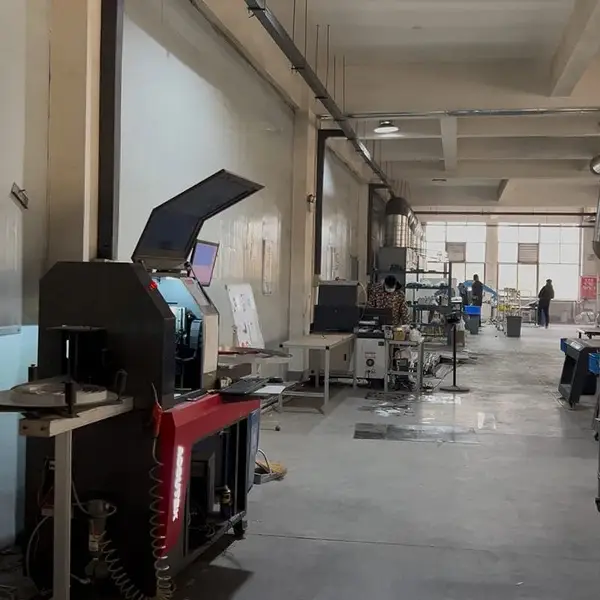
Real photo from our production floor — every sign we ship is made here.
Products mentioned or relevant to this topic — factory-direct, custom built.
Factory-direct since 2010. Free quote within 24 hours — no obligation.
Get a Free Quote → Copy EmailMOQ: 1 piece · Flexible lead time · 2-year warranty · Worldwide shipping
See pricing, specs, and get a free quote for the sign type you need. Built in our factory, shipped worldwide.