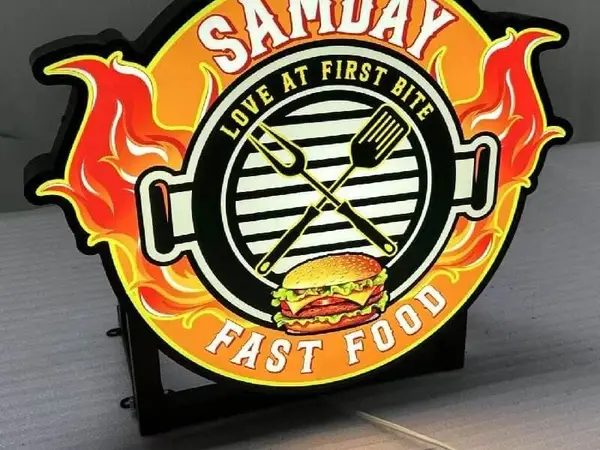
I’ve watched sign faces fail in three years because someone picked the wrong method.
Maybe the spec said “vinyl” because that’s what the last shop used. Maybe the project manager got sold on digital print by a printer salesman who never spent a day on a boom truck. I’ve seen a $12,000 monument sign look like peeling wallpaper after two Chicago winters. I’ve also seen a $2,000 acrylic
light box face look pristine after a decade because the guy who ordered it asked the right three questions.
For a sign shop owner, contractor, or importer standing in front of a quote with three line items—digital print, applied vinyl, painted face—the differences aren’t about which one’s “better.” It’s about which one stays looking like new until the lease renewal, and which one makes you eat the warranty cost. I’ll break it down the way I do for clients at our factory in Lu’an: with numbers, with scars, and without the marketing fluff.
Digital Print: When Pixels Hit Plastic
Digital print on acrylic or polycarbonate is basically a giant inkjet on steroids. We push a 4x8 sheet of 3mm clear acrylic onto a UV flatbed printer, flood a white backing layer, then CMYK color, then sometimes a protective clear coat. All in one pass.
Here’s what nobody tells you: the ink matters more than the printer. Our factory spent 40,000 RMB extra per printer head upgrade to run UV-curable inks from a Swiss supplier. Cheap solvent inks fade in 12 months under UV exposure. UV-cured inks with proper adhesion promoters will give you 3-5 years outdoors un-laminated, 5-7 years with a 2-mil matte overlaminate. I’ve got test panels on our rooftop in Anhui that prove it. After three summers, the cheap ink samples look like a Polaroid left in a glove box.
Cost at our factory is moderate. A digitally printed face for a standard
acrylic light box—say 24"x48" with white floods and full-color graphics—runs you $40 to $65. That’s with Mitsubishi-grade acrylic, 90-92% light transmittance, no yellowing for 5 years. That same face in a US sign supply catalog will have a prepainted acrylic blank for $30, and a local print shop will charge $80 to print on it. We can ship it to your dock for less than the blank alone.
Where digital print wins: photographic images, gradients, complex patterns with 50 colors, anything where a knife plotter would go insane. For
food menu signs with a burger that needs to look edible, digital is the only option. For a corporate logo with a six-color swoosh, same. The ink cost doesn’t multiply with color count. You’re paying for square footage, period.
Durability caveats: that 3-5 year rating is for indirect south-facing elevation. Direct, unshaded Arizona sun with no lamination? Start budgeting for replacement at year three. And never, ever let a client put a digital printed face on a light box that runs 24/7 with high-output modules. The heat from SMD 5730 LEDs at full blast can cook the ink within two years. We spec 2835 strips spaced every 2 inches for printed faces to keep the cavity temperature down.
Vinyl Applied: The Knife’s Edge
Applied vinyl means you take a sheet of translucent or opaque film, cut the design on a plotter, weed out the scraps, and transfer-tape the graphic onto a clean acrylic or polycarbonate face. Simple, until it isn’t.
Look, vinyl is not one material. It’s two distinct species, and the price difference tells you everything. Cast vinyl (like 3M 3630 or Avery A9) has a 5-7 year outdoor life. The manufacturing process stretches the film gently, so it doesn’t want to shrink back. Calendered vinyl—the stuff that comes in 10-yard rolls for $20—is literally squished flat like pasta dough. It wants to return to its original blob state. Outdoor durability: 18 months to 3 years before cracking, pulling at edges, or looking like a dry lake bed.
I’ve seen this go wrong: a contractor ordered calendared vinyl lettering on a dark bronze painted aluminum face for a bank branch in Dallas. Hottest July on record. The dark face hit 150°F every afternoon. Within 14 months, the vinyl letters had shrunk 1/16" all around, leaving a dirty adhesive halo you could see from the drive-thru. They paid $400 to redo the whole thing with cast vinyl. The savings on the first go-round? Maybe $60.
Factory pricing for vinyl is misleading if you only look at material. A two-color vinyl face for a 36" round storefront sign—white translucent for letter, black opaque for background—runs $35-50 at our shop. That includes the plotter time, weeding, and hand-application on a cleaned and static-dusted acrylic blank. Material cost is under $5. The labor is the real line item. But because vinyl is a mechanical bond, not chemical, the edges are forever a weak point. A pressure washer at close range will lift even cast vinyl if the applicator didn’t post-heat the edges.
Where vinyl makes sense: simple vector logos, single-color lettering on translucent backgrounds, any job where the client wants to change the phone number in three years without buying a whole new face. It’s also the only method that lets you use high-performance reflective films for DOT signage. And if you’re building
front-lit channel letters with a colored acrylic face that needs a white outline, vinyl is still often quicker than a multi-stage paint mask.
The ugly truth is: most vinyl failures aren’t material failures. They’re surface prep failures. A fingerprint, a wisp of dust, a single drop of condensation on the acrylic before application—that’s where the edge lifts first. Our QC crew wears cotton gloves and wipes every face with 99% isopropyl alcohol. Does your supplier? Ask for a process photo.
Painted Faces: The Old Dog That Keeps Biting
A painted sign face can mean three things: back-painting a clear acrylic sheet with translucent ink, spraying opaque acrylic urethane onto a sign blank, or powder coating
metal letters. I’m lumping them because the core idea is the same: liquid or powder adheres chemically or thermally, and if done right, it’s part of the substrate, not sitting on top.
Painted durability is the heavyweight champ. Back-painted acrylic with a two-part automotive grade urethane will look factory-fresh for 7-10 years outdoors. I’ve pulled 12-year-old pylon sign letters from a shopping center re-brand where the paint was dusty but intact, while the vinyl logo next to it had disintegrated. Powder coating on aluminum? 10+ years, easy. On stainless steel fabrications, a powder coat over 304 base is a 15-year marriage.
Cost at the factory is higher for paint because you can’t fake the process. You want a 5mm acrylic face back-painted Pantone 186C red, then CNC routed to fit a light box frame? That’s a three-day job: clean, spray, cure for 24 hours, then machine. We charge $55-80 for a 24x36 face. A powder coated aluminum letter set for a building directory runs $10-25 per letter, but that’s with a primer base, the color powder, and a 400°F oven cure.
Here’s the brutal honesty moment nobody enjoys: painted faces show every speck of dirt in the spray booth. A painted white acrylic light box face with a single black booger in the paint will light up like a beacon the first night the LEDs come on. Our painters spend an hour masking and cleaning a booth before running a $200 acrylic sheet. Cheaper shops skip that hour. You’ll see the boogers from the parking lot. We’ve all driven past that sign and thought, “Somebody didn’t care.” Don’t let it be yours.
For
stainless steel letters and aluminum letter faces, paint opens up color options that anodizing can’t touch. You want a matte orange letter with a 316 stainless backer for a hotel in coastal Florida? Paint it. Just specify 316 because 304 near salt spray will get pinhole corrosion under the powder within five years, and you’ll be chasing rust blooms forever. We’ve done exactly that for a resort in Miami Beach; the 316 premium was 25% more on material, zero more on labor, and nobody’s called me in seven years about a rust stain.
Durability vs. Cost: The No-Chart Chart
I’m not building a fancy table because those are for magazine articles. Here’s what you need to know, ranked by outdoor lifespan and real factory price for a common 24"x36" acrylic face (our shop, February 2025):
Digital print with UV ink, no lamination: 3-5 years outdoors, 5-7 indoors. $40-65. Repairable only by replacing the whole face.
Digital print with 2-mil matte overlaminate: 5-7 years outdoors, 8-10 indoors. Add $8-12.
Cast vinyl, single color, computer-cut: 5-7 years, assuming North American UV exposure, not desert. $30-50 for simple two-color layout. You can re-vinyl the same acrylic blank years later if the substrate holds up.
Calendered vinyl: 1-3 years. Don’t do it for anything permanent. It’s for a 6-month promotion or an indoor wall decal.
Painted acrylic (back-painted, urethane): 7-10 years. $55-80. The acrylic itself may need replacement after a decade if it’s domestic grade; UV-resistant Mitsubishi adds $15 per face but keeps clarity.
Powder coated aluminum or stainless letters: 10-15 years. Factor letter pricing from our catalog, not a per-square-foot comparison. A 12-inch
aluminum letter with a powder coat is $15-25, and you’ll forget you bought it before it fades.
Now, the hidden cost: what does it cost to replace a failed face three years in? A vinyl face that delaminates on a 20-foot tall monument sign requires a bucket truck, two guys, permit, maybe after-hours work. The face cost $45. The labor to swap it is $600. Suddenly, the painted option at $80 starts looking like the cheap one. I’ve put my phone number on enough warranties to know: the real money evaporates at the service call, not the purchase order.
What Nobody Tells You About Each Method
I’ll give you the factory-floor confessions.
I’ve seen this go wrong: “Thermal shock.” A digital-printed acrylic face in a light box with no ventilation. Daytime heat inside the box hits 140°F. Night drops to 40°F. The acrylic expands and contracts, and the ink layer doesn’t stretch at the same rate. Microscopic cracks form in the clear coat. Water gets in. Within 18 months, the print looks milky along the edges. We vent all our light box frames now, but I still see designs without a single drain hole.
Here’s what nobody tells you: Painted letters on a monument sign at a church in Pennsylvania—letter faces painted a nice forest green. Four years later, the east-facing side is faded to mint. The west-facing side looks new. That’s not a paint failure; that’s an owner who didn’t realize the sun isn’t democratic. If your sign face is going to get uneven UV, tell the factory to use a UV-resistant clear topcoat and bake it. We do an extra layer of automotive clear with UV inhibitors for any painted face that’s not under a canopy. It costs $5 more per face. It’s the cheapest insurance in the business.
Look, if you’re importing sign faces from a factory like ours in China, you need to ask about edge sealing on digital prints. A lot of shops will print edge-to-edge, then trim the acrylic, leaving raw ink at the cut line. Moisture wicks in from that edge and delaminates the ink within months. We leave a 1mm unprinted margin or apply a clear edge sealer by hand. It’s a 30-second step. Ask for it. If they say “we don’t do that,” find a factory that does.
Matching the Method to the Mission
Don’t pick a method because a spec sheet says “5-year durability.” Pick it by asking: how will this sign actually die, and when?
For interior
food menu signs that are backlit 14 hours a day, digital print on 3mm acrylic with a white flood coat is your workhorse. No vinyl edge lifting from heat, no paint to scratch, and if the menu changes in two years, you print a new face for $30. We ship them by air in foam-lined boxes, no problem.
For exterior
acrylic light boxes on a strip mall where the landlord expects seven years of clean white light, I’ll push you to back-painted acrylic with routed push-through lettering. Paint the background color on the inside face, CNC cut the letter shapes, insert translucent
acrylic letter returns. No graphic layer to fade, no vinyl to peel. It’ll cost $90 per face instead of $50 for a digital print. Over seven years, you’ve saved yourself one bucket truck visit—maybe two.
For a corporate lobby directory with
stainless steel letters—brushed #4 finish, recessed into a painted wall—the choice is between paint-filled engraving or applied vinyl on the letters. Vinyl lettering on the face of a brushed stainless letter will peel along the grain. Always. Paint filling is permanent, tactile, and doesn’t care about humidity. We charge $5 extra per letter to hand-paint the recess instead of vinyl. It’s the kind of thing your client will run their fingers over ten years later.
If you’re doing a temporary event banner for a two-month festival, throw vinyl on coroplast and call it a day. But you’re not reading this for a two-month job. You’re reading this because you have a purchase order for a permanent installation and you don’t want to answer your phone in 2027 with a complaint about a flaking sign face.
The Factory’s Bottom Line
We can do all three methods, and we do them daily for sign shops worldwide. Digital print with UV flatbed, cast vinyl plotting, liquid paint booth with bake cycle, powder coating line for metal letters. If you email me a vector file, I can return a quote for each option so you can present three columns to your client. I’ll even put a note in the quote: “Option B saves $30 now. Option C saves $400 in service calls over 10 years.”
Because here’s the thing: I don’t care which one you pick. I care that the sign you hang doesn’t embarrass you. An embarrasing sign is a reputation killer for both of us. A sign that still looks crisp the day you retire—that’s how I get referral business from a sign shop in Cleveland I’ve never met in person.
One last ugly truth: UL, ETL, CE, IP65—none of those certifications will save a sign face from the wrong print method. You can have the best LED modules, the most waterproof power supply, and the most beautifully welded aluminum cabinet, but if the face goes cloudy and peeled, the whole sign looks like garbage. The face is what the public sees. Spend your money accordingly.
So whether you need digitally printed light box faces for a fast-food chain, vinyl graphics on push-through lettering, or back-painted acrylic for a flagship store, shoot us the specs. I’ll tell you honestly which method will sleep through the warranty period, and which one will keep you up at night. That’s the kind of comparison shopping that pays for itself before you pay us a dime.