I sell signs. I don’t install them. But I spend my days on the phone with guys who just tried.
They call me after the fact, voice shaking, asking if I can rush a replacement letter because the one they mounted fell and shattered. I hear the same story every month: YouTube video looked easy, saved on labor, three days later the sign’s on the ground and the landlord's furious. The money they saved on install wouldn’t cover the repair bill. That’s the part nobody puts in the brochure. The ugly truth is, the biggest lie in this industry is "anyone can install a sign." No. Anyone can try. Trying isn’t installing. The difference between the two is a broken arm, a voided warranty, or a lawsuit.
Here’s what nobody tells you: The real expense isn't the installation cost—it's the cost of the mistake. I've seen a $1,200 set of front-lit channel letters turn into scrap metal because the owner used the wrong anchors. He saved $900 on labor. He paid $1,200 for new letters plus a $600 emergency installer to fix the wall. Net loss: $900 and two weeks of an empty storefront.
Let’s stop guessing. I’ll give you actual numbers from a thousand signs shipped.
Professional installation for a typical storefront—six 18-inch front-lit channel letters—runs $800 to $1,800 in a mid-sized US city. That’s lift rental ($200–400/day), a two-person crew ($75–150/hr), electrical if needed, permits ($50–500), and a $150 “we know what we’re doing” premium. DIY, on paper, costs you a Saturday, a drill, a ladder, some anchors, and a buddy who owes you a favor. Looks like you’re saving a grand. Looks.
Here’s the real DIY bill most people don’t calculate: a hammer drill ($150), a decent laser level ($80), stainless steel fasteners ($30), a friend’s pizza and beer ($40), a stud finder that actually works ($60), and a tube of exterior-grade silicone ($12). That’s $372 if you own nothing. Add a $200 lift rental if your sign goes above 10 feet. You’re already at $572 before you’ve put a single hole in the wall. And if you have to pull an electrical permit? Add $100 and a morning of head-scratching at the municipal office.
So the real savings might be $200–400. Not zero. But small enough that one error wipes it out completely. I’ve done the math with my wife’s accountant brain. She’d tell you the risk-adjusted return on DIY is terrible.
Look, I’m not anti-DIY. I’m anti-disaster.
If you’re mounting lightweight, non-illuminated aluminum letters with studs and a paper template on a ground-level interior wall, go for it. We ship those with a 1:1 paper pattern, welded studs, and instructions. A 12-inch aluminum letter weighs maybe 2 pounds. You can mount six of them in an hour with a level, a drill, and some patience. No electrical, no ladder above 8 feet, no weatherproofing nightmare. I’ve seen sign shop owners do it in their own break room. It’s straightforward, and the cost of failure is low—a filled hole and some paint, not a shattered glass door.
This also works for simple, non-lit indoor signage. If you can hang a heavy picture frame, you can handle small indoor letters. But the moment you step outside, the rules change.
I need to be brutally honest here: outdoor, illuminated, or oversized signs are not a hobby project. They’re engineered assemblies that face wind load, rain, UV, and idiots with shopping carts.
Take back-lit halo letters. These need a precise 1- to 2-inch standoff from the wall to create that perfect light halo. Mount them flush and you get an ugly hot spot. Mount them at an angle, and the halo looks like a drunk idea. We include standoffs and a drilling template, but if your wall is brick and you don't have a hammer drill with the right bit, or you measure once and drill 17 holes wrong, those standoffs are useless. I’ve had customers glue the standoffs with construction adhesive. They lasted three weeks. The letters sagged, the wiring pinched, and the LED modules burned out from the tension. Warranty doesn’t cover that.
I’ve seen this go wrong: a restaurant owner in Miami tried to install 3-foot-tall stainless steel letters on a stucco wall above an outdoor patio. He used plastic wall anchors because he didn’t want to mess with Toggler bolts. One letter tore off in a storm, dropped twelve feet onto a metal chair, and the impact sounded like a gunshot. Nobody hurt, thank God. But the letter was destroyed, the stucco ripped open, and the landlord sued for $5,000 in facade damage. The letter itself? That was a stainless steel letters letter, 304 grade, beautiful finish, cost him $90 from me. The lawsuit cost 55 times that.
And never, ever try to DIY a large outdoor light box or a neon flex sign on a high wall. The wiring alone can kill you. 120V lines, LED drivers, waterproof junction boxes—one loose wire nut, and the whole thing becomes a fire risk or a shock hazard. Electricians exist for a reason. I’ve watched a guy use indoor romex to wire an outdoor acrylic light box because “it’s in a protected area under an awning.” Six months later, water seeped in, corroded the connection, and shorted the driver. The whole sign flickered like a horror movie and then died. His fire insurance adjuster laughed at him. I wish I was kidding.
Here’s something nobody in my position will admit out loud: I want you to order the sign from me, and I honestly don’t care who installs it. But I’ve seen too many good signs turn into legal nightmares because the owner thought a YouTube tutorial was a license to practice electrical engineering.
Professional sign installers carry liability insurance. If a sign they mounted falls and cracks someone’s skull, their policy kicks in. If you do it yourself and the same thing happens, your business insurance may deny the claim if they determine the installation was non-compliant with local codes or NEC Article 600. Most policies exclude “work performed by unlicensed persons.” You’re then personally on the hook for medical bills, property damage, and a lawsuit that can run into six figures. That’s not fearmongering. That’s a conversation I’ve had with a sobbing franchise owner in Arizona. She settled for $80,000.
The ugly truth is, many municipalities require a licensed electrician for any sign with external illumination over a certain wattage. Pulling a permit might seem like a hassle, but an unpermitted sign can get you a stop-work order or a fine from the city. If the sign is visible from a public right-of-way, inspectors notice. I’ve shipped to a guy in Chicago who ignored the permit. He got fined $2,000 and had to pay a licensed contractor to re-do the entire install anyway. The inspector red-tagged his shop. For three weeks, he had a gorgeous sign that he couldn’t legally light up.
Look, this isn’t complicated. You’re reading this because you’re comparison shopping, ready to order, and you want to keep costs down without being stupid. I respect that. So here’s the approach I recommend after 16 years in this business:
This hybrid model is what the smartest contractors and business owners do. They import the sign at factory pricing, then pay for local install. They skip the US markups on fabrication and only pay for domestic labor and peace of mind. It’s not rocket science—it’s arithmetic.
I’ve shipped worldwide, and the successful projects all follow this pattern. The ones that end in disaster? Somebody tried to do it all himself with a buddy and a case of beer.
Here’s what I can promise you, and I’ll stake my factory’s reputation on it.
Every sign that leaves my loading dock in Lu’an, Anhui is ready to install. The template is dead-on. The studs are TIG-welded at exact points. The wiring harness is plug-and-play with waterproof connectors. We run every letter through an 8–12 hour burn-in test before it’s packed in plywood crates. I’ve personally watched a QC inspector reject a batch of back-lit halo letters because the halo wasn’t perfectly even at 2 inches. That’s our standard. You’ll get a sign that a professional can mount with confidence.
What I cannot do is climb the ladder for you. I can’t hold your drill, check your studs, or stop you from using the wrong anchors. My warranty covers manufacturing defects—LED modules that fail within 2 years, power supplies that die within 1 year, and letters that arrive bent from shipping. It does not cover installation errors. If you strip the threads on a standoff, if you overtighten and crack the acrylic face, if you wire the driver backwards and fry the circuit, that’s on you. I’ll sell you a replacement at cost, but it still hurts.
Look, I’m a factory owner, not a life coach. But if I’ve learned anything, it’s this: trying to save money in the wrong place costs you more money, more time, and more stress than you ever anticipated. The sign business is full of guys who learned that the hard way. Don’t be one of them.
So order the sign. Pick the front-lit channel letters for your storefront or the stainless steel letters for that upscale lobby. We’ll make them beautiful. Then hire the right person to put them up. I’ll even send you the mounting pattern in advance so your installer can plan. The real sign of wisdom isn’t doing it yourself—it’s knowing when to call someone who’s done it a thousand times.

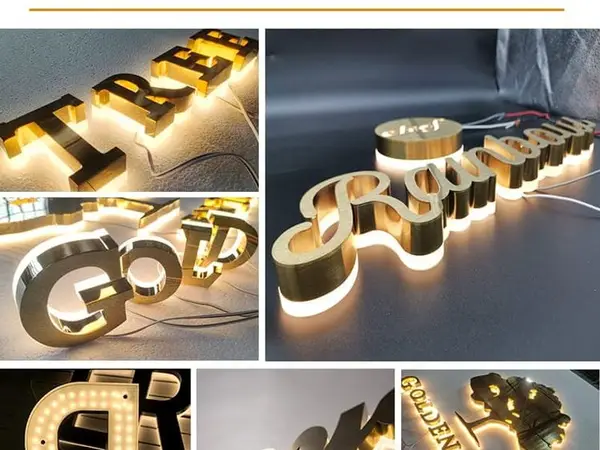
Real photo from our production floor — every sign we ship is made here.
From $24/letter · MOQ 1 piece · Flexible lead time · CE & UL certified · ships to 20+ countries
Custom sizes, colors, and finishes. Get a factory price in 24 hours.
Get a Free Quote Copy EmailWhatsApp +86 13865703472 · business@aochuangsign.cn
See pricing, specs, and get a free quote for the sign type you need. Built in our factory, shipped worldwide.