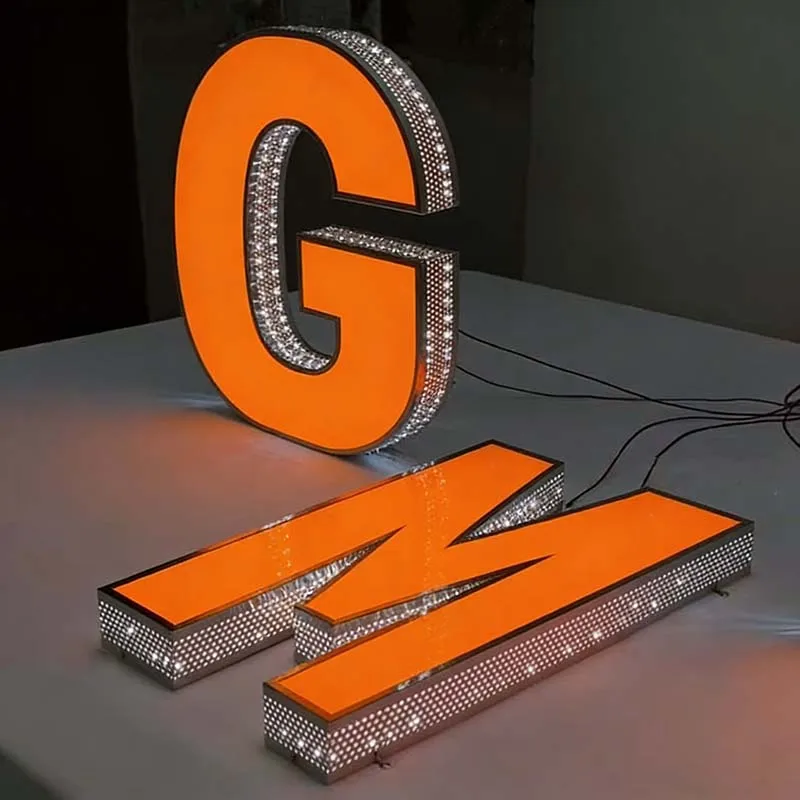
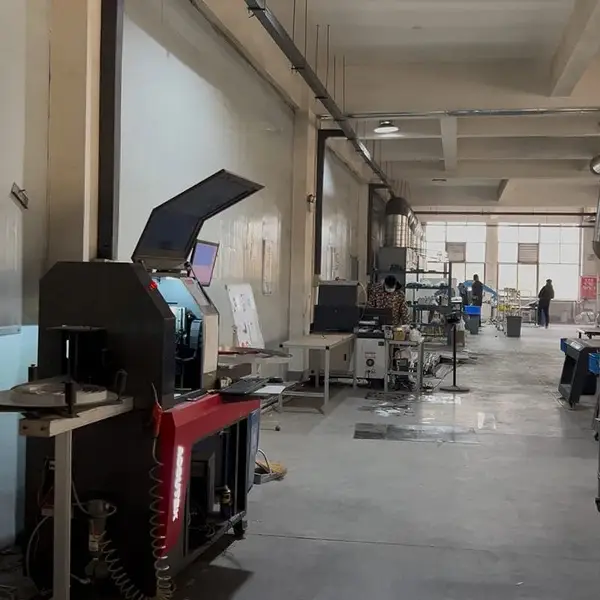
I’ve been cutting, welding, and wiring signs since 1997. I run a 50-person shop in Lu'an, Anhui, and I've watched the import game from both sides. This guide is for sign shop owners, contractors, and importers who are done with broker fluff and want straight answers on sourcing illuminated storefront signs wholesale factory direct.
The first thing I'll tell you: the internet is full of fake factories. Real ones like mine hide behind 20-page PDFs and Alibaba listings that all look the same. So let's cut through it.
---
Why Go Factory Direct For Illuminated Storefront Signs?
Money. That's the only reason that matters.
A front-lit
channel letter that costs $600 installed in the U.S. retails for $80–120 at my factory. Same 304 stainless, same Samsung LEDs, same weatherproofing. The gap is real, and it's not because I'm skimping. It's because you're not paying a broker, not paying a U.S. shop's overhead, and not paying for a salesperson's commission.
Here's what nobody tells you though: factory direct means *you* become the project manager. You own the spec, the approval process, the shipping headaches, and the tariff paperwork. If you can't handle that, hire a U.S. fabricator and stop reading.
For the rest of you — the ones who've already quoted a job to a local client and want to keep 50 cents on the dollar — keep reading.
What You Need Before You Ask For a Quote
I get 20 inquiries a week that say "need sign, quote please." That tells me nothing. If you want a real price, send me these:
- Vector artwork or dimensions — .ai, .eps, .pdf. DXF works too.
- Face size per letter — height, depth, overall width.
- Material preference — stainless, aluminum, acrylic, or don't care.
- LED color and brightness — warm white for restaurants, cool white for highways.
- Mounting method — flat wall, raceway, or studs.
- Location — coastal or inland. That changes steel grade.
Missing half of that? I'll still quote, but the price will have a safety buffer that costs you. Be precise. You're a professional, so act like one.
The ugly truth is most buyers don't know their own sign code. They request 3mm acrylic for a letter that's 3 feet tall. It'll warp in the first summer. Over 2.5 meters, you need 5mm acrylic, period. If you're not sure, ask me before you send a spec, not after the mockup is done.
What Drives the Price on Channel Letters
Let's break down a typical front-lit channel letter quote you'd get from my shop:
- Stainless steel back and returns: $20–80 per letter (front-lit)
- Back-lit halo letters, same build: $35–120 per letter
- Aluminum non-lit, plain: $15–40 per letter
- 3D fabricated with bends, no LED: $40–120 per letter
The material choice is the biggest swing. Stainless 304 is my default for outdoor because it lasts 10+ years. You want 316? That's for coastal salt air — Miami Beach, anywhere within a mile of the ocean. It costs 20–30% more, and it's worth every penny. A strip mall in Ohio doesn't need 316, so don't waste money.
Aluminum is lighter, one-third the weight of steel, naturally rust-proof, and a solid choice for indoor or protected signs. But for exterior channel letters, I still prefer stainless. It holds the detail better and doesn't dent on the truck.
The LED modules inside matter more than your electrician will tell you. I use SMD 2835 with 100–150 lumens per watt and Samsung/Osram chips. They run 50,000 hours before hitting 70% brightness — that's five years of nightly operation. Cheap modules? They burn out in 12 to 18 months. I've seen that go wrong: a casino client in Reno had to relight an entire backlit perimeter because the broker sold them bargain-bin strips. Don't be that guy.
The Factory-Direct Quote Process (and How Fast It Really Moves)
Here's what nobody tells you about factory direct quotes: the price you get in 24 hours is not the price you pay. The final number shifts with shipping, tariffs, and any spec changes you make after the file is approved. That's normal. Anyone who promises a fixed quote forever is either overcharging you upfront or will hit you with surprise fees later.
My process, which you'll get when you request a quote online:
1. Send your artwork and dimensions.
2. I review within one business day and send a written quote.
3. You approve the file and we make a digital proof (1 day).
4. Laser cutting ±0.1mm (1–2 days).
5. Bending, TIG welding, grinding, polishing (2–4 days).
6. Acrylic face CNC routing (1 day).
7. LED assembly and wiring (1–2 days).
8. Sealing with neutral silicone, then an 8–12 hour aging test.
9. 100% QC inspection, photo report.
10. Export packaging — foam, carton, plywood crate.
Total production: 7–15 days, depending on how many letters and how much polishing. That's it. If a factory tells you 3 days, they're sending you unfinished garbage.
Shipping, Tariffs, and the Real Cost to Your Door
Quotes are nice, but what matters is landed cost. Here's honest numbers from my shipping desk:
- Express (DHL/FedEx): 7–15 days, $30–100 for small sign kits. Good for samples.
- Air freight: 10–20 days, $4–12 per kg. Best for orders under 100kg.
- Sea freight: 50–70 days, $80–200 per cubic meter LCL. Full container $1,200–3,000. This is where you save.
Now the part no one likes: U.S. Section 301 tariffs add roughly 30% on top of the invoice for most signs. You can't route around it, and I'm not going to help you fudge the customs declaration. That's illegal and gets your shipment seized. Budget the tariff, and you'll still beat a domestic quote by 50%.
What I Can't Do, and Why That Should Make You Trust Me
I can weld stainless, CNC acrylic, and wire LED circuits in my sleep. But I can't give you UL listed signage. My factory holds CE, RoHS, ISO 9001, and IP65 ratings for our enclosures, but if you need a UL label for a U.S. municipal inspection, I'm not your guy. Not unless you're willing to pay $4,000–15,000 and wait 4–9 months for a custom UL evaluation. Most importers don't want that. They buy from us, have a local electrician wire it in with a listed power supply, and sign off under NEC Article 600. That's legal in many jurisdictions, but not all. Check your local code.
I also can't fix an installation. My warranty covers the LEDs (2 years) and the power supply (1 year). It does not cover a contractor who mounts a channel letter with the wrong anchors into brick veneer. If your electrician feeds 240V into a 24V system because he didn't read the label, that's on him.
And I can't make cheap cheap. I've seen quotes from other Chinese factories at half my price. They're using 1.0mm steel where I use 1.5mm, or acrylic that yellows in 12 months instead of 5–8 years. They skip the aging test. They cut corners on silicone. You'll pay for that in callbacks. I'd rather lose the order than ship a sign that fails in a parking lot after a year.
How to Get a Reliable Online Quote
Go to my product pages and send an inquiry. If you're looking for classic storefront signs, start with
front-lit channel letters. For upscale work, check
back-lit halo letters — those are the ones that glow against the wall, and they're the most requested CEO office sign I make. For modern aesthetics,
rimless channel letters are gaining traction because they look cleaner with no visible trim cap.
Don't send a message that says "how much for a sign." I've said it once, I'll say it again: give me numbers. I will respond same day with a real quote, not a range.
If you need stainless for a lobby that'll never see rain, look at
stainless steel letters. For outdoor storefront
light boxes, the
acrylic light boxes page has options from $80–250 per square meter. And if you want that neon flex look without the glass headaches, we do
neon flex signs all day long.
A Rookie Mistake That Costs You Thousands
Here's the classic blunder: a contractor orders illuminated letters based on the width at the bottom of the letter, then forgets to account for the return depth. A 10-inch tall letter with a 3-inch depth has a different face shape than a flat cutout. If your artwork is a two-dimensional outline, the fabricator has to infer the depth. If the depth isn't specified, we make it 2 inches and you don't find out until installation when the letter hits a pipe chase. Specify a depth in your drawing. It's one line. It saves a mess.
Another one: don't request IP65 and think it means waterproof. IP65 means dust-tight and water jets from any direction. It's the minimum for outdoor. IP66 handles powerful jets, and IP68 is for submersible — for a sign that floods occasionally. If you're on the coast and get typhoons or hurricanes, ask for IP66 on the wiring compartment. I've seen that go wrong dozens of times in Southeast Asian projects.
Lead Times and the 8-Hour Test
My production runs Monday through Saturday, 8 AM to 6 PM. A typical 30-letter storefront sign takes 10 days from approved artwork. That includes the 8–12 hour aging test where every letter is lit up with its final power supply to catch weak solder joints and dead LEDs. We do this on 100% of orders, not just the big ones. You want to trust a factory that takes a photo of every letter during its burn-in. I don't send videos of CNC machines spinning — that's theater. I send photos of the finished sign, lit, with a date stamp.
Okay, What About Payment and MOQ?
MOQ is one piece. Not one letter, one sign. If you need a single halo letter for a boutique hotel, I'll build it. Most factories won't touch that. My bread and butter is the 20-letter storefront package, but the machinery doesn't care if I cut one or fifty.
Payment terms are simple: 50% deposit to start production, 50% before shipping. Wire transfer, PayPal (with fees), or Trade Assurance. No net-30 unless you're a returning customer with history. I know American shops like net-30, but I've been burned by too many middlemen who vanish after the goods leave China. If you're importing regularly, we can talk terms after two orders.
Trusting a Factory You Found Online
Look, I get it. You've been burned before. A factory in another province sends you glossy photos of a clean shop floor, then ships rusted letter backs. So let me tell you what separates a real manufacturer from a trading company:
1. They send a factory photo with a specific machine and your name written on a whiteboard.
2. They ask about voltage and your local sign code before quoting.
3. They turn down work they can't do properly.
4. They respond to emails within one business day, not three.
5. They don't have "partners" — they have a workshop.
I have all five. If you want, arrange a video call during Beijing business hours and I'll walk you through the shop with a phone. That's not a sales gimmick. I show everyone the same rubber floor, the same dust collectors, and the same welding stations. What you see is what you get.
The ugly truth is that you don't need to find the cheapest factory. You need to find a factory that tells you when your spec is dumb. That's me. I'd rather lose a quote than send you a bending deformation on a 0.8mm return because you asked for lightweight. I'll tell you to use 1.2mm.
Now, Get That Quote
You've got the knowledge. You know the materials, the lead times, the tariffs, and the traps. The next step is to send a detailed inquiry from one of my product pages. Put "factory direct quote" in the subject line and I'll prioritize it myself.
If you're still undecided, order a sample. One letter, one light box, one neon flex test piece. Pay for express shipping, and you'll have it in your shop within two weeks. Weigh it, bend it, light it, abuse it. Then order the whole set.
I'll be here, behind the same welding bench, answering your emails after the sale. Because the deal doesn't end when the container ships — it ends when your client looks up at that sign and says "that's clean." That's the job. Always has been.