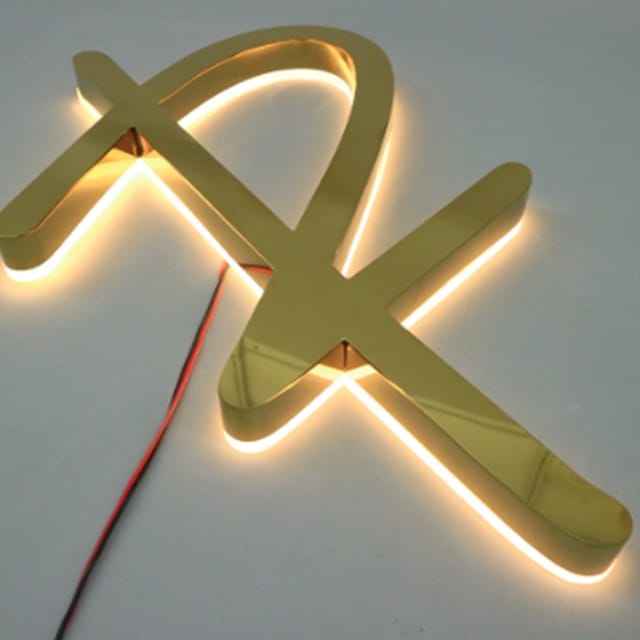
A real Chinese sign factory quotes front-lit channel letters at $20–80 per letter, not $8 for a “premium” one. I’ve spent 14 years on the factory floor, and I’ve seen more fake factory listings than bad solder joints. That $8 letter? It’ll fall apart.
Here's what nobody tells you: most “factories” on Alibaba are trading companies. They rent a desk near a real plant, slap their logo on the photos, and call it a day. Verify before you wire a cent.
Don't be the guy who loses $15,000 because a pretty website had a stock photo of a laser cutter.
Ask for the unified social credit code. 18 characters. It's on every legitimate Chinese business license. If they hem and haw about it, you're done.
A real factory's license lists registered capital and paid-in capital. Don't just glance at the registered number. I've seen trading companies with $50,000 registered capital claim they run a 3,000m² plant. My shop, Aochuang Sign in Lu'an, Anhui, started in 2010. 3,000m² facility. 50+ workers. That's what a legitimate line looks like.
Check the business scope on the license. If it says “trading” or “import/export” but not “manufacture,” you're dealing with a middleman. Plenty of buyers never check because they don't know how. Go to the National Enterprise Credit Information Publicity System, enter the code, and compare the paid-in capital to what they claimed.
No license photo? Walk away.
A factory that's been exporting since 2010 has a paper trail. Ask for the last three bills of lading. Not photos of crates — actual B/L numbers you can verify. If they go quiet, you've got your answer.
Customs data tells you how much they've shipped, to which ports, and under what HS code. Sign letters typically go under 9405, but your customs broker can confirm. LCL sea freight means your crate gets handled 6-8 times between our dock and yours. Every touch is a chance for damage. A factory with clean B/L history won't hide it.
Sea freight from China to the US runs 50–70 days. LCL costs $80–200 per cubic meter. A full container runs $1,200–3,000. If a supplier promises sea freight in 3 weeks, they're lying or they're putting it on a plane without telling you.
I've watched sign shops pay $800 for a front-lit letter from a domestic fabricator. Same 304 stainless. Same Samsung LEDs. We ship that letter for $120. A factory with real export records can back those prices up because they've done it before. If you're ordering back-lit halo letters, ask which port they've shipped from most recently — Shanghai, Ningbo, or Shenzhen. No port history, no deal.
I've seen this go wrong: a buyer wires 30% to a “factory” that turns out to be a two-room office above a noodle shop. The video call request gets delayed. Then cancelled. Then they send a pre-recorded walkthrough. Don't be that buyer.
Live video audits are free. Use WeChat, Zoom, or WhatsApp. Make them walk the floor. Look for laser cutters, bending brakes, TIG welders, and LED assembly benches. If you're ordering front-lit channel letters, have them point the camera at the laser cutter cutting your letters. Ask to see the acrylic sheet thickness. Ask to see the worker's hands. If the floor's empty and two guys are drinking tea, that's a trading office.
A real sign factory's floor moves. Laser cutting, bending, welding, polishing, acrylic CNC, LED assembly, silicone sealing, aging test. That aging test runs 8–12 hours, by the way. If they don't mention it, ask why.
CE marking isn't a safety certification for the US market. It costs a factory 20,000–50,000 RMB and takes 2–8 weeks. In some cases, it's a self-declaration. UL 48, on the other hand, costs $4,000–15,000, takes 4–9 months, and requires quarterly audits. Big difference.
If you're selling into the US, you need UL 48 or ETL on any lit sign. ETL's a UL alternative that's 10–30% cheaper and just as accepted by inspectors. Don't let a factory wave a CE certificate at you and claim it covers UL. It doesn't.
IP65 sounds impressive. It means dust-tight and protected against water jets from any direction. It does not mean your sign survives a Florida hurricane. For coastal work, you need IP66 minimum, and 316 stainless costs 20–30% more than 304. If you're ordering stainless steel letters for a strip mall in Ohio, 304 is fine. For Miami Beach, pay for 316 or you're replacing letters in 3 years.
Alibaba Gold Supplier status means they paid a fee. It doesn't mean they own a factory. I've been on the floor since 2010, and the quickest way to spot bad LED modules is to look at the solder joints. Dull gray? Won't last 18 months. Shiny silver? Proper lead-free solder. That's the kind of detail you won't see in a marketplace listing.
Ask for trade references from US sign shops. Then actually pick up the phone and call them. If the factory sends you three references and every email bounces, that's a red flag. Check their B2B profile for transaction history, years active, and verified export data. If they've been on Alibaba for one year but claim 14 years in business, something's off.
If the supplier's listing for acrylic LED letters shows a different logo than their business license, you're dealing with a reseller.
A factory that demands 100% upfront has no skin in the game. Don't do it. Standard terms are 30% deposit, 70% before shipment after video inspection. For a sample under $100, sure, pay 100% upfront. For a $10,000 order, you need leverage.
Get a written contract with delivery date, material specs, LED brand, warranty, and refund terms. Mention US Section 301 tariffs — roughly 30% — and nail down whether the price includes them or not. A factory that won't put warranty in writing? Walk away. Our factory offers 2 years on LED, 1 year on power supply. If they won't match that, ask why.
Some factories will ship you a sample made by another shop. Protect yourself: require a final video inspection before you pay the balance.
No amount of paperwork beats a sample on your bench. Order one letter. For back-lit halo letters, one letter runs $35–120. That's cheap insurance. Check the acrylic face thickness, LED brightness, weld quality, paint finish. Put it outside for 60 days.
Then order a small pilot run of 10–20 letters. Measure every one. Check the color temperature with a meter. 6000–6500K is cold blue for industrial. 4000–5000K is neutral for retail. 3000–3500K is warm for hospitality. If your pilot order comes in wrong, thank your luck and find another factory before you're out $20,000.
A real factory doesn't need a 100-piece minimum. We have an MOQ of 1 piece and lead time of 7–15 days. If a “factory” tells you minimum order is 500 pieces, they're not making the signs themselves.
Q: Can I trust a factory that has an English website but no Chinese address?
No. Every legitimate Chinese factory has a physical address in Chinese. If you can't find it on Baidu Maps, it doesn't exist.
Q: What does CE marking actually prove?
CE is a European conformity mark that can cost 20,000–50,000 RMB and take 2–8 weeks. It does not mean UL. For the US, you need UL 48 or ETL. Stop asking me this.
Q: Should I use a sourcing agent?
If you're ordering 50 feet of custom letters and don't have time to verify, a sourcing agent can help. But they take 5–10% and can lie too. Do the video audit yourself.
Q: What if the factory says they have UL but won't share the certificate?
Then they don't have UL. UL 48 costs $4,000–15,000 and requires quarterly audits. A factory with that investment will show you the certificate with today's date. If they won't, they're dodging.
Products mentioned or relevant to this topic — factory-direct, custom built.
From $16/letter · MOQ 1 piece · 7–15 day production · CE & UL certified · ships to 20+ countries
Custom sizes, colors, and finishes. Get a factory price in 24 hours.
Get a Free QuoteWhatsApp +86 13865703472 · cairuisheng@aochuangsign.cn