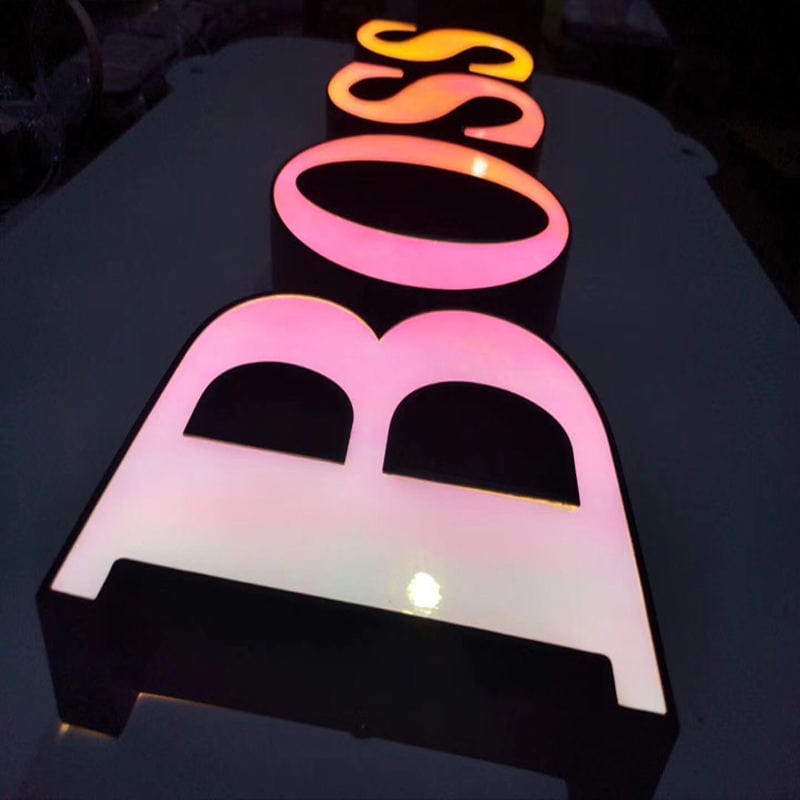
How to Choose • Budget • Design • Source • Ship • Install Your Business Signage
Your sign is the first thing a potential customer sees — before your website, before your sales team, before your product. Research shows that 76% of consumers have entered a store they'd never visited before based solely on its signage. And 68% of consumers believe a business's signage directly reflects the quality of its products or services.
A custom sign isn't just a name on a wall. It's a 24/7 salesperson that works while your business is closed, your team is asleep, and your digital ads have stopped running. The global signage market is valued at approximately $9 billion in 2023 and projected to reach $24 billion by 2030 — because businesses understand that good signage pays for itself.
This guide walks you through the entire process of buying custom signage — from deciding what type of sign you need, to getting it manufactured, shipped, and installed. Whether you're a business owner buying your first storefront sign, a contractor sourcing for a client, or a sign shop looking for a reliable factory partner, this guide is written for you.
Factory-direct insight: The single biggest money-saving decision in signage is where you buy. US retail sign shops charge $200-700 per channel letter installed. The same letter from a factory costs $20-80. Even after shipping, tariffs, and local installation, you save 50-65%. This guide explains exactly how to do it right.
Before you can buy a sign, you need to know what's available. Here's every major type of custom business signage, what it's best for, and what it costs.
| Sign Type | Best For | Factory Price Range | Durability |
|---|---|---|---|
| Front-Lit Channel Letters | Retail stores, restaurants, medical offices | $20–$80 per letter | 8-12 years |
| Back-Lit (Halo) Channel Letters | Law firms, corporate HQ, luxury brands | $35–$120 per letter | 8-12 years |
| Stainless Steel Letters | Office building lobbies, exterior facades | $30–$120 per letter | 10-15 years |
| Light Boxes | Gas stations, chain stores, shopping malls | $80–$250 per sqm | 5-8 years |
| Neon Signs (LED Flex) | Restaurants, bars, event spaces | $30–$200 per sign | 3-5 years |
| Acrylic Signs | Office lobbies, directional signage | $15–$100 per piece | 3-5 years |
| Mini LED Letters | Jewelry stores, luxury retail counters | $50–$150 per letter | 5-8 years |
| Punch-Hole / Exposed LED Signs | Rooftop signs, highway billboards | $30–$100 per letter | 8-12 years (IP68) |
| Custom Logo Signs | Brand identity, corporate headquarters | $100–$1,000+ per sign | Varies by material |
The biggest functional decision is whether your sign lights up:
Not every sign type works for every situation. Here's a practical decision framework:
Budget isn't just the sign cost — it's sign + shipping + tariffs + installation + permitting. Here's a realistic total-cost range for a typical 6-letter storefront sign:
| Sign Type | Factory Cost (6 letters) | Shipping + Tariff | Local Install | Total Range |
|---|---|---|---|---|
| Front-Lit Channel Letters (18") | $300–$480 | $100–$250 | $800–$1,200 | $1,200–$1,930 |
| Halo-Lit Stainless Steel (18") | $420–$720 | $120–$280 | $1,000–$1,500 | $1,540–$2,500 |
| Light Box (4'×8') | $400–$800 | $200–$500 | $600–$1,000 | $1,200–$2,300 |
The materials you choose determine how your sign looks on day one — and how it looks five years later.
Material cost-quality tradeoff: The price difference between domestic and import acrylic is 3-5× — but import acrylic lasts 4-5× longer. For a permanent installation, the "cheap" option is actually more expensive when you factor in replacement labor. For temporary signage (trade show, pop-up, seasonal), domestic acrylic is the right call.
Poor artwork is the #1 cause of production delays. Here's how to submit files that get your order into production fast:
Pro tip: If you don't have vector artwork, we can create it from your raster file or even a hand sketch. This adds 1-2 days to the timeline and a small design fee (typically $30-80), but the result is production-ready vector art. Just tell us upfront so we factor it into the timeline.
Bigger is almost always better for outdoor signs — but there are real rules that determine the right size:
Let's talk real numbers. Here's what custom signage actually costs — and where your money goes.
A $5,000 sign project doesn't put $5,000 into the sign itself. Here's where it goes:
| Cost Component | % of Total | Typical Range |
|---|---|---|
| Sign manufacturing (factory) | 15-25% | $300–$1,500 |
| International shipping + tariff | 5-10% | $100–$500 |
| Local installation labor | 25-35% | $800–$2,000 |
| Permitting + engineering | 5-10% | $200–$800 |
| Sign shop markup (if using middleman) | 20-30% | $1,000–$2,500 |
Buying factory-direct cuts out the sign shop markup — usually the single largest line item. But it's not free money. You take on:
For a sign shop owner or contractor who already does these things, factory-direct is pure margin improvement. For a business owner doing it once, the learning curve is real but manageable — and the savings are worth it.
Here's exactly what happens from "I need a sign" to "the sign is on the wall":
Send your design/idea. Factory reviews and sends a quote within 24 hours. No obligation.
Factory creates production drawings. You review and approve dimensions, materials, colors.
One complete letter or sign is made first. You approve (or request changes) before full production.
7-15 days. Laser cutting → welding → polishing → LED assembly → sealing → aging test.
100% inspection + lighting test video. Triple-layer packaging: foam + carton + plywood crate.
Express (7-10 days), air (about 10 days), or sea (about 65 days). Tracking provided.
You or your broker handles import. We provide all required documentation.
Submit to local building department. 2-6 weeks typical. We provide spec sheets for the application.
Local installer mounts and wires the sign. We provide templates + wiring diagrams.
| Phase | Duration | Notes |
|---|---|---|
| Design + sample approval | 3-7 days | Depends on revision rounds |
| Production | 7-15 days | Rush: 5-7 days available |
| Shipping (express) | 7-10 days | Small orders only |
| Shipping (air freight) | about 10 days | Medium orders |
| Shipping (sea freight) | about 65 days | Large/bulk orders |
| Permitting | 2-6 weeks | Start early — often the bottleneck |
| Installation | 1-3 days | Weather dependent |
| Total (with sea freight) | 8-12 weeks | Start permit process week 1 |
| Total (with express) | 4-7 weeks | Permit still the bottleneck |
Critical timing tip: Permitting is almost always the longest single step. Start the permit application the moment you place your order — don't wait for the sign to arrive. Most building departments accept permit applications with spec sheets and engineered drawings, which we provide. If you wait until the sign is in your hands, you'll add 2-6 weeks of dead time.
Not all sign factories are equal. Here's how to separate professionals from amateurs — before you send money:
Certifications aren't paperwork — they're what gets your sign through customs and past the building inspector.
| Region | Required | Cost | Timeline |
|---|---|---|---|
| USA / Canada | UL 48 or ETL (electric signs) | $4,000-15,000 (UL), less for ETL | 4-9 months (UL) |
| European Union | CE + RoHS | 20,000-50,000 RMB (CE) | 2-8 weeks |
| Saudi Arabia | SASO | Varies | Varies |
| Australia | RCM | Varies | Varies |
Channel letters and decorative signs are generally exempt from ADA tactile requirements. But directional signs, room identification, and wayfinding signs in the same building must comply:
Getting a sign from a factory in China to a wall in Chicago involves multiple steps. Here's the real picture:
| Method | Cost | Transit Time | Best For |
|---|---|---|---|
| DHL/UPS/FedEx (small) | $30–$100 | 7-15 days | Single small signs under 5kg |
| DHL/UPS/FedEx (per kg) | $10–$50/kg | 7-15 days | Medium orders, time-sensitive |
| Air Freight | $4–$12/kg | about 10 days | Medium-large orders |
| LCL Sea Freight | $80–$200/m³ | about 65 days | Small-medium orders, cost-sensitive |
| FCL Sea Freight (20ft) | $1,200–$3,000 | about 65 days | Large bulk orders |
| Matson Fast Ship (US West) | $180–$280/m³ | 25-35 days | Mid-speed, mid-cost option |
The best-made sign in the world is worthless if it arrives damaged. Export-grade packaging is not optional:
Wood crates must be ISPM-15 certified (heat-treated for pest control) or fumigated with a certificate. Non-compliant crates get held at customs.
A customs broker charges $150-300 to handle clearance. For first-time importers, it's worth every dollar.
A well-made sign is a 10+ year asset — if you maintain it:
After 15 years in this industry, here are the mistakes we see over and over — and how to avoid them:
| Mistake | What Happens | How to Avoid |
|---|---|---|
| Choosing by price alone | Cheap LEDs dim in 12 months. Thin aluminum warps. You pay twice. | Compare materials + warranty, not just the quote number |
| Skipping the pre-production sample | Full order arrives with wrong color, wrong finish, wrong size | Always approve one unit first. Always. |
| Not checking local sign codes first | Sign arrives but city won't permit it. You're stuck. | Check with local building department before ordering |
| Waiting to start the permit | Sign sits in storage for 4 weeks waiting for permit approval | Submit permit application the day you place the order |
| Bad file format | JPG logo gets pixelated when enlarged. Production delayed for vectorization. | Submit AI/EPS/PDF vector files with text outlined |
| No Pantone/RAL color codes | "Navy blue" from factory ≠ "navy blue" in your brand guide | Specify exact Pantone or RAL numbers |
| Wrong voltage | 220V sign shipped to 110V country (or vice versa). Won't work. | Specify voltage upfront: 110V (US) or 220V (EU/Asia) |
| Underestimating shipping cost | $800 sign costs $600 to ship. Budget blown. | Get shipping quote before finalizing order |
| Poor packaging for fragile signs | Acrylic faces cracked, LED modules shaken loose in transit | Insist on plywood crate + foam padding. Not optional. |
| No drainage in outdoor letters | Condensation pools inside, LEDs short out within months | Confirm weep holes are drilled at the bottom of each letter |
For a typical 6-letter front-lit channel letter sign (18" height), budget $1,200-$2,000 total if buying factory-direct (including shipping, tariff, and local installation). The same sign from a US sign shop typically runs $3,000-4,500 installed. Larger letters, premium materials (stainless steel, halo-lit), or complex installations increase the budget.
One piece. Most factories (including ours) accept single-unit orders. Per-letter pricing is higher for singles compared to bulk, but there's no forced minimum. You can order one custom sign, one channel letter, one logo — whatever you need.
Plan for 8-12 weeks from order to installed sign (with sea freight). With express shipping, 4-7 weeks. Permitting is usually the bottleneck, not production. Start the permit application early.
If you're comfortable with basic electrical wiring (connecting a 12V driver) and have the tools to drill into your building facade — yes, many contractors DIY. We provide full-size paper templates and wiring diagrams. For large, high-elevation, or street-facing installations, hire a licensed sign contractor — most cities require one for the permit.
With proper packaging (plywood crate + foam), damage is extremely rare. But if it happens: we require photos of the damaged crate, damaged sign, and shipping label within 48 hours of delivery. We'll either replace the damaged pieces or refund — whichever you prefer. This is why we insist on export-grade packaging.
Yes. 2 years on LED modules, 1 year on power supply. This is the industry standard. If LEDs fail or the power supply dies within the warranty period, we replace the parts at no cost. Shipping for warranty replacements is at our expense.
Wire transfer (T/T), PayPal, and Alibaba Trade Assurance. Standard payment terms: 50% deposit to start production, 50% before shipping (after you approve final QC photos and video). We never ask for 100% upfront.
Yes — if you provide Pantone (PMS) or RAL color codes. We match acrylic face colors and paint finishes to your exact brand specifications. Without a color code, "dark blue" is subjective — always provide a Pantone number.
Send us your design or just tell us what you need. We'll respond with a quote and production timeline within 24 hours — no obligation, no pressure.
Get a Free Quote → Copy EmailExplore specific topics from this guide in depth — each article is a comprehensive 1,500–2,500 word resource written by our factory experts.
MOQ: 1 piece • Lead time: 7-15 days • Worldwide shipping • 2-year warranty
Dive deeper with these in-depth articles from our factory floor.