A broken channel letter usually comes down to one of two things: a dead LED module or water in the raceway. Buy the part factory-direct and you'll pay $20–$80 for a whole new letter—not the $200–$700 a sign company charges for an installed retail unit. Don't order a single part until you know which failure you're dealing with.
I've learned that the hard way. More than once.
I've seen this go wrong: a shop owner replaced an entire sign because one LED module died. $2,400 later, the new sign had the same issue because nobody resealed the top seam. Water dripped into the raceway every rainstorm.
Pull the acrylic face off first. If it's a front-lit channel letter, you'll see water stains, corroded wires, or a cluster of dark modules. All dark? Check the power supply. Some dark, some lit? That's modules. Water in the bottom? That's a seal failure.
Set your multimeter to DC voltage. Check the output terminals on the power supply. Don't see 12V or 24V? The supply is dead. See voltage but modules don't light? You've got a wiring break or a bad module. Don't guess. Test.
Look, I've fixed 8 out of 10 channel letter failures on site, and they come down to either cheap LED modules that died in 12–18 months or water that got through a cracked top seal. Quality SMD 2835 modules carry an L70 rating of ≥50,000 hours. That's five years of real runtime—not the two-year death spiral you get with bargain-bin modules.
Whole sign dark? Don't start pulling letters off the wall. Check the breaker. Then check the power supply input. 120V in and nothing out? That's the supply. Output at the supply but nothing at the letter? Broken wire in the raceway. One module out? That's the module. Water at the bottom means you didn't seal the top. That's the whole flowchart.
Nobody tells you this: a channel letter on a 20-foot storefront is basically a metal box with 120 volts inside. Fall off a ladder, and it's not the LED that kills you.
Shut off the breaker at the panel and lock it out. If you're working on a raceway, you're dealing with line voltage. Don't trust a wall switch. Use a non-contact voltage tester before you touch any wire.
Use a rated ladder or a lift. Don't lean an extension ladder against the sign face—that's how acrylic cracks and you end up replacing more than the module. And don't work on a wet sign. Water and 120 volts don't mix. I've got the scorched screwdriver to prove it.
If you're on a ladder, make sure someone on the ground knows you're up there. A bucket truck beats a ladder every time. And if the sign is over a sidewalk, barricade the area. You don't want your heat gun falling on a pedestrian.
You don't need a full shop. A multimeter, a heat gun, plastic pry tools, a soldering iron, waterproof heat-shrink connectors, and neutral-cure silicone will cover 90% of repairs.
Replacement parts: match the LED module type. If the existing modules are SMD 2835, buy SMD 2835 with the same voltage and spacing. Mixing 12V and 24V modules on one power supply will fry half of them. Ask me how I know.
For the face, if the acrylic is cracked or yellowed, don't patch it. UV-resistant acrylic like Mitsubishi or Degussa lasts 5–8 years. Domestic acrylic starts yellowing in 1–2 years. Replacing a face on a letter over 2.5 meters? Go 5mm thick, not 3mm. Patching looks like hell and fails anyway.
You'll also want a non-contact voltage tester, a decent set of nut drivers, and a tube of neutral-cure silicone—not the acidic stuff. If you're replacing modules, order 10% more than you think you need. You'll drop one, bend one, or realize one was bad from the start.
Power supplies die for two reasons: cheap components or water. The factory warranty is 1 year, but a quality supply should run 3–5 years if it's not swimming. Test the input first—120V in, 12V or 24V out. No output? Replace it with the same wattage or higher, not lower.
Wiring faults are usually loose wire nuts or corroded splices. Use waterproof heat-shrink butt connectors, not electrical tape. Tape dries out, falls off, and then you've got a bare 12V lead touching the aluminum back.
Look, if the output sags below 11.4V on a 12V system under load, your LEDs will flicker and die early. That's a sign the power supply is undersized or dying. Replace it before it takes out a whole string of modules.
A power supply that's been underwater might still work for a week. Then it dies. If you see water stains inside the supply, don't test it. Replace it. And while you're in there, drill a weep hole at the lowest point of the raceway so water that gets in can get out.
Peel off the dead module. Clean the back with isopropyl alcohol—aluminum or acrylic, doesn't matter. Stick the new module with 3M VHB tape or the factory adhesive. If screws held the old module, reuse them or use stainless ones.
Here's the part that separates pros from hacks: if one module in a string is dead, replace all of them. Same batch, same age, same failure waiting to happen. Cheap modules last 12–18 months because the solder joints oxidize. Dull gray solder joints are the tell. Shiny silver means lead-free solder that'll last.
SMD 2835 modules run 100–150 lumens per watt. That's the industry standard. If you're replacing, don't downgrade to some no-name chip. Buy quality modules from a factory that runs an 8–12 hour aging test before shipping. That's the difference between a 5-year sign and an 18-month headache.
Don't mix old and new modules on the same string. The new ones will draw differently and you'll stress the old ones. Replace the whole string. And spacing matters—if the factory spaced modules every 6 inches, don't stretch to 9 to save money. You'll get hot spots and dark bands.
Acrylic faces crack from impact or heat stress. A 2mm face transmits 90% of light; 3mm transmits 92%. Your customer won't notice the 2%, but they will notice the 40% cost bump for 3mm unless the letter is over 2.5 meters. For big letters, use 5mm.
If the trim cap is bent or the mounting hardware is rusted, look at the material. 304 stainless has 18% chromium and 8% nickel and lasts 10+ years outdoors. If you're on a coast, 316 stainless with 2–3% molybdenum is the only thing that survives salt air. It costs 20–30% more, but replacing rusted letters in 3 years costs way more.
For a cracked acrylic face on an acrylic LED letter, order a new CNC-cut face from a factory. They cut to ±0.1mm. Field-cutting acrylic with a jigsaw looks like a drunk beaver did it.
Mounting hardware: loose anchors are common. Use toggle bolts or through-bolts with a backing plate. Wind load will yank a sign off the wall if you used drywall anchors. Don't be that guy.
If the face is yellowed and it's UV-resistant acrylic that's 7 years old, replace it. If it's domestic acrylic and 2 years old, replace it and never buy domestic again. The yellowing isn't just ugly; it cuts light output and makes the whole sign look tired.
The ugly truth is that many sign shops will sell you a whole new sign when all you need is a $20 LED module or a $10 power supply. The markup on installed retail letters is brutal—$200 to $700 per letter for front-lit, $400 to $1,000 for halo-lit. Factory-direct, that same letter costs $20 to $80.
If you're already pulling a letter down and the face is yellowed, the trim is bent, and half the modules are dead, you're not repairing. You're rebuilding. And that's when factory-direct makes sense. You can order a complete back-lit halo letter or a replacement stainless steel letter for $35–$120, get it in 7–15 days, and install it yourself.
Quality factories run a 10-step process: laser cutting ±0.1mm, TIG welding, CNC acrylic, LED assembly, sealing with neutral silicone, 8–12 hour aging test, and 100% QC inspection. They also provide a 2-year warranty on LED modules and 1 year on the power supply. Try getting that from a local shop that's just reselling the same parts at triple the price.
Shipping factory-direct: express 7–15 days runs $30–100 for small parts, air 10–20 days runs $4–12/kg, and sea freight 50–70 days runs $80–200/m³ LCL. US Section 301 tariff is about 30%, so factor that in before you compare prices. Even with that, you're still saving 50–65% on product versus installed retail.
So before you spend $800 on a service call, open the letter, diagnose it, and order the parts. Most of the time, you're looking at a $50 fix, not a $2,400 replacement.
Do I need to replace the whole letter if one LED module is out? No. Replace the module. If the rest of the modules are from the same batch and age, replace them all so you don't go back up the ladder in two months. That's just common sense.
Can I use any silicone from the hardware store? Only neutral-cure silicone. Acetic-acid silicone releases acetic acid while curing, and that corrodes LED module contacts and copper traces. I've seen a "repaired" letter fail in six months because someone used the wrong caulk.
What's the difference between IP65 and IP66? IP65 means dust-tight and protected against water jets from any direction. That's the minimum for outdoor signs. IP66 handles more powerful jets—think coastal storms. IP68 means it can be submerged. None of them mean a Florida hurricane won't find a way in.
Why does my repaired sign fail again in 6 months? Because you reused old cheap modules, didn't reseal the top seam, or used the wrong silicone. Fix the root cause, not the symptom. Otherwise you'll be back on that ladder. And I'll be the one saying "told you so" from the ground.
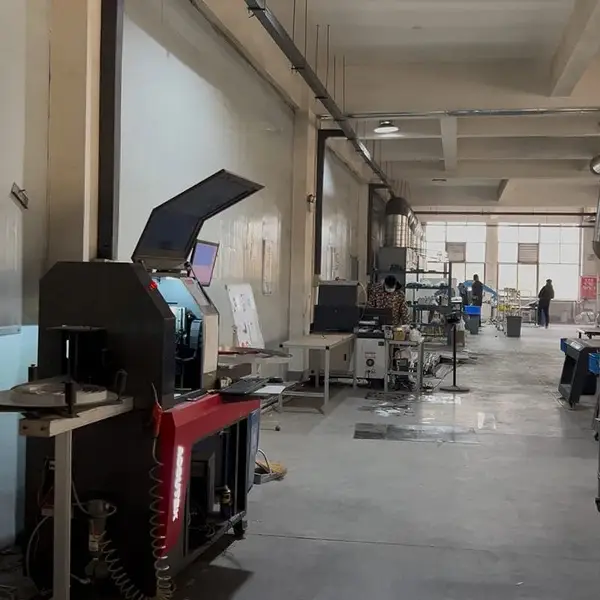
Real photo from our production floor — every sign we ship is made here.
Products mentioned or relevant to this topic — factory-direct, custom built.
From $24/letter · MOQ 1 piece · Flexible lead time · Project-specific compliance documents · ships to 20+ countries
Custom sizes, colors, and finishes. Get a factory price in 24 hours.
Get a Free Quote Copy EmailWhatsApp +86 13865703472 · business@aochuangsign.cn