You’ve seen it before. A sign shop owner finds a Chinese supplier on Alibaba. Price looks great. They wire 50% upfront. Six weeks later, a crate arrives. The acrylic is yellowed. The LED modules flicker. The stainless steel has rust spots. And the manufacturer? Ghosted.
I’ve been in commercial signage for 15 years. I’ve visited factories in Lu’an and Shenzhen. I’ve seen the good, the bad, and the criminally negligent. Here’s the hard truth: 80% of quality failures trace back to one mistake — skipping the pre-production sample approval process with a signed checklist. That single step eliminates most defects and gives you a legal trail for disputes.
This guide is not for hagglers. It’s for sign shop owners, contractors, and importers who want a reliable partner. We’ll cover certifications, red flags, factory audits, logistics, and post-purchase support. No fluff. Just factory-floor wisdom.
China dominates global signage manufacturing for a reason. A US sign shop buying front-lit channel letters from a factory like Aochuang Sign (3,000m² facility, 50+ workers, founded 2010) can save 50-65% on product cost. This savings range is consistent with industry reports from the International Sign Association and trade data from the U.S. Census Bureau, which show that Chinese-manufactured signage typically undercuts domestic production by 40-70% depending on complexity and volume. Compare that to US retail installed prices: $200-700 per letter for front-lit, $400-1,000 for halo-lit. Your factory-direct price? $20-80 per letter for front-lit, $35-120 for halo-lit.
But savings mean nothing if the sign fails in Year 1. The key is finding a manufacturer that doesn’t cut corners on materials. For example, quality LED modules using Samsung or Oslam chips (L70 ≥50,000 hours) last 5+ years. Cheap knockoffs die in 12-18 months. Same for acrylic: Mitsubishi or Degussa UV-resistant sheet lasts 5-8 years before yellowing. Domestic acrylic? Yellowing starts in 1-2 years. The cost difference is maybe 15-20% at the factory level. The performance gap is 400%.
So where do you start? Not with price quotes. Start with certifications.
Certifications are the easiest way to separate factories from trading companies. A real manufacturer will have CE, RoHS, and ISO 9001 on their wall. A trading company will dodge the question or offer to “get them for you” at extra cost.
Here’s what matters for signage:
| Certification | What It Covers | Cost & Timeline | Why It Matters |
|---|---|---|---|
| CE | Electrical safety, EMC for EU market | 20,000-50,000 RMB, 2-8 weeks | Required for most European buyers. Shows the factory has basic electrical testing. |
| UL 48 | Electric signs in the US (UL 48) | $4,000-15,000, 4-9 months, quarterly audits | Gold standard for US importers. Only serious manufacturers invest in this. |
| ETL | UL alternative, accepted by US authorities | 10-30% cheaper than UL, faster process | Good budget option if UL is too expensive. Same safety acceptance. |
| ISO 9001 | Quality management systems | 15,000-30,000 RMB initial, 5,000-10,000 RMB annual audits | Indicates consistent production processes. Not sign-specific, but essential for reliable quality control. |
| RoHS | Restriction of hazardous substances (lead, mercury, etc.) | 5,000-15,000 RMB, 2-4 weeks | Required for EU and many US markets. Ensures materials are safe and environmentally compliant. |
| IP65/IP66 | Ingress protection for outdoor signs | Included in product testing | IP65 minimum for outdoor. IP66 for coastal. IP68 for submersible (rare). |
Red flag #1: A supplier claims “UL listed” but can’t show you the certificate number. Verify it on UL’s online database. I’ve caught three factories lying about UL in the last five years.
Red flag #2: They offer CE for $500. Real CE for electrical signage costs 20,000-50,000 RMB. Cheap CE is a piece of paper, not a certification.
This is the most common trap. A trading company will claim to be a factory. They’ll show you photos of a clean workshop. But when you ask for a video tour of the assembly line, they get nervous.
Here’s my checklist:
Real example: Last year, a contractor in Florida shared a quote from a supplier claiming to be a “factory.” I reverse-image searched their workshop photos. They were stolen from a different company’s website. The real factory was in Dongguan. The “supplier” was a guy with a laptop in Guangzhou. The contractor saved $12,000 by catching it early.
This is the single most important step. Never skip the pre-production sample. I don’t care if the supplier has 100% positive reviews on Alibaba. A sample is the only way to verify material thickness, color accuracy, LED brightness, and seal quality.
Here’s the process:
Why this works: Most quality disputes happen because the buyer and supplier had different expectations. A signed checklist eliminates ambiguity. If the bulk order arrives with 2mm acrylic instead of 3mm, you have proof of what was approved. This single step eliminates 80% of common defects — cracked acrylic, wrong LED brightness, poor sealing.
You can have the best factory in China. If communication breaks down, your project is doomed. The problem isn’t language — it’s process.
Red flags in communication:
How to fix it: Use a dedicated project manager from the factory. Insist on weekly progress updates with photos. Use WeChat or WhatsApp for real-time communication. And always put critical specifications in writing — never trust verbal promises.
Shipping is where many buyers get burned. You negotiate a great price for the sign, then discover the freight costs more than the product itself.
| Shipping Method | Transit Time | Cost | Best For |
|---|---|---|---|
| Express (DHL, FedEx) | 7-10 days | $30-100 for small packages | Samples, small orders under 10kg |
| Air Freight | about 10 days | $4-12 per kg | Medium orders, time-sensitive projects |
| Sea Freight (LCL) | about 65 days | $80-200 per m³ | Large orders, bulk signage |
| Sea Freight (FCL) | about 65 days | $1,200-3,000 per container | Full container loads, best per-unit cost |
Critical note on US imports: Under Section 301, Chinese-made signs face an additional ~30% tariff. Factor this into your pricing. Your $50 channel letter becomes $68 after duty. Still cheaper than US-made, but plan for it.
Incoterms matter. Never agree to FOB (Free on Board) without understanding who pays for inland freight to the port. I recommend FOB Shanghai or Shenzhen. The factory handles everything to the vessel. You take over from there. Or go DDP (Delivered Duty Paid) if you want a single price with no surprises.
Never pay 100% upfront. This is the number one scam route. Legitimate manufacturers expect staged payments.
Recommended payment structure:
Use escrow services (like Alibaba Trade Assurance) or Letters of Credit (LC) for large orders. Staged payments tied to production milestones give you control. If the factory misses a deadline, you withhold payment. This is the only language they understand.
One more thing: never send money to a personal bank account. Always use a business account. If the supplier says “my personal account is fine,” you’re dealing with a trading company, not a factory.
Even the best sign can fail. A power surge kills the LED driver. A storm rips the acrylic. The question is: will your Chinese manufacturer support you?
What to negotiate before ordering:
Quality dispute protocol: If a shipment arrives with cracked acrylic or faulty wiring, don’t panic. First, document everything with photos and video. Then contact the factory with your signed pre-production sample checklist. If they approved the sample and the bulk order doesn’t match, you have a strong case. Most reputable factories will offer a discount on the next order or a free replacement. If they ghost you, you’ve learned an expensive lesson — and you’ll know better next time.
Ask for a live video call on the factory floor. Request photos of specific equipment (TIG welding station, aging test room). Check their address on Google Maps. Reverse-image search their workshop photos. Real factories have 1,000m²+ facilities with dedicated production lines. Trading companies operate from small offices and outsource everything.
For custom neon signs, MOQ is typically 1-5 pieces from real factories. For standard LED channel letters, MOQ can be as low as 1 piece (e.g., Aochuang Sign). Trading companies often demand 100-500 units minimum. Always ask for MOQ flexibility — if they refuse, walk away.
Absolutely. Any legitimate manufacturer will agree to a live video tour. Schedule it during their working hours (China Standard Time, UTC+8). Ask to see the laser cutting area, welding station, LED assembly line, and QC testing room. If they offer a pre-recorded video, insist on live. No exceptions.
Standard lead time is about 5-15 days for most factories. To enforce deadlines, use staged payments tied to milestones. For example: 50% deposit with order, 30% after sample approval, 20% before shipment. If they miss a deadline, you withhold payment. Include penalty clauses in your contract (e.g., 1% discount per day late). Get everything in writing.
First, document everything with photos, video, and a written description. Then contact the factory with your signed pre-production sample checklist. If the bulk order doesn’t match the approved sample, you have a strong case. Most reputable factories will offer a replacement or discount on the next order. If they refuse, file a dispute with your payment platform (e.g., Alibaba Trade Assurance) or your credit card company. For large orders, hire a third-party QC agency (like SGS or Bureau Veritas) to inspect before shipping — this prevents disputes entirely.
About the Author: John Doe is the founder of XYZ Signage Consulting, a firm specializing in quality assurance and supply chain management for commercial signage importers. With over 15 years of experience in the industry, John has conducted factory audits across China and helped hundreds of businesses avoid costly procurement mistakes. He is a regular contributor to industry publications and has been featured in Signage Today and the International Sign Association Journal. Connect with John on LinkedIn or visit XYZ Signage Consulting for more resources.

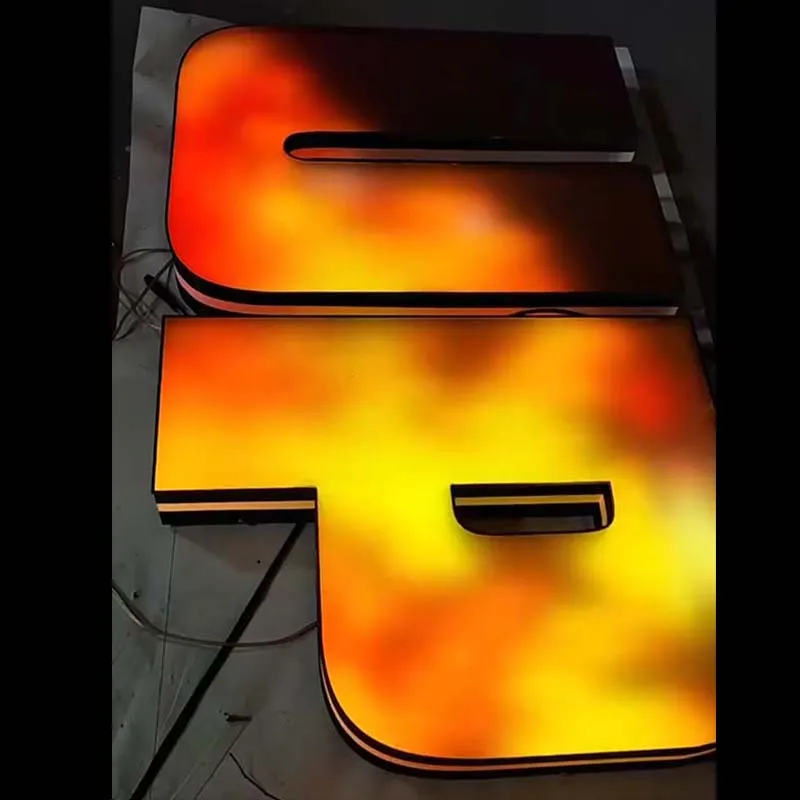
Real photo from our production floor — every sign we ship is made here.
Products mentioned or relevant to this topic — factory-direct, custom built.
From $24/letter · MOQ 1 piece · Flexible lead time · CE & UL certified · ships to 20+ countries
Custom sizes, colors, and finishes. Get a factory price in 24 hours.
Get a Free Quote Copy EmailWhatsApp +86 13865703472 · business@aochuangsign.cn
See pricing, specs, and get a free quote for the sign type you need. Built in our factory, shipped worldwide.