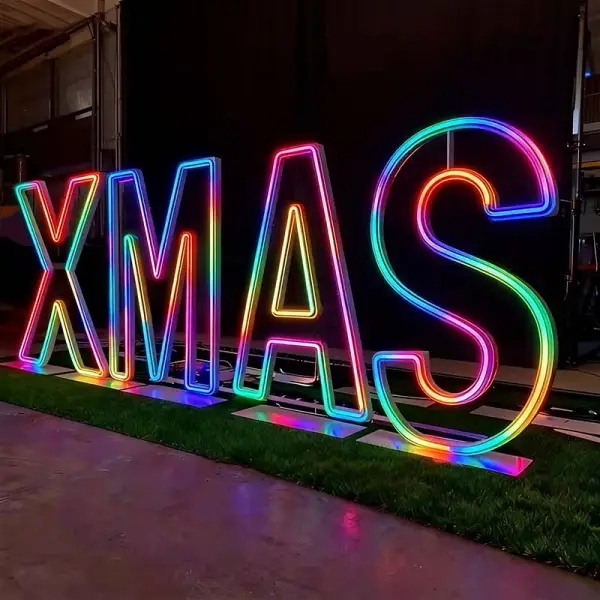
You’ve seen the numbers. Factory-direct pricing on channel letters runs $20–80 per letter for front-lit, compared to $200–700 installed in the US. That 50–65% savings is real. But so is the nightmare of a bulk order that shows up with swapped materials, dead LEDs, or wrong colors. I’ve been in this industry since before Alibaba was a verb. I’ve watched sign shop owners lose their shirts—and their reputations—by chasing the lowest quote from a Chinese supplier they never truly vetted.
Here’s the thing. Finding a reliable manufacturer in China isn’t about bargaining hard. It’s about knowing who you’re actually dealing with, what they’re capable of, and how to build a process that protects you from the start. This guide gives you the specific criteria, certifications, and factory-floor checks that separate the pros from the middlemen.
The most common mistake? Assuming every “factory” on Alibaba is the real deal. A Gold Supplier badge costs about $3,000 a year. That doesn’t mean they own a 3,000m² facility with 50+ workers. It just means they paid a fee.
Real factories have production lines. They have laser cutters with ±0.1mm precision. They have TIG welders, CNC routers for acrylic, and aging test rooms where LEDs run for 8–12 hours before shipping. Trading companies have laptops and a Rolodex of factories they’ve never visited.
The hard-won wisdom? Prioritize manufacturers that specialize in your exact sign type. A company that cranks out aluminum composite light boxes won’t know how to build a marine-grade 316 stainless steel pylon sign. Generalists cut corners on compliance and lead times because they’re learning your product on your dime.
You don’t need to fly to a factory in China to check them out. But you do need to run a few checks that expose the frauds.
Don’t ask “Do you have certifications?” Ask for CE, RoHS, and ISO 9001 by name. Then verify the cert number. A real CE certificate for electrical signage costs 20,000–50,000 RMB and takes 2–8 weeks to obtain. If they can’t produce one or the number doesn’t check out online, walk away. You can verify CE certificates through the European Commission’s CE marking portal, and ISO 9001 via the ISO certification database.
For US-bound signs, UL 48 is the gold standard. It costs $4,000–15,000 and requires quarterly factory audits. An ETL certification is a valid alternative, costing 10–30% less. But if a supplier claims UL without being able to show the audit schedule, they’re lying. Verify UL certifications at the UL certification directory and ETL at the Intertek verification portal.
Any real factory will oblige. Ask them to walk you through the 10-step production process: laser cutting, bending/welding, grinding, polishing, CNC routing of acrylic, LED assembly, sealing with neutral silicone, aging test, QC inspection, and export packaging. If they hesitate or show only an office, you’ve got a middleman.
Ask for a list of countries they’ve shipped to. A factory exporting worldwide has a dedicated export team that understands Incoterms, customs paperwork, and the US Section 301 tariff (~30%). A generalist will fumble the paperwork and cost you time and money.
| Certification | Cost Range | Timeline | What It Covers |
|---|---|---|---|
| UL 48 | $4,000–15,000 | 4–9 months + quarterly audits | Electrical safety for US signs |
| ETL | 10–30% less than UL | Similar to UL | UL alternative, same scope |
| CE | 20,000–50,000 RMB | 2–8 weeks | European safety & emissions |
| ISO 9001 | Varies | 3–6 months | Quality management system |
| IP65/66/68 | Included in product testing | Part of QC | Dust/water ingress protection |
Every buyer knows to request a sample. But most evaluate the wrong things. They check the finish and the brightness. Then they place a $10,000 order and get boxes of garbage.
Here’s what to look for on a sample:
The real test? Run the sample for 48 hours straight. Then check for hot spots, flicker, or dead diodes. A factory that skips the 8–12 hour aging test will ship you problems.
Chinese law is different. But a well-written contract can still save you. You’re not looking for a legal masterpiece—you’re looking for clarity on four things: payment, defects, timelines, and dispute resolution.
Never pay 100% upfront. Standard terms are 30% T/T deposit, 70% balance before shipment after your third-party inspection. For larger orders, a Letter of Credit (L/C) adds bank-level protection. If a supplier demands 50% or more upfront, that’s a red flag.
Get it in writing: the manufacturer warrants that materials (e.g., 304 stainless steel with 18% Cr, 8% Ni) and LEDs (Samsung/Osram) match the sample. Include a clause for replacement or refund if defects exceed 3% of the order. A reliable manufacturer offers 2 years on LEDs and 1 year on power supplies—that’s a good benchmark.
Specify arbitration in Hong Kong or Singapore. Chinese courts are slow and expensive for foreign buyers. Arbitration is faster and more neutral.
Your factory price is only half the story. Shipping and duties can eat 30–50% of your savings if you don’t plan.
Here are the real numbers from the knowledge base:
Don’t forget the US Section 301 tariff of ~30% on Chinese-made signage. Factor that into your pricing from day one. And use FOB (Free on Board) Incoterms—the supplier handles export customs and loading. You take over at the port of origin.
You can’t be an expert in every material. But you can ask the right questions.
| Material | Outdoor Life | Key Specs | Red Flags |
|---|---|---|---|
| Acrylic (Mitsubishi/Degussa) | 5–8 years | 90–92% transmittance, UV-resistant | Domestic acrylic yellows in 1–2 years |
| 304 Stainless Steel | 10+ years | 18% Cr, 8% Ni, 1.0–3.0mm thick | Magnetic? That’s not real 304. |
| 316 Stainless Steel | 15+ years (marine) | 2–3% Mo, 20–30% cost premium over 304 | No moly content = not 316 |
| Aluminum | 8–12 years | 1.0–1.6mm, 1/3 weight of steel | Thinner than 0.040” will dent |
| SMD 2835 LEDs | 5+ years (quality) | 100–150 lm/W, L70 ≥50,000 hrs | Cheap modules fail in 12–18 months |
For the US, demand UL 48 or ETL plus IP65 minimum for outdoor signs. For Europe, CE and RoHS are mandatory. For any market, ISO 9001 shows they have a quality management system. If they’re exporting worldwide, they’ll have these in place. If they ask “What’s a UL?”—run.
Ask for a live video walkthrough of their production floor. A real factory has laser cutters, TIG welders, CNC routers, and an aging test room. A trading company has an office and a catalog. Also, check their MOQ. A real factory will often accept 1 piece for custom orders. A middleman usually requires 50–100 pieces because they have to meet a factory minimum.
For a direct manufacturer, MOQ is 1 piece for custom channel letters and neon flex signs. Light boxes start around 1–5 units. Digital displays may have higher MOQs due to component sourcing. If a supplier quotes MOQ 500 for a simple acrylic sign, they’re not the manufacturer.
Hire a third-party inspection company like SGS or Bureau Veritas to do a pre-shipment inspection. They’ll check material specs, LED function, IP ratings, and packaging. Cost is usually $300–500 per day. It’s cheap insurance against a $10,000 mistake. Also, request photos of the 8–12 hour aging test in progress.
Standard safe terms: 30% T/T deposit, 70% balance after inspection and before shipment. For larger orders, use an L/C at sight. Avoid Western Union or PayPal for deposits. If the supplier insists on 50% upfront or full payment before production, find another factory. The best suppliers know that trust is built on fair terms, not fear.
Author Bio: This guide was written by a B2B sourcing specialist with over 15 years of experience in the sign manufacturing and import/export industry. The author has managed procurement for major retail chains, overseen factory audits across China, and facilitated the export of thousands of signage units to North America and Europe. Their expertise includes material specifications, certification compliance, and logistics optimization for custom signage projects.
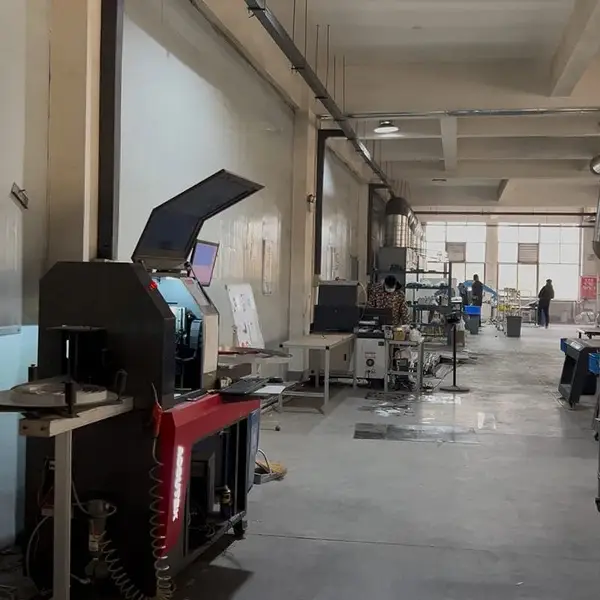
Real photo from our production floor — every sign we ship is made here.
Products mentioned or relevant to this topic — factory-direct, custom built.
Factory-direct since 2010. Free quote within 24 hours — no obligation.
Get a Free Quote → Copy EmailMOQ: 1 piece · Flexible lead time · 2-year warranty · Worldwide shipping
See pricing, specs, and get a free quote for the sign type you need. Built in our factory, shipped worldwide.