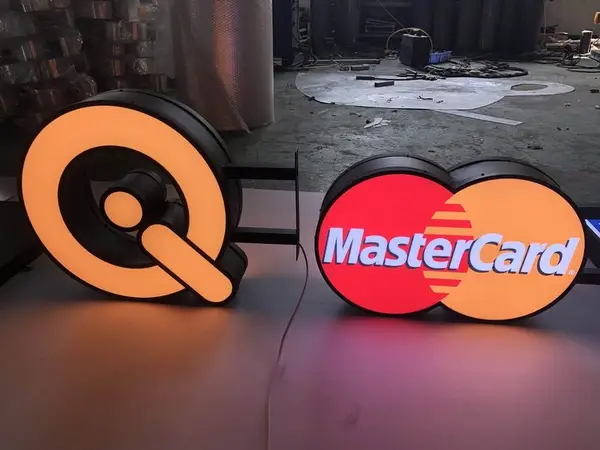
That $120 Letter Isn’t $120 by the Time It Hits Your Shop
I’ve watched sign shops pay $800 for a single front-lit channel letter from a domestic fabricator. Same 304 stainless, same Samsung LEDs. We ship that letter for $120.
But here’s what nobody tells you: that $120 is just the factory price. The real number — what lands on your receiving dock — is a different animal. And if you don’t account for shipping, duties, tariffs, and certification costs upfront, you’re going to have a very bad quarter.
Let’s break it down. No fluff. No “navigate the complexities.” Just what you’ll actually pay.
Factory Price vs. Delivered Cost: The Math
You order
front-lit channel letters from a Chinese factory like Aochuang. They quote you $120 per letter, FOB (Free on Board) — meaning the price includes getting it to the Chinese port. From there, it’s on you.
Here’s the typical per-letter cost breakdown for a 12-inch front-lit letter (2mm acrylic, 304 stainless returns, SMD 2835 LEDs):
| Cost Component | Amount |
|----------------|--------|
| Factory price (FOB) | $120 |
| Ocean freight (LCL, per m³ share) | $15–25 |
| Marine insurance (0.5% of value) | $0.60 |
| U.S. customs broker fee | $2–5 |
| Section 301 tariff (25% on $120) | $30 |
| Customs entry + MPF | $1–2 |
| Inland trucking to your shop | $5–15 |
| **Total delivered cost** | **$174–$198** |
That’s still 60–75% less than domestic fabrication. But it’s not $120.
The ugly truth is: most importers forget the tariff. Section 301 slapped a 25% duty on most Chinese-made signs starting in 2018. It’s still there. If your supplier doesn’t mention it, they’re not lying — they just don’t handle your customs. You do.
Shipping: Three Ways to Get Burned
You’ve got three options: express, air, or sea.
**Express (DHL, FedEx, UPS)** — 7-10 days, $30–100 for small samples. Good for prototypes. Bad for production orders. A pallet of 20 letters will cost you a kidney.
**Air freight** — about 10 days, $4–12 per kg. A 30-kg crate of letters runs $120–360. Fast, but you pay for speed. Only worth it if your customer’s grand opening is next week and you forgot to order.
**Sea freight** — about 65 days. LCL (less than container load) is $80–200 per cubic meter. A full 20-ft container: $1,200–3,000. This is where you want to be for any order over 10 letters.
Here’s what nobody tells you about LCL: your crate gets handled 6–8 times between our dock and yours. Every touch is a chance for damage. That’s not in the brochure. I’ve seen a $500 stainless steel letter arrive dented because some dockworker dropped a forklift tine through the crate. Budget for crate reinforcement. We pack with foam + carton + plywood, but if you want extra internal bracing, ask. It costs $20 more. Worth it.
Tariffs, Duties, and Certifications — The Hidden Tax
The U.S. Section 301 tariff is around 30% on most metal and acrylic sign imports (check HTS code 9405.60.6000 for lights, or 8310.00.0000 for non-illuminated signs). Your customs broker will need a correct classification. Mislabel it and you’re looking at penalties.
Some importers try to dodge by declaring a lower value. I’ve seen this go wrong: Customs audits caught it, fined the importer 3x the duty difference, and blacklisted them. Not worth it.
Then there’s certification. If you’re selling signs in the U.S., you need UL or ETL for electrical safety. UL 48 certification costs $4,000–15,000 and takes 4–9 months. Most Chinese factories don’t have it. Aochuang has CE, RoHS, and ISO 9001 — but not UL. We can build to UL specs, but the listing is on you. Budget $5,000–10,000 if you need a UL label on every sign.
If you’re installing in a coastal area, don’t cheap out on stainless.
Stainless steel letters in 316 marine grade cost 20–30% more than 304, but they last 15+ years in salt air. For a strip mall in Ohio, 304 is fine. For Miami Beach, pay for 316 or you’re replacing letters in 3 years.
Materials Trade-Offs That Screw Your Total Cost
The biggest rookie mistake: choosing acrylic without understanding its lifespan. Domestic acrylic (cheap stuff) yellows in 1–2 years. Mitsubishi or Degussa acrylic — the good stuff — lasts 5–8 years before it starts to go. That’s a 92% light transmittance vs 90% on thinner 2mm. Your customer won’t notice the 2% difference, but they will notice the 40% cost bump. For outdoor signs, spend the extra. You’ll get fewer callbacks.
Same with LEDs. Quality modules from Samsung or Osram have a real lifespan of 5+ years. Cheap modules die in 12–18 months. Quickest way to spot bad LED modules: look at the solder joints. Dull gray = won’t last 18 months. Shiny silver = proper lead-free solder. Aochuang uses quality components — we test every sign for 8–12 hours before it ships. Not all factories do.
If you’re going with a back-lit halo letter, the extra depth costs more in shipping (more volume) and requires higher-grade sealing. IP65 sounds impressive. It means water jets from any direction. It does NOT mean your sign survives a Florida hurricane. For true weatherproofing, ask for IP66 or IP68. That adds $10–20 per letter but saves you a warranty headache.
The Real Timeline from Order to Installed Sign
You place an order. Factory confirms design in 1 day. Laser cutting (1–2 days), bending/welding (1–2), grinding (1–2), acrylic CNC (1), LED assembly (1–2), sealing (1), aging test (8–12 hours), QC and packaging (1). Total: 7–15 days.
Then shipping: sea adds about 65 days. Customs clearance: 2–5 days. Inland: 1–3 days. So you’re looking at 60–90 days door-to-door for sea. Air: 20–30 days. Express: 15–25 days.
Plan accordingly. If your customer needs the sign in 30 days, you’ll pay through the nose for air freight. If you order three months before the install date, sea freight makes sense and you save 60%.
FAQ — The Answers Nobody Gives You Because They’re Annoyed
Do I really need to pay the 25% Section 301 tariff?
Yes. Unless you can prove the sign components came from outside China (and good luck with that). Some importers use a different HTS code to drop the rate. I’ve seen customs catch it. Do it wrong and you’re looking at audits. For a few hundred dollars in duty savings, it’s not worth the risk. Pay the tariff and price it into your quote.
Can I skip UL certification for small orders?
Technically, yes. But if your sign catches fire or falls and hurts someone, your insurance won’t pay a dime. And your local inspector may reject it. For single custom projects, sometimes you can get away with a variance. For any repeat business, get UL or ETL. It’s an investment, not an expense.
What’s the minimum order quantity?
Aochuang takes 1 piece. I’ve shipped a single custom letter for a dentist’s office. But you’ll pay more in shipping per unit. Most shops order 5–10 letters minimum to make the freight worthwhile. If you’re just testing a factory, order one. It gives you a real sample to inspect.
How do I know if the factory is quality?
Ask for a recent CE certificate with a date. Watch them sweat. Then request photos of their production line — specifically the welding and testing area. A clean floor and organized wire spools tell you a lot. Then order a sample. Measure the acrylic thickness with calipers. Check the LED solder joints. Run it for 24 hours. If it passes, you’re good. If it doesn’t, move on. There are a hundred factories in China — don’t settle for the first one.